 Add to Chrome
 Add to Firefox
 Add to Edge
Sparse OFDM Design for Interference and Ambiguity Mitigation in Multi-Static ISAC
Dec 16, 2025
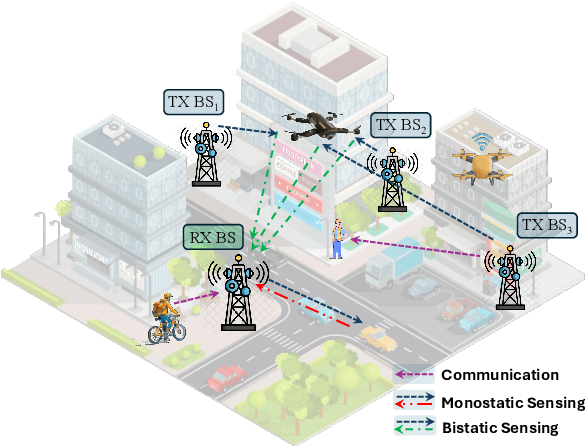
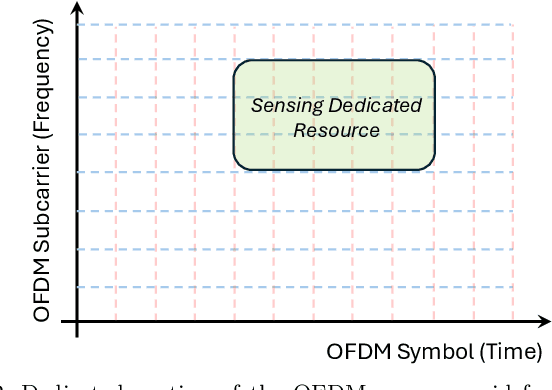
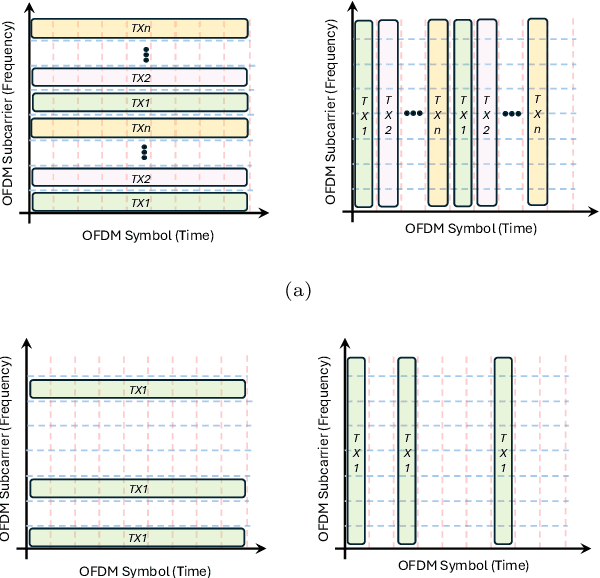
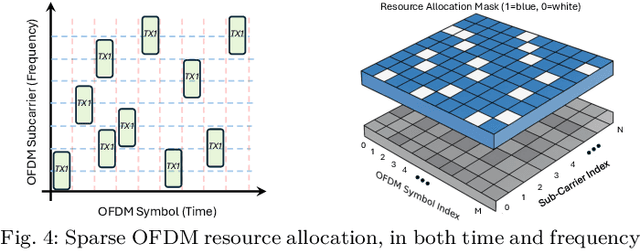
The sixth-generation (6G) wireless networks promises the integration of radar-like sensing capabilities into communication infrastructure. In this paper, we investigate a multi-static sensing framework where half-duplex base stations (BSs) are assigned as either transmitter or sensing receiver nodes. We propose a randomized sparse resource allocation scheme based on orthogonal frequency division multiplexing (OFDM) waveform design tailored for the multi-static scenario to simultaneously mitigate inter-BS interference (IBI) and sensing ambiguities. The waveform design also ensures robustness against inter-symbol interference (ISI) and intercarrier interference (ICI) via a judicious choice of subcarrier spacing according to the deployment of BSs. The potential ambiguity caused by sparse signaling is addressed through controlled irregularity in both time and frequency domains, with a negligible noise floor elevation. Simulation results demonstrate the effectiveness and resilience of the proposed design in the presence of multiple targets and clutter.

Generation-Agnostic Zero-Energy Devices for Sustainable Connectivity, Sensing, and Localization
Nov 12, 2025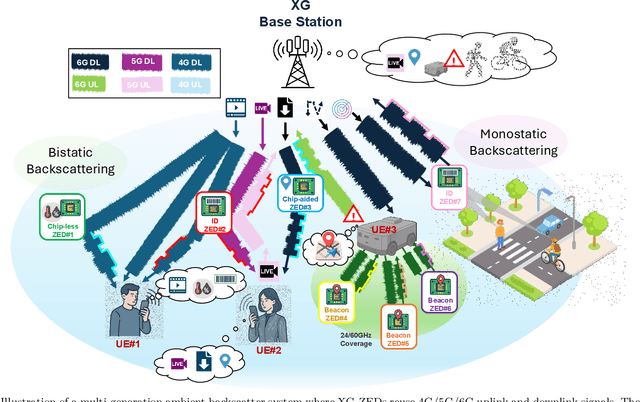
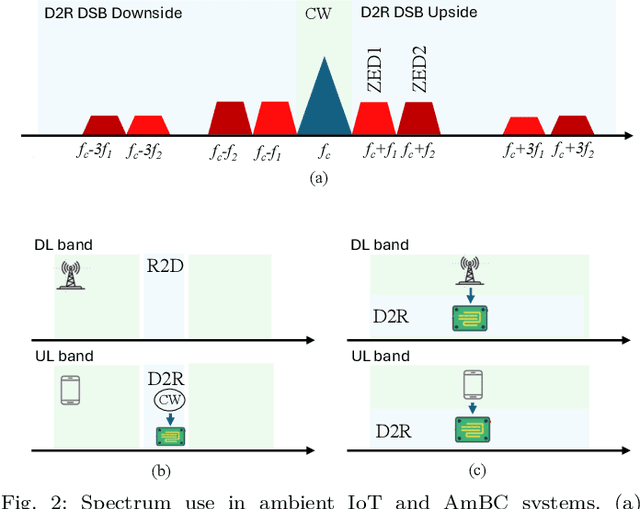
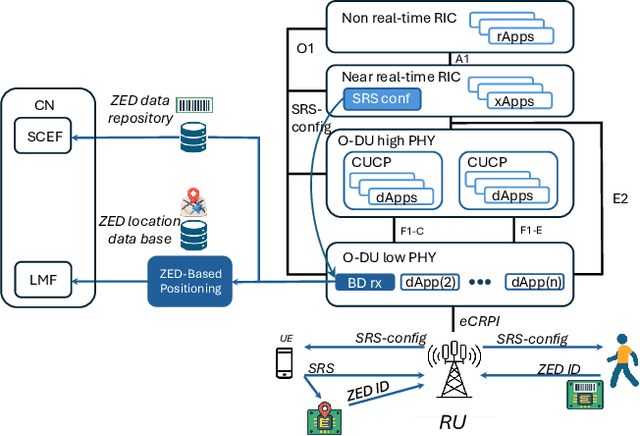
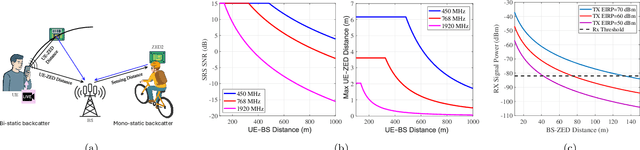
The massive scale of Internet of Things (IoT) connectivity expected in 6G networks raises unprecedented challenges in energy use, battery waste, and lifecycle sustainability. Current cellular IoT solutions remain bound to the lifetime of underlying network generations and rely on billions of disposable batteries, creating unsustainable economic and environmental costs. This article proposes generation-agnostic zero-energy devices (XG-ZEDs), a new class of backscatter based IoT devices that are battery-less, spectrum-agnostic, and future-proof across successive network generations. XG-ZEDs exploit existing ambient wireless signals for communication, sensing, and localization, transforming infrastructure and user devices into universal enablers of ultra-low-power connectivity. We review architectural classifications, communication protocols, network integration, and representative applications such as sensing, localization, and radio-SLAM, while outlining the challenges ahead.
Distributed Intelligent Integrated Sensing and Communications: The 6G-DISAC Approach
Feb 28, 2024This paper introduces the concept of Distributed Intelligent integrated Sensing and Communications (DISAC), which expands the capabilities of Integrated Sensing and Communications (ISAC) towards distributed architectures. Additionally, the DISAC framework integrates novel waveform design with new semantic and goal-oriented communication paradigms, enabling ISAC technologies to transition from traditional data fusion to the semantic composition of diverse sensed and shared information. This progress facilitates large-scale, energy-efficient support for high-precision spatial-temporal processing, optimizing ISAC resource utilization, and enabling effective multi-modal sensing performance. Addressing key challenges such as efficient data management and connect-compute resource utilization, 6G- DISAC stands to revolutionize applications in diverse sectors including transportation, healthcare, and industrial automation. Our study encapsulates the project vision, methodologies, and potential impact, marking a significant stride towards a more connected and intelligent world.
Towards Distributed and Intelligent Integrated Sensing and Communications for 6G Networks
Feb 18, 2024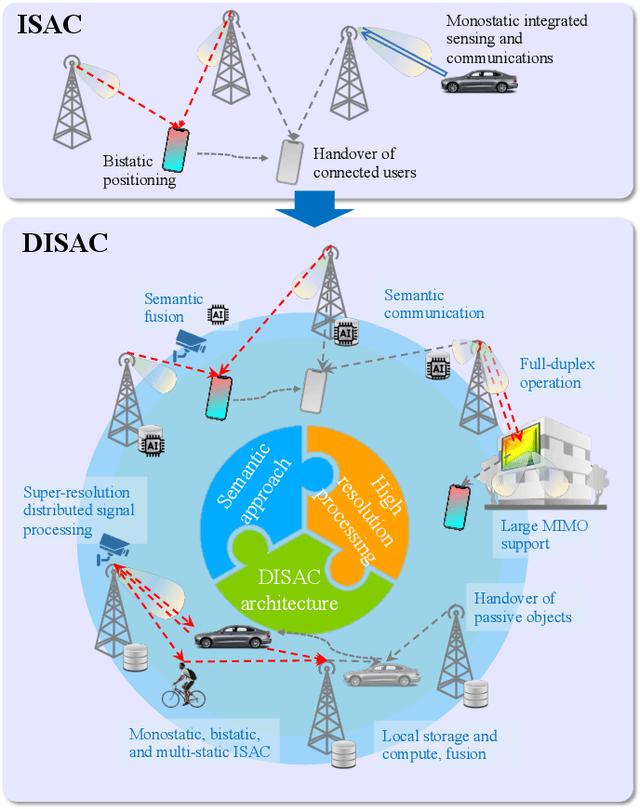
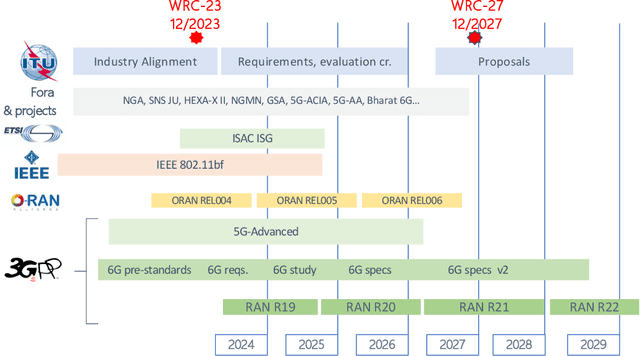
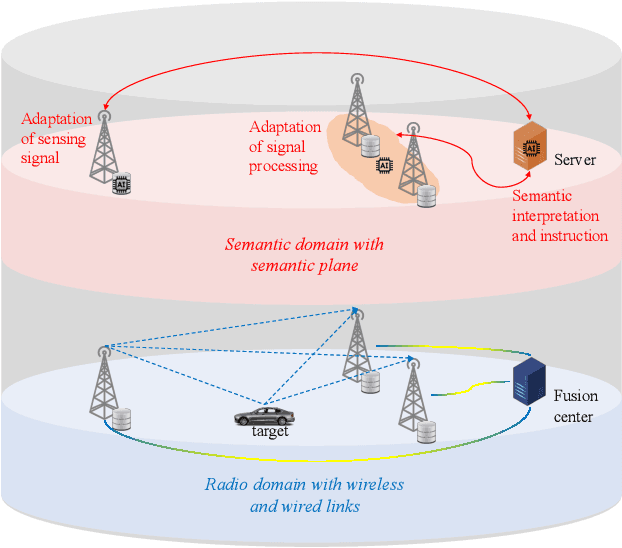
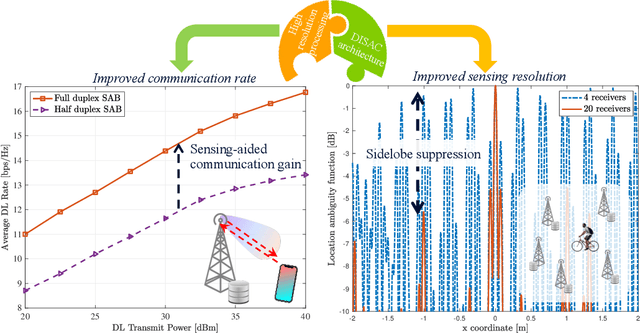
This paper introduces the distributed and intelligent integrated sensing and communications (DISAC) concept, a transformative approach for 6G wireless networks that extends the emerging concept of integrated sensing and communications (ISAC). DISAC addresses the limitations of the existing ISAC models and, to overcome them, it introduces two novel foundational functionalities for both sensing and communications: a distributed architecture and a semantic and goal-oriented framework. The distributed architecture enables large-scale and energy-efficient tracking of connected users and objects, leveraging the fusion of heterogeneous sensors. The semantic and goal-oriented intelligent and parsimonious framework, enables the transition from classical data fusion to the composition of semantically selected information, offering new paradigms for the optimization of resource utilization and exceptional multi-modal sensing performance across various use cases. This paper details DISAC's principles, architecture, and potential applications.