 Add to Chrome
 Add to Firefox
 Add to Edge
Generation-Agnostic Zero-Energy Devices for Sustainable Connectivity, Sensing, and Localization
Nov 12, 2025
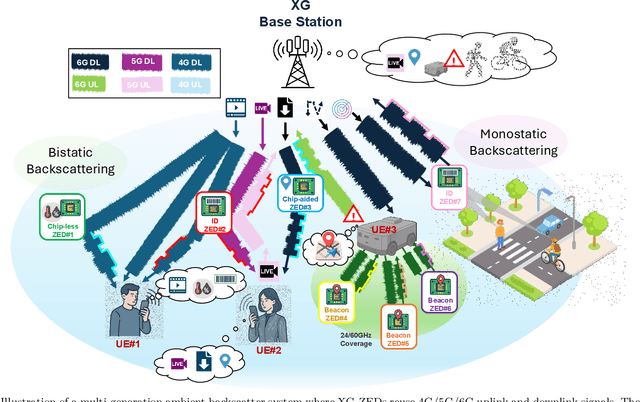
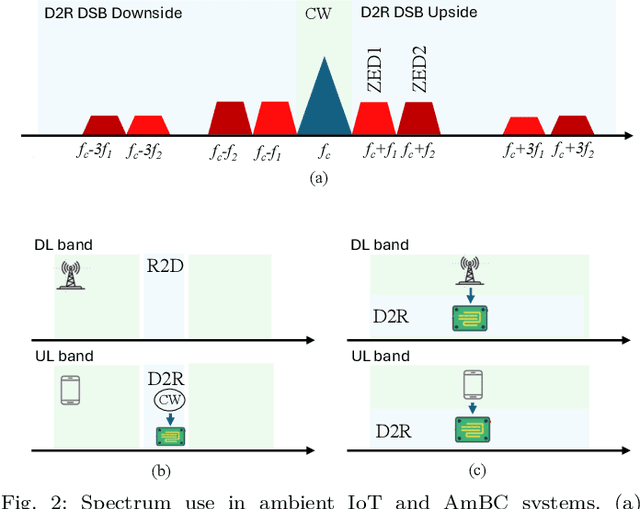
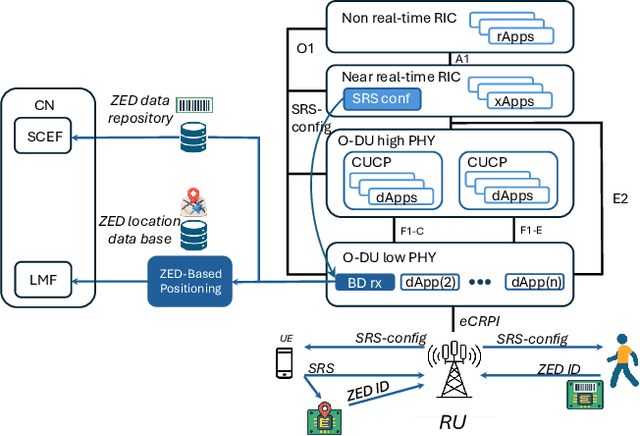
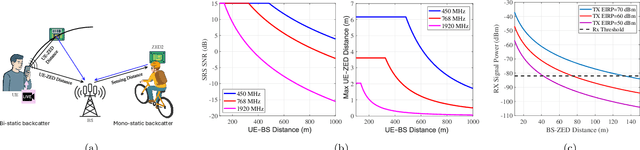
The massive scale of Internet of Things (IoT) connectivity expected in 6G networks raises unprecedented challenges in energy use, battery waste, and lifecycle sustainability. Current cellular IoT solutions remain bound to the lifetime of underlying network generations and rely on billions of disposable batteries, creating unsustainable economic and environmental costs. This article proposes generation-agnostic zero-energy devices (XG-ZEDs), a new class of backscatter based IoT devices that are battery-less, spectrum-agnostic, and future-proof across successive network generations. XG-ZEDs exploit existing ambient wireless signals for communication, sensing, and localization, transforming infrastructure and user devices into universal enablers of ultra-low-power connectivity. We review architectural classifications, communication protocols, network integration, and representative applications such as sensing, localization, and radio-SLAM, while outlining the challenges ahead.

Perfect matching of reactive loads through complex frequencies: from circuital analysis to experiments
Feb 05, 2025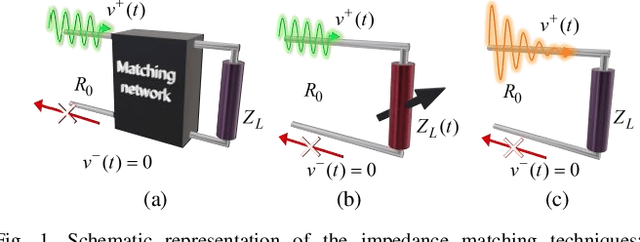
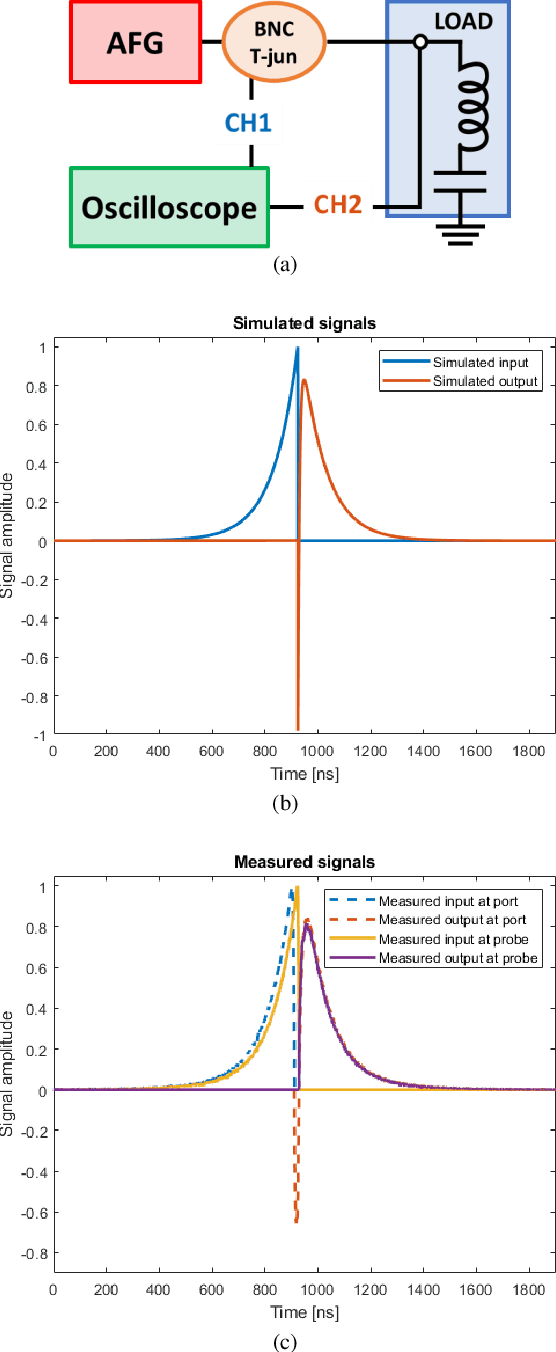
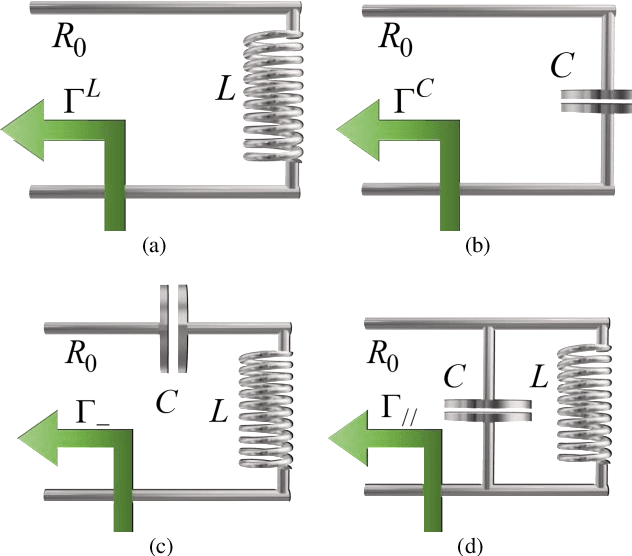
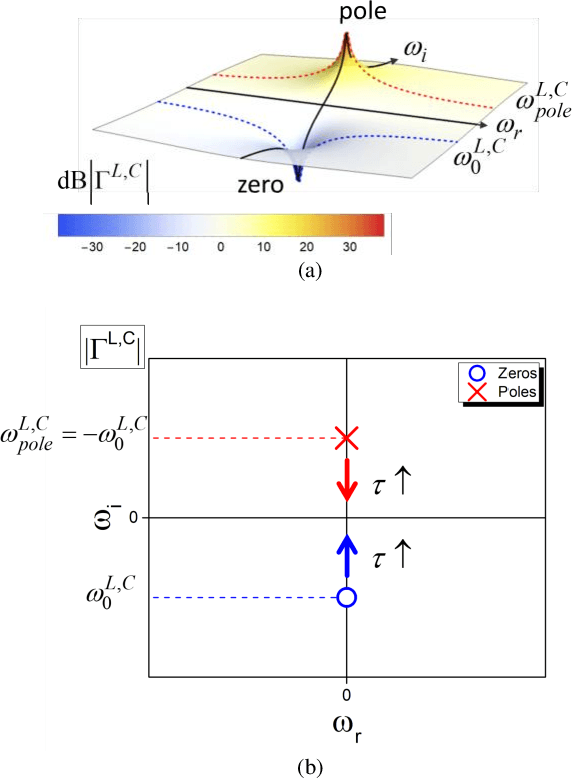
The experimental evidence of purely reactive loads impedance matching is here provided by exploiting the special scattering response under complex excitations. The study starts with a theoretical analysis of the reflection properties of an arbitrary reactive load and identifies the proper excitation able to transform the purely reactive load into a virtual resistive load during the time the signal is applied. To minimize reflections between the load and the transmission line, the excitation must have a complex frequency, leading to a propagating signal with a tailored temporal envelope. The aim of this work is to design and, for the first time,experimentally demonstrate this anomalous scattering behavior in microwave circuits, showing that the time-modulated signals can be exploited as a new degree of freedom for achieving impedance matching without introducing neither a matching network nor resistive elements, that are typically used for ensuring power dissipation and, thus, zero reflection. The proposed matching strategy does not alter the reactive load that is still lossless, enabling an anomalous termination condition where the energy is not dissipated nor reflected, but indefinitely accumulated in the reactive load. The stored energy leaks out the load as soon as the applied signal changes or stops.