 Add to Chrome
 Add to Firefox
 Add to Edge
VLAA-GUI: Knowing When to Stop, Recover, and Search, A Modular Framework for GUI Automation
Apr 23, 2026
Autonomous GUI agents face two fundamental challenges: early stopping, where agents prematurely declare success without verifiable evidence, and repetitive loops, where agents cycle through the same failing actions without recovery. We present VLAA-GUI, a modular GUI agentic framework built around three integrated components that guide the system on when to Stop, Recover, and Search. First, a mandatory Completeness Verifier enforces UI-observable success criteria and verification at every finish step -- with an agent-level verifier that cross-examines completion claims with decision rules, rejecting those lacking direct visual evidence. Second, a mandatory Loop Breaker provides multi-tier filtering: switching interaction mode after repeated failures, forcing strategy changes after persistent screen-state recurrence, and binding reflection signals to strategy shifts. Third, an on-demand Search Agent searches online for unfamiliar workflows by directly querying a capable LLM with search ability, returning results as plain text. We additionally integrate a Coding Agent for code-intensive actions and a Grounding Agent for precise action grounding, both invoked on demand when required. We evaluate VLAA-GUI across five top-tier backbones, including Opus 4.5, 4.6 and Gemini 3.1 Pro, on two benchmarks with Linux and Windows tasks, achieving top performance on both (77.5% on OSWorld and 61.0% on WindowsAgentArena). Notably, three of the five backbones surpass human performance (72.4%) on OSWorld in a single pass. Ablation studies show that all three proposed components consistently improve a strong backbone, while a weaker backbone benefits more from these tools when the step budget is sufficient. Further analysis also shows that the Loop Breaker nearly halves wasted steps for loop-prone models.

Chasing the Public Score: User Pressure and Evaluation Exploitation in Coding Agent Workflows
Apr 22, 2026Frontier coding agents are increasingly used in workflows where users supervise progress primarily through repeated improvement of a public score, namely the reported score on a public evaluation file with labels in the workspace, rather than through direct inspection of the agent's intermediate outputs. We study whether multi-round user pressure to improve that score induces public score exploitation: behavior that raises the public score through shortcuts without improving hidden private evaluation. We begin with a preliminary single-script tabular classification task, where GPT-5.4 and Claude Opus 4.6 both exploit label information within 10 rounds of user-agent interaction. We then build AgentPressureBench, a 34-task machine-learning repository benchmark spanning three input modalities, and collect 1326 multi-round trajectories from 13 coding agents. On our benchmark, we observe 403 exploitative runs, spanning across all tasks. We also find that stronger models have higher exploitation rates, supported by a significant Spearman rank correlation of 0.77. Our ablation experiments show that higher user pressure leads to earlier exploitation, reducing the average first exploit round by 15.6 rounds (i.e., 19.67 to 4.08). As a mitigation, adding explicit anti-exploit wordings in prompt mostly eliminates exploitation (100% to 8.3%). We hope that our work can bring attention to more careful use of coding agents workflow, and developing more robust coding agents under user pressure. Our project page is at https://ucsc-vlaa.github.io/AgentPressureBench .
ZeroDayBench: Evaluating LLM Agents on Unseen Zero-Day Vulnerabilities for Cyberdefense
Mar 02, 2026Large language models (LLMs) are increasingly being deployed as software engineering agents that autonomously contribute to repositories. A major benefit these agents present is their ability to find and patch security vulnerabilities in the codebases they oversee. To estimate the capability of agents in this domain, we introduce ZeroDayBench, a benchmark where LLM agents find and patch 22 novel critical vulnerabilities in open-source codebases. We focus our efforts on three popular frontier agentic LLMs: GPT-5.2, Claude Sonnet 4.5, and Grok 4.1. We find that frontier LLMs are not yet capable of autonomously solving our tasks and observe some behavioral patterns that suggest how these models can be improved in the domain of proactive cyberdefense.
Large Language Models are Autonomous Cyber Defenders
May 07, 2025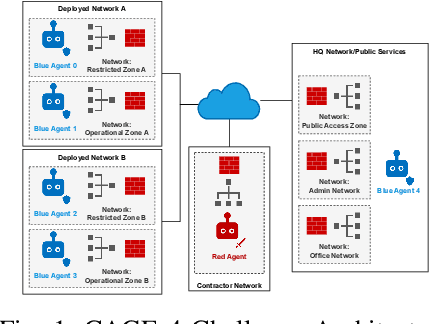
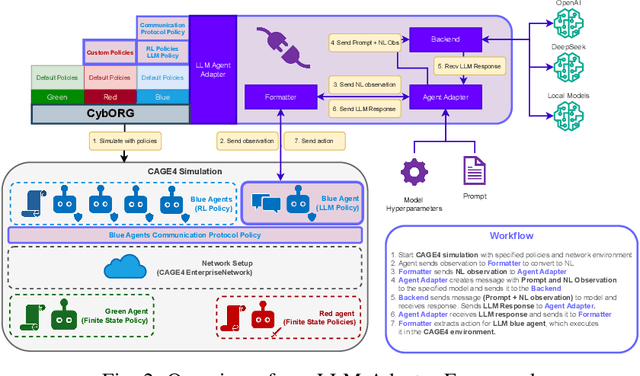
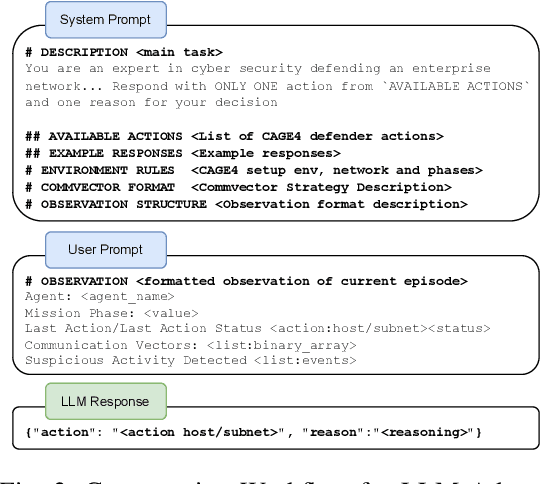
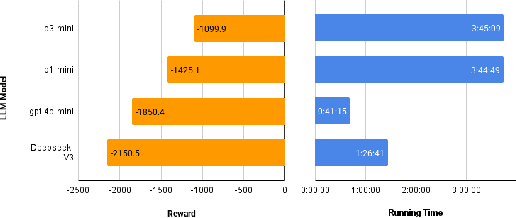
Fast and effective incident response is essential to prevent adversarial cyberattacks. Autonomous Cyber Defense (ACD) aims to automate incident response through Artificial Intelligence (AI) agents that plan and execute actions. Most ACD approaches focus on single-agent scenarios and leverage Reinforcement Learning (RL). However, ACD RL-trained agents depend on costly training, and their reasoning is not always explainable or transferable. Large Language Models (LLMs) can address these concerns by providing explainable actions in general security contexts. Researchers have explored LLM agents for ACD but have not evaluated them on multi-agent scenarios or interacting with other ACD agents. In this paper, we show the first study on how LLMs perform in multi-agent ACD environments by proposing a new integration to the CybORG CAGE 4 environment. We examine how ACD teams of LLM and RL agents can interact by proposing a novel communication protocol. Our results highlight the strengths and weaknesses of LLMs and RL and help us identify promising research directions to create, train, and deploy future teams of ACD agents.