 Add to Chrome
 Add to Firefox
 Add to Edge
Phoneme Discretized Saliency Maps for Explainable Detection of AI-Generated Voice
Jun 14, 2024
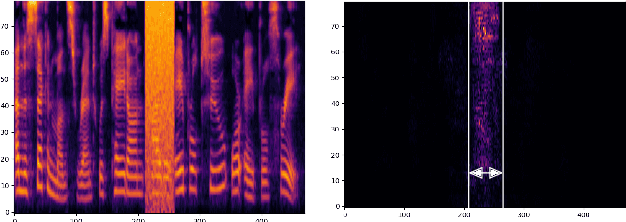
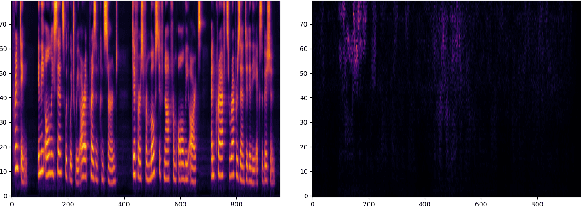
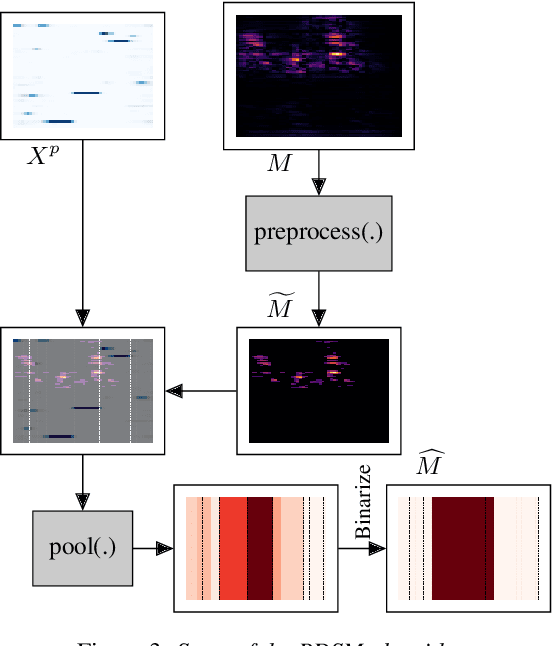

In this paper, we propose Phoneme Discretized Saliency Maps (PDSM), a discretization algorithm for saliency maps that takes advantage of phoneme boundaries for explainable detection of AI-generated voice. We experimentally show with two different Text-to-Speech systems (i.e., Tacotron2 and Fastspeech2) that the proposed algorithm produces saliency maps that result in more faithful explanations compared to standard posthoc explanation methods. Moreover, by associating the saliency maps to the phoneme representations, this methodology generates explanations that tend to be more understandable than standard saliency maps on magnitude spectrograms.

Listenable Maps for Zero-Shot Audio Classifiers
May 27, 2024Interpreting the decisions of deep learning models, including audio classifiers, is crucial for ensuring the transparency and trustworthiness of this technology. In this paper, we introduce LMAC-ZS (Listenable Maps for Audio Classifiers in the Zero-Shot context), which, to the best of our knowledge, is the first decoder-based post-hoc interpretation method for explaining the decisions of zero-shot audio classifiers. The proposed method utilizes a novel loss function that maximizes the faithfulness to the original similarity between a given text-and-audio pair. We provide an extensive evaluation using the Contrastive Language-Audio Pretraining (CLAP) model to showcase that our interpreter remains faithful to the decisions in a zero-shot classification context. Moreover, we qualitatively show that our method produces meaningful explanations that correlate well with different text prompts.
Listenable Maps for Audio Classifiers
Mar 19, 2024Despite the impressive performance of deep learning models across diverse tasks, their complexity poses challenges for interpretation. This challenge is particularly evident for audio signals, where conveying interpretations becomes inherently difficult. To address this issue, we introduce Listenable Maps for Audio Classifiers (L-MAC), a posthoc interpretation method that generates faithful and listenable interpretations. L-MAC utilizes a decoder on top of a pretrained classifier to generate binary masks that highlight relevant portions of the input audio. We train the decoder with a special loss that maximizes the confidence of the classifier decision on the masked-in portion of the audio while minimizing the probability of model output for the masked-out portion. Quantitative evaluations on both in-domain and out-of-domain data demonstrate that L-MAC consistently produces more faithful interpretations than several gradient and masking-based methodologies. Furthermore, a user study confirms that, on average, users prefer the interpretations generated by the proposed technique.
SKILL: Similarity-aware Knowledge distILLation for Speech Self-Supervised Learning
Feb 26, 2024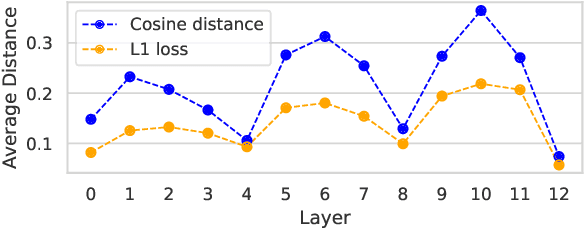
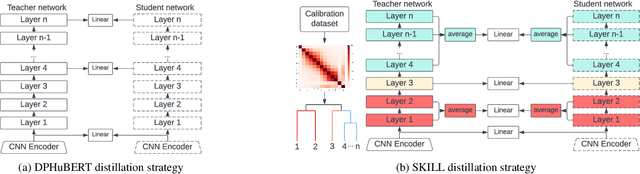
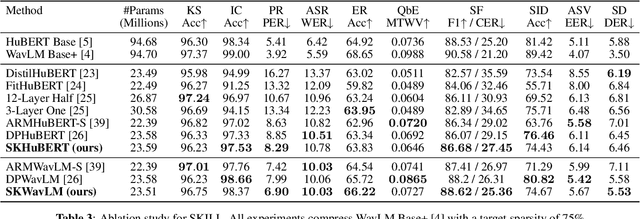
Self-supervised learning (SSL) has achieved remarkable success across various speech-processing tasks. To enhance its efficiency, previous works often leverage the use of compression techniques. A notable recent attempt is DPHuBERT, which applies joint knowledge distillation (KD) and structured pruning to learn a significantly smaller SSL model. In this paper, we contribute to this research domain by introducing SKILL, a novel method that conducts distillation across groups of layers instead of distilling individual arbitrarily selected layers within the teacher network. The identification of the layers to distill is achieved through a hierarchical clustering procedure applied to layer similarity measures. Extensive experiments demonstrate that our distilled version of WavLM Base+ not only outperforms DPHuBERT but also achieves state-of-the-art results in the 30M parameters model class across several SUPERB tasks.
Focal Modulation Networks for Interpretable Sound Classification
Feb 05, 2024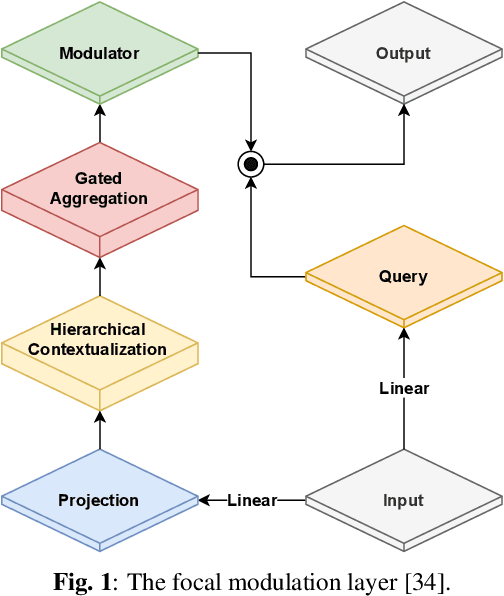
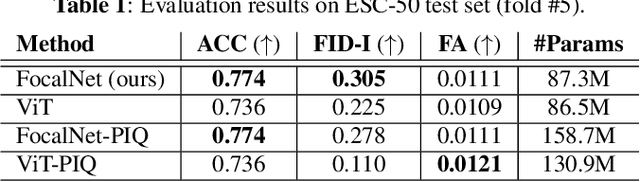
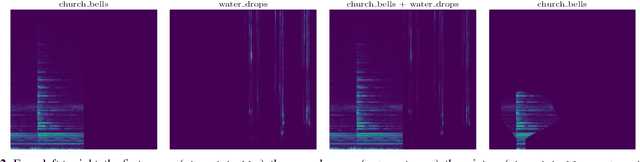
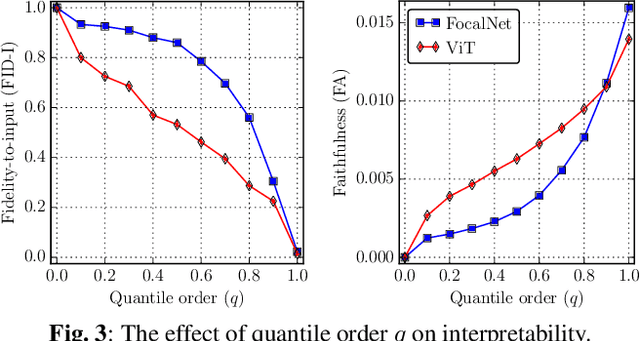
The increasing success of deep neural networks has raised concerns about their inherent black-box nature, posing challenges related to interpretability and trust. While there has been extensive exploration of interpretation techniques in vision and language, interpretability in the audio domain has received limited attention, primarily focusing on post-hoc explanations. This paper addresses the problem of interpretability by-design in the audio domain by utilizing the recently proposed attention-free focal modulation networks (FocalNets). We apply FocalNets to the task of environmental sound classification for the first time and evaluate their interpretability properties on the popular ESC-50 dataset. Our method outperforms a similarly sized vision transformer both in terms of accuracy and interpretability. Furthermore, it is competitive against PIQ, a method specifically designed for post-hoc interpretation in the audio domain.
Bayesian Deep Learning for Remaining Useful Life Estimation via Stein Variational Gradient Descent
Feb 02, 2024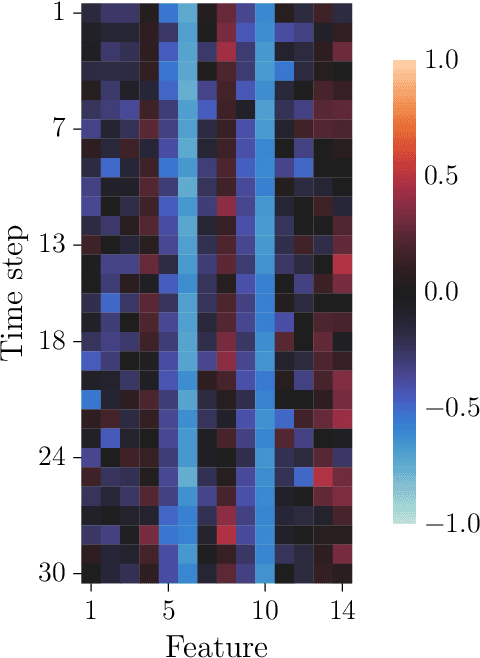
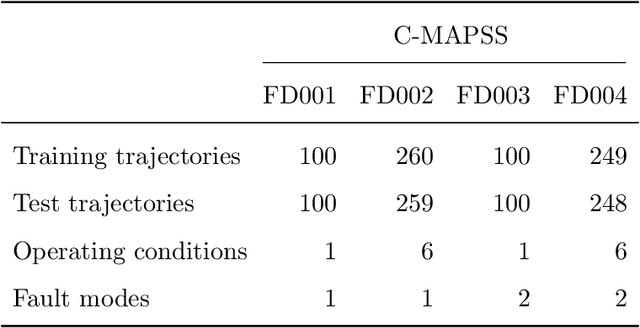
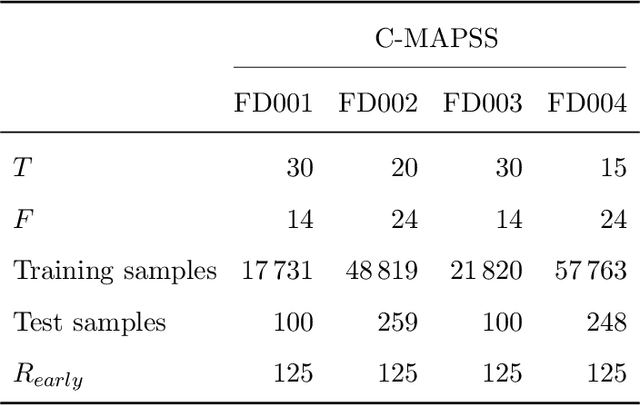
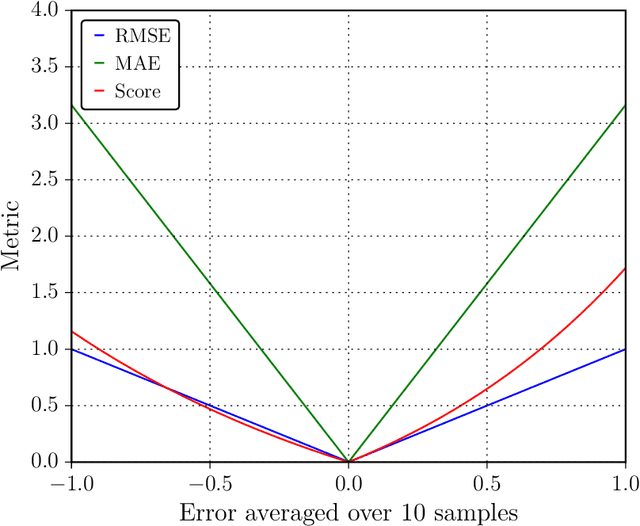
A crucial task in predictive maintenance is estimating the remaining useful life of physical systems. In the last decade, deep learning has improved considerably upon traditional model-based and statistical approaches in terms of predictive performance. However, in order to optimally plan maintenance operations, it is also important to quantify the uncertainty inherent to the predictions. This issue can be addressed by turning standard frequentist neural networks into Bayesian neural networks, which are naturally capable of providing confidence intervals around the estimates. Several methods exist for training those models. Researchers have focused mostly on parametric variational inference and sampling-based techniques, which notoriously suffer from limited approximation power and large computational burden, respectively. In this work, we use Stein variational gradient descent, a recently proposed algorithm for approximating intractable distributions that overcomes the drawbacks of the aforementioned techniques. In particular, we show through experimental studies on simulated run-to-failure turbofan engine degradation data that Bayesian deep learning models trained via Stein variational gradient descent consistently outperform with respect to convergence speed and predictive performance both the same models trained via parametric variational inference and their frequentist counterparts trained via backpropagation. Furthermore, we propose a method to enhance performance based on the uncertainty information provided by the Bayesian models. We release the source code at https://github.com/lucadellalib/bdl-rul-svgd.
Are LLMs Robust for Spoken Dialogues?
Jan 04, 2024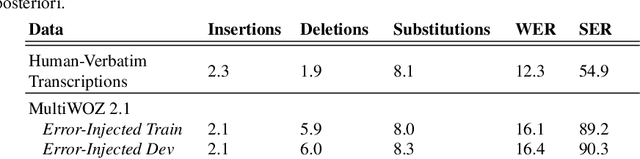
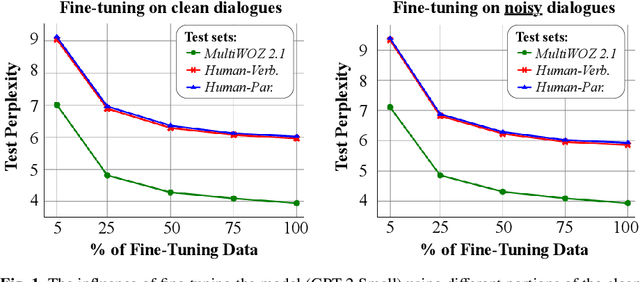
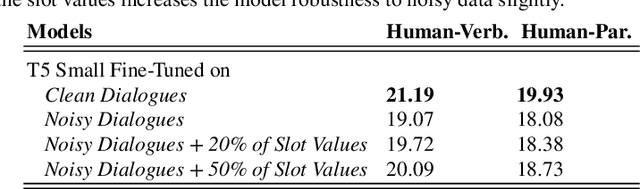
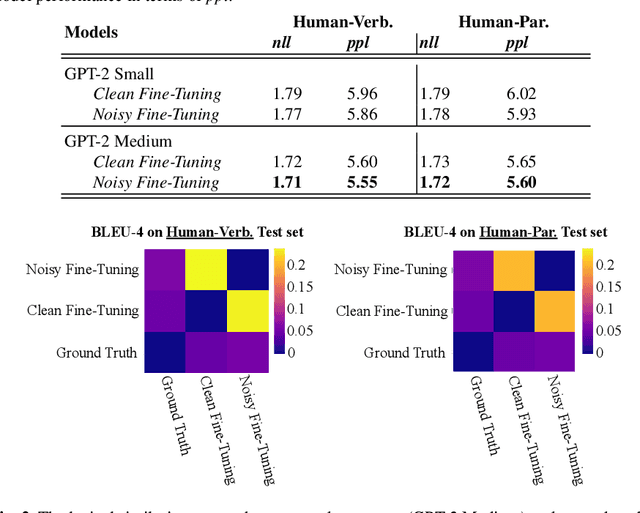
Large Pre-Trained Language Models have demonstrated state-of-the-art performance in different downstream tasks, including dialogue state tracking and end-to-end response generation. Nevertheless, most of the publicly available datasets and benchmarks on task-oriented dialogues focus on written conversations. Consequently, the robustness of the developed models to spoken interactions is unknown. In this work, we have evaluated the performance of LLMs for spoken task-oriented dialogues on the DSTC11 test sets. Due to the lack of proper spoken dialogue datasets, we have automatically transcribed a development set of spoken dialogues with a state-of-the-art ASR engine. We have characterized the ASR-error types and their distributions and simulated these errors in a large dataset of dialogues. We report the intrinsic (perplexity) and extrinsic (human evaluation) performance of fine-tuned GPT-2 and T5 models in two subtasks of response generation and dialogue state tracking, respectively. The results show that LLMs are not robust to spoken noise by default, however, fine-tuning/training such models on a proper dataset of spoken TODs can result in a more robust performance.
Parameter-Efficient Transfer Learning of Audio Spectrogram Transformers
Dec 07, 2023The common modus operandi of fine-tuning large pre-trained Transformer models entails the adaptation of all their parameters (i.e., full fine-tuning). While achieving striking results on multiple tasks, this approach becomes unfeasible as the model size and the number of downstream tasks increase. In natural language processing and computer vision, parameter-efficient approaches like prompt-tuning and adapters have emerged as solid alternatives by fine-tuning only a small number of extra parameters, without sacrificing performance accuracy. Specifically, adapters, due to their flexibility, have recently garnered significant attention, leading to several variants. For audio classification tasks, the Audio Spectrogram Transformer model shows impressive results. However, surprisingly, how to efficiently adapt it to several downstream tasks has not been tackled before. In this paper, we bridge this gap and present a detailed investigation of common parameter-efficient methods, revealing that adapters consistently outperform the other methods across four benchmarks. This trend is also confirmed in few-shot learning settings and when the total number of trainable parameters increases, demonstrating adapters superior scalability. We finally study the best adapter configuration, as well as the role of residual connections in the learning process.
TorchAudio 2.1: Advancing speech recognition, self-supervised learning, and audio processing components for PyTorch
Oct 27, 2023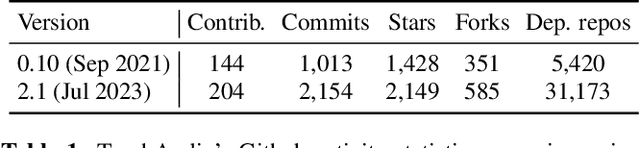
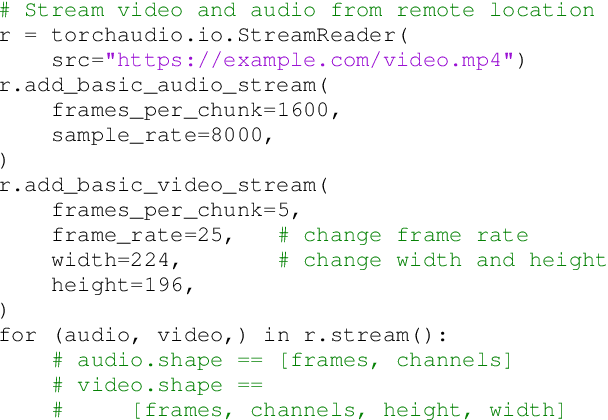

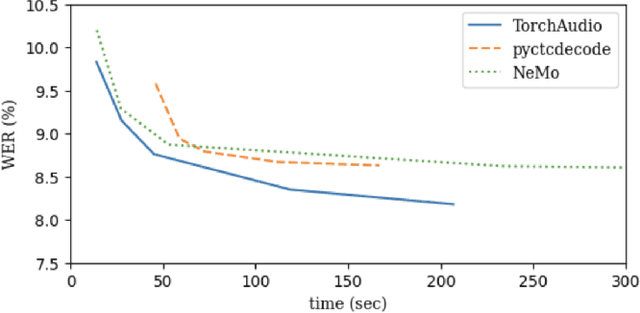
TorchAudio is an open-source audio and speech processing library built for PyTorch. It aims to accelerate the research and development of audio and speech technologies by providing well-designed, easy-to-use, and performant PyTorch components. Its contributors routinely engage with users to understand their needs and fulfill them by developing impactful features. Here, we survey TorchAudio's development principles and contents and highlight key features we include in its latest version (2.1): self-supervised learning pre-trained pipelines and training recipes, high-performance CTC decoders, speech recognition models and training recipes, advanced media I/O capabilities, and tools for performing forced alignment, multi-channel speech enhancement, and reference-less speech assessment. For a selection of these features, through empirical studies, we demonstrate their efficacy and show that they achieve competitive or state-of-the-art performance.
CL-MASR: A Continual Learning Benchmark for Multilingual ASR
Oct 25, 2023
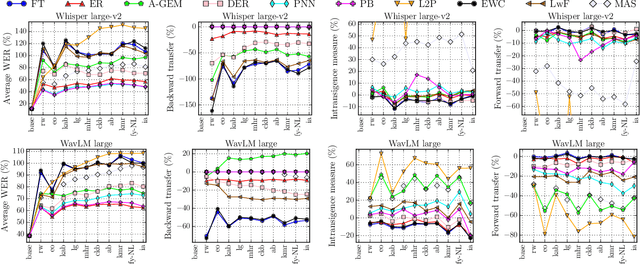
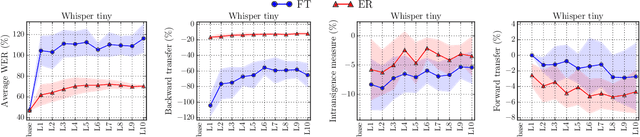
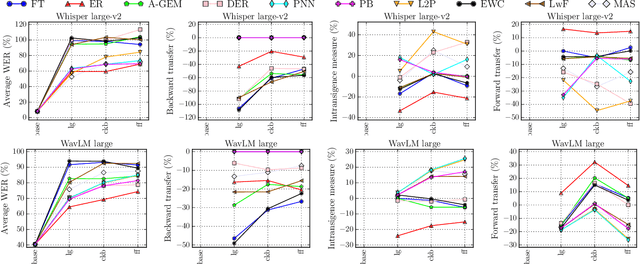
Modern multilingual automatic speech recognition (ASR) systems like Whisper have made it possible to transcribe audio in multiple languages with a single model. However, current state-of-the-art ASR models are typically evaluated on individual languages or in a multi-task setting, overlooking the challenge of continually learning new languages. There is insufficient research on how to add new languages without losing valuable information from previous data. Furthermore, existing continual learning benchmarks focus mostly on vision and language tasks, leaving continual learning for multilingual ASR largely unexplored. To bridge this gap, we propose CL-MASR, a benchmark designed for studying multilingual ASR in a continual learning setting. CL-MASR provides a diverse set of continual learning methods implemented on top of large-scale pretrained ASR models, along with common metrics to assess the effectiveness of learning new languages while addressing the issue of catastrophic forgetting. To the best of our knowledge, CL-MASR is the first continual learning benchmark for the multilingual ASR task. The code is available at https://github.com/speechbrain/benchmarks.