 Add to Chrome
 Add to Firefox
 Add to Edge
CAP: Towards PPG Universal Representation Learning with Patient-level Supervision
Jun 13, 2026
Photoplethysmography (PPG) plays a central role in wearable health monitoring and clinical decision support. Yet existing approaches to universal PPG representation learning largely focus on signal-level objectives and often overlook patient-level health context, which limits generalization to complex clinical tasks and heterogeneous cohorts. To address this gap, we construct a large-scale paired PPG-EHR multimodal dataset by distilling fragmented medical histories and clinical records into cohesive, patient-level electronic health records (EHR). Building on this resource, we propose Clinical Anchored Pretraining for PPG (CAP). During pretraining, CAP performs cross-modal contrastive alignment that anchors PPG representations to patient-level clinical semantics, guiding the encoder beyond waveform fitting toward modeling consistency in a patient's overall physiological state. During downstream adaptation, the pretrained PPG encoder provides clinically grounded representations that strengthen inductive bias and improve robustness and transferability. Experiments demonstrate that CAP consistently outperforms strong baselines on four diverse downstream tasks. CAP achieves a particularly large gain on respiratory rate prediction (up to +87.6% relative improvement over the state-of-the-art baseline) and delivers an average relative +26.7% across all tasks. We further enhance the interpretability of our approach through comprehensive analyses, including ablations and multiple complementary visualizations of the learned representations. The code for our experiments is available at: https://github.com/gody123gody/CAP .

Seedance 2.0: Advancing Video Generation for World Complexity
Apr 15, 2026Seedance 2.0 is a new native multi-modal audio-video generation model, officially released in China in early February 2026. Compared with its predecessors, Seedance 1.0 and 1.5 Pro, Seedance 2.0 adopts a unified, highly efficient, and large-scale architecture for multi-modal audio-video joint generation. This allows it to support four input modalities: text, image, audio, and video, by integrating one of the most comprehensive suites of multi-modal content reference and editing capabilities available in the industry to date. It delivers substantial, well-rounded improvements across all key sub-dimensions of video and audio generation. In both expert evaluations and public user tests, the model has demonstrated performance on par with the leading levels in the field. Seedance 2.0 supports direct generation of audio-video content with durations ranging from 4 to 15 seconds, with native output resolutions of 480p and 720p. For multi-modal inputs as reference, its current open platform supports up to 3 video clips, 9 images, and 3 audio clips. In addition, we provide Seedance 2.0 Fast version, an accelerated variant of Seedance 2.0 designed to boost generation speed for low-latency scenarios. Seedance 2.0 has delivered significant improvements to its foundational generation capabilities and multi-modal generation performance, bringing an enhanced creative experience for end users.
TransWorldNG: Traffic Simulation via Foundation Model
May 25, 2023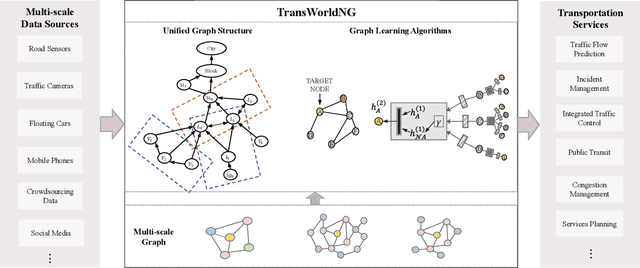
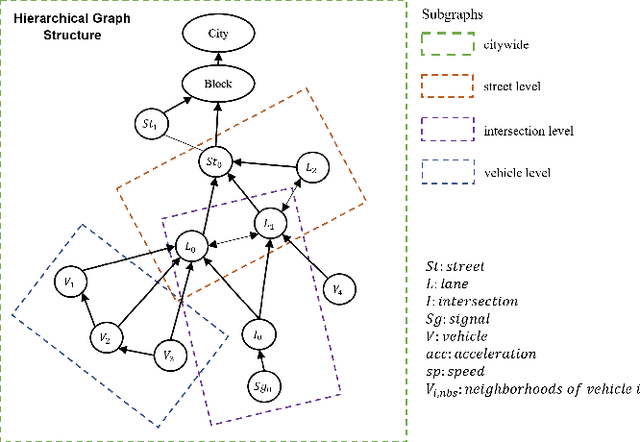
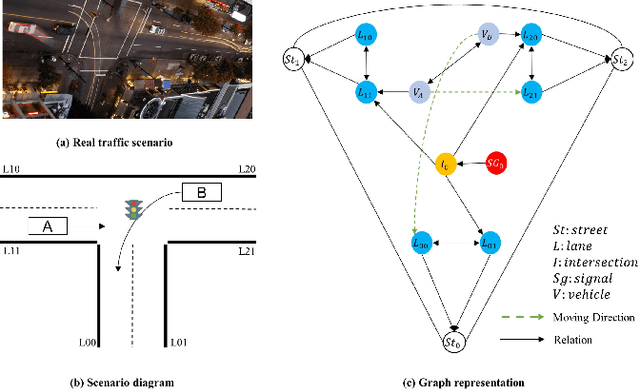
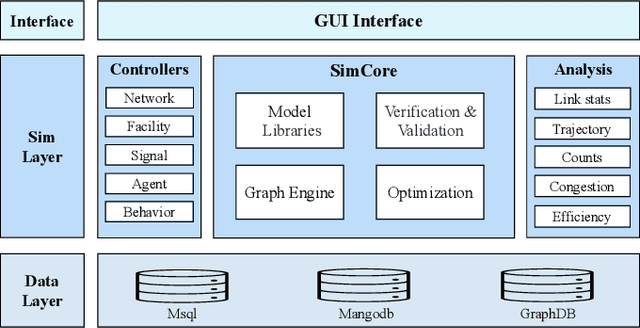
Traffic simulation is a crucial tool for transportation decision-making and policy development. However, achieving realistic simulations in the face of the high dimensionality and heterogeneity of traffic environments is a longstanding challenge. In this paper, we present TransWordNG, a traffic simulator that uses Data-driven algorithms and Graph Computing techniques to learn traffic dynamics from real data. The functionality and structure of TransWorldNG are introduced, which utilize a foundation model for transportation management and control. The results demonstrate that TransWorldNG can generate more realistic traffic patterns compared to traditional simulators. Additionally, TransWorldNG exhibits better scalability, as it shows linear growth in computation time as the scenario scale increases. To the best of our knowledge, this is the first traffic simulator that can automatically learn traffic patterns from real-world data and efficiently generate accurate and realistic traffic environments.