 Add to Chrome
 Add to Firefox
 Add to Edge
REACT: Environment-Adaptive Architecture for Continuous Formation Navigation of Wheeled Mobile Robots
May 18, 2026
Formation control of wheeled mobile robots (WMRs) has been extensively studied due to its broad applications in fields such as logistics transportation, environmental monitoring, and search and rescue. However, most existing works mainly focus on tracking predefined formations, which limits their adaptability to complex real-world environments. To address this, we propose REACT (Real-time Environment-Adaptive architecture for Continuous formation navigaTion), a hierarchical architecture integrating centralized formation generation and distributed formation maintenance. Specifically, our upper layer generates new environment-adaptive formations when necessary and uses our proposed TCF-R2T (Trajectory-Conflict-Free Robot-to-Target assignment) algorithm to compute conflict-free WMR-to-target assignments in polynomial time, enabling timely formation transitions without trajectory conflicts. At the lower layer, each WMR executes our developed JSTP (Joint Spatio-Temporal trajectory Planning) method to maintain the generated formation by simultaneously optimizing spatial positions and temporal durations, thereby enhancing coordination among WMRs and enabling continuous navigation in obstacle-rich environments and dynamic-obstacle scenarios. Both simulation and real-world experiments validate the effectiveness and practical applicability of REACT. Experimental videos are available on our project website: https://dongjh20.github.io/REACT-website.

From Optimizable to Interactable: Mixed Digital Twin-Empowered Testing of Vehicle-Infrastructure Cooperation Systems
Mar 19, 2026Sufficient testing under corner cases is critical for the long-term operation of vehicle-infrastructure cooperation systems (VICS). However, existing corner-case generation methods are primarily AI-driven, and VICS testing under corner cases is typically limited to simulation. In this paper, we introduce an L5 ''Interactable'' level to the VICS digital twin (VICS-DT) taxonomy, extending beyond the conventional L4 ''Optimizable'' level. We further propose an L5-level VICS testing framework, IMPACT (Interactive Mixed-digital-twin Paradigm for Advanced Cooperative vehicle-infrastructure Testing). By enabling direct human interactions with VICS entities, IMPACT incorporates highly uncertain and unpredictable human behaviors into the testing loop, naturally generating high-quality corner cases that complement AI-based methods. Furthermore, the mixedDT-enabled ''Physical-Virtual Action Interaction'' facilitates safe VICS testing under corner cases, incorporating real-world environments and entities rather than purely in simulation. Finally, we implement IMPACT on the I-VIT (Interactive Vehicle-Infrastructure Testbed), and experiments demonstrate its effectiveness. The experimental videos are available at our project website: https://dongjh20.github.io/IMPACT.
Multi-Source Human-in-the-Loop Digital Twin Testbed for Connected and Autonomous Vehicles in Mixed Traffic Flow
Mar 18, 2026In the emerging mixed traffic environments, Connected and Autonomous Vehicles (CAVs) have to interact with surrounding human-driven vehicles (HDVs). This paper introduces MSH-MCCT (Multi-Source Human-in-the-Loop Mixed Cloud Control Testbed), a novel CAV testbed that captures complex interactions between various CAVs and HDVs. Utilizing the Mixed Digital Twin concept, which combines Mixed Reality with Digital Twin, MSH-MCCT integrates physical, virtual, and mixed platforms, along with multi-source control inputs. Bridged by the mixed platform, MSH-MCCT allows human drivers and CAV algorithms to operate both physical and virtual vehicles within multiple fields of view. Particularly, this testbed facilitates the coexistence and real-time interaction of physical and virtual CAVs \& HDVs, significantly enhancing the experimental flexibility and scalability. Experiments on vehicle platooning in mixed traffic showcase the potential of MSH-MCCT to conduct CAV testing with multi-source real human drivers in the loop through driving simulators of diverse fidelity. The videos for the experiments are available at our project website: https://dongjh20.github.io/MSH-MCCT.
Small-Scale Testbeds for Connected and Automated Vehicles and Robot Swarms: Challenges and a Roadmap
Mar 07, 2025This article proposes a roadmap to address the current challenges in small-scale testbeds for Connected and Automated Vehicles (CAVs) and robot swarms. The roadmap is a joint effort of participants in the workshop "1st Workshop on Small-Scale Testbeds for Connected and Automated Vehicles and Robot Swarms," held on June 2 at the IEEE Intelligent Vehicles Symposium (IV) 2024 in Jeju, South Korea. The roadmap contains three parts: 1) enhancing accessibility and diversity, especially for underrepresented communities, 2) sharing best practices for the development and maintenance of testbeds, and 3) connecting testbeds through an abstraction layer to support collaboration. The workshop features eight invited speakers, four contributed papers [1]-[4], and a presentation of a survey paper on testbeds [5]. The survey paper provides an online comparative table of more than 25 testbeds, available at https://bassamlab.github.io/testbeds-survey. The workshop's own website is available at https://cpm-remote.lrt.unibwmuenchen.de/iv24-workshop.
Mixed Cloud Control Testbed: Validating Vehicle-Road-Cloud Integration via Mixed Digital Twin
Dec 05, 2022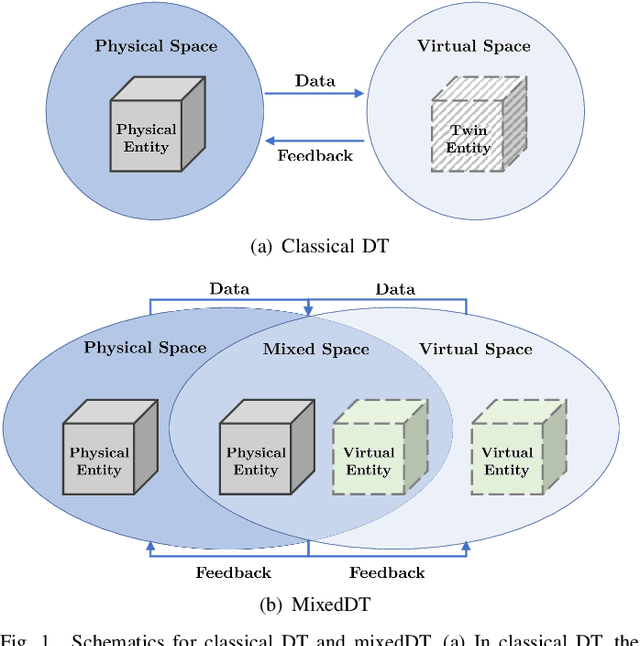
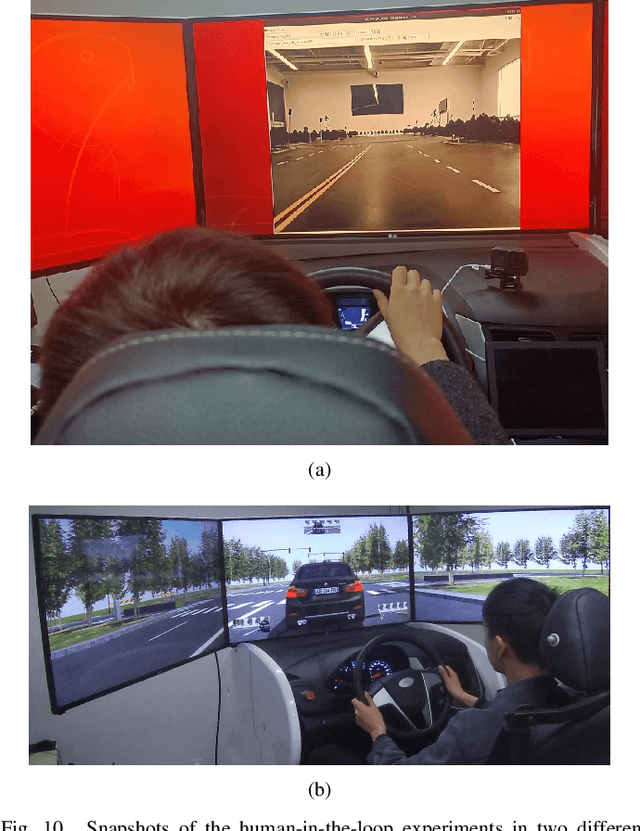
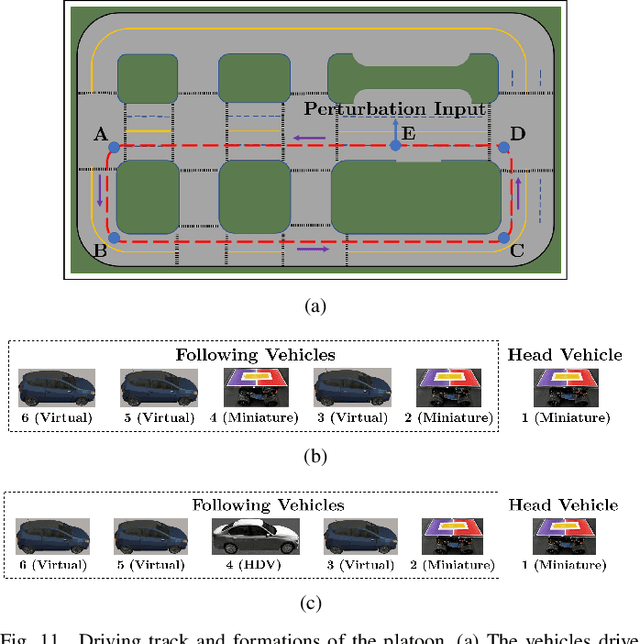

Reliable and efficient validation technologies are critical for the recent development of multi-vehicle cooperation and vehicle-road-cloud integration. In this paper, we introduce our miniature experimental platform, Mixed Cloud Control Testbed (MCCT), developed based on a new notion of Mixed Digital Twin (mixedDT). Combining Mixed Reality with Digital Twin, mixedDT integrates the virtual and physical spaces into a mixed one, where physical entities coexist and interact with virtual entities via their digital counterparts. Under the framework of mixedDT, MCCT contains three major experimental platforms in the physical, virtual and mixed spaces respectively, and provides a unified access for various human-machine interfaces and external devices such as driving simulators. A cloud unit, where the mixed experimental platform is deployed, is responsible for fusing multi-platform information and assigning control instructions, contributing to synchronous operation and real-time cross-platform interaction. Particularly, MCCT allows for multi-vehicle coordination composed of different multi-source vehicles (\eg, physical vehicles, virtual vehicles and human-driven vehicles). Validations on vehicle platooning demonstrate the flexibility and scalability of MCCT.
Conflict-free Cooperation Method for Connected and Automated Vehicles at Unsignalized Intersections: Graph-based Modeling and Optimality Analysis
Jul 15, 2021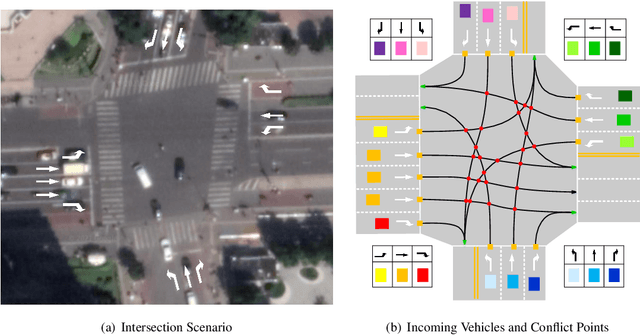
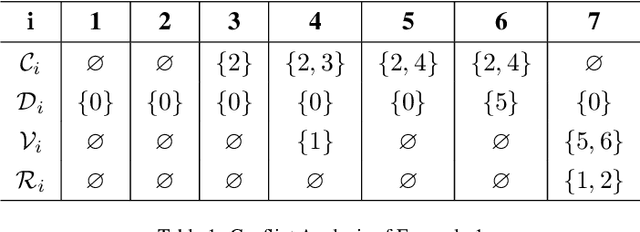
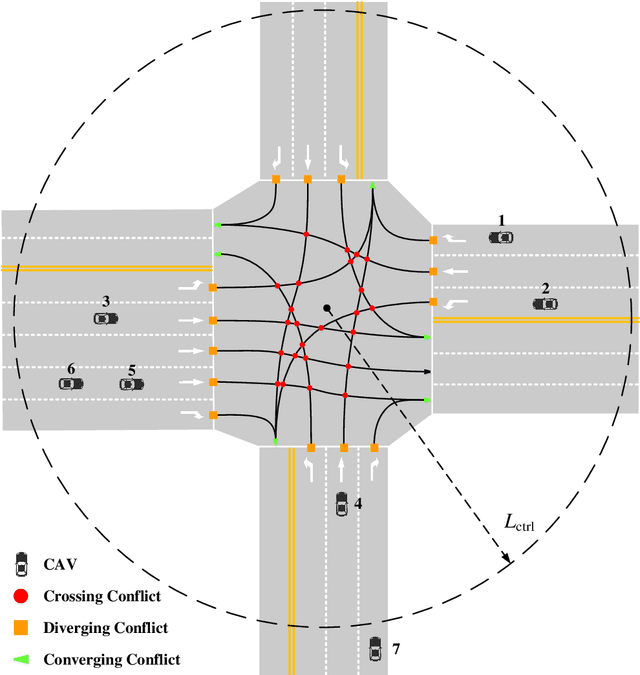

Connected and automated vehicles have shown great potential in improving traffic mobility and reducing emissions, especially at unsignalized intersections. Previous research has shown that vehicle passing order is the key influencing factor in improving intersection traffic mobility. In this paper, we propose a graph-based cooperation method to formalize the conflict-free scheduling problem at an unsignalized intersection. Based on graphical analysis, a vehicle's trajectory conflict relationship is modeled as a conflict directed graph and a coexisting undirected graph. Then, two graph-based methods are proposed to find the vehicle passing order. The first is an improved depth-first spanning tree algorithm, which aims to find the local optimal passing order vehicle by vehicle. The other novel method is a minimum clique cover algorithm, which identifies the global optimal solution. Finally, a distributed control framework and communication topology are presented to realize the conflict-free cooperation of vehicles. Extensive numerical simulations are conducted for various numbers of vehicles and traffic volumes, and the simulation results prove the effectiveness of the proposed algorithms.
Formation Control with Lane Preference for Connected and Automated Vehicles in Multi-lane Scenarios
Jun 18, 2021
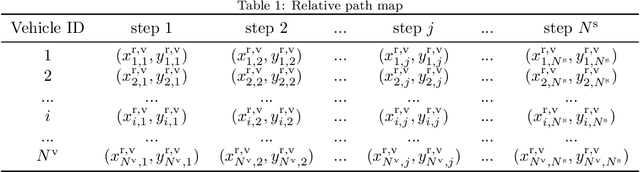
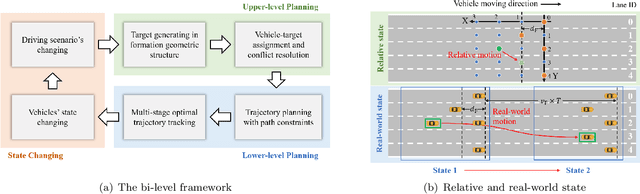
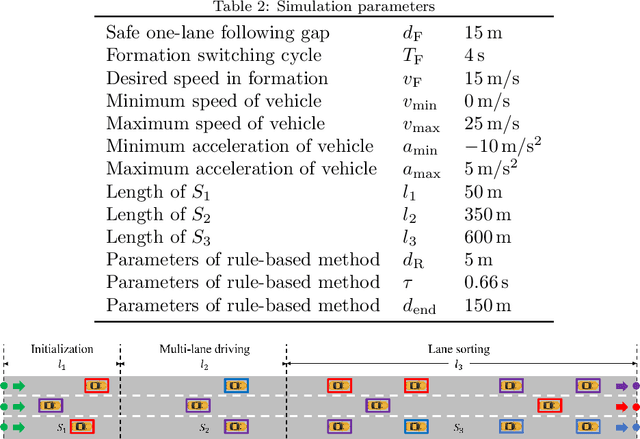
Multi-lane roads are typical scenarios in the real-world traffic system. Vehicles usually have preference on lanes according to their routes and destinations. Few of the existing studies looks into the problem of controlling vehicles to drive on their desired lanes. This paper proposes a formation control method that considers vehicles' preference on different lanes. The bi-level formation control framework is utilized to plan collision-free motion for vehicles, where relative target assignment and path planning are performed in the upper level, and trajectory planning and tracking are performed in the lower level. The collision-free multi-vehicle path planning problem considering lane preference is decoupled into two sub problems: calculating assignment list with non-decreasing cost and planning collision-free paths according to given assignment result. The Conflict-based Searching (CBS) method is utilized to plan collision-free paths for vehicles based on given assignment results. Case study is conducted and simulations are carried out in a three-lane road scenario. The results indicate that the proposed formation control method significantly reduces congestion and improves traffic efficiency at high traffic volumes, compared to the rule-based method.