 Add to Chrome
 Add to Firefox
 Add to Edge
HarMoE: Multi-Source Chest Radiograph Pretraining with Dataset-Disentangled Experts
Aug 03, 2026
Recent vision-language models for chest X-ray understanding are largely built on image-report alignment and therefore rely heavily on MIMIC-CXR as the dominant pretraining source. While effective at scale, this paradigm underexplores an important alternative source of supervision: a range of existing multi-label classification datasets, which provide cleaner and more explicit disease signals than free-text reports, and can offer broader pathology coverage when combined across sources. However, learning from such heterogeneous datasets is nontrivial, as differences in label ontologies, annotation protocols, acquisition pipelines, and report styles can cause models to entangle clinical semantics with dataset identity, leading to poor transfer despite increased scale. In this work, we revisit radiology VLM construction from the perspective of harmonized multi-source learning. We propose HarMoE, a dataset-aware mixture-of-experts framework that learns shared cross-dataset medical semantics while confining source-specific variation to lightweight residual experts in deeper decoder layers. To further exploit clean supervision from labeled datasets, we train in a unified disease vocabulary with masked multi-dataset supervision, enabling the model to leverage complementary annotations without introducing false negatives. Experiments on large-scale chest X-ray benchmarks show that HarMoE consistently improves zero-shot classification, out-of-distribution transfer, and grounding over strong baselines. Our results suggest that building robust radiology VLMs requires moving beyond single-source image-report alignment toward structured knowledge construction from heterogeneous datasets with cleaner supervision and broader coverage. Code and the 873k harmonized dataset will be released at https://github.com/Roypic/harmoe.

EnTrust: Modeling Inter-Modal Conflict for Trustworthy Multimodal Medical Image Analysis
Jun 19, 2026Multimodal medical imaging fuses complementary anatomical and functional information, yet modalities frequently disagree in pathologically heterogeneous regions. Current segmentation models handle this in one of two inadequate ways: deterministic fusion that averages away disagreement, or post-hoc uncertainty estimation decoupled from the fusion process that produces it. Both obscure the clinically critical question: why is this prediction unreliable? We present EnTrust, a framework that treats inter-modal conflict as the primary source of predictive uncertainty. Our EnFuse module decomposes multimodal features into three disentangled components: shared anatomical consensus (F_c), modality-specific cues (F_{u,m}), and spatially localized conflict signals (F_{cf}), with independence enforced via a cross-covariance objective. This structured decomposition conditions SegDiff, a diffusion-based generative segmentation model whose sampled hypotheses diverge specifically in regions of modal disagreement. TrustMap then translates this hypothesis divergence into calibrated, pixel-wise uncertainty using ensemble entropy, conflict-guided perturbation probing, and a learned calibration head, enabling clinicians to understand not only where predictions are uncertain, but why. Across four benchmarks spanning brain, cardiac, lesion, and oncology domains, EnTrust achieves state-of-the-art segmentation accuracy while reducing calibration error by 40% compared to the strongest baseline. Notably, it outperforms 5x deep ensembles using a single model at roughly half the memory footprint. Code and checkpoints are available at https://github.com/GenMI-Lab/EnTrust.git.
KEPIL: Knowledge-Enhanced Prompt-Image Learning for Prompt-Robust Disease Detection
May 09, 2026Vision--language models (VLMs) show promise for clinical decision support in radiology because they enable joint reasoning over radiological images and clinical text, thereby leveraging complementary clinical information. However, radiological findings are long-tailed in practice, leaving some conditions underrepresented and making zero-shot inference essential. Yet current CLIP-style medical VLMs are sensitive to prompt variations and often lack trustworthy external knowledge at inference time, which hinders reliable clinical deployment. We present \textit{KEPIL}, a prompt-robust framework that integrates curated medical knowledge to stabilize zero-shot generalization. KEPIL comprises: (i) \emph{dynamic prompt enrichment} using ontologies with LLM assistance, (ii) a \emph{semantic-aware contrastive loss} aligning embeddings of equivalent prompt variants via a dual-embedding objective, and (iii) \emph{entity-centric report standardization} to yield ontology-aligned representations. Across seven benchmarks, KEPIL achieves state-of-the-art zero-shot inference performance; under prompt-variation tests, it improves AUC by \(6.37\%\) on \textit{CheXpert} and by \(4.11\%\) on average. These results suggest that structured knowledge and robust prompt design are key to clinically reliable radiology-facing VLMs. Code will be released at https://github.com/Roypic/KEPIL.
Grounding Clinical AI Competency in Human Cognition Through the Clinical World Model and Skill-Mix Framework
Apr 09, 2026The competency of any intelligent agent is bounded by its formal account of the world in which it operates. Clinical AI lacks such an account. Existing frameworks address evaluation, regulation, or system design in isolation, without a shared model of the clinical world to connect them. We introduce the Clinical World Model, a framework that formalizes care as a tripartite interaction among Patient, Provider, and Ecosystem. To formalize how any agent, whether human or artificial, transforms information into clinical action, we develop parallel decision-making architectures for providers, patients, and AI agents, grounded in validated principles of clinical cognition. The Clinical AI Skill-Mix operationalizes competency through eight dimensions. Five define the clinical competency space (condition, phase, care setting, provider role, and task) and three specify how AI engages human reasoning (assigned authority, agent facing, and anchoring layer). The combinatorial product of these dimensions yields a space of billions of distinct competency coordinates. A central structural implication is that validation within one coordinate provides minimal evidence for performance in another, rendering the competency space irreducible. The framework supplies a common grammar through which clinical AI can be specified, evaluated, and bounded across stakeholders. By making this structure explicit, the Clinical World Model reframes the field's central question from whether AI works to in which competency coordinates reliability has been demonstrated, and for whom.
Hybrid Explanation-Guided Learning for Transformer-Based Chest X-Ray Diagnosis
Oct 14, 2025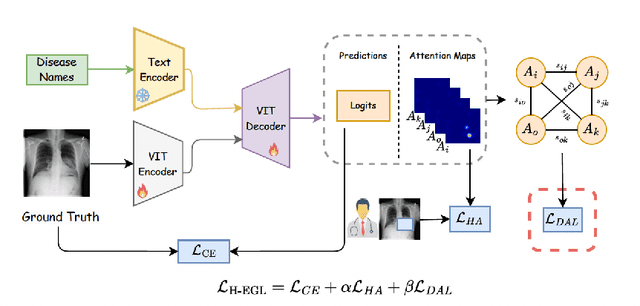
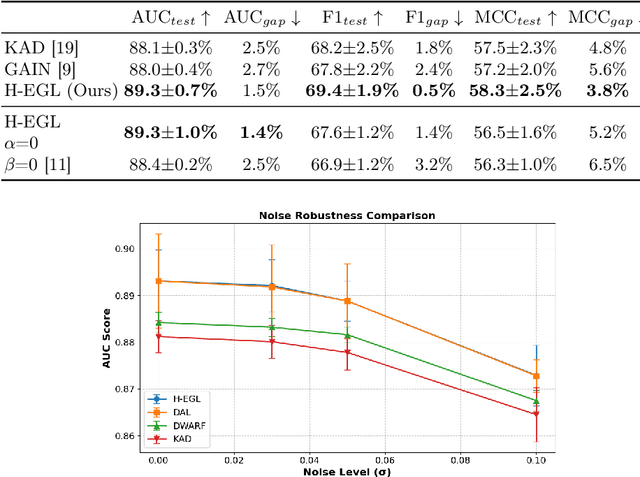
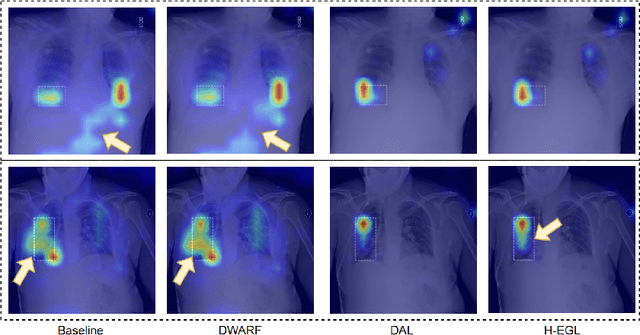
Transformer-based deep learning models have demonstrated exceptional performance in medical imaging by leveraging attention mechanisms for feature representation and interpretability. However, these models are prone to learning spurious correlations, leading to biases and limited generalization. While human-AI attention alignment can mitigate these issues, it often depends on costly manual supervision. In this work, we propose a Hybrid Explanation-Guided Learning (H-EGL) framework that combines self-supervised and human-guided constraints to enhance attention alignment and improve generalization. The self-supervised component of H-EGL leverages class-distinctive attention without relying on restrictive priors, promoting robustness and flexibility. We validate our approach on chest X-ray classification using the Vision Transformer (ViT), where H-EGL outperforms two state-of-the-art Explanation-Guided Learning (EGL) methods, demonstrating superior classification accuracy and generalization capability. Additionally, it produces attention maps that are better aligned with human expertise.
On the Interplay of Human-AI Alignment,Fairness, and Performance Trade-offs in Medical Imaging
May 15, 2025Deep neural networks excel in medical imaging but remain prone to biases, leading to fairness gaps across demographic groups. We provide the first systematic exploration of Human-AI alignment and fairness in this domain. Our results show that incorporating human insights consistently reduces fairness gaps and enhances out-of-domain generalization, though excessive alignment can introduce performance trade-offs, emphasizing the need for calibrated strategies. These findings highlight Human-AI alignment as a promising approach for developing fair, robust, and generalizable medical AI systems, striking a balance between expert guidance and automated efficiency. Our code is available at https://github.com/Roypic/Aligner.
From Claims to Evidence: A Unified Framework and Critical Analysis of CNN vs. Transformer vs. Mamba in Medical Image Segmentation
Mar 03, 2025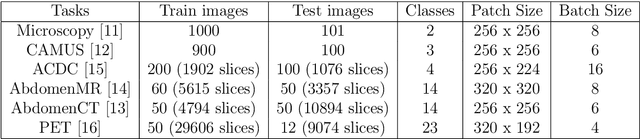
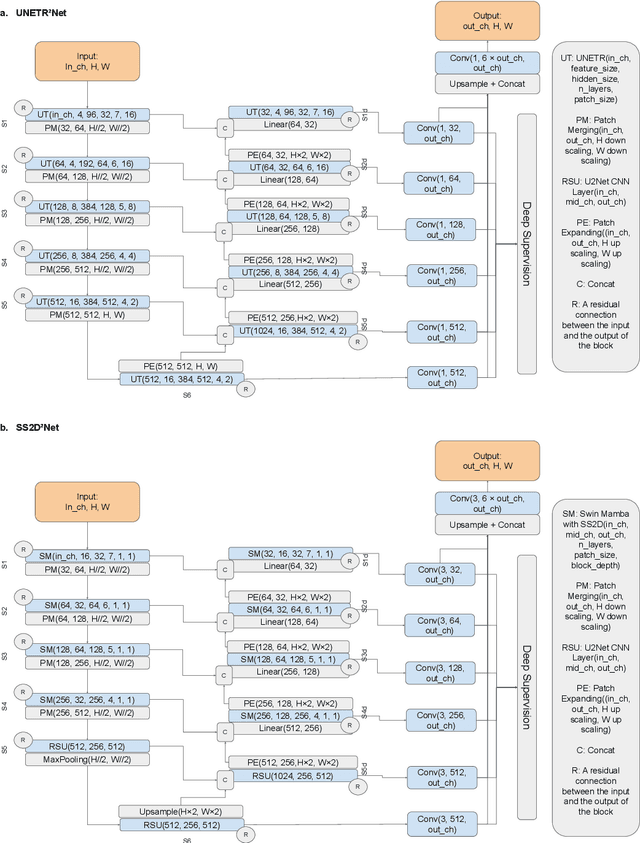
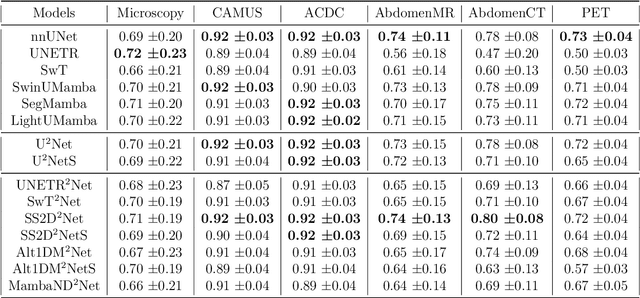
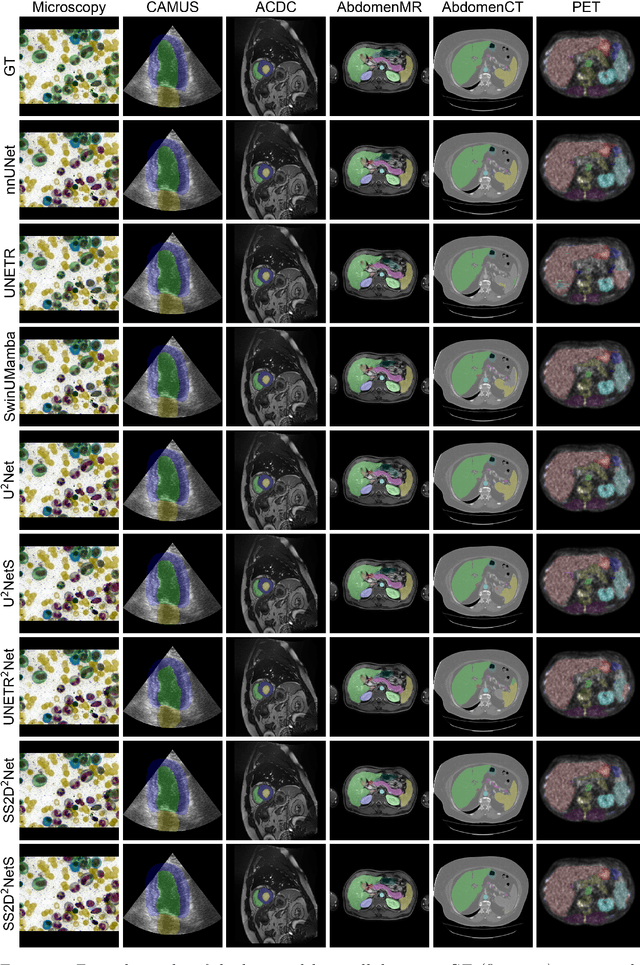
While numerous architectures for medical image segmentation have been proposed, achieving competitive performance with state-of-the-art models networks such as nnUNet, still leave room for further innovation. In this work, we introduce nnUZoo, an open source benchmarking framework built upon nnUNet, which incorporates various deep learning architectures, including CNNs, Transformers, and Mamba-based models. Using this framework, we provide a fair comparison to demystify performance claims across different medical image segmentation tasks. Additionally, in an effort to enrich the benchmarking, we explored five new architectures based on Mamba and Transformers, collectively named X2Net, and integrated them into nnUZoo for further evaluation. The proposed models combine the features of conventional U2Net, nnUNet, CNN, Transformer, and Mamba layers and architectures, called X2Net (UNETR2Net (UNETR), SwT2Net (SwinTransformer), SS2D2Net (SwinUMamba), Alt1DM2Net (LightUMamba), and MambaND2Net (MambaND)). We extensively evaluate the performance of different models on six diverse medical image segmentation datasets, including microscopy, ultrasound, CT, MRI, and PET, covering various body parts, organs, and labels. We compare their performance, in terms of dice score and computational efficiency, against their baseline models, U2Net, and nnUNet. CNN models like nnUNet and U2Net demonstrated both speed and accuracy, making them effective choices for medical image segmentation tasks. Transformer-based models, while promising for certain imaging modalities, exhibited high computational costs. Proposed Mamba-based X2Net architecture (SS2D2Net) achieved competitive accuracy with no significantly difference from nnUNet and U2Net, while using fewer parameters. However, they required significantly longer training time, highlighting a trade-off between model efficiency and computational cost.
In the Picture: Medical Imaging Datasets, Artifacts, and their Living Review
Jan 18, 2025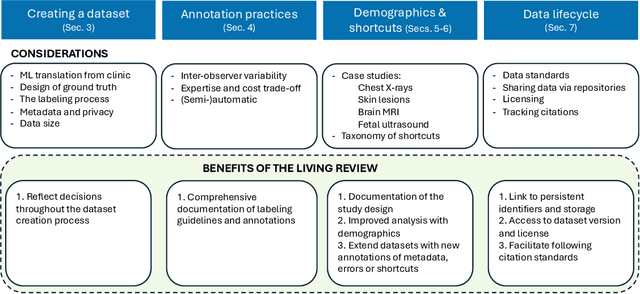


Datasets play a critical role in medical imaging research, yet issues such as label quality, shortcuts, and metadata are often overlooked. This lack of attention may harm the generalizability of algorithms and, consequently, negatively impact patient outcomes. While existing medical imaging literature reviews mostly focus on machine learning (ML) methods, with only a few focusing on datasets for specific applications, these reviews remain static -- they are published once and not updated thereafter. This fails to account for emerging evidence, such as biases, shortcuts, and additional annotations that other researchers may contribute after the dataset is published. We refer to these newly discovered findings of datasets as research artifacts. To address this gap, we propose a living review that continuously tracks public datasets and their associated research artifacts across multiple medical imaging applications. Our approach includes a framework for the living review to monitor data documentation artifacts, and an SQL database to visualize the citation relationships between research artifact and dataset. Lastly, we discuss key considerations for creating medical imaging datasets, review best practices for data annotation, discuss the significance of shortcuts and demographic diversity, and emphasize the importance of managing datasets throughout their entire lifecycle. Our demo is publicly available at http://130.226.140.142.
ISLES 2024: The first longitudinal multimodal multi-center real-world dataset in (sub-)acute stroke
Aug 20, 2024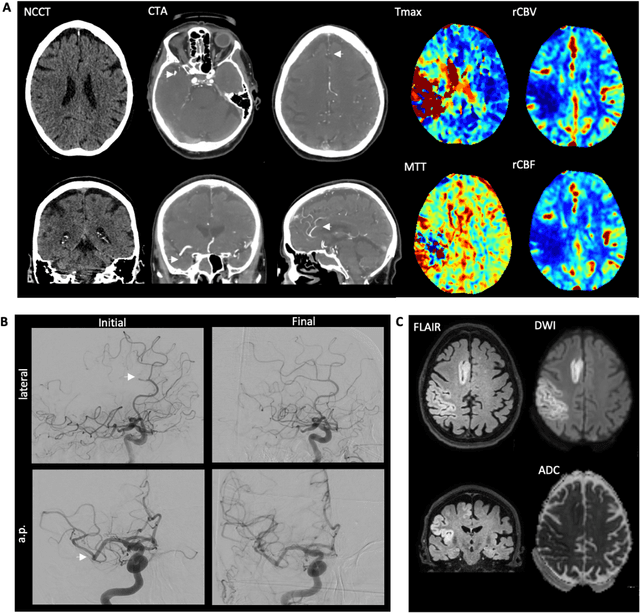
Stroke remains a leading cause of global morbidity and mortality, placing a heavy socioeconomic burden. Over the past decade, advances in endovascular reperfusion therapy and the use of CT and MRI imaging for treatment guidance have significantly improved patient outcomes and are now standard in clinical practice. To develop machine learning algorithms that can extract meaningful and reproducible models of brain function for both clinical and research purposes from stroke images - particularly for lesion identification, brain health quantification, and prognosis - large, diverse, and well-annotated public datasets are essential. While only a few datasets with (sub-)acute stroke data were previously available, several large, high-quality datasets have recently been made publicly accessible. However, these existing datasets include only MRI data. In contrast, our dataset is the first to offer comprehensive longitudinal stroke data, including acute CT imaging with angiography and perfusion, follow-up MRI at 2-9 days, as well as acute and longitudinal clinical data up to a three-month outcome. The dataset includes a training dataset of n = 150 and a test dataset of n = 100 scans. Training data is publicly available, while test data will be used exclusively for model validation. We are making this dataset available as part of the 2024 edition of the Ischemic Stroke Lesion Segmentation (ISLES) challenge (https://www.isles-challenge.org/), which continuously aims to establish benchmark methods for acute and sub-acute ischemic stroke lesion segmentation, aiding in creating open stroke imaging datasets and evaluating cutting-edge image processing algorithms.
ISLES'24: Improving final infarct prediction in ischemic stroke using multimodal imaging and clinical data
Aug 20, 2024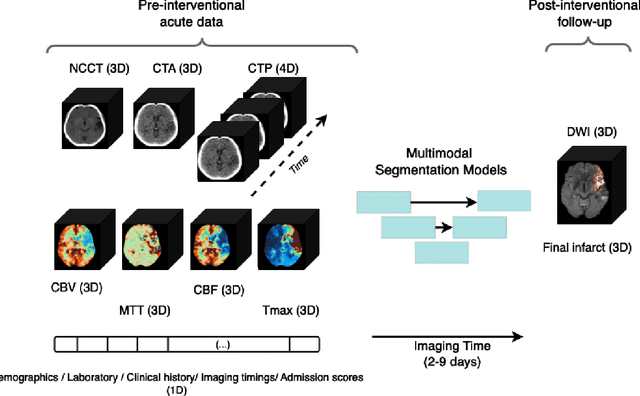
Accurate estimation of core (irreversibly damaged tissue) and penumbra (salvageable tissue) volumes is essential for ischemic stroke treatment decisions. Perfusion CT, the clinical standard, estimates these volumes but is affected by variations in deconvolution algorithms, implementations, and thresholds. Core tissue expands over time, with growth rates influenced by thrombus location, collateral circulation, and inherent patient-specific factors. Understanding this tissue growth is crucial for determining the need to transfer patients to comprehensive stroke centers, predicting the benefits of additional reperfusion attempts during mechanical thrombectomy, and forecasting final clinical outcomes. This work presents the ISLES'24 challenge, which addresses final post-treatment stroke infarct prediction from pre-interventional acute stroke imaging and clinical data. ISLES'24 establishes a unique 360-degree setting where all feasibly accessible clinical data are available for participants, including full CT acute stroke imaging, sub-acute follow-up MRI, and clinical tabular data. The contributions of this work are two-fold: first, we introduce a standardized benchmarking of final stroke infarct segmentation algorithms through the ISLES'24 challenge; second, we provide insights into infarct segmentation using multimodal imaging and clinical data strategies by identifying outperforming methods on a finely curated dataset. The outputs of this challenge are anticipated to enhance clinical decision-making and improve patient outcome predictions. All ISLES'24 materials, including data, performance evaluation scripts, and leading algorithmic strategies, are available to the research community following \url{https://isles-24.grand-challenge.org/}.