 Add to Chrome
 Add to Firefox
 Add to Edge
KEPIL: Knowledge-Enhanced Prompt-Image Learning for Prompt-Robust Disease Detection
May 09, 2026
Vision--language models (VLMs) show promise for clinical decision support in radiology because they enable joint reasoning over radiological images and clinical text, thereby leveraging complementary clinical information. However, radiological findings are long-tailed in practice, leaving some conditions underrepresented and making zero-shot inference essential. Yet current CLIP-style medical VLMs are sensitive to prompt variations and often lack trustworthy external knowledge at inference time, which hinders reliable clinical deployment. We present \textit{KEPIL}, a prompt-robust framework that integrates curated medical knowledge to stabilize zero-shot generalization. KEPIL comprises: (i) \emph{dynamic prompt enrichment} using ontologies with LLM assistance, (ii) a \emph{semantic-aware contrastive loss} aligning embeddings of equivalent prompt variants via a dual-embedding objective, and (iii) \emph{entity-centric report standardization} to yield ontology-aligned representations. Across seven benchmarks, KEPIL achieves state-of-the-art zero-shot inference performance; under prompt-variation tests, it improves AUC by \(6.37\%\) on \textit{CheXpert} and by \(4.11\%\) on average. These results suggest that structured knowledge and robust prompt design are key to clinically reliable radiology-facing VLMs. Code will be released at https://github.com/Roypic/KEPIL.

Hybrid Explanation-Guided Learning for Transformer-Based Chest X-Ray Diagnosis
Oct 14, 2025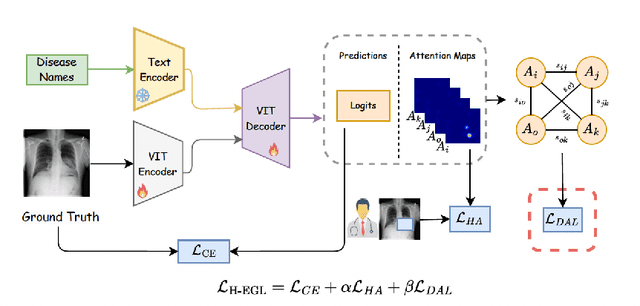
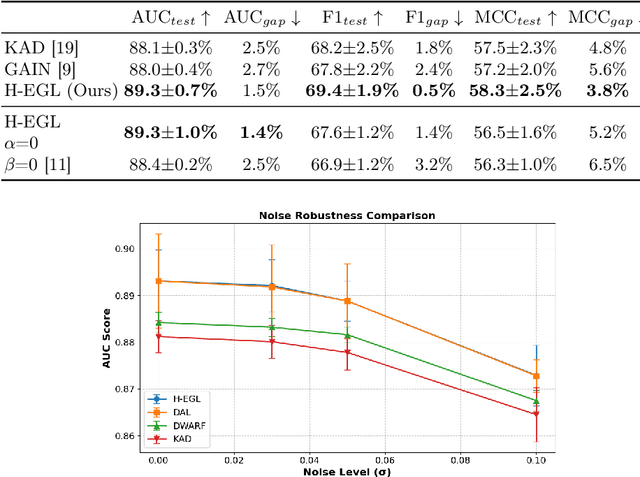
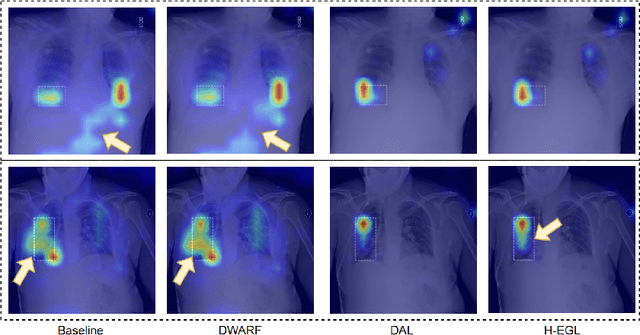
Transformer-based deep learning models have demonstrated exceptional performance in medical imaging by leveraging attention mechanisms for feature representation and interpretability. However, these models are prone to learning spurious correlations, leading to biases and limited generalization. While human-AI attention alignment can mitigate these issues, it often depends on costly manual supervision. In this work, we propose a Hybrid Explanation-Guided Learning (H-EGL) framework that combines self-supervised and human-guided constraints to enhance attention alignment and improve generalization. The self-supervised component of H-EGL leverages class-distinctive attention without relying on restrictive priors, promoting robustness and flexibility. We validate our approach on chest X-ray classification using the Vision Transformer (ViT), where H-EGL outperforms two state-of-the-art Explanation-Guided Learning (EGL) methods, demonstrating superior classification accuracy and generalization capability. Additionally, it produces attention maps that are better aligned with human expertise.