 Add to Chrome
 Add to Firefox
 Add to Edge
Episodic Multi-Task Learning with Heterogeneous Neural Processes
Oct 28, 2023
This paper focuses on the data-insufficiency problem in multi-task learning within an episodic training setup. Specifically, we explore the potential of heterogeneous information across tasks and meta-knowledge among episodes to effectively tackle each task with limited data. Existing meta-learning methods often fail to take advantage of crucial heterogeneous information in a single episode, while multi-task learning models neglect reusing experience from earlier episodes. To address the problem of insufficient data, we develop Heterogeneous Neural Processes (HNPs) for the episodic multi-task setup. Within the framework of hierarchical Bayes, HNPs effectively capitalize on prior experiences as meta-knowledge and capture task-relatedness among heterogeneous tasks, mitigating data-insufficiency. Meanwhile, transformer-structured inference modules are designed to enable efficient inferences toward meta-knowledge and task-relatedness. In this way, HNPs can learn more powerful functional priors for adapting to novel heterogeneous tasks in each meta-test episode. Experimental results show the superior performance of the proposed HNPs over typical baselines, and ablation studies verify the effectiveness of the designed inference modules.

Small Visual Language Models can also be Open-Ended Few-Shot Learners
Sep 30, 2023We present Self-Context Adaptation (SeCAt), a self-supervised approach that unlocks open-ended few-shot abilities of small visual language models. Our proposed adaptation algorithm explicitly learns from symbolic, yet self-supervised training tasks. Specifically, our approach imitates image captions in a self-supervised way based on clustering a large pool of images followed by assigning semantically-unrelated names to clusters. By doing so, we construct the `self-context', a training signal consisting of interleaved sequences of image and pseudo-caption pairs and a query image for which the model is trained to produce the right pseudo-caption. We demonstrate the performance and flexibility of SeCAt on several multimodal few-shot datasets, spanning various granularities. By using models with approximately 1B parameters we outperform the few-shot abilities of much larger models, such as Frozen and FROMAGe. SeCAt opens new possibilities for research in open-ended few-shot learning that otherwise requires access to large or proprietary models.
Prototype-Enhanced Hypergraph Learning for Heterogeneous Information Networks
Sep 22, 2023The variety and complexity of relations in multimedia data lead to Heterogeneous Information Networks (HINs). Capturing the semantics from such networks requires approaches capable of utilizing the full richness of the HINs. Existing methods for modeling HINs employ techniques originally designed for graph neural networks, and HINs decomposition analysis, like using manually predefined metapaths. In this paper, we introduce a novel prototype-enhanced hypergraph learning approach for node classification in HINs. Using hypergraphs instead of graphs, our method captures higher-order relationships among nodes and extracts semantic information without relying on metapaths. Our method leverages the power of prototypes to improve the robustness of the hypergraph learning process and creates the potential to provide human-interpretable insights into the underlying network structure. Extensive experiments on three real-world HINs demonstrate the effectiveness of our method.
ProtoExplorer: Interpretable Forensic Analysis of Deepfake Videos using Prototype Exploration and Refinement
Sep 20, 2023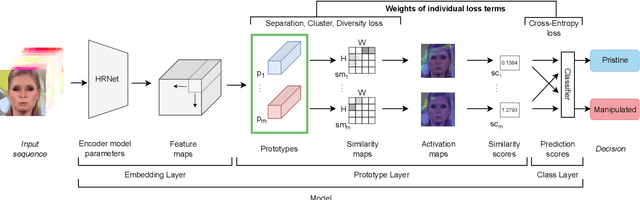
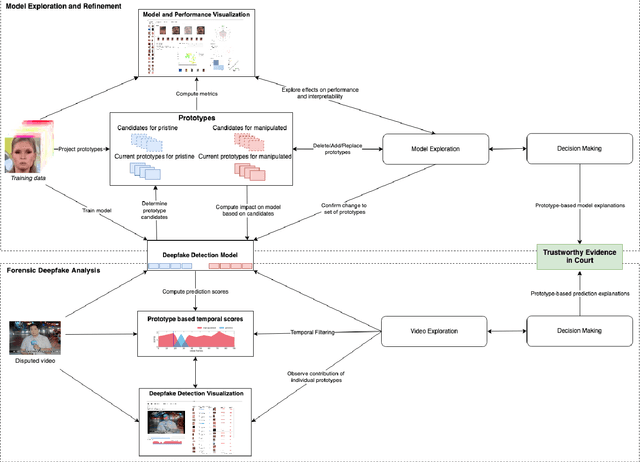
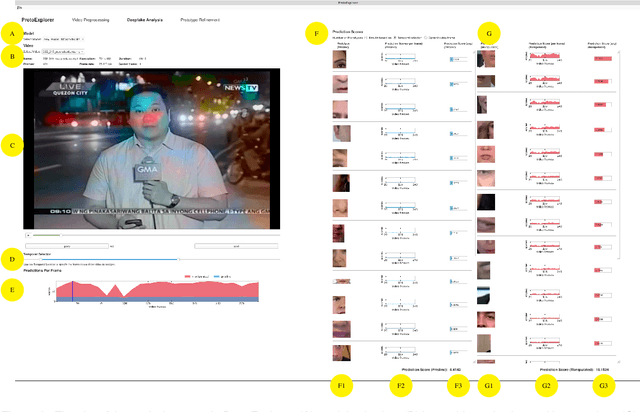

In high-stakes settings, Machine Learning models that can provide predictions that are interpretable for humans are crucial. This is even more true with the advent of complex deep learning based models with a huge number of tunable parameters. Recently, prototype-based methods have emerged as a promising approach to make deep learning interpretable. We particularly focus on the analysis of deepfake videos in a forensics context. Although prototype-based methods have been introduced for the detection of deepfake videos, their use in real-world scenarios still presents major challenges, in that prototypes tend to be overly similar and interpretability varies between prototypes. This paper proposes a Visual Analytics process model for prototype learning, and, based on this, presents ProtoExplorer, a Visual Analytics system for the exploration and refinement of prototype-based deepfake detection models. ProtoExplorer offers tools for visualizing and temporally filtering prototype-based predictions when working with video data. It disentangles the complexity of working with spatio-temporal prototypes, facilitating their visualization. It further enables the refinement of models by interactively deleting and replacing prototypes with the aim to achieve more interpretable and less biased predictions while preserving detection accuracy. The system was designed with forensic experts and evaluated in a number of rounds based on both open-ended think aloud evaluation and interviews. These sessions have confirmed the strength of our prototype based exploration of deepfake videos while they provided the feedback needed to continuously improve the system.
Knowledge Graph Embeddings for Multi-Lingual Structured Representations of Radiology Reports
Sep 14, 2023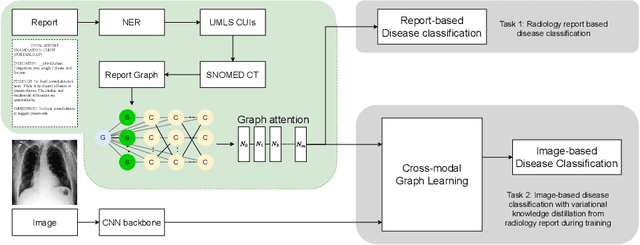
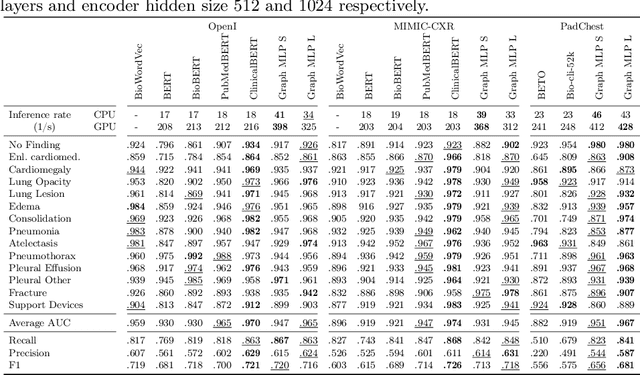

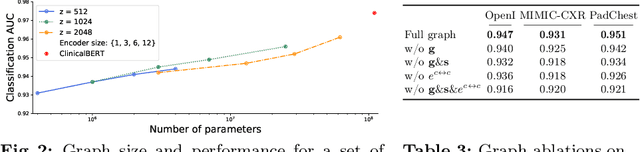
The way we analyse clinical texts has undergone major changes over the last years. The introduction of language models such as BERT led to adaptations for the (bio)medical domain like PubMedBERT and ClinicalBERT. These models rely on large databases of archived medical documents. While performing well in terms of accuracy, both the lack of interpretability and limitations to transfer across languages limit their use in clinical setting. We introduce a novel light-weight graph-based embedding method specifically catering radiology reports. It takes into account the structure and composition of the report, while also connecting medical terms in the report through the multi-lingual SNOMED Clinical Terms knowledge base. The resulting graph embedding uncovers the underlying relationships among clinical terms, achieving a representation that is better understandable for clinicians and clinically more accurate, without reliance on large pre-training datasets. We show the use of this embedding on two tasks namely disease classification of X-ray reports and image classification. For disease classification our model is competitive with its BERT-based counterparts, while being magnitudes smaller in size and training data requirements. For image classification, we show the effectiveness of the graph embedding leveraging cross-modal knowledge transfer and show how this method is usable across different languages.
Multimodal Temporal Fusion Transformers Are Good Product Demand Forecasters
Jul 05, 2023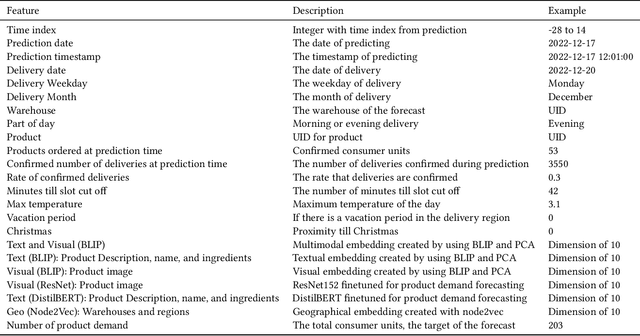


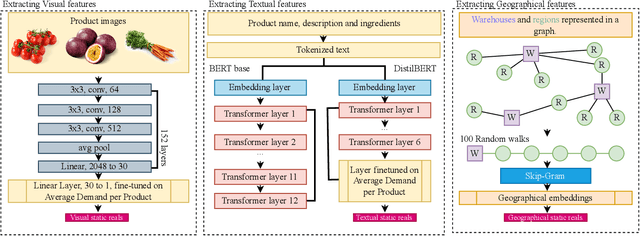
Multimodal demand forecasting aims at predicting product demand utilizing visual, textual, and contextual information. This paper proposes a method for multimodal product demand forecasting using convolutional, graph-based, and transformer-based architectures. Traditional approaches to demand forecasting rely on historical demand, product categories, and additional contextual information such as seasonality and events. However, these approaches have several shortcomings, such as the cold start problem making it difficult to predict product demand until sufficient historical data is available for a particular product, and their inability to properly deal with category dynamics. By incorporating multimodal information, such as product images and textual descriptions, our architecture aims to address the shortcomings of traditional approaches and outperform them. The experiments conducted on a large real-world dataset show that the proposed approach effectively predicts demand for a wide range of products. The multimodal pipeline presented in this work enhances the accuracy and reliability of the predictions, demonstrating the potential of leveraging multimodal information in product demand forecasting.
Query-based Video Summarization with Pseudo Label Supervision
Jul 04, 2023Existing datasets for manually labelled query-based video summarization are costly and thus small, limiting the performance of supervised deep video summarization models. Self-supervision can address the data sparsity challenge by using a pretext task and defining a method to acquire extra data with pseudo labels to pre-train a supervised deep model. In this work, we introduce segment-level pseudo labels from input videos to properly model both the relationship between a pretext task and a target task, and the implicit relationship between the pseudo label and the human-defined label. The pseudo labels are generated based on existing human-defined frame-level labels. To create more accurate query-dependent video summaries, a semantics booster is proposed to generate context-aware query representations. Furthermore, we propose mutual attention to help capture the interactive information between visual and textual modalities. Three commonly-used video summarization benchmarks are used to thoroughly validate the proposed approach. Experimental results show that the proposed video summarization algorithm achieves state-of-the-art performance.
Causal Video Summarizer for Video Exploration
Jul 04, 2023Recently, video summarization has been proposed as a method to help video exploration. However, traditional video summarization models only generate a fixed video summary which is usually independent of user-specific needs and hence limits the effectiveness of video exploration. Multi-modal video summarization is one of the approaches utilized to address this issue. Multi-modal video summarization has a video input and a text-based query input. Hence, effective modeling of the interaction between a video input and text-based query is essential to multi-modal video summarization. In this work, a new causality-based method named Causal Video Summarizer (CVS) is proposed to effectively capture the interactive information between the video and query to tackle the task of multi-modal video summarization. The proposed method consists of a probabilistic encoder and a probabilistic decoder. Based on the evaluation of the existing multi-modal video summarization dataset, experimental results show that the proposed approach is effective with the increase of +5.4% in accuracy and +4.92% increase of F 1- score, compared with the state-of-the-art method.
Causalainer: Causal Explainer for Automatic Video Summarization
Apr 30, 2023
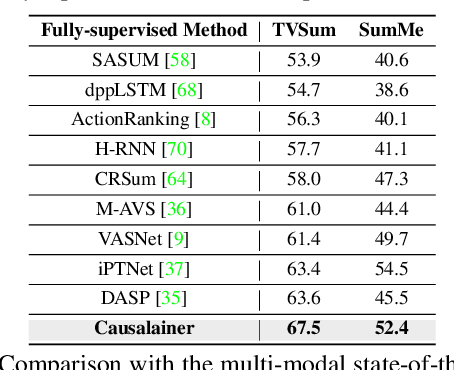
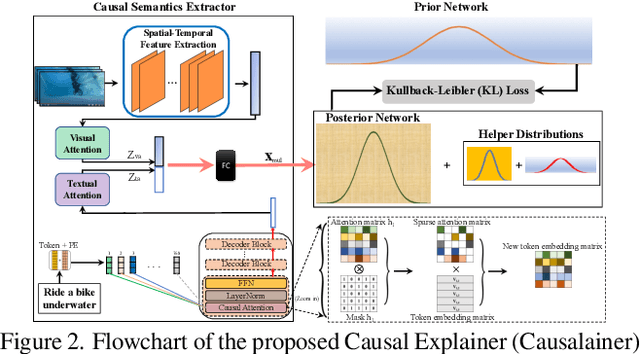
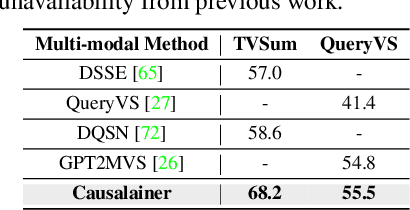
The goal of video summarization is to automatically shorten videos such that it conveys the overall story without losing relevant information. In many application scenarios, improper video summarization can have a large impact. For example in forensics, the quality of the generated video summary will affect an investigator's judgment while in journalism it might yield undesired bias. Because of this, modeling explainability is a key concern. One of the best ways to address the explainability challenge is to uncover the causal relations that steer the process and lead to the result. Current machine learning-based video summarization algorithms learn optimal parameters but do not uncover causal relationships. Hence, they suffer from a relative lack of explainability. In this work, a Causal Explainer, dubbed Causalainer, is proposed to address this issue. Multiple meaningful random variables and their joint distributions are introduced to characterize the behaviors of key components in the problem of video summarization. In addition, helper distributions are introduced to enhance the effectiveness of model training. In visual-textual input scenarios, the extra input can decrease the model performance. A causal semantics extractor is designed to tackle this issue by effectively distilling the mutual information from the visual and textual inputs. Experimental results on commonly used benchmarks demonstrate that the proposed method achieves state-of-the-art performance while being more explainable.
Improving Visual Question Answering Models through Robustness Analysis and In-Context Learning with a Chain of Basic Questions
Apr 06, 2023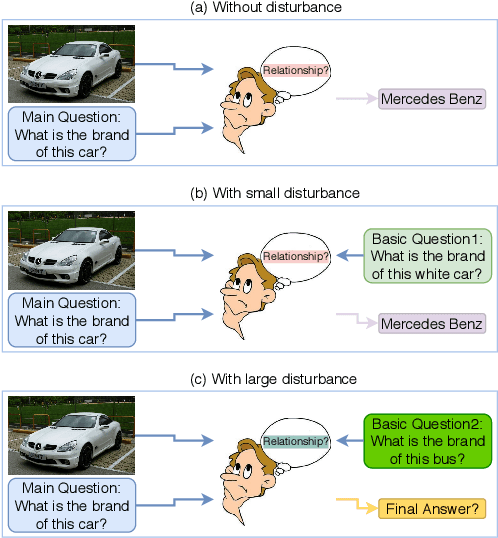
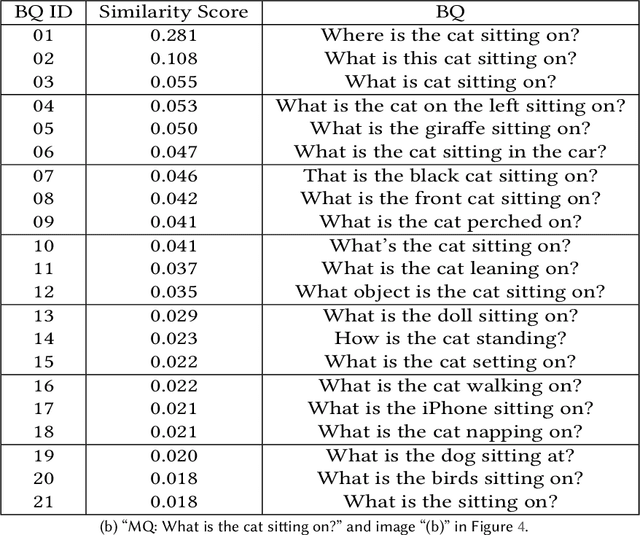
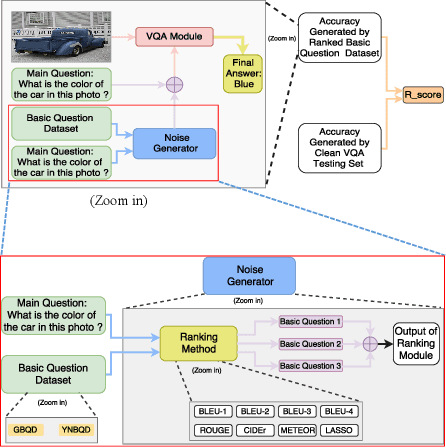
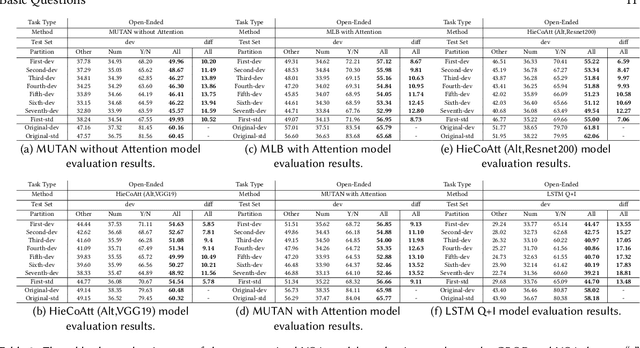
Deep neural networks have been critical in the task of Visual Question Answering (VQA), with research traditionally focused on improving model accuracy. Recently, however, there has been a trend towards evaluating the robustness of these models against adversarial attacks. This involves assessing the accuracy of VQA models under increasing levels of noise in the input, which can target either the image or the proposed query question, dubbed the main question. However, there is currently a lack of proper analysis of this aspect of VQA. This work proposes a new method that utilizes semantically related questions, referred to as basic questions, acting as noise to evaluate the robustness of VQA models. It is hypothesized that as the similarity of a basic question to the main question decreases, the level of noise increases. To generate a reasonable noise level for a given main question, a pool of basic questions is ranked based on their similarity to the main question, and this ranking problem is cast as a LASSO optimization problem. Additionally, this work proposes a novel robustness measure, R_score, and two basic question datasets to standardize the analysis of VQA model robustness. The experimental results demonstrate that the proposed evaluation method effectively analyzes the robustness of VQA models. Moreover, the experiments show that in-context learning with a chain of basic questions can enhance model accuracy.