 Add to Chrome
 Add to Firefox
 Add to Edge
NeuDiff Agent: A Governed AI Workflow for Single-Crystal Neutron Crystallography
Feb 18, 2026
Large-scale facilities increasingly face analysis and reporting latency as the limiting step in scientific throughput, particularly for structurally and magnetically complex samples that require iterative reduction, integration, refinement, and validation. To improve time-to-result and analysis efficiency, NeuDiff Agent is introduced as a governed, tool-using AI workflow for TOPAZ at the Spallation Neutron Source that takes instrument data products through reduction, integration, refinement, and validation to a validated crystal structure and a publication-ready CIF. NeuDiff Agent executes this established pipeline under explicit governance by restricting actions to allowlisted tools, enforcing fail-closed verification gates at key workflow boundaries, and capturing complete provenance for inspection, auditing, and controlled replay. Performance is assessed using a fixed prompt protocol and repeated end-to-end runs with two large language model backends, with user and machine time partitioned and intervention burden and recovery behaviors quantified under gating. In a reference-case benchmark, NeuDiff Agent reduces wall time from 435 minutes (manual) to 86.5(4.7) to 94.4(3.5) minutes (4.6-5.0x faster) while producing a validated CIF with no checkCIF level A or B alerts. These results establish a practical route to deploy agentic AI in facility crystallography while preserving traceability and publication-facing validation requirements.

6G Enabled Advanced Transportation Systems
May 24, 2023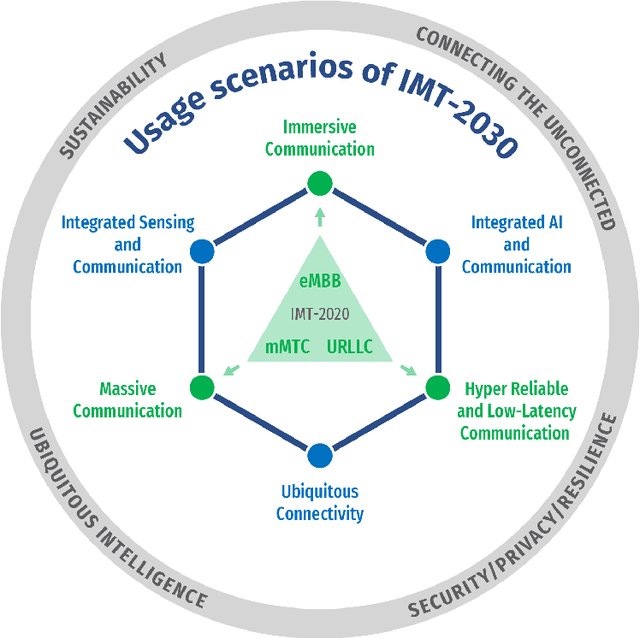

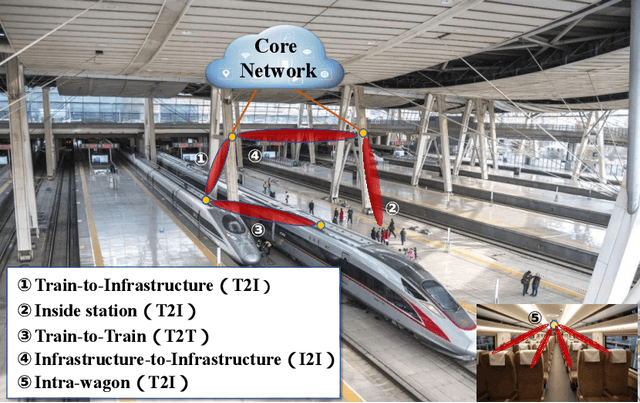
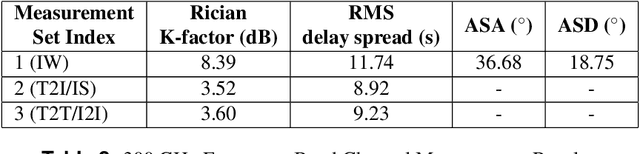
The 6th generation (6G) wireless communication network is envisaged to be able to change our lives drastically, including transportation. In this paper, two ways of interactions between 6G communication networks and transportation are introduced. With the new usage scenarios and capabilities 6G is going to support, passengers on all sorts of transportation systems will be able to get data more easily, even in the most remote areas on the planet. The quality of communication will also be improved significantly, thanks to the advanced capabilities of 6G. On top of providing seamless and ubiquitous connectivity to all forms of transportation, 6G will also transform the transportation systems to make them more intelligent, more efficient, and safer. Based on the latest research and standardization progresses, technical analysis on how 6G can empower advanced transportation systems are provided, as well as challenges and insights for a possible road ahead.
Terahertz-Band Near-Space Communications: From a Physical-Layer Perspective
Jul 25, 2022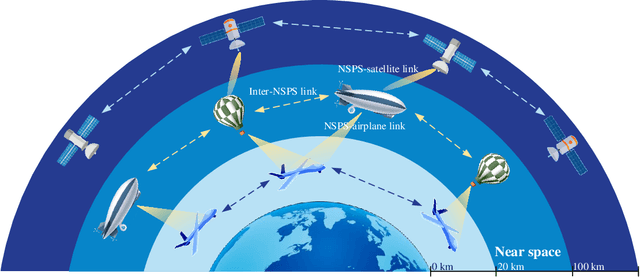
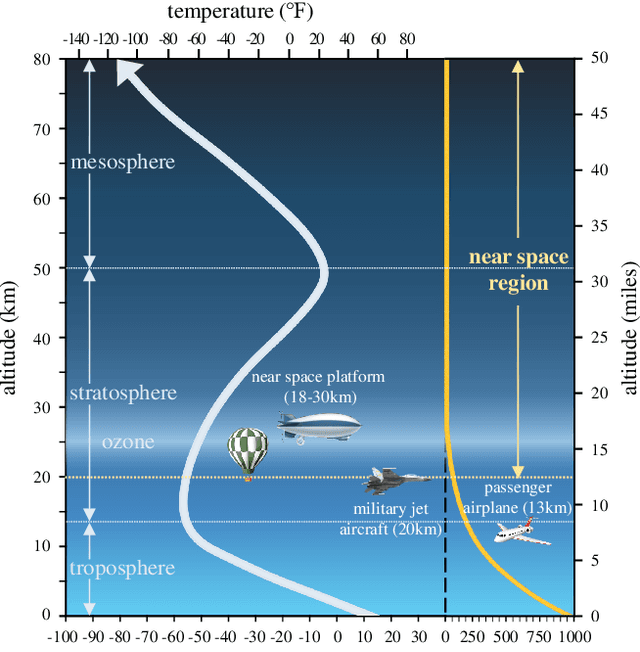
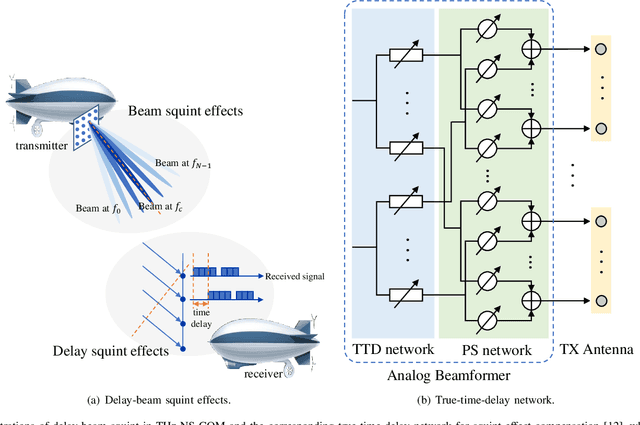
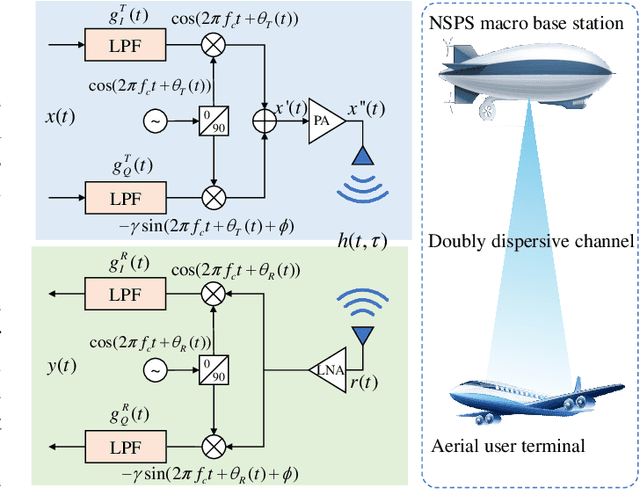
Facilitated by rapid technological development of the near-space platform stations (NSPS), near-space communication (NS-COM) is envisioned to play a pivotal role in the space-air-ground integrated network for sixth-generation (6G) communications and beyond. In NS-COM, ultra-broadband wireless connectivity between NSPSs and various airborne/spaceborne platforms is required for a plethora of bandwidth-consuming applications, such as NSPS-based Ad hoc networking, in-flight Internet and relaying technology. However, such requirement seems to contradict with the scarcity of spectrum resources at conventional microwave frequencies, which motivates the exploitation of terahertz (THz) band ranging from 0.1 to 10 THz. Due to huge available bandwidth, the THz signals are capable of supporting ultra-high-rate data transmission for NS-COM over 100 Gb/s, which are naturally suitable for the near-space environment with marginal path loss. To this end, this article provides an extensive investigation on the THz-band NS-COM (THz-NS-COM) from a physical-layer perspective. Firstly, we summarize the potential applications of THz communications in the near-space environment, where the corresponding technical barriers are analyzed. Then the channel characteristics of THz-NS-COM and the corresponding modeling strategies are discussed, respectively. Afterwards, three essential research directions are investigated to surpass the technical barriers of THz-NS-COM, i.e., robust beamforming for ultra-massive antenna array, signal processing algorithms against hybrid distortions, and integrated sensing and communications. Several open problems are also provided to unleash the full potential of THz-NS-COM.