 Add to Chrome
 Add to Firefox
 Add to Edge
UnpredictaBench: A Benchmark for Evaluating Distributional Randomness in LLMs
Jun 04, 2026
We introduce UnpredictaBench, an evaluation that tests the ability of large language models (LLMs) to capture true underlying distributions. As LLMs are increasingly used as substitutes for other entities (e.g., for humans in economic simulations), the tendency of many models to collapse towards a single plausible answer means a failure to capture the unpredictability of real systems. Recent work on improving output diversity is insufficient for this setting: simulation requires samples that are calibrated to a target distribution, not merely varied outputs. UnpredictaBench isolates a simplified but fundamental version of this problem: sampling outcomes from individual target distributions, including canonical statistical distributions, distributions induced by stochastic programs, and natural-language scenarios that describe random processes. We introduce 448 such problems together with KS@N, a general-purpose evaluation metric that quantifies how well a model outputs approximate black-box target distributions via the Kolmogorov-Smirnov statistical test. This is the rate at which we fail to reject model samples of size N against ground-truth samples, with larger N indicating greater difficulty. Tested across open and proprietary models, we find a large spread in distributional capabilities. For instance, when models generate samples of size 100 (KS@100, our standard metric), scores range from near 0 to over 20%. No model is able to achieve over 40% at KS@100, showing significant headroom in distributional sampling as a capability. Although adding reasoning can somewhat increase scores, we find no immediate solution for this issue. UnpredictaBench shows that even simple distributional simulation remains challenging, making it a necessary first step toward using LLMs as stand-ins for complex systems.

VAMPS: Visual-Assisted Mathematical Problem Solving Benchmark
Jun 02, 2026Multimodal large language models are increasingly capable of complex reasoning, yet their performance often degrades when they must externalize a problem through a tool and then reason over the tool's output, specifically when they rely on visual aids. This gap is especially important because real engineering and scientific workflows often rely on visualization tools for analysis, validation, and decision-making. To study this discrepancy, we introduce VAMPS (Visual-Assisted Mathematical Problem Solving), a benchmark for graph-assisted mathematics. VAMPS contains 1,168 multimodal, bilingual multiple-choice question-answer pairs drawn from Iranian University Entrance Exam algebra and calculus problems and expanded with human-reviewed LLM-generated synthetic variants, all selected so that plotting provides a natural solution strategy by revealing intersections, extrema, asymptotes, etc. Designed for both benchmarking and diagnosis, VAMPS goes beyond prior multimodal benchmarks that primarily evaluate reasoning over fixed visual inputs by testing whether a model can benefit from constructing a useful graph and grounding its answer in the resulting visualization. Overall, we found that across a diverse set of models, direct analytical solving surprisingly outperforms tool-enabled visual solving, even on problems where plotting is a natural strategy.
When Minor Edits Matter: LLM-Driven Prompt Attack for Medical VLM Robustness in Ultrasound
Mar 22, 2026Ultrasound is widely used in clinical practice due to its portability, cost-effectiveness, safety, and real-time imaging capabilities. However, image acquisition and interpretation remain highly operator dependent, motivating the development of robust AI-assisted analysis methods. Vision-language models (VLMs) have recently demonstrated strong multimodal reasoning capabilities and competitive performance in medical image analysis, including ultrasound. However, emerging evidence highlights significant concerns about their trustworthiness. In particular, adversarial robustness is critical because Med-VLMs operate via natural-language instructions, rendering prompt formulation a realistic and practically exploitable point of vulnerability. Small variations (typos, shorthand, underspecified requests, or ambiguous wording) can meaningfully shift model outputs. We propose a scalable adversarial evaluation framework that leverages a large language model (LLM) to generate clinically plausible adversarial prompt variants via "humanized" rewrites and minimal edits that mimic routine clinical communication. Using ultrasound multiple-choice question answering benchmarks, we systematically assess the vulnerability of SOTA Med-VLMs to these attacks, examine how attacker LLM capacity influences attack success, analyze the relationship between attack success and model confidence, and identify consistent failure patterns across models. Our results highlight realistic robustness gaps that must be addressed for safe clinical translation. Code will be released publicly following the review process.
StreamSplat: Towards Online Dynamic 3D Reconstruction from Uncalibrated Video Streams
Jun 10, 2025Real-time reconstruction of dynamic 3D scenes from uncalibrated video streams is crucial for numerous real-world applications. However, existing methods struggle to jointly address three key challenges: 1) processing uncalibrated inputs in real time, 2) accurately modeling dynamic scene evolution, and 3) maintaining long-term stability and computational efficiency. To this end, we introduce StreamSplat, the first fully feed-forward framework that transforms uncalibrated video streams of arbitrary length into dynamic 3D Gaussian Splatting (3DGS) representations in an online manner, capable of recovering scene dynamics from temporally local observations. We propose two key technical innovations: a probabilistic sampling mechanism in the static encoder for 3DGS position prediction, and a bidirectional deformation field in the dynamic decoder that enables robust and efficient dynamic modeling. Extensive experiments on static and dynamic benchmarks demonstrate that StreamSplat consistently outperforms prior works in both reconstruction quality and dynamic scene modeling, while uniquely supporting online reconstruction of arbitrarily long video streams. Code and models are available at https://github.com/nickwzk/StreamSplat.
MoFlow: One-Step Flow Matching for Human Trajectory Forecasting via Implicit Maximum Likelihood Estimation based Distillation
Mar 13, 2025In this paper, we address the problem of human trajectory forecasting, which aims to predict the inherently multi-modal future movements of humans based on their past trajectories and other contextual cues. We propose a novel motion prediction conditional flow matching model, termed MoFlow, to predict K-shot future trajectories for all agents in a given scene. We design a novel flow matching loss function that not only ensures at least one of the $K$ sets of future trajectories is accurate but also encourages all $K$ sets of future trajectories to be diverse and plausible. Furthermore, by leveraging the implicit maximum likelihood estimation (IMLE), we propose a novel distillation method for flow models that only requires samples from the teacher model. Extensive experiments on the real-world datasets, including SportVU NBA games, ETH-UCY, and SDD, demonstrate that both our teacher flow model and the IMLE-distilled student model achieve state-of-the-art performance. These models can generate diverse trajectories that are physically and socially plausible. Moreover, our one-step student model is $\textbf{100}$ times faster than the teacher flow model during sampling. The code, model, and data are available at our project page: https://moflow-imle.github.io
SimMark: A Robust Sentence-Level Similarity-Based Watermarking Algorithm for Large Language Models
Feb 05, 2025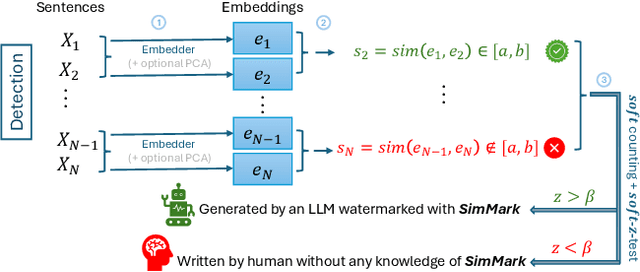
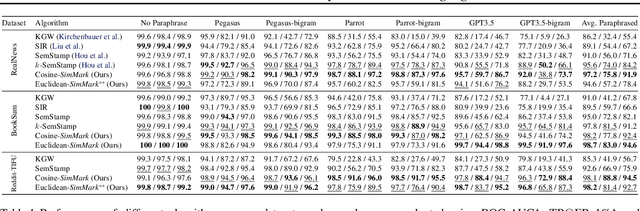
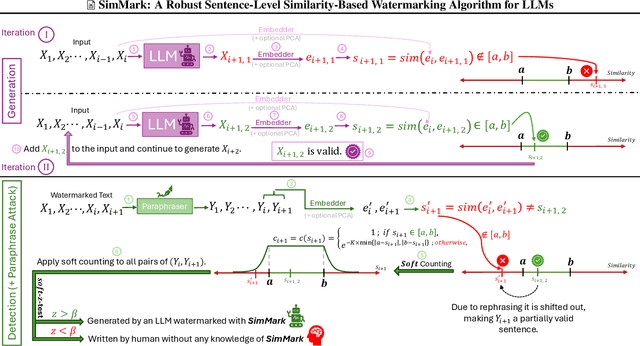
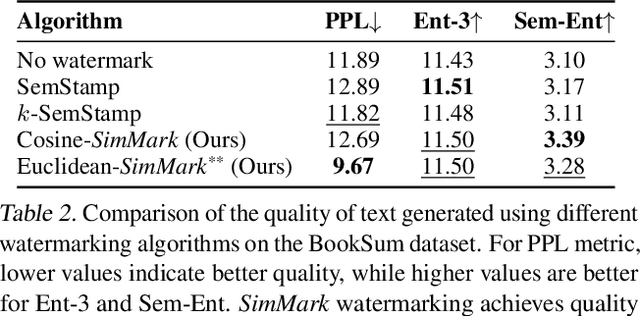
The rapid proliferation of large language models (LLMs) has created an urgent need for reliable methods to detect whether a text is generated by such models. In this paper, we propose SimMark, a posthoc watermarking algorithm that makes LLMs' outputs traceable without requiring access to the model's internal logits, enabling compatibility with a wide range of LLMs, including API-only models. By leveraging the similarity of semantic sentence embeddings and rejection sampling to impose detectable statistical patterns imperceptible to humans, and employing a soft counting mechanism, SimMark achieves robustness against paraphrasing attacks. Experimental results demonstrate that SimMark sets a new benchmark for robust watermarking of LLM-generated content, surpassing prior sentence-level watermarking techniques in robustness, sampling efficiency, and applicability across diverse domains, all while preserving the text quality.
Fréchet Video Motion Distance: A Metric for Evaluating Motion Consistency in Videos
Jul 23, 2024


Significant advancements have been made in video generative models recently. Unlike image generation, video generation presents greater challenges, requiring not only generating high-quality frames but also ensuring temporal consistency across these frames. Despite the impressive progress, research on metrics for evaluating the quality of generated videos, especially concerning temporal and motion consistency, remains underexplored. To bridge this research gap, we propose Fr\'echet Video Motion Distance (FVMD) metric, which focuses on evaluating motion consistency in video generation. Specifically, we design explicit motion features based on key point tracking, and then measure the similarity between these features via the Fr\'echet distance. We conduct sensitivity analysis by injecting noise into real videos to verify the effectiveness of FVMD. Further, we carry out a large-scale human study, demonstrating that our metric effectively detects temporal noise and aligns better with human perceptions of generated video quality than existing metrics. Additionally, our motion features can consistently improve the performance of Video Quality Assessment (VQA) models, indicating that our approach is also applicable to unary video quality evaluation. Code is available at https://github.com/ljh0v0/FMD-frechet-motion-distance.
BCAmirs at SemEval-2024 Task 4: Beyond Words: A Multimodal and Multilingual Exploration of Persuasion in Memes
Apr 03, 2024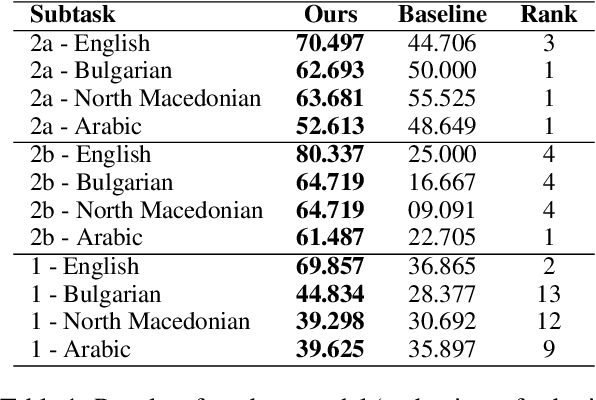

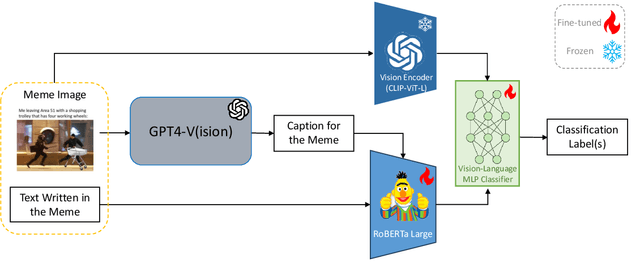
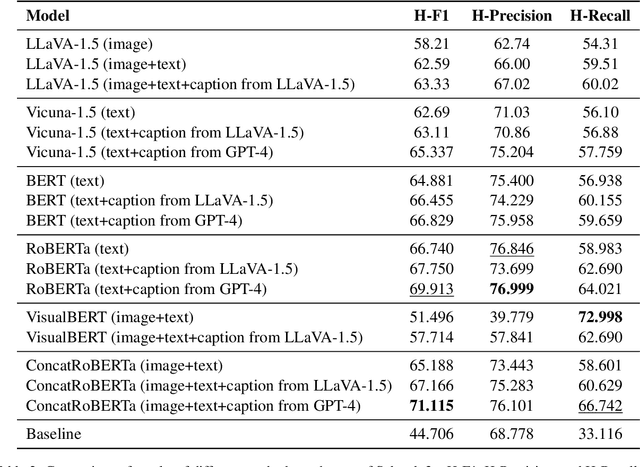
Memes, combining text and images, frequently use metaphors to convey persuasive messages, shaping public opinion. Motivated by this, our team engaged in SemEval-2024 Task 4, a hierarchical multi-label classification task designed to identify rhetorical and psychological persuasion techniques embedded within memes. To tackle this problem, we introduced a caption generation step to assess the modality gap and the impact of additional semantic information from images, which improved our result. Our best model utilizes GPT-4 generated captions alongside meme text to fine-tune RoBERTa as the text encoder and CLIP as the image encoder. It outperforms the baseline by a large margin in all 12 subtasks. In particular, it ranked in top-3 across all languages in Subtask 2a, and top-4 in Subtask 2b, demonstrating quantitatively strong performance. The improvement achieved by the introduced intermediate step is likely attributable to the metaphorical essence of images that challenges visual encoders. This highlights the potential for improving abstract visual semantics encoding.
An Information-Theoretic Framework for Out-of-Distribution Generalization
Mar 29, 2024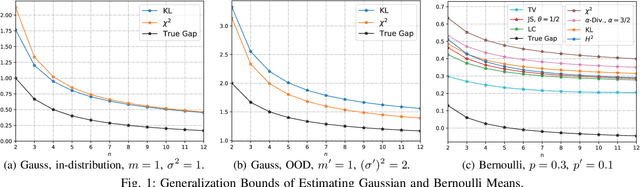
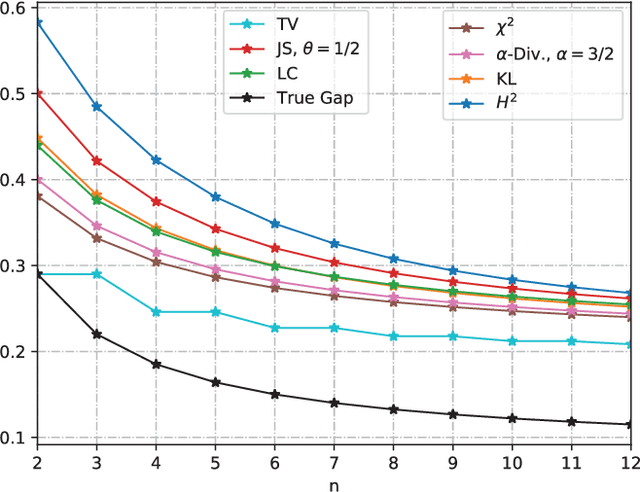
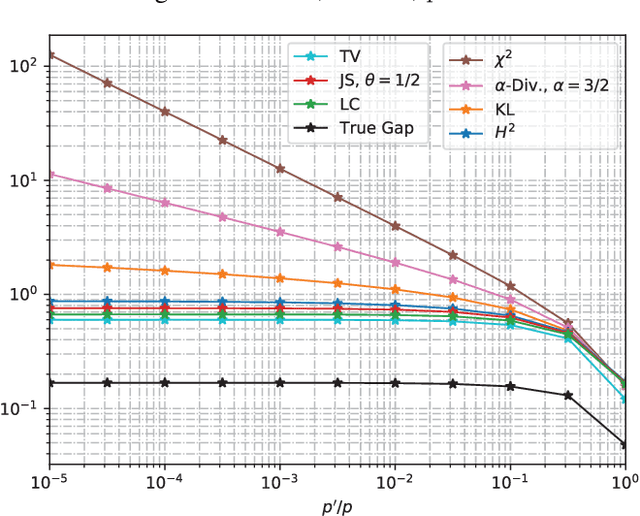
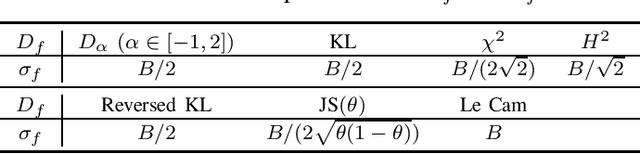
We study the Out-of-Distribution (OOD) generalization in machine learning and propose a general framework that provides information-theoretic generalization bounds. Our framework interpolates freely between Integral Probability Metric (IPM) and $f$-divergence, which naturally recovers some known results (including Wasserstein- and KL-bounds), as well as yields new generalization bounds. Moreover, we show that our framework admits an optimal transport interpretation. When evaluated in two concrete examples, the proposed bounds either strictly improve upon existing bounds in some cases or recover the best among existing OOD generalization bounds.
Joint Generative Modeling of Scene Graphs and Images via Diffusion Models
Jan 02, 2024
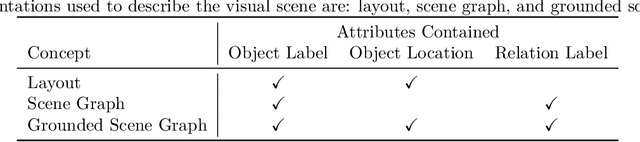

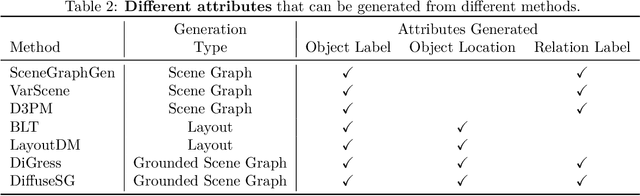
In this paper, we present a novel generative task: joint scene graph - image generation. While previous works have explored image generation conditioned on scene graphs or layouts, our task is distinctive and important as it involves generating scene graphs themselves unconditionally from noise, enabling efficient and interpretable control for image generation. Our task is challenging, requiring the generation of plausible scene graphs with heterogeneous attributes for nodes (objects) and edges (relations among objects), including continuous object bounding boxes and discrete object and relation categories. We introduce a novel diffusion model, DiffuseSG, that jointly models the adjacency matrix along with heterogeneous node and edge attributes. We explore various types of encodings for the categorical data, relaxing it into a continuous space. With a graph transformer being the denoiser, DiffuseSG successively denoises the scene graph representation in a continuous space and discretizes the final representation to generate the clean scene graph. Additionally, we introduce an IoU regularization to enhance the empirical performance. Our model significantly outperforms existing methods in scene graph generation on the Visual Genome and COCO-Stuff datasets, both on standard and newly introduced metrics that better capture the problem complexity. Moreover, we demonstrate the additional benefits of our model in two downstream applications: 1) excelling in a series of scene graph completion tasks, and 2) improving scene graph detection models by using extra training samples generated from DiffuseSG.