 Add to Chrome
 Add to Firefox
 Add to Edge
When Minor Edits Matter: LLM-Driven Prompt Attack for Medical VLM Robustness in Ultrasound
Mar 22, 2026
Ultrasound is widely used in clinical practice due to its portability, cost-effectiveness, safety, and real-time imaging capabilities. However, image acquisition and interpretation remain highly operator dependent, motivating the development of robust AI-assisted analysis methods. Vision-language models (VLMs) have recently demonstrated strong multimodal reasoning capabilities and competitive performance in medical image analysis, including ultrasound. However, emerging evidence highlights significant concerns about their trustworthiness. In particular, adversarial robustness is critical because Med-VLMs operate via natural-language instructions, rendering prompt formulation a realistic and practically exploitable point of vulnerability. Small variations (typos, shorthand, underspecified requests, or ambiguous wording) can meaningfully shift model outputs. We propose a scalable adversarial evaluation framework that leverages a large language model (LLM) to generate clinically plausible adversarial prompt variants via "humanized" rewrites and minimal edits that mimic routine clinical communication. Using ultrasound multiple-choice question answering benchmarks, we systematically assess the vulnerability of SOTA Med-VLMs to these attacks, examine how attacker LLM capacity influences attack success, analyze the relationship between attack success and model confidence, and identify consistent failure patterns across models. Our results highlight realistic robustness gaps that must be addressed for safe clinical translation. Code will be released publicly following the review process.

Vision-Language Synthetic Data Enhances Echocardiography Downstream Tasks
Mar 28, 2024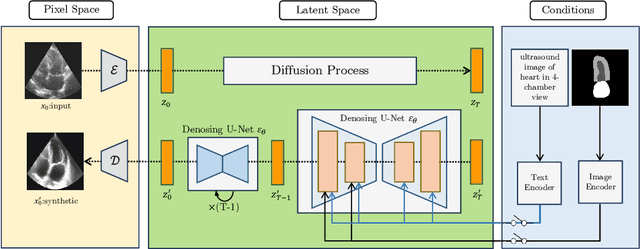
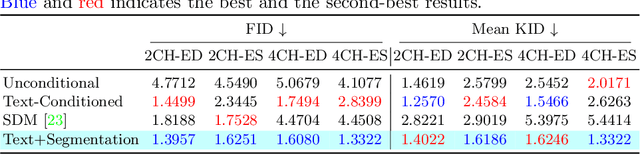
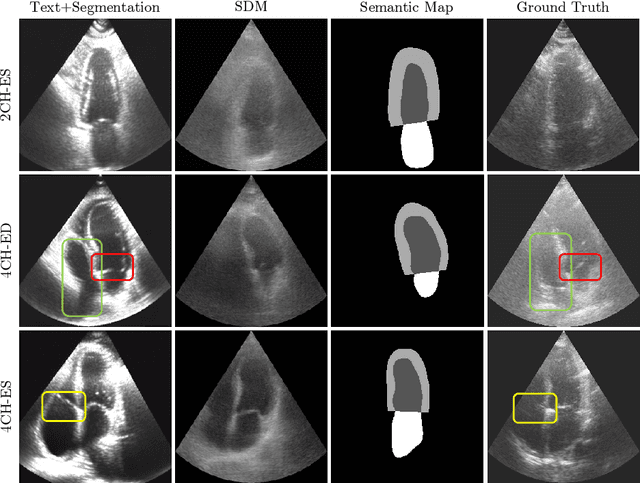
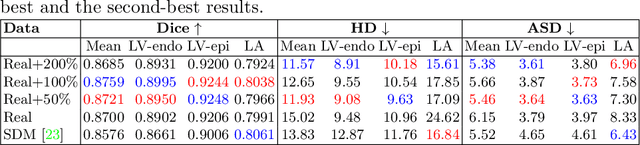
High-quality, large-scale data is essential for robust deep learning models in medical applications, particularly ultrasound image analysis. Diffusion models facilitate high-fidelity medical image generation, reducing the costs associated with acquiring and annotating new images. This paper utilizes recent vision-language models to produce diverse and realistic synthetic echocardiography image data, preserving key features of the original images guided by textual and semantic label maps. Specifically, we investigate three potential avenues: unconditional generation, generation guided by text, and a hybrid approach incorporating both textual and semantic supervision. We show that the rich contextual information present in the synthesized data potentially enhances the accuracy and interpretability of downstream tasks, such as echocardiography segmentation and classification with improved metrics and faster convergence. Our implementation with checkpoints, prompts, and the created synthetic dataset will be publicly available at \href{https://github.com/Pooria90/DiffEcho}{GitHub}.