 Add to Chrome
 Add to Firefox
 Add to Edge
Gauge-equivariant flow models for sampling in lattice field theories with pseudofermions
Jul 18, 2022
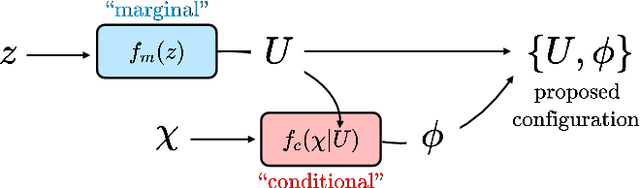
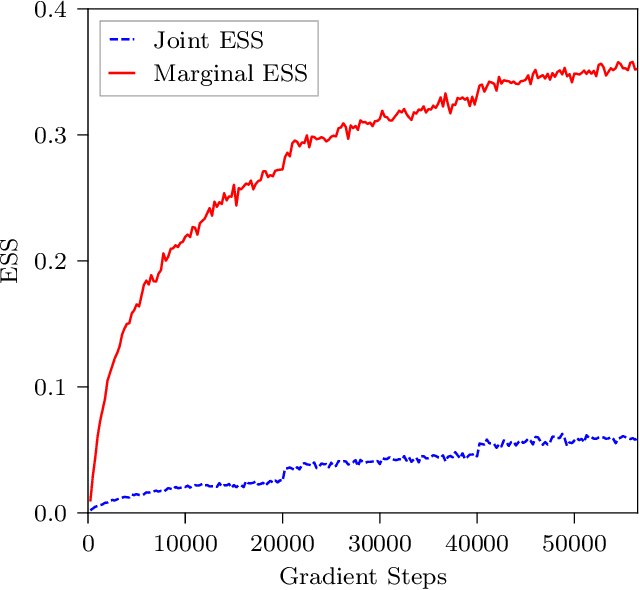
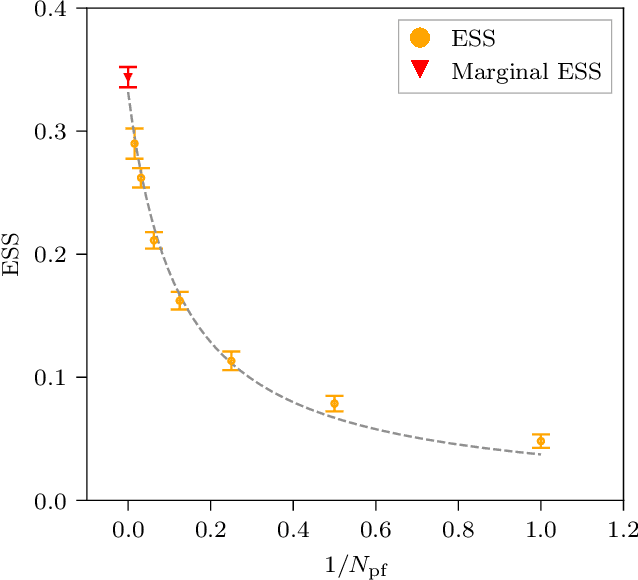
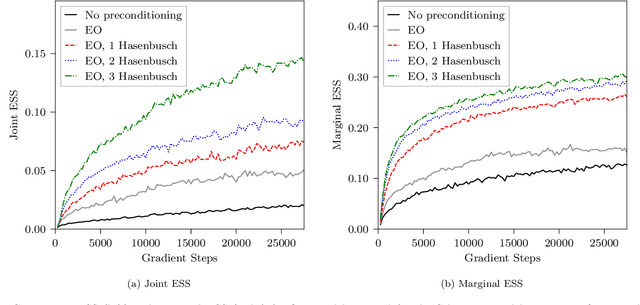
This work presents gauge-equivariant architectures for flow-based sampling in fermionic lattice field theories using pseudofermions as stochastic estimators for the fermionic determinant. This is the default approach in state-of-the-art lattice field theory calculations, making this development critical to the practical application of flow models to theories such as QCD. Methods by which flow-based sampling approaches can be improved via standard techniques such as even/odd preconditioning and the Hasenbusch factorization are also outlined. Numerical demonstrations in two-dimensional U(1) and SU(3) gauge theories with $N_f=2$ flavors of fermions are provided.

Flow-based sampling in the lattice Schwinger model at criticality
Feb 23, 2022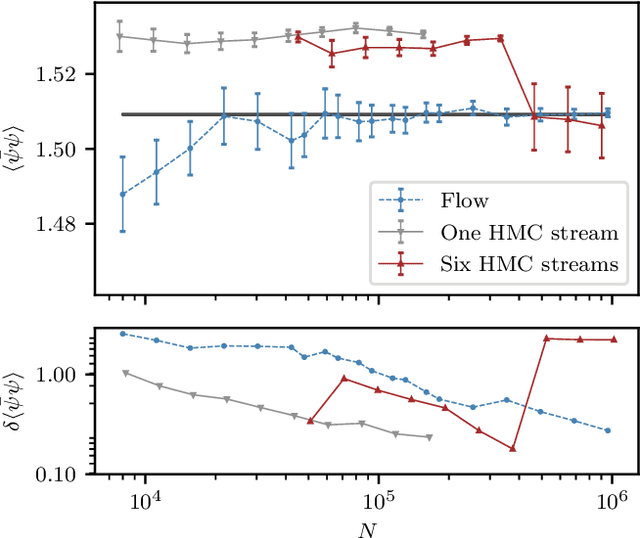
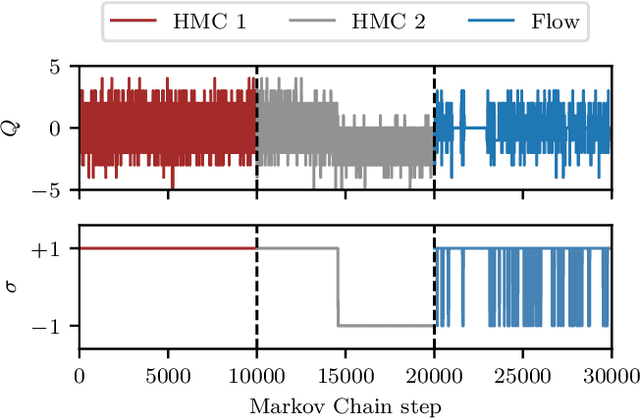
Recent results suggest that flow-based algorithms may provide efficient sampling of field distributions for lattice field theory applications, such as studies of quantum chromodynamics and the Schwinger model. In this work, we provide a numerical demonstration of robust flow-based sampling in the Schwinger model at the critical value of the fermion mass. In contrast, at the same parameters, conventional methods fail to sample all parts of configuration space, leading to severely underestimated uncertainties.
Simulation Intelligence: Towards a New Generation of Scientific Methods
Dec 06, 2021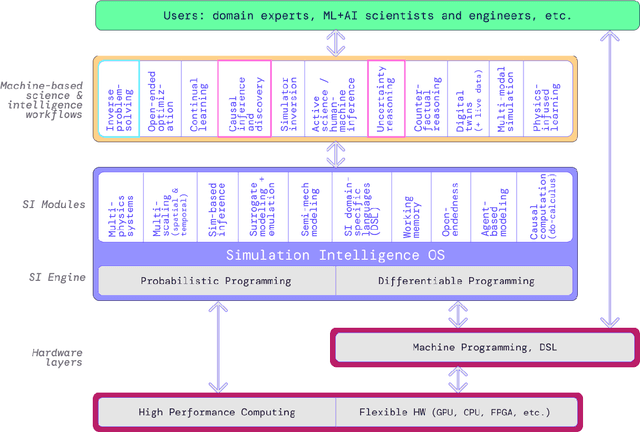
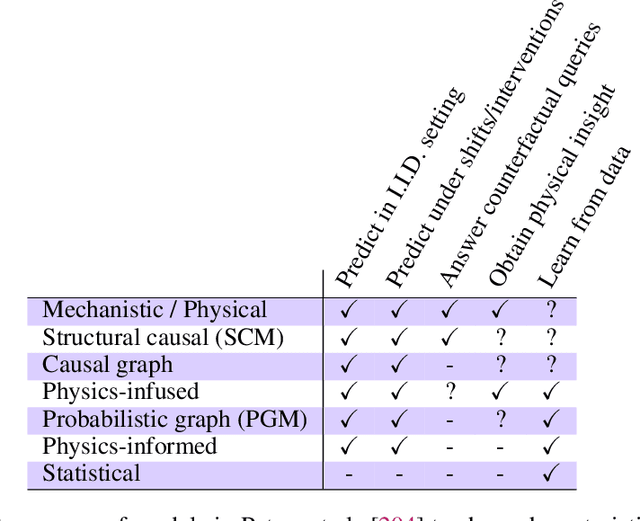
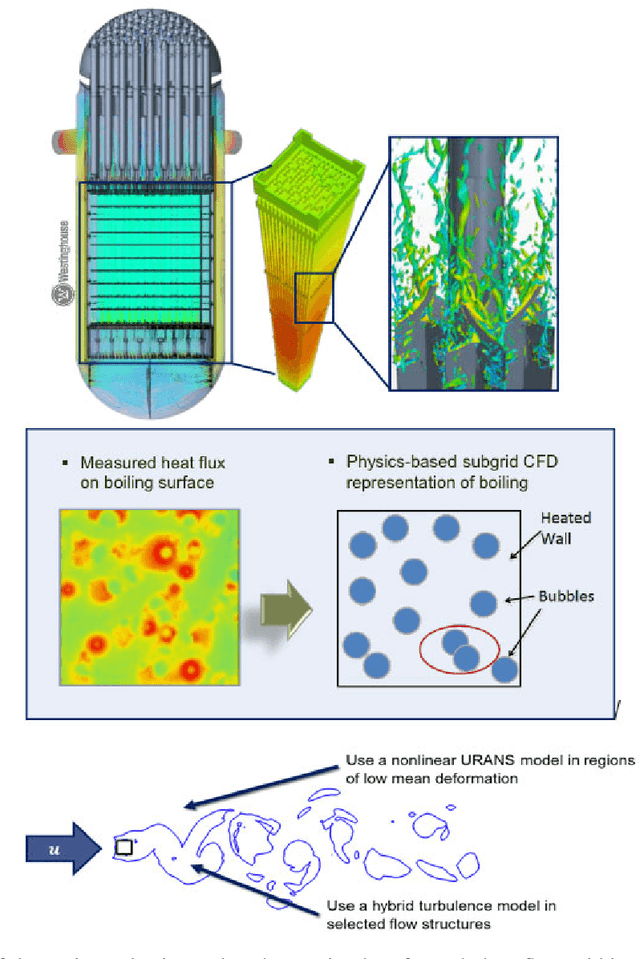
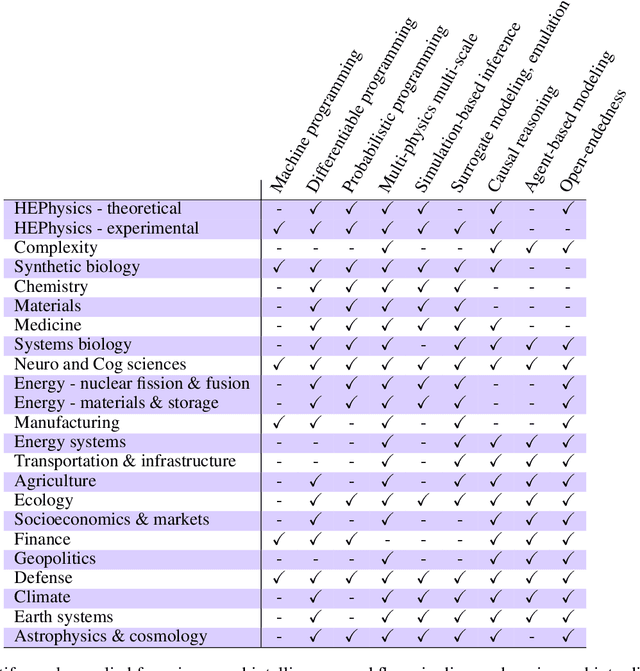
The original "Seven Motifs" set forth a roadmap of essential methods for the field of scientific computing, where a motif is an algorithmic method that captures a pattern of computation and data movement. We present the "Nine Motifs of Simulation Intelligence", a roadmap for the development and integration of the essential algorithms necessary for a merger of scientific computing, scientific simulation, and artificial intelligence. We call this merger simulation intelligence (SI), for short. We argue the motifs of simulation intelligence are interconnected and interdependent, much like the components within the layers of an operating system. Using this metaphor, we explore the nature of each layer of the simulation intelligence operating system stack (SI-stack) and the motifs therein: (1) Multi-physics and multi-scale modeling; (2) Surrogate modeling and emulation; (3) Simulation-based inference; (4) Causal modeling and inference; (5) Agent-based modeling; (6) Probabilistic programming; (7) Differentiable programming; (8) Open-ended optimization; (9) Machine programming. We believe coordinated efforts between motifs offers immense opportunity to accelerate scientific discovery, from solving inverse problems in synthetic biology and climate science, to directing nuclear energy experiments and predicting emergent behavior in socioeconomic settings. We elaborate on each layer of the SI-stack, detailing the state-of-art methods, presenting examples to highlight challenges and opportunities, and advocating for specific ways to advance the motifs and the synergies from their combinations. Advancing and integrating these technologies can enable a robust and efficient hypothesis-simulation-analysis type of scientific method, which we introduce with several use-cases for human-machine teaming and automated science.
A neural simulation-based inference approach for characterizing the Galactic Center $γ$-ray excess
Oct 13, 2021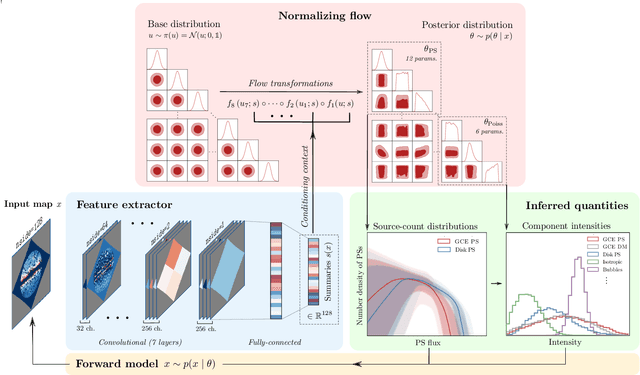
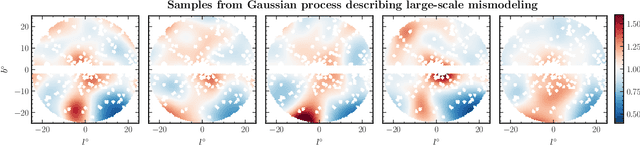
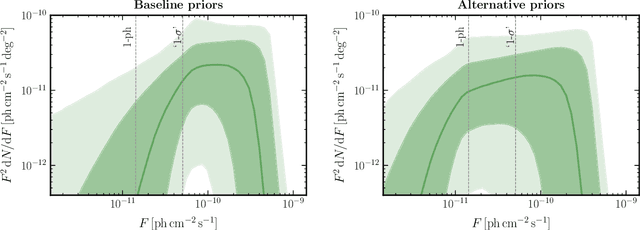
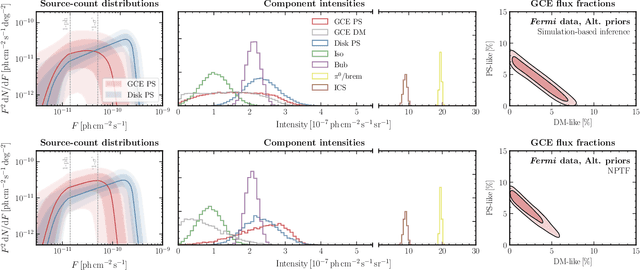
The nature of the Fermi gamma-ray Galactic Center Excess (GCE) has remained a persistent mystery for over a decade. Although the excess is broadly compatible with emission expected due to dark matter annihilation, an explanation in terms of a population of unresolved astrophysical point sources e.g., millisecond pulsars, remains viable. The effort to uncover the origin of the GCE is hampered in particular by an incomplete understanding of diffuse emission of Galactic origin. This can lead to spurious features that make it difficult to robustly differentiate smooth emission, as expected for a dark matter origin, from more "clumpy" emission expected for a population of relatively bright, unresolved point sources. We use recent advancements in the field of simulation-based inference, in particular density estimation techniques using normalizing flows, in order to characterize the contribution of modeled components, including unresolved point source populations, to the GCE. Compared to traditional techniques based on the statistical distribution of photon counts, our machine learning-based method is able to utilize more of the information contained in a given model of the Galactic Center emission, and in particular can perform posterior parameter estimation while accounting for pixel-to-pixel spatial correlations in the gamma-ray map. This makes the method demonstrably more resilient to certain forms of model misspecification. On application to Fermi data, the method generically attributes a smaller fraction of the GCE flux to unresolved point sources when compared to traditional approaches. We nevertheless infer such a contribution to make up a non-negligible fraction of the GCE across all analysis variations considered, with at least $38^{+9}_{-19}\%$ of the excess attributed to unresolved points sources in our baseline analysis.
Flow-based sampling for multimodal distributions in lattice field theory
Jul 01, 2021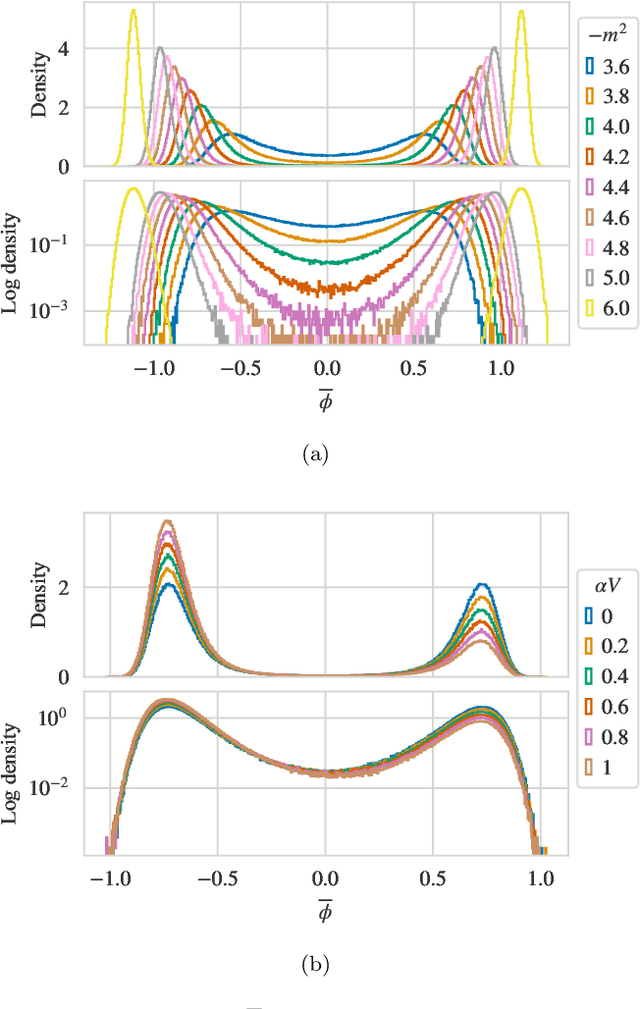
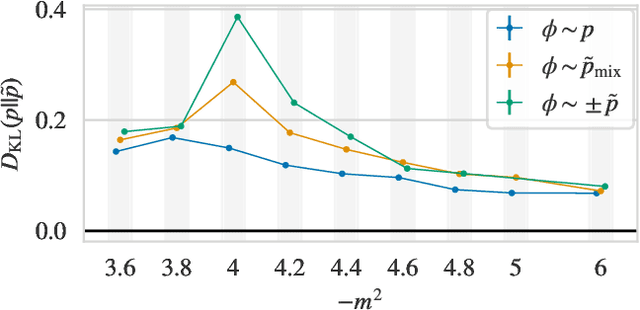
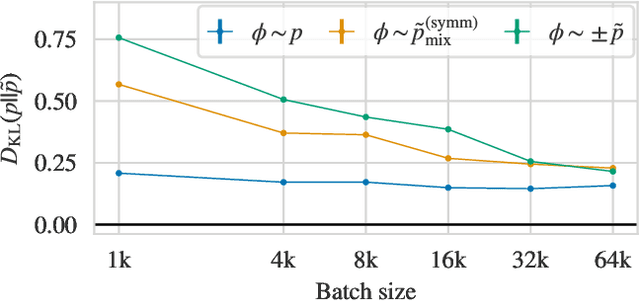
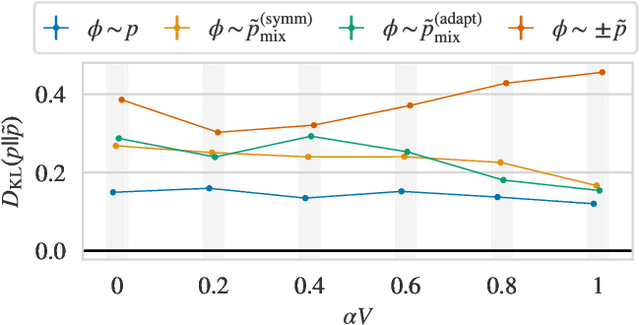
Recent results have demonstrated that samplers constructed with flow-based generative models are a promising new approach for configuration generation in lattice field theory. In this paper, we present a set of methods to construct flow models for targets with multiple separated modes (i.e. theories with multiple vacua). We demonstrate the application of these methods to modeling two-dimensional real scalar field theory in its symmetry-broken phase. In this context we investigate the performance of different flow-based sampling algorithms, including a composite sampling algorithm where flow-based proposals are occasionally augmented by applying updates using traditional algorithms like HMC.
Flow-based sampling for fermionic lattice field theories
Jun 10, 2021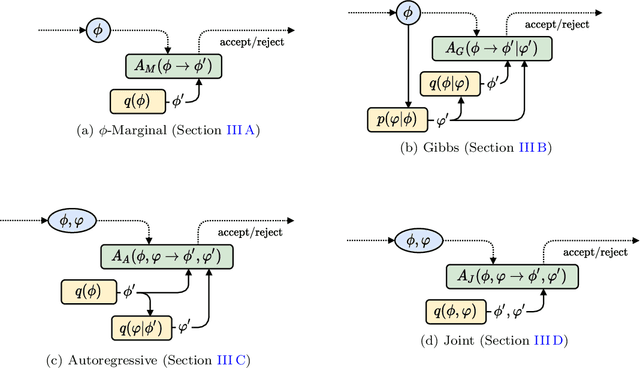
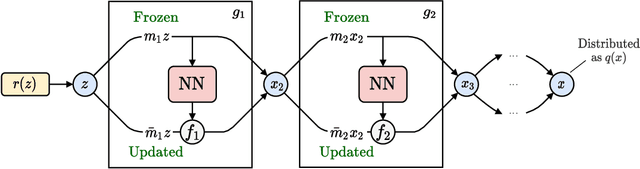

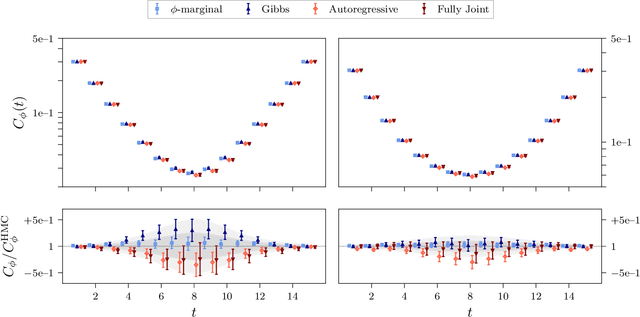
Algorithms based on normalizing flows are emerging as promising machine learning approaches to sampling complicated probability distributions in a way that can be made asymptotically exact. In the context of lattice field theory, proof-of-principle studies have demonstrated the effectiveness of this approach for scalar theories, gauge theories, and statistical systems. This work develops approaches that enable flow-based sampling of theories with dynamical fermions, which is necessary for the technique to be applied to lattice field theory studies of the Standard Model of particle physics and many condensed matter systems. As a practical demonstration, these methods are applied to the sampling of field configurations for a two-dimensional theory of massless staggered fermions coupled to a scalar field via a Yukawa interaction.
Exact and Approximate Hierarchical Clustering Using A*
Apr 14, 2021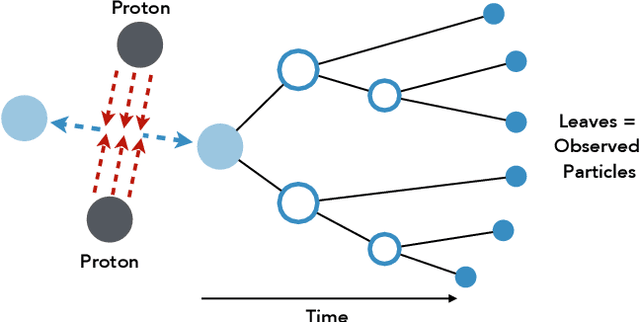
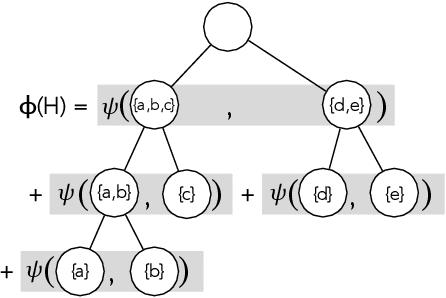
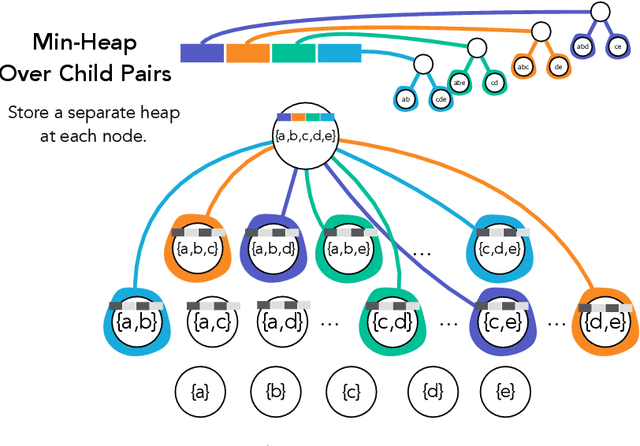
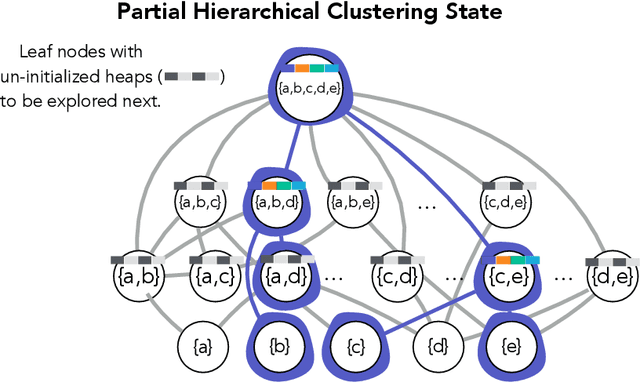
Hierarchical clustering is a critical task in numerous domains. Many approaches are based on heuristics and the properties of the resulting clusterings are studied post hoc. However, in several applications, there is a natural cost function that can be used to characterize the quality of the clustering. In those cases, hierarchical clustering can be seen as a combinatorial optimization problem. To that end, we introduce a new approach based on A* search. We overcome the prohibitively large search space by combining A* with a novel \emph{trellis} data structure. This combination results in an exact algorithm that scales beyond previous state of the art, from a search space with $10^{12}$ trees to $10^{15}$ trees, and an approximate algorithm that improves over baselines, even in enormous search spaces that contain more than $10^{1000}$ trees. We empirically demonstrate that our method achieves substantially higher quality results than baselines for a particle physics use case and other clustering benchmarks. We describe how our method provides significantly improved theoretical bounds on the time and space complexity of A* for clustering.
Introduction to Normalizing Flows for Lattice Field Theory
Jan 20, 2021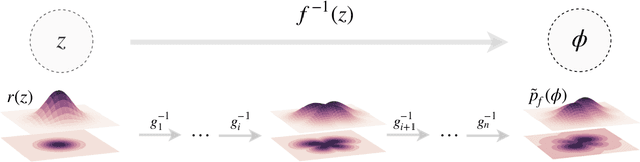
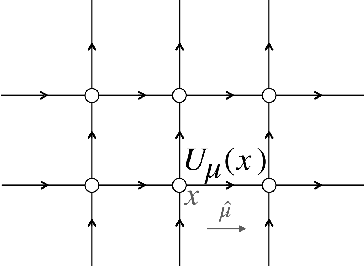
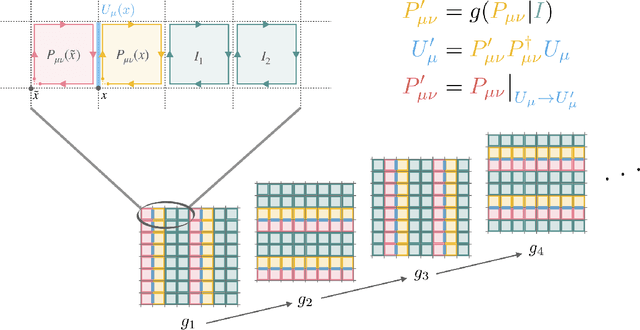
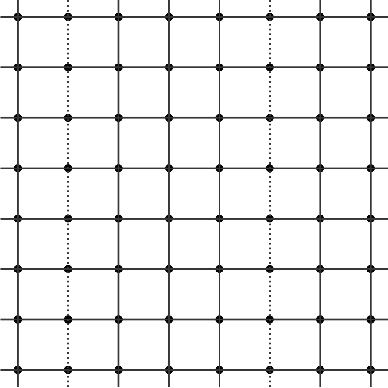
This notebook tutorial demonstrates a method for sampling Boltzmann distributions of lattice field theories using a class of machine learning models known as normalizing flows. The ideas and approaches proposed in arXiv:1904.12072, arXiv:2002.02428, and arXiv:2003.06413 are reviewed and a concrete implementation of the framework is presented. We apply this framework to a lattice scalar field theory and to U(1) gauge theory, explicitly encoding gauge symmetries in the flow-based approach to the latter. This presentation is intended to be interactive and working with the attached Jupyter notebook is recommended.
Hierarchical clustering in particle physics through reinforcement learning
Nov 16, 2020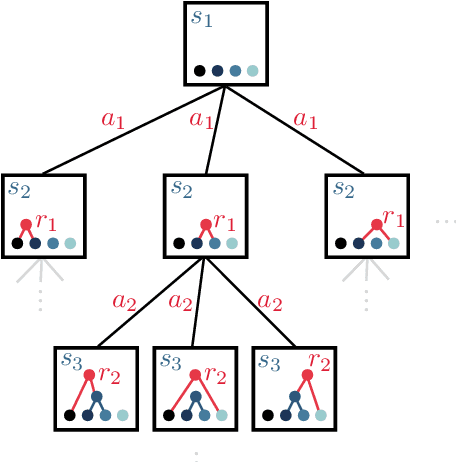
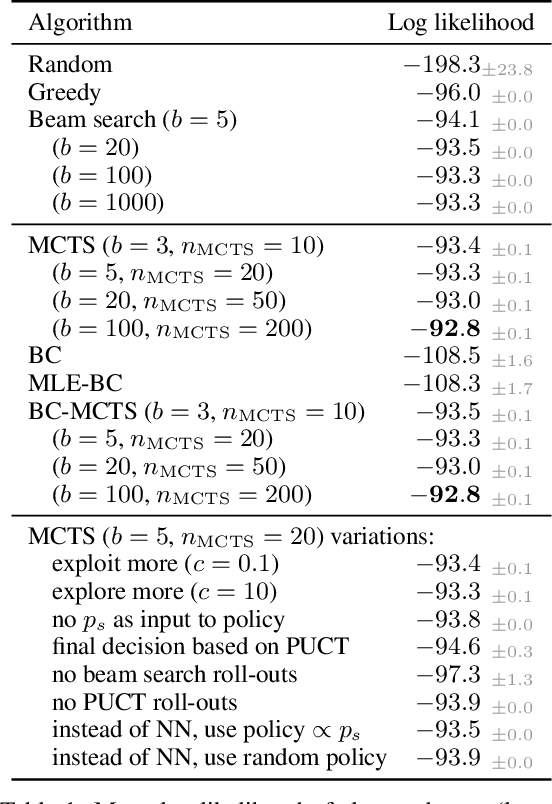
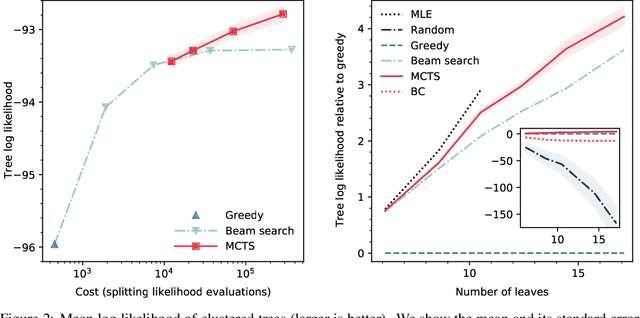
Particle physics experiments often require the reconstruction of decay patterns through a hierarchical clustering of the observed final-state particles. We show that this task can be phrased as a Markov Decision Process and adapt reinforcement learning algorithms to solve it. In particular, we show that Monte-Carlo Tree Search guided by a neural policy can construct high-quality hierarchical clusterings and outperform established greedy and beam search baselines.
Simulation-based inference methods for particle physics
Nov 02, 2020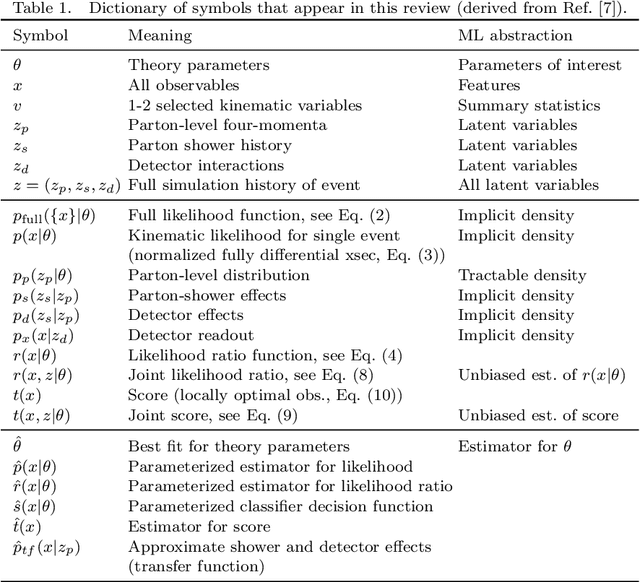
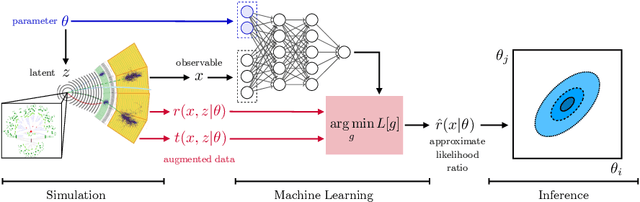
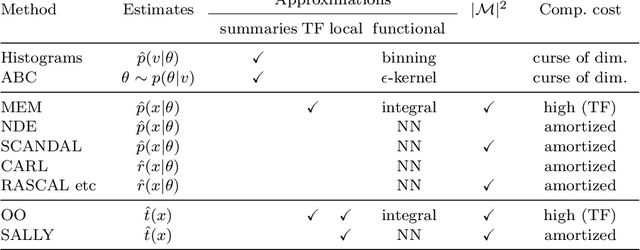
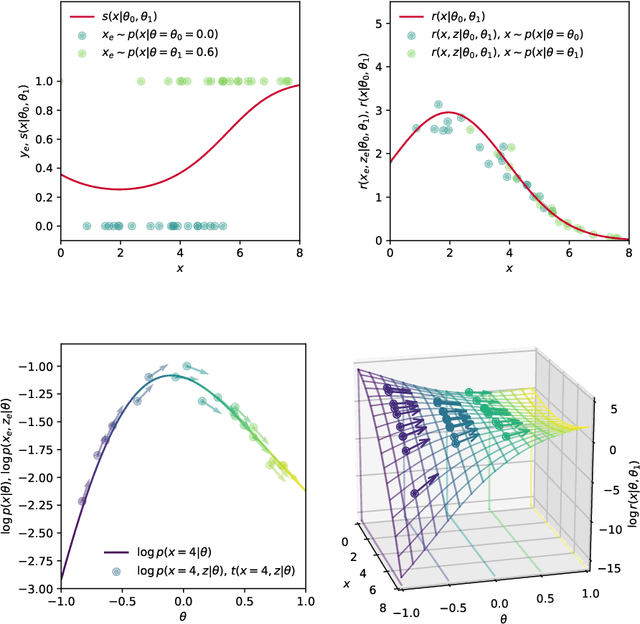
Our predictions for particle physics processes are realized in a chain of complex simulators. They allow us to generate high-fidelity simulated data, but they are not well-suited for inference on the theory parameters with observed data. We explain why the likelihood function of high-dimensional LHC data cannot be explicitly evaluated, why this matters for data analysis, and reframe what the field has traditionally done to circumvent this problem. We then review new simulation-based inference methods that let us directly analyze high-dimensional data by combining machine learning techniques and information from the simulator. Initial studies indicate that these techniques have the potential to substantially improve the precision of LHC measurements. Finally, we discuss probabilistic programming, an emerging paradigm that lets us extend inference to the latent process of the simulator.