 Add to Chrome
 Add to Firefox
 Add to Edge
Balanced LoRA: Removing Parameter Invariance to Accelerate Convergence
May 29, 2026
Low-Rank Adaptation (LoRA) is the most widely adopted method for fine-tuning large language models. Notably, LoRA is inherently overparameterized: multiple pairs of low-rank factors can yield the same adapted weight matrix. We show--both theoretically and empirically--that these pairs exhibit significantly different condition numbers. As a result, converging to different loss minimizers directly impacts the convergence rate of LoRA. Building on this observation, we introduce Balanced Low-Rank Adaptation (BaLoRA), a variant of LoRA that projects iterates onto a balanced manifold. This manifold improves the conditioning of the loss landscape while preserving the adapted matrix. The projection step is computationally lightweight and integrates seamlessly into existing fine-tuning pipelines. Empirically, BaLoRA converges faster than standard LoRA and achieves superior performance across a range of fine-tuning tasks.

Expected Batch Optimal Transport Plans and Consequences for Flow Matching
May 12, 2026Solving optimal transport (OT) on random minibatches is a common surrogate for exact OT in large-scale learning. In flow matching (FM), this surrogate is used to obtain OT-like couplings that can straighten probability paths and reduce numerical integration cost. Yet, the population-level coupling induced by repeated minibatch OT remains only partially understood. We formalize this coupling as the expected batch OT plan $\overlineπ_{k}$, obtained by averaging empirical OT plans over independent minibatches of size $k$. We then establish its large-batch consistency and, in the semidiscrete case relevant to generative modeling, derive rates for both the transport-cost bias and the convergence of $\overlineπ_{k}$ to the OT plan. For FM, this yields a population coupling whose induced velocity field is regular enough to define a unique flow from the source to the discrete target. We finally quantify how OT batch size interacts with numerical integration in a tractable two-atom model and in synthetic and image experiments.
Convergence Rates for Distribution Matching with Sliced Optimal Transport
Feb 11, 2026We study the slice-matching scheme, an efficient iterative method for distribution matching based on sliced optimal transport. We investigate convergence to the target distribution and derive quantitative non-asymptotic rates. To this end, we establish __ojasiewicz-type inequalities for the Sliced-Wasserstein objective. A key challenge is to control along the trajectory the constants in these inequalities. We show that this becomes tractable for Gaussian distributions. Specifically, eigenvalues are controlled when matching along random orthonormal bases at each iteration. We complement our theory with numerical experiments and illustrate the predicted dependence on dimension and step-size, as well as the stabilizing effect of orthonormal-basis sampling.
Optimal Transport-based Conformal Prediction
Jan 31, 2025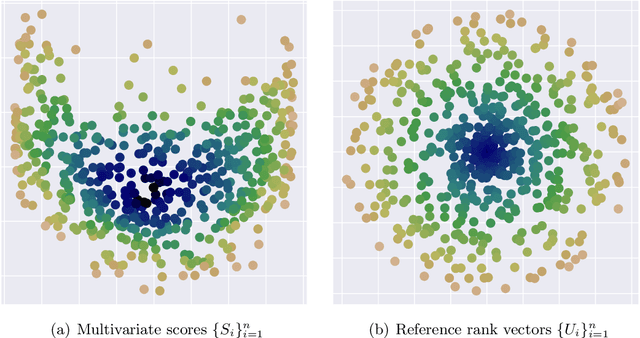
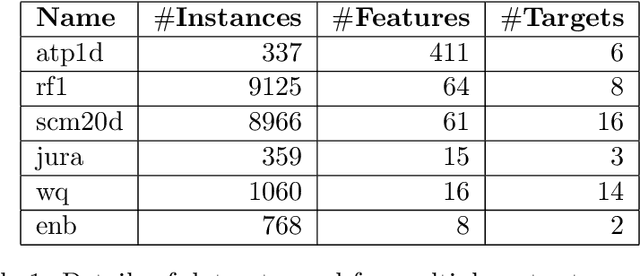
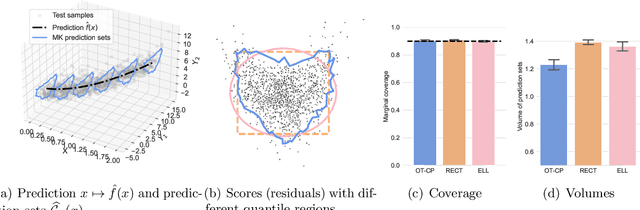
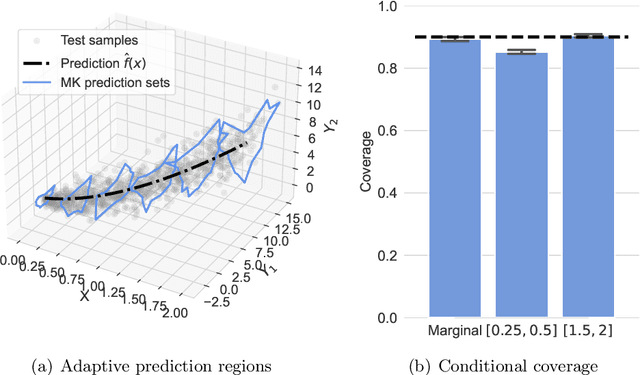
Conformal Prediction (CP) is a principled framework for quantifying uncertainty in blackbox learning models, by constructing prediction sets with finite-sample coverage guarantees. Traditional approaches rely on scalar nonconformity scores, which fail to fully exploit the geometric structure of multivariate outputs, such as in multi-output regression or multiclass classification. Recent methods addressing this limitation impose predefined convex shapes for the prediction sets, potentially misaligning with the intrinsic data geometry. We introduce a novel CP procedure handling multivariate score functions through the lens of optimal transport. Specifically, we leverage Monge-Kantorovich vector ranks and quantiles to construct prediction region with flexible, potentially non-convex shapes, better suited to the complex uncertainty patterns encountered in multivariate learning tasks. We prove that our approach ensures finite-sample, distribution-free coverage properties, similar to typical CP methods. We then adapt our method for multi-output regression and multiclass classification, and also propose simple adjustments to generate adaptive prediction regions with asymptotic conditional coverage guarantees. Finally, we evaluate our method on practical regression and classification problems, illustrating its advantages in terms of (conditional) coverage and efficiency.
Slicing Mutual Information Generalization Bounds for Neural Networks
Jun 06, 2024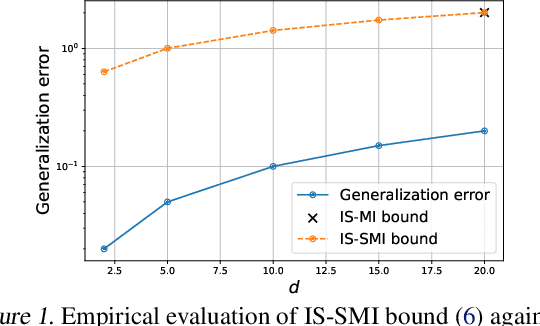

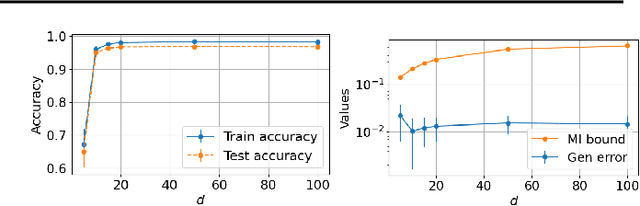
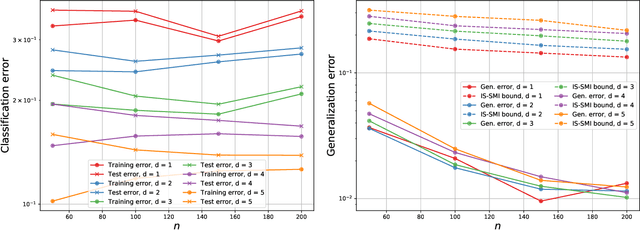
The ability of machine learning (ML) algorithms to generalize well to unseen data has been studied through the lens of information theory, by bounding the generalization error with the input-output mutual information (MI), i.e., the MI between the training data and the learned hypothesis. Yet, these bounds have limited practicality for modern ML applications (e.g., deep learning), due to the difficulty of evaluating MI in high dimensions. Motivated by recent findings on the compressibility of neural networks, we consider algorithms that operate by slicing the parameter space, i.e., trained on random lower-dimensional subspaces. We introduce new, tighter information-theoretic generalization bounds tailored for such algorithms, demonstrating that slicing improves generalization. Our bounds offer significant computational and statistical advantages over standard MI bounds, as they rely on scalable alternative measures of dependence, i.e., disintegrated mutual information and $k$-sliced mutual information. Then, we extend our analysis to algorithms whose parameters do not need to exactly lie on random subspaces, by leveraging rate-distortion theory. This strategy yields generalization bounds that incorporate a distortion term measuring model compressibility under slicing, thereby tightening existing bounds without compromising performance or requiring model compression. Building on this, we propose a regularization scheme enabling practitioners to control generalization through compressibility. Finally, we empirically validate our results and achieve the computation of non-vacuous information-theoretic generalization bounds for neural networks, a task that was previously out of reach.
Asymmetry in Low-Rank Adapters of Foundation Models
Feb 27, 2024
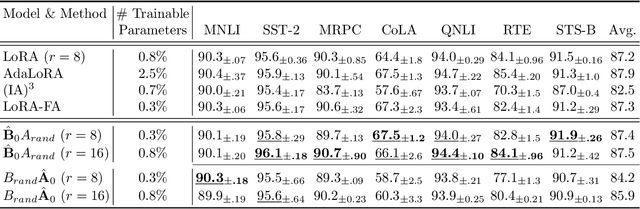

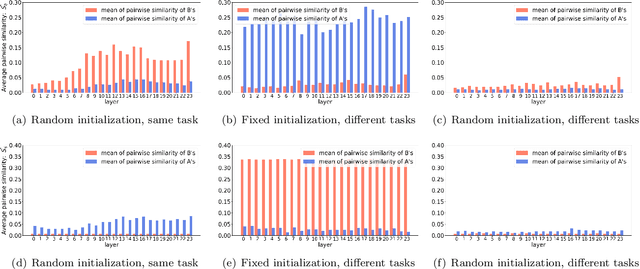
Parameter-efficient fine-tuning optimizes large, pre-trained foundation models by updating a subset of parameters; in this class, Low-Rank Adaptation (LoRA) is particularly effective. Inspired by an effort to investigate the different roles of LoRA matrices during fine-tuning, this paper characterizes and leverages unexpected asymmetry in the importance of low-rank adapter matrices. Specifically, when updating the parameter matrices of a neural network by adding a product $BA$, we observe that the $B$ and $A$ matrices have distinct functions: $A$ extracts features from the input, while $B$ uses these features to create the desired output. Based on this observation, we demonstrate that fine-tuning $B$ is inherently more effective than fine-tuning $A$, and that a random untrained $A$ should perform nearly as well as a fine-tuned one. Using an information-theoretic lens, we also bound the generalization of low-rank adapters, showing that the parameter savings of exclusively training $B$ improves the bound. We support our conclusions with experiments on RoBERTa, BART-Large, LLaMA-2, and ViTs.
Federated Wasserstein Distance
Oct 03, 2023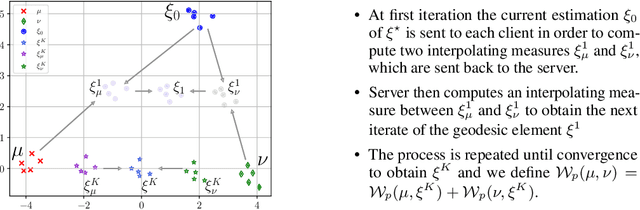
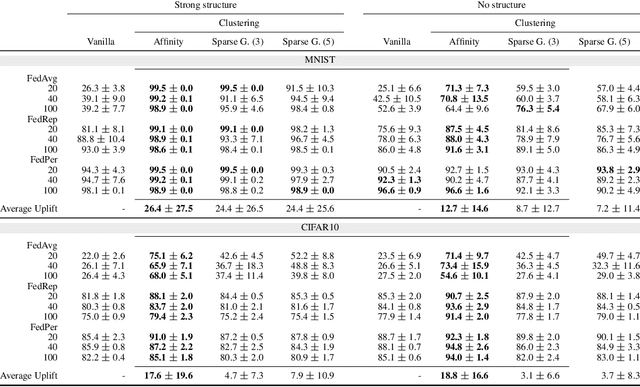

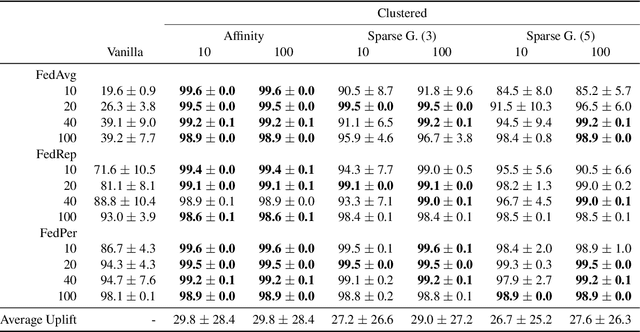
We introduce a principled way of computing the Wasserstein distance between two distributions in a federated manner. Namely, we show how to estimate the Wasserstein distance between two samples stored and kept on different devices/clients whilst a central entity/server orchestrates the computations (again, without having access to the samples). To achieve this feat, we take advantage of the geometric properties of the Wasserstein distance -- in particular, the triangle inequality -- and that of the associated {\em geodesics}: our algorithm, FedWad (for Federated Wasserstein Distance), iteratively approximates the Wasserstein distance by manipulating and exchanging distributions from the space of geodesics in lieu of the input samples. In addition to establishing the convergence properties of FedWad, we provide empirical results on federated coresets and federate optimal transport dataset distance, that we respectively exploit for building a novel federated model and for boosting performance of popular federated learning algorithms.
Unbalanced Optimal Transport meets Sliced-Wasserstein
Jun 12, 2023Optimal transport (OT) has emerged as a powerful framework to compare probability measures, a fundamental task in many statistical and machine learning problems. Substantial advances have been made over the last decade in designing OT variants which are either computationally and statistically more efficient, or more robust to the measures and datasets to compare. Among them, sliced OT distances have been extensively used to mitigate optimal transport's cubic algorithmic complexity and curse of dimensionality. In parallel, unbalanced OT was designed to allow comparisons of more general positive measures, while being more robust to outliers. In this paper, we propose to combine these two concepts, namely slicing and unbalanced OT, to develop a general framework for efficiently comparing positive measures. We propose two new loss functions based on the idea of slicing unbalanced OT, and study their induced topology and statistical properties. We then develop a fast Frank-Wolfe-type algorithm to compute these loss functions, and show that the resulting methodology is modular as it encompasses and extends prior related work. We finally conduct an empirical analysis of our loss functions and methodology on both synthetic and real datasets, to illustrate their relevance and applicability.
Shedding a PAC-Bayesian Light on Adaptive Sliced-Wasserstein Distances
Jun 07, 2022

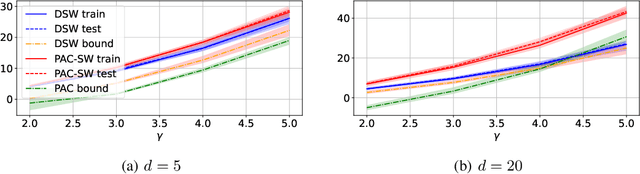
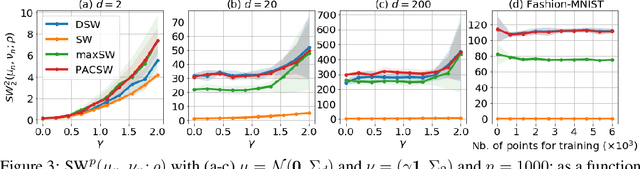
The Sliced-Wasserstein distance (SW) is a computationally efficient and theoretically grounded alternative to the Wasserstein distance. Yet, the literature on its statistical properties with respect to the distribution of slices, beyond the uniform measure, is scarce. To bring new contributions to this line of research, we leverage the PAC-Bayesian theory and the central observation that SW actually hinges on a slice-distribution-dependent Gibbs risk, the kind of quantity PAC-Bayesian bounds have been designed to characterize. We provide four types of results: i) PAC-Bayesian generalization bounds that hold on what we refer as adaptive Sliced-Wasserstein distances, i.e. distances defined with respect to any distribution of slices, ii) a procedure to learn the distribution of slices that yields a maximally discriminative SW, by optimizing our PAC-Bayesian bounds, iii) an insight on how the performance of the so-called distributional Sliced-Wasserstein distance may be explained through our theory, and iv) empirical illustrations of our findings.
Fast Approximation of the Sliced-Wasserstein Distance Using Concentration of Random Projections
Jun 29, 2021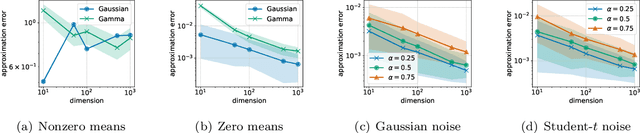
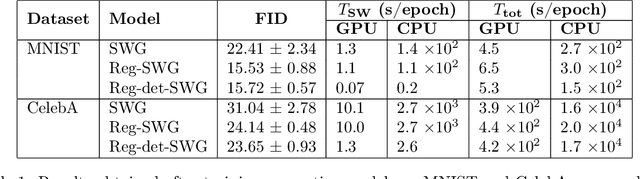
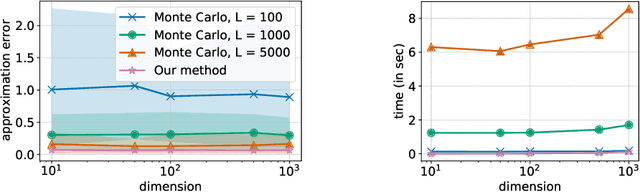

The Sliced-Wasserstein distance (SW) is being increasingly used in machine learning applications as an alternative to the Wasserstein distance and offers significant computational and statistical benefits. Since it is defined as an expectation over random projections, SW is commonly approximated by Monte Carlo. We adopt a new perspective to approximate SW by making use of the concentration of measure phenomenon: under mild assumptions, one-dimensional projections of a high-dimensional random vector are approximately Gaussian. Based on this observation, we develop a simple deterministic approximation for SW. Our method does not require sampling a number of random projections, and is therefore both accurate and easy to use compared to the usual Monte Carlo approximation. We derive nonasymptotical guarantees for our approach, and show that the approximation error goes to zero as the dimension increases, under a weak dependence condition on the data distribution. We validate our theoretical findings on synthetic datasets, and illustrate the proposed approximation on a generative modeling problem.