 Add to Chrome
 Add to Firefox
 Add to Edge
A Sociolinguistic Analysis of Automatic Speech Recognition Bias in Newcastle English
Mar 25, 2026
Automatic Speech Recognition (ASR) systems are widely used in everyday communication, education, healthcare, and industry, yet their performance remains uneven across speakers, particularly when dialectal variation diverges from the mainstream accents represented in training data. This study investigates ASR bias through a sociolinguistic analysis of Newcastle English, a regional variety of North-East England that has been shown to challenge current speech recognition technologies. Using spontaneous speech from the Diachronic Electronic Corpus of Tyneside English (DECTE), we evaluate the output of a state-of-the-art commercial ASR system and conduct a fine-grained analysis of more than 3,000 transcription errors. Errors are classified by linguistic domain and examined in relation to social variables including gender, age, and socioeconomic status. In addition, an acoustic case study of selected vowel features demonstrates how gradient phonetic variation contributes directly to misrecognition. The results show that phonological variation accounts for the majority of errors, with recurrent failures linked to dialect-specific features like vowel quality and glottalisation, as well as local vocabulary and non-standard grammatical forms. Error rates also vary across social groups, with higher error frequencies observed for men and for speakers at the extremes of the age spectrum. These findings indicate that ASR errors are not random but socially patterned and can be explained from a sociolinguistic perspective. Thus, the study demonstrates the importance of incorporating sociolinguistic expertise into the evaluation and development of speech technologies and argues that more equitable ASR systems require explicit attention to dialectal variation and community-based speech data.

CharacterFlywheel: Scaling Iterative Improvement of Engaging and Steerable LLMs in Production
Mar 02, 2026This report presents CharacterFlywheel, an iterative flywheel process for improving large language models (LLMs) in production social chat applications across Instagram, WhatsApp, and Messenger. Starting from LLaMA 3.1, we refined models across 15 generations using data from both internal and external real-user traffic. Through continuous deployments from July 2024 to April 2025, we conducted controlled 7-day A/B tests showing consistent engagement improvements: 7 of 8 newly deployed models demonstrated positive lift over the baseline, with the strongest performers achieving up to 8.8% improvement in engagement breadth and 19.4% in engagement depth. We also observed substantial gains in steerability, with instruction following increasing from 59.2% to 84.8% and instruction violations decreasing from 26.6% to 5.8%. We detail the CharacterFlywheel process which integrates data curation, reward modeling to estimate and interpolate the landscape of engagement metrics, supervised fine-tuning (SFT), reinforcement learning (RL), and both offline and online evaluation to ensure reliable progress at each optimization step. We also discuss our methods for overfitting prevention and navigating production dynamics at scale. These contributions advance the scientific rigor and understanding of LLMs in social applications serving millions of users.
Character-aware Transformers Learn an Irregular Morphological Pattern Yet None Generalize Like Humans
Feb 15, 2026Whether neural networks can serve as cognitive models of morphological learning remains an open question. Recent work has shown that encoder-decoder models can acquire irregular patterns, but evidence that they generalize these patterns like humans is mixed. We investigate this using the Spanish \emph{L-shaped morphome}, where only the first-person singular indicative (e.g., \textit{pongo} `I put') shares its stem with all subjunctive forms (e.g., \textit{ponga, pongas}) despite lacking apparent phonological, semantic, or syntactic motivation. We compare five encoder-decoder transformers varying along two dimensions: sequential vs. position-invariant positional encoding, and atomic vs. decomposed tag representations. Positional encoding proves decisive: position-invariant models recover the correct L-shaped paradigm clustering even when L-shaped verbs are scarce in training, whereas sequential positional encoding models only partially capture the pattern. Yet none of the models productively generalize this pattern to novel forms. Position-invariant models generalize the L-shaped stem across subjunctive cells but fail to extend it to the first-person singular indicative, producing a mood-based generalization rather than the L-shaped morphomic pattern. Humans do the opposite, generalizing preferentially to the first-person singular indicative over subjunctive forms. None of the models reproduce the human pattern, highlighting the gap between statistical pattern reproduction and morphological abstraction.
Prompt-to-Product: Generative Assembly via Bimanual Manipulation
Aug 28, 2025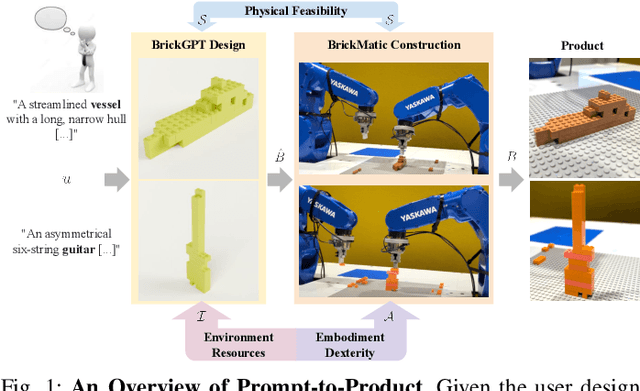
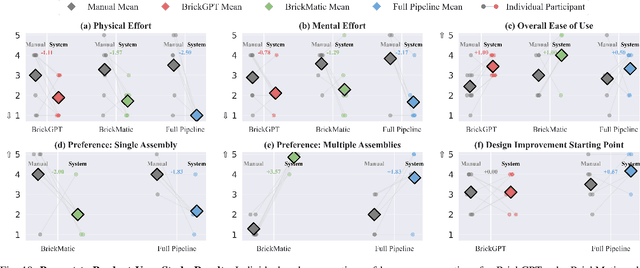
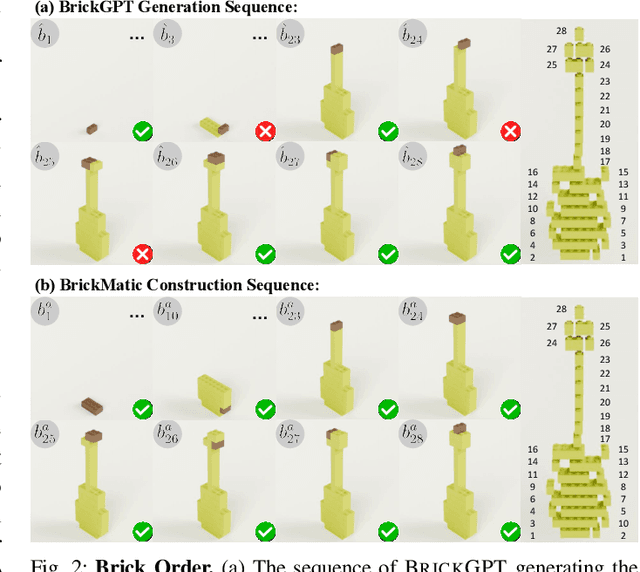
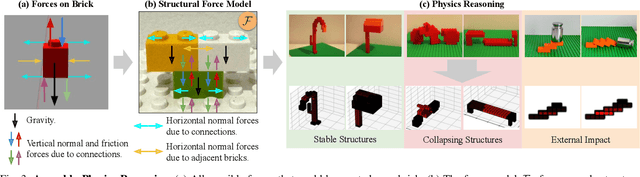
Creating assembly products demands significant manual effort and expert knowledge in 1) designing the assembly and 2) constructing the product. This paper introduces Prompt-to-Product, an automated pipeline that generates real-world assembly products from natural language prompts. Specifically, we leverage LEGO bricks as the assembly platform and automate the process of creating brick assembly structures. Given the user design requirements, Prompt-to-Product generates physically buildable brick designs, and then leverages a bimanual robotic system to construct the real assembly products, bringing user imaginations into the real world. We conduct a comprehensive user study, and the results demonstrate that Prompt-to-Product significantly lowers the barrier and reduces manual effort in creating assembly products from imaginative ideas.
Modeling Probabilistic Reduction using Information Theory and Naive Discriminative Learning
Jun 11, 2025This study compares probabilistic predictors based on information theory with Naive Discriminative Learning (NDL) predictors in modeling acoustic word duration, focusing on probabilistic reduction. We examine three models using the Buckeye corpus: one with NDL-derived predictors using information-theoretic formulas, one with traditional NDL predictors, and one with N-gram probabilistic predictors. Results show that the N-gram model outperforms both NDL models, challenging the assumption that NDL is more effective due to its cognitive motivation. However, incorporating information-theoretic formulas into NDL improves model performance over the traditional model. This research highlights a) the need to incorporate not only frequency and contextual predictability but also average contextual predictability, and b) the importance of combining information-theoretic metrics of predictability and information derived from discriminative learning in modeling acoustic reduction.
Automatic Speech Recognition of African American English: Lexical and Contextual Effects
Jun 07, 2025Automatic Speech Recognition (ASR) models often struggle with the phonetic, phonological, and morphosyntactic features found in African American English (AAE). This study focuses on two key AAE variables: Consonant Cluster Reduction (CCR) and ING-reduction. It examines whether the presence of CCR and ING-reduction increases ASR misrecognition. Subsequently, it investigates whether end-to-end ASR systems without an external Language Model (LM) are more influenced by lexical neighborhood effect and less by contextual predictability compared to systems with an LM. The Corpus of Regional African American Language (CORAAL) was transcribed using wav2vec 2.0 with and without an LM. CCR and ING-reduction were detected using the Montreal Forced Aligner (MFA) with pronunciation expansion. The analysis reveals a small but significant effect of CCR and ING on Word Error Rate (WER) and indicates a stronger presence of lexical neighborhood effect in ASR systems without LMs.
Connecting the Persian-speaking World through Transliteration
Feb 27, 2025Despite speaking mutually intelligible varieties of the same language, speakers of Tajik Persian, written in a modified Cyrillic alphabet, cannot read Iranian and Afghan texts written in the Perso-Arabic script. As the vast majority of Persian text on the Internet is written in Perso-Arabic, monolingual Tajik speakers are unable to interface with the Internet in any meaningful way. Due to overwhelming similarity between the formal registers of these dialects and the scarcity of Tajik-Farsi parallel data, machine transliteration has been proposed as more a practical and appropriate solution than machine translation. This paper presents a transformer-based G2P approach to Tajik-Farsi transliteration, achieving chrF++ scores of 58.70 (Farsi to Tajik) and 74.20 (Tajik to Farsi) on novel digraphic datasets, setting a comparable baseline metric for future work. Our results also demonstrate the non-trivial difficulty of this task in both directions. We also provide an overview of the differences between the two scripts and the challenges they present, so as to aid future efforts in Tajik-Farsi transliteration.
Playing with Voices: Tabletop Role-Playing Game Recordings as a Diarization Challenge
Feb 18, 2025This paper provides a proof of concept that audio of tabletop role-playing games (TTRPG) could serve as a challenge for diarization systems. TTRPGs are carried out mostly by conversation. Participants often alter their voices to indicate that they are talking as a fictional character. Audio processing systems are susceptible to voice conversion with or without technological assistance. TTRPG present a conversational phenomenon in which voice conversion is an inherent characteristic for an immersive gaming experience. This could make it more challenging for diarizers to pick the real speaker and determine that impersonating is just that. We present the creation of a small TTRPG audio dataset and compare it against the AMI and the ICSI corpus. The performance of two diarizers, pyannote.audio and wespeaker, were evaluated. We observed that TTRPGs' properties result in a higher confusion rate for both diarizers. Additionally, wespeaker strongly underestimates the number of speakers in the TTRPG audio files. We propose TTRPG audio as a promising challenge for diarization systems.
Analysis of LLM as a grammatical feature tagger for African American English
Feb 09, 2025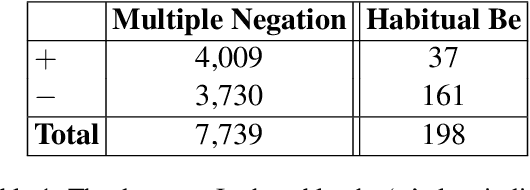
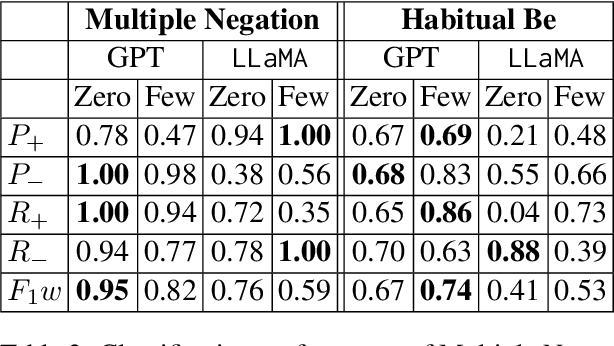
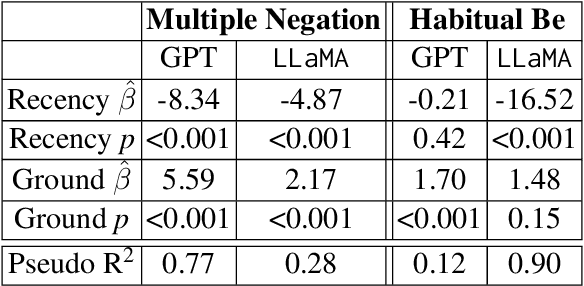
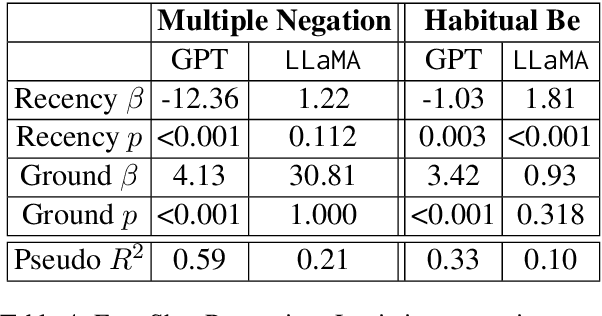
African American English (AAE) presents unique challenges in natural language processing (NLP). This research systematically compares the performance of available NLP models--rule-based, transformer-based, and large language models (LLMs)--capable of identifying key grammatical features of AAE, namely Habitual Be and Multiple Negation. These features were selected for their distinct grammatical complexity and frequency of occurrence. The evaluation involved sentence-level binary classification tasks, using both zero-shot and few-shot strategies. The analysis reveals that while LLMs show promise compared to the baseline, they are influenced by biases such as recency and unrelated features in the text such as formality. This study highlights the necessity for improved model training and architectural adjustments to better accommodate AAE's unique linguistic characteristics. Data and code are available.
Frequency matters: Modeling irregular morphological patterns in Spanish with Transformers
Oct 28, 2024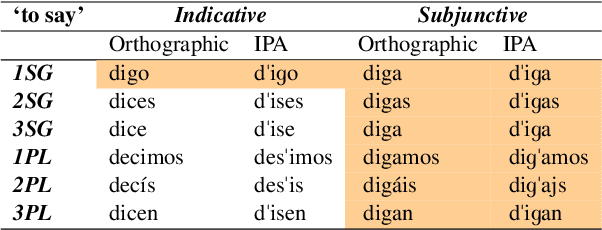
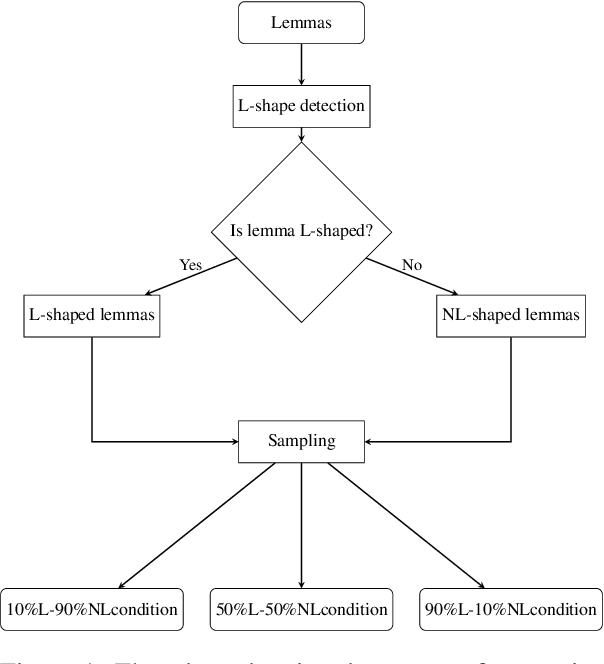
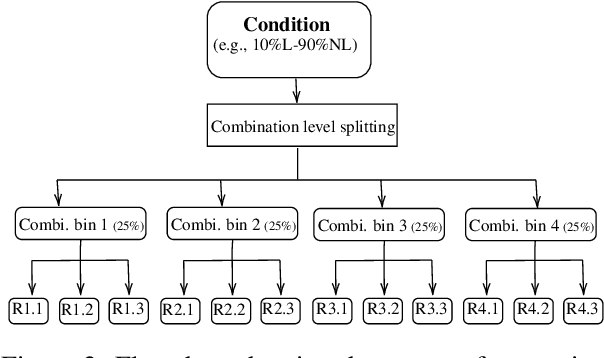
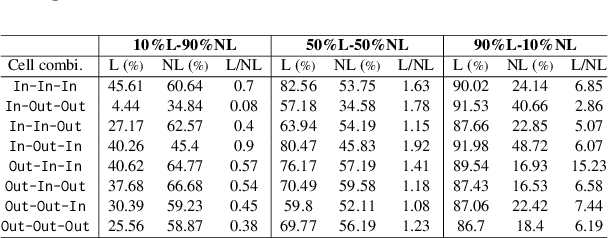
The present paper evaluates the learning behaviour of a transformer-based neural network with regard to an irregular inflectional paradigm. We apply the paradigm cell filling problem to irregular patterns. We approach this problem using the morphological reinflection task and model it as a character sequence-to-sequence learning problem. The test case under investigation are irregular verbs in Spanish. Besides many regular verbs in Spanish L-shaped verbs the first person singular indicative stem irregularly matches the subjunctive paradigm, while other indicative forms remain unaltered. We examine the role of frequency during learning and compare models under differing input frequency conditions. We train the model on a corpus of Spanish with a realistic distribution of regular and irregular verbs to compare it with models trained on input with augmented distributions of (ir)regular words. We explore how the neural models learn this L-shaped pattern using post-hoc analyses. Our experiments show that, across frequency conditions, the models are surprisingly capable of learning the irregular pattern. Furthermore, our post-hoc analyses reveal the possible sources of errors. All code and data are available at \url{https://anonymous.4open.science/r/modeling_spanish_acl-7567/} under MIT license.