 Add to Chrome
 Add to Firefox
 Add to Edge
MISO: Model-Internal-State-Guided Optimization for Ranking Models
Aug 07, 2026
Ranking models are repeatedly refined within established model families, yet the choice of which component to scale, replace, or retire is often guided by expensive trial-and-error. We present Model Internal State Optimization (MISO), a systems workflow that uses model internal states (MIS), including parameters, activations, gradients, and normalization statistics, to prioritize such local optimization decisions. MISO extracts MIS from a trained ranking model, aggregates them into ranking, alignment, and comparison signals, and converts those signals into a small set of interpretable candidate edits. Because MIS are re-extracted after each retraining cycle, MISO naturally supports an adaptive optimization workflow that tracks evolving model behavior as data distributions and system requirements shift over time. In an ads ranking case study, MISO improves normalized entropy while requiring substantially fewer validation runs than expert-driven and black-box scaling workflows, offering a practical middle ground between manual tuning and opaque automated search.

EasyHeC++: Fully Automatic Hand-Eye Calibration with Pretrained Image Models
Oct 11, 2024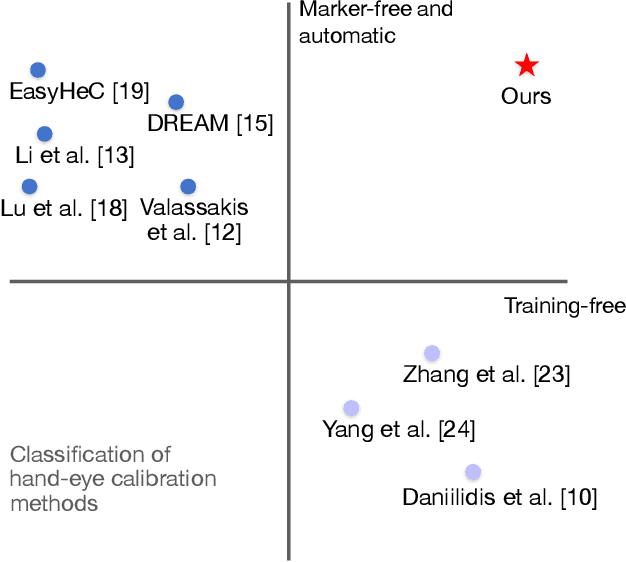

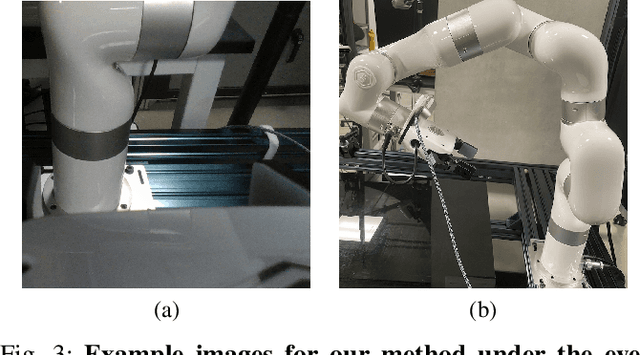
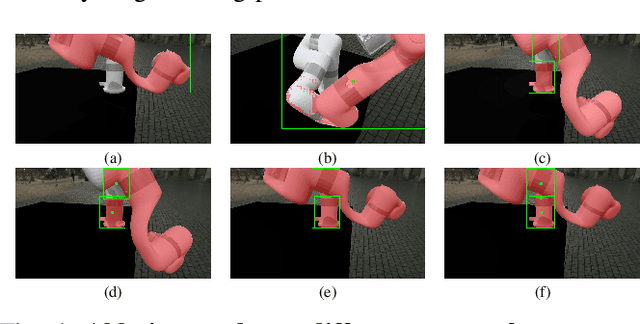
Hand-eye calibration plays a fundamental role in robotics by directly influencing the efficiency of critical operations such as manipulation and grasping. In this work, we present a novel framework, EasyHeC++, designed for fully automatic hand-eye calibration. In contrast to previous methods that necessitate manual calibration, specialized markers, or the training of arm-specific neural networks, our approach is the first system that enables accurate calibration of any robot arm in a marker-free, training-free, and fully automatic manner. Our approach employs a two-step process. First, we initialize the camera pose using a sampling or feature-matching-based method with the aid of pretrained image models. Subsequently, we perform pose optimization through differentiable rendering. Extensive experiments demonstrate the system's superior accuracy in both synthetic and real-world datasets across various robot arms and camera settings. Project page: https://ootts.github.io/easyhec_plus.
OPONeRF: One-Point-One NeRF for Robust Neural Rendering
Sep 30, 2024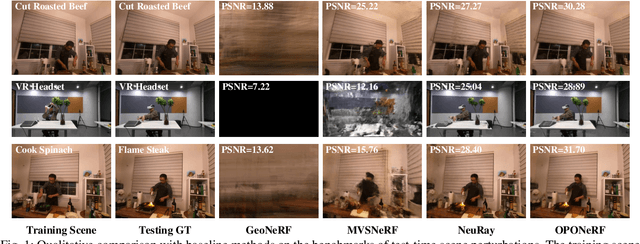

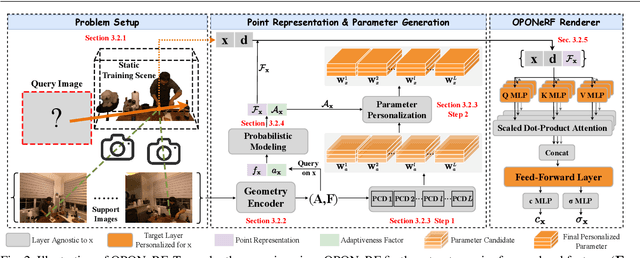

In this paper, we propose a One-Point-One NeRF (OPONeRF) framework for robust scene rendering. Existing NeRFs are designed based on a key assumption that the target scene remains unchanged between the training and test time. However, small but unpredictable perturbations such as object movements, light changes and data contaminations broadly exist in real-life 3D scenes, which lead to significantly defective or failed rendering results even for the recent state-of-the-art generalizable methods. To address this, we propose a divide-and-conquer framework in OPONeRF that adaptively responds to local scene variations via personalizing appropriate point-wise parameters, instead of fitting a single set of NeRF parameters that are inactive to test-time unseen changes. Moreover, to explicitly capture the local uncertainty, we decompose the point representation into deterministic mapping and probabilistic inference. In this way, OPONeRF learns the sharable invariance and unsupervisedly models the unexpected scene variations between the training and testing scenes. To validate the effectiveness of the proposed method, we construct benchmarks from both realistic and synthetic data with diverse test-time perturbations including foreground motions, illumination variations and multi-modality noises, which are more challenging than conventional generalization and temporal reconstruction benchmarks. Experimental results show that our OPONeRF outperforms state-of-the-art NeRFs on various evaluation metrics through benchmark experiments and cross-scene evaluations. We further show the efficacy of the proposed method via experimenting on other existing generalization-based benchmarks and incorporating the idea of One-Point-One NeRF into other advanced baseline methods.