 Add to Chrome
 Add to Firefox
 Add to Edge
TERRA: A Hierarchical Parallel Training and Memory Orchestration Framework for High-Resolution AI-based Earth Modeling
Aug 15, 2026
Training high-resolution AI-based Earth forecasting models is memory-intensive. Window-based Swin Transformers reduce the quadratic cost of global attention, but existing distributed systems such as AERIS primarily target pixel-level models and do not jointly support convolutional sampling modules and shifted-window execution. Long-lead rollout finetuning further increases activation memory. To address these challenges, we present TERRA, a hierarchical parallel training framework for high-resolution Earth forecasting. TERRA introduces Sampling-Aware Window, Sequence, and Tensor Parallelism (SAWSTP), which preserves spatially contiguous layouts for sampling modules and routes tokens into topology-aware ragged window layouts for Transformer execution. For long-lead finetuning, Memory Orchestration (MO) provides rollout-aware checkpoint planning and combines input buffering with budget-constrained activation offloading. Experiments on the $1/12^\circ$ GLORYS-based Wenhai workload show that TERRA supports models with up to 11.4B parameters on 96 H200 GPUs and sustains up to $39.76$ PFLOPS, achieving $65.0\%$ strong-scaling and $94.1\%$ weak-scaling efficiency. Compared with checkpoint-only policies, MO further reduces peak allocated GPU memory by $32.2\%$--$51.8\%$ with at most $20.0\%$ step-time overhead, which makes finetuning with smaller patch sizes and longer rollouts feasible for improved forecasting accuracy.

Cellular Signal Constructed Convolutional Vision Transformer for High Accuracy Positioning
Jul 14, 2026Modern cellular systems employ wide bandwidths and large antenna arrays to meet high data rate requirements. The high spatial and temporal resolution for communication also enables high-accuracy positioning as an ancillary benefit. Standard convolutional neural networks (CNNs) and vision Transformers have demonstrated excellent performance in positioning by leveraging delay-angle domain channel representations. However, they still face practical challenges in complicated cellular environments with low signal-to-noise ratios and severe inter-cell interference. This paper proposes a hybrid convolutional vision Transformer (ConViT) architecture that integrates the local receptive fields of CNNs to suppress local noise and employs Transformers to capture global attention among different multipath components. Various fusion strategies for combining signals from multiple distributed base stations are also evaluated. An extended Kalman filter with sensor fusion is applied to further mitigate long tail fluctuations of model estimates. Comprehensive validation is conducted with commercial long-term-evolution signals received by a large antenna array in urban environments with non line-of-sight signals and strong inter-cell interference. ConViT achieves a distance root mean square error (RMSE) of 3.46 meters and a yaw RMSE of 2.54 degrees, significantly outperforming benchmark models, while maintaining a lower parameter count and reduced computational complexity. Finally, a correspondence analysis between delay-angle power distributions and Transformer attention weights demonstrates the interpretability of the model.
Pruner: An Efficient Cross-Platform Tensor Compiler with Dual Awareness
Feb 04, 2024Tensor program optimization on Deep Learning Accelerators (DLAs) is critical for efficient model deployment. Although search-based Deep Learning Compilers (DLCs) have achieved significant performance gains compared to manual methods, they still suffer from the persistent challenges of low search efficiency and poor cross-platform adaptability. In this paper, we propose $\textbf{Pruner}$, following hardware/software co-design principles to hierarchically boost tensor program optimization. Pruner comprises two primary components: a Parameterized Static Analyzer ($\textbf{PSA}$) and a Pattern-aware Cost Model ($\textbf{PaCM}$). The former serves as a hardware-aware and formulaic performance analysis tool, guiding the pruning of the search space, while the latter enables the performance prediction of tensor programs according to the critical data-flow patterns. Furthermore, to ensure effective cross-platform adaptation, we design a Momentum Transfer Learning ($\textbf{MTL}$) strategy using a Siamese network, which establishes a bidirectional feedback mechanism to improve the robustness of the pre-trained cost model. The extensive experimental results demonstrate the effectiveness and advancement of the proposed Pruner in various tensor program tuning tasks across both online and offline scenarios, with low resource overhead. The code is available at https://github.com/qiaolian9/Pruner.
Wiometrics: Comparative Performance of Artificial Neural Networks for Wireless Navigation
Sep 05, 2023
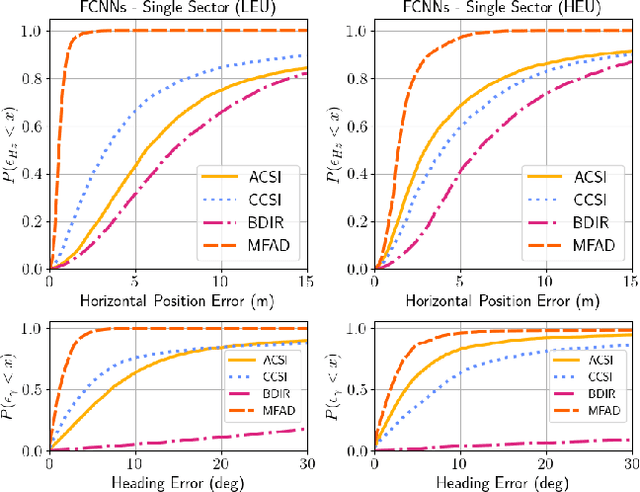
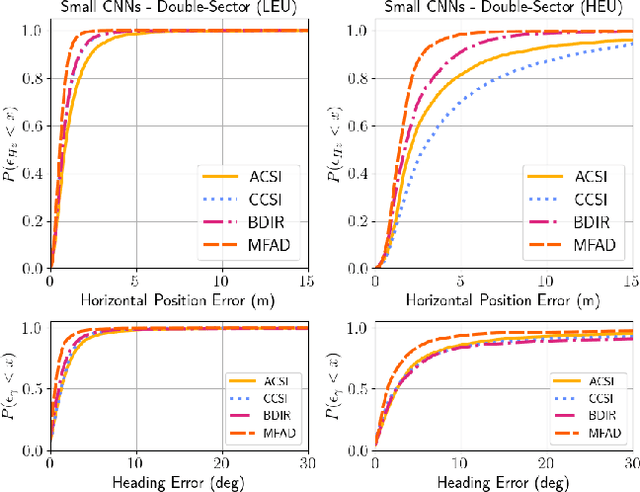
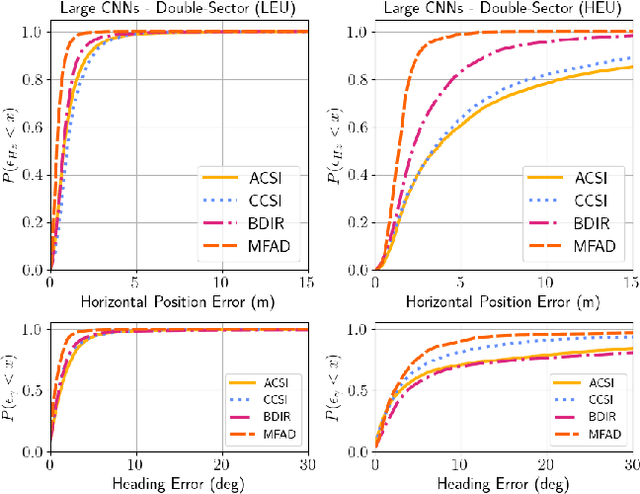
Radio signals are used broadly as navigation aids, and current and future terrestrial wireless communication systems have properties that make their dual-use for this purpose attractive. Sub-6 GHz carrier frequencies enable widespread coverage for data communication and navigation, but typically offer smaller bandwidths and limited resolution for precise estimation of geometries, particularly in environments where propagation channels are diffuse in time and/or space. Non-parametric methods have been employed with some success for such scenarios both commercially and in literature, but often with an emphasis on low-cost hardware and simple models of propagation, or with simulations that do not fully capture hardware impairments and complex propagation mechanisms. In this article, we make opportunistic observations of downlink signals transmitted by commercial cellular networks by using a software-defined radio and massive antenna array mounted on a passenger vehicle in an urban non line-of-sight scenario, together with a ground truth reference for vehicle pose. With these observations as inputs, we employ artificial neural networks to generate estimates of vehicle location and heading for various artificial neural network architectures and different representations of the input observation data, which we call wiometrics, and compare the performance for navigation. Position accuracy on the order of a few meters, and heading accuracy of a few degrees, are achieved for the best-performing combinations of networks and wiometrics. Based on the results of the experiments we draw conclusions regarding possible future directions for wireless navigation using statistical methods.
Extended FastSLAM Using Cellular Multipath Component Delays and Angular Information
Jan 18, 2023Opportunistic navigation using cellular signals is appealing for scenarios where other navigation technologies face challenges. In this paper, long-term evolution (LTE) downlink signals from two neighboring commercial base stations (BS) are received by a massive antenna array mounted on a passenger vehicle. Multipath component (MPC) delays and angle-of-arrival (AOA) extracted from the received signals are used to jointly estimate the positions of the vehicle, transmitters, and virtual transmitters (VT) with an extended fast simultaneous localization and mapping (FastSLAM) algorithm. The results show that the algorithm can accurately estimate the positions of the vehicle and the transmitters (and virtual transmitters). The vehicle's horizontal position error of SLAM fused with proprioception is less than 6 meters after a traversed distance of 530 meters, whereas un-aided proprioception results in a horizontal error of 15 meters.
High-Resolution Channel Sounding and Parameter Estimation in Multi-Site Cellular Networks
Nov 17, 2022Accurate understanding of electromagnetic propagation properties in real environments is necessary for efficient design and deployment of cellular systems. In this paper, we show a method to estimate high-resolution channel parameters with a massive antenna array in real network deployments. An antenna array mounted on a vehicle is used to receive downlink long-term evolution (LTE) reference signals from neighboring base stations (BS) with mutual interference. Delay and angular information of multipath components is estimated with a novel inter-cell interference cancellation algorithm and an extension of the RIMAX algorithm. The estimated high-resolution channel parameters are consistent with the movement pattern of the vehicle and the geometry of the environment and allow for refined channel modeling and precise cellular positioning.