 Add to Chrome
 Add to Firefox
 Add to Edge
Dual Inversion for Text-to-Image Diffusion Models: From Both Prompt and Noise Perspectives
Jul 29, 2026
Prompt inversion, as a typical reverse engineering technique, enables text-to-image (T2I) diffusion models to generate the desired target images without extensive prompt engineering. However, existing prompt inversion methods suffer from significant limitations: (1) gradient-based methods are unstable and uninterpretable, often resulting in generated images with severe artifacts; (2) gradient-free methods yield human-readable prompts but still fail to preserve visual fidelity due to the lack of fine-grained detail alignment. We contend that the limitations stem from treating prompt inversion as a sufficient condition for reverse engineering, ignoring the critical role of the latent noise that encodes structural information. Consequently, we propose Dualin (Dual inversion), a two-stage method that jointly recovers both the semantic prompt and latent noise of the target image. In the first stage, we integrate vision-language model, CLIP and large language model to invert a faithful, human-interpretable hard prompt. In the second stage, unconditional DDIM inversion reconstructs the exact latent noise of the target image, guaranteeing the consistency at the structural information level. Theoretically, we prove that the inverted noise enables flexible image editing without re-optimization. Extensive experiments on diverse datasets demonstrate that Dualin simultaneously generates high-quality inverted prompts and achieves state-of-the-art image fidelity. Additionally, Dualin can establish a robust foundation for the precise and controllable image editing.

Adversarial RAW: Image-Scaling Attack Against Imaging Pipeline
Jun 02, 2022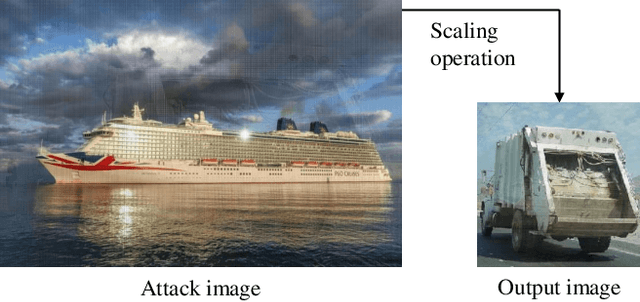
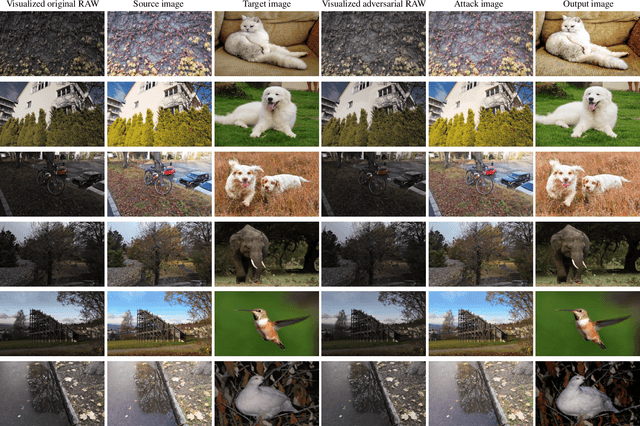
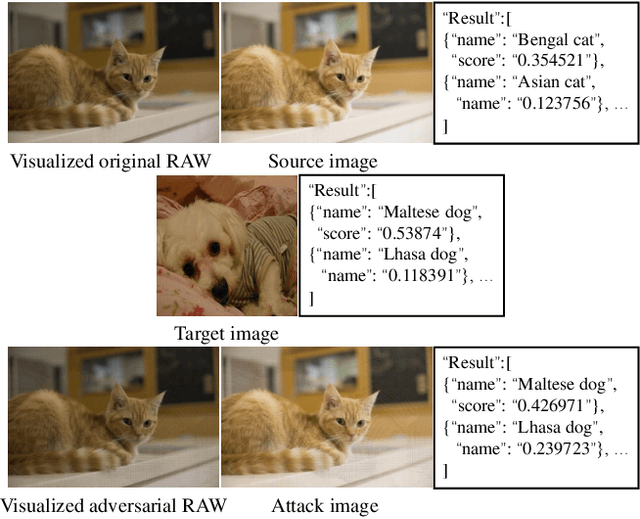
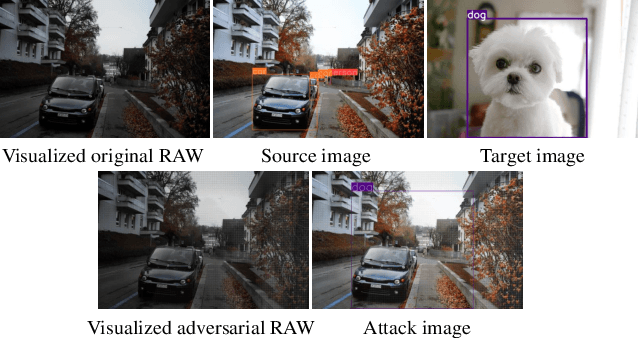
Deep learning technologies have become the backbone for the development of computer vision. With further explorations, deep neural networks have been found vulnerable to well-designed adversarial attacks. Most of the vision devices are equipped with image signal processing (ISP) pipeline to implement RAW-to-RGB transformations and embedded into data preprocessing module for efficient image processing. Actually, ISP pipeline can introduce adversarial behaviors to post-capture images while data preprocessing may destroy attack patterns. However, none of the existing adversarial attacks takes into account the impacts of both ISP pipeline and data preprocessing. In this paper, we develop an image-scaling attack targeting on ISP pipeline, where the crafted adversarial RAW can be transformed into attack image that presents entirely different appearance once being scaled to a specific-size image. We first consider the gradient-available ISP pipeline, i.e., the gradient information can be directly used in the generation process of adversarial RAW to launch the attack. To make the adversarial attack more applicable, we further consider the gradient-unavailable ISP pipeline, in which a proxy model that well learns the RAW-to-RGB transformations is proposed as the gradient oracles. Extensive experiments show that the proposed adversarial attacks can craft adversarial RAW data against the target ISP pipelines with high attack rates.
Edge Data Based Trailer Inception Probabilistic Matrix Factorization for Context-Aware Movie Recommendation
Feb 16, 2022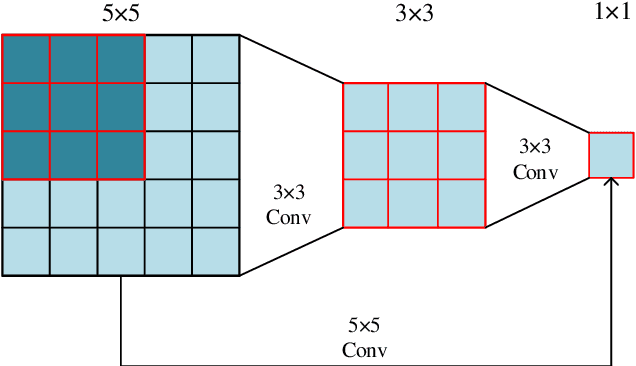
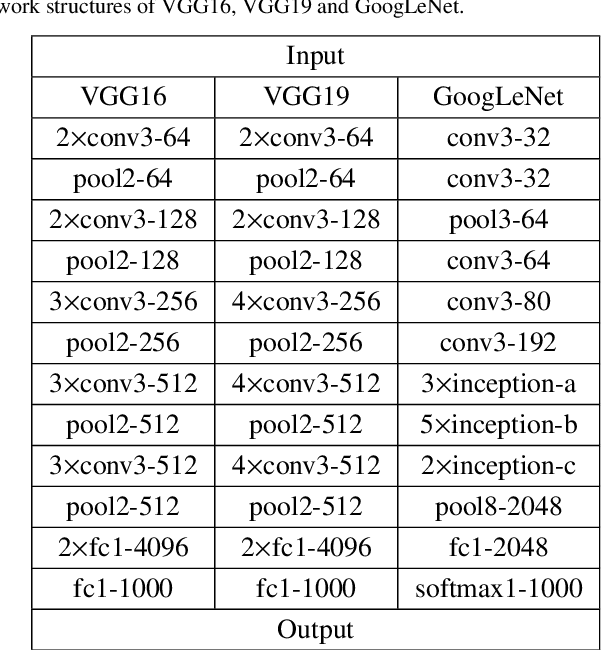
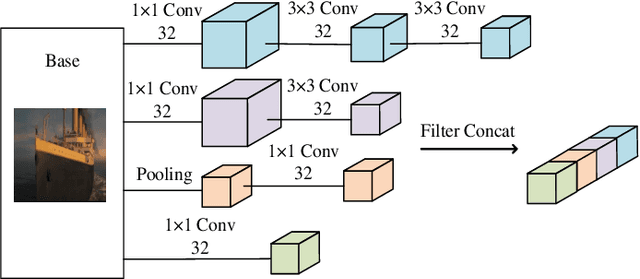
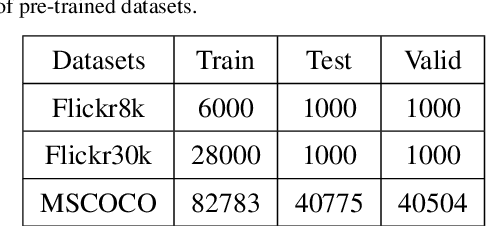
The rapid growth of edge data generated by mobile devices and applications deployed at the edge of the network has exacerbated the problem of information overload. As an effective way to alleviate information overload, recommender system can improve the quality of various services by adding application data generated by users on edge devices, such as visual and textual information, on the basis of sparse rating data. The visual information in the movie trailer is a significant part of the movie recommender system. However, due to the complexity of visual information extraction, data sparsity cannot be remarkably alleviated by merely using the rough visual features to improve the rating prediction accuracy. Fortunately, the convolutional neural network can be used to extract the visual features precisely. Therefore, the end-to-end neural image caption (NIC) model can be utilized to obtain the textual information describing the visual features of movie trailers. This paper proposes a trailer inception probabilistic matrix factorization model called Ti-PMF, which combines NIC, recurrent convolutional neural network, and probabilistic matrix factorization models as the rating prediction model. We implement the proposed Ti-PMF model with extensive experiments on three real-world datasets to validate its effectiveness. The experimental results illustrate that the proposed Ti-PMF outperforms the existing ones.