 Add to Chrome
 Add to Firefox
 Add to Edge
DeepType: Multilingual Entity Linking by Neural Type System Evolution
Feb 03, 2018
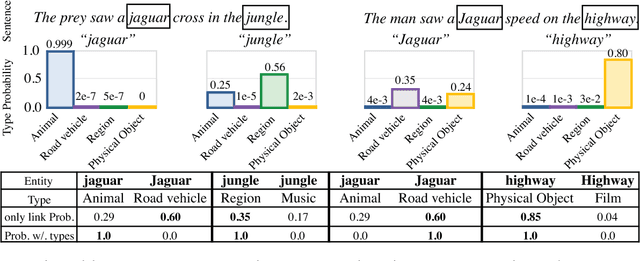
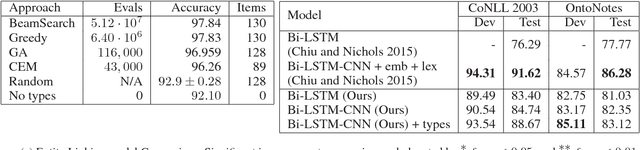
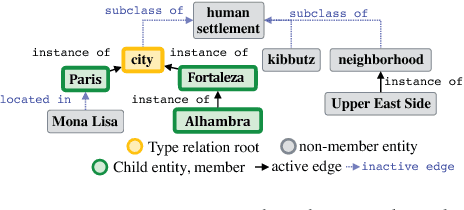
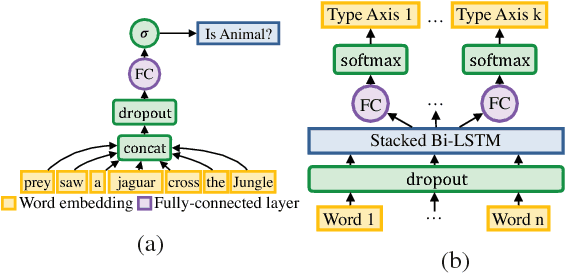
The wealth of structured (e.g. Wikidata) and unstructured data about the world available today presents an incredible opportunity for tomorrow's Artificial Intelligence. So far, integration of these two different modalities is a difficult process, involving many decisions concerning how best to represent the information so that it will be captured or useful, and hand-labeling large amounts of data. DeepType overcomes this challenge by explicitly integrating symbolic information into the reasoning process of a neural network with a type system. First we construct a type system, and second, we use it to constrain the outputs of a neural network to respect the symbolic structure. We achieve this by reformulating the design problem into a mixed integer problem: create a type system and subsequently train a neural network with it. In this reformulation discrete variables select which parent-child relations from an ontology are types within the type system, while continuous variables control a classifier fit to the type system. The original problem cannot be solved exactly, so we propose a 2-step algorithm: 1) heuristic search or stochastic optimization over discrete variables that define a type system informed by an Oracle and a Learnability heuristic, 2) gradient descent to fit classifier parameters. We apply DeepType to the problem of Entity Linking on three standard datasets (i.e. WikiDisamb30, CoNLL (YAGO), TAC KBP 2010) and find that it outperforms all existing solutions by a wide margin, including approaches that rely on a human-designed type system or recent deep learning-based entity embeddings, while explicitly using symbolic information lets it integrate new entities without retraining.

Deep Voice 2: Multi-Speaker Neural Text-to-Speech
Sep 20, 2017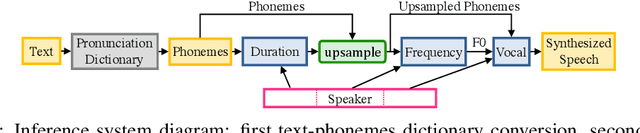
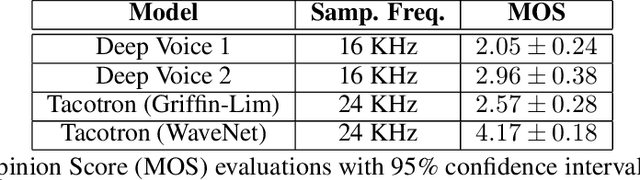
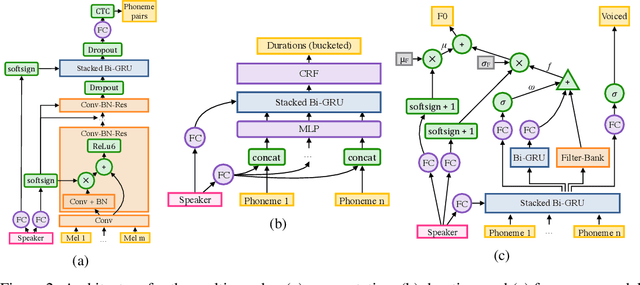
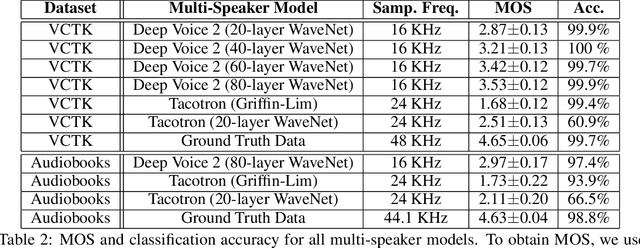
We introduce a technique for augmenting neural text-to-speech (TTS) with lowdimensional trainable speaker embeddings to generate different voices from a single model. As a starting point, we show improvements over the two state-ofthe-art approaches for single-speaker neural TTS: Deep Voice 1 and Tacotron. We introduce Deep Voice 2, which is based on a similar pipeline with Deep Voice 1, but constructed with higher performance building blocks and demonstrates a significant audio quality improvement over Deep Voice 1. We improve Tacotron by introducing a post-processing neural vocoder, and demonstrate a significant audio quality improvement. We then demonstrate our technique for multi-speaker speech synthesis for both Deep Voice 2 and Tacotron on two multi-speaker TTS datasets. We show that a single neural TTS system can learn hundreds of unique voices from less than half an hour of data per speaker, while achieving high audio quality synthesis and preserving the speaker identities almost perfectly.
Globally Normalized Reader
Sep 08, 2017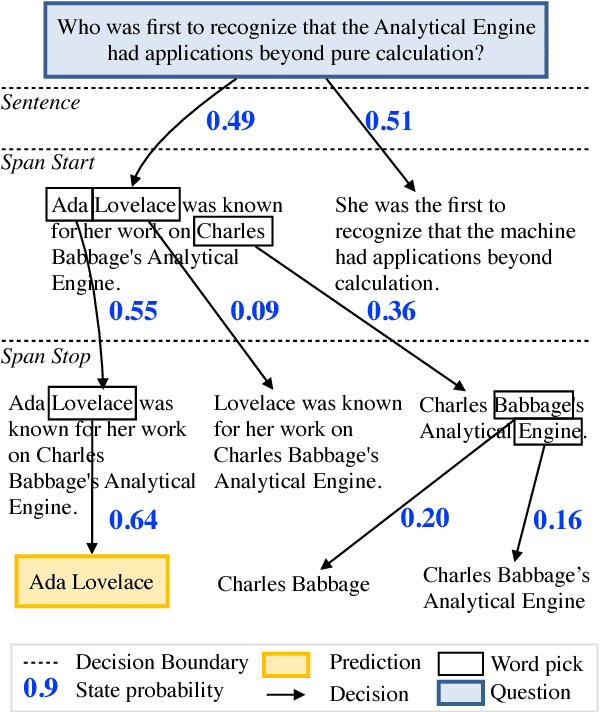
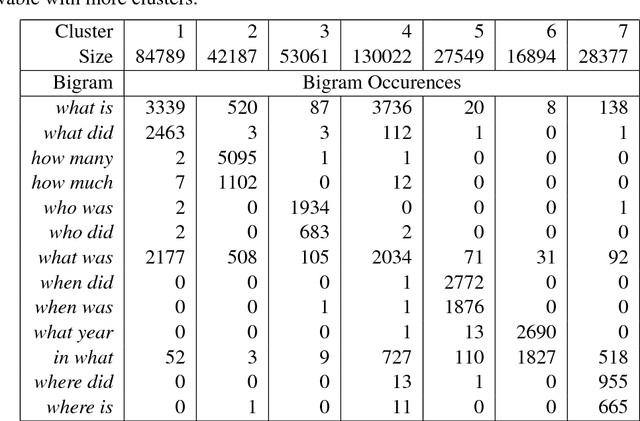
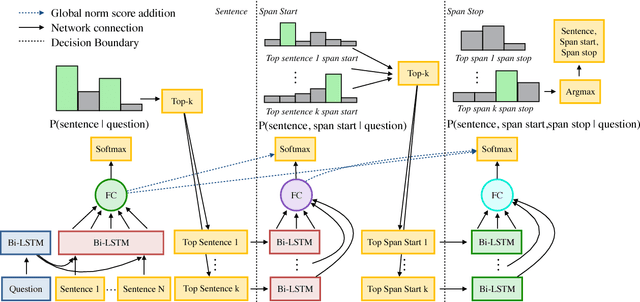
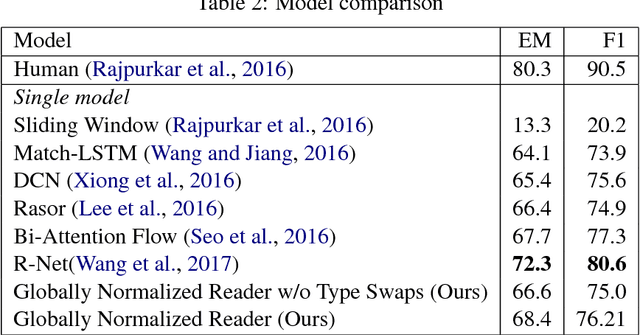
Rapid progress has been made towards question answering (QA) systems that can extract answers from text. Existing neural approaches make use of expensive bi-directional attention mechanisms or score all possible answer spans, limiting scalability. We propose instead to cast extractive QA as an iterative search problem: select the answer's sentence, start word, and end word. This representation reduces the space of each search step and allows computation to be conditionally allocated to promising search paths. We show that globally normalizing the decision process and back-propagating through beam search makes this representation viable and learning efficient. We empirically demonstrate the benefits of this approach using our model, Globally Normalized Reader (GNR), which achieves the second highest single model performance on the Stanford Question Answering Dataset (68.4 EM, 76.21 F1 dev) and is 24.7x faster than bi-attention-flow. We also introduce a data-augmentation method to produce semantically valid examples by aligning named entities to a knowledge base and swapping them with new entities of the same type. This method improves the performance of all models considered in this work and is of independent interest for a variety of NLP tasks.
Deep Voice: Real-time Neural Text-to-Speech
Mar 07, 2017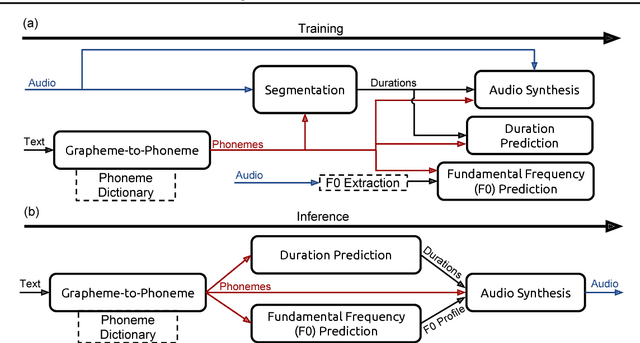
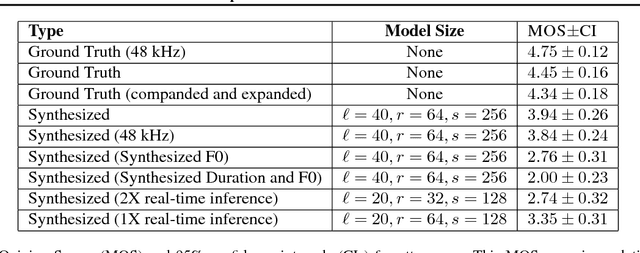
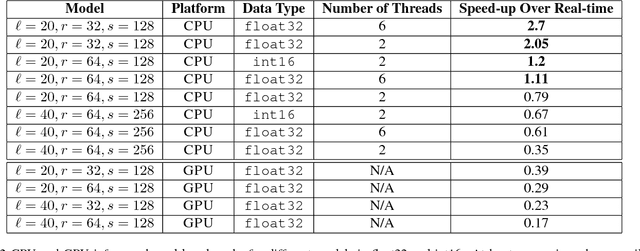
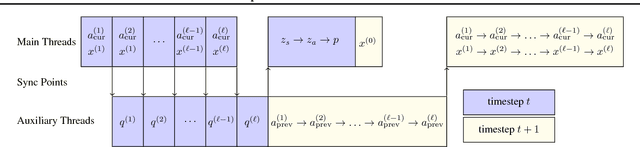
We present Deep Voice, a production-quality text-to-speech system constructed entirely from deep neural networks. Deep Voice lays the groundwork for truly end-to-end neural speech synthesis. The system comprises five major building blocks: a segmentation model for locating phoneme boundaries, a grapheme-to-phoneme conversion model, a phoneme duration prediction model, a fundamental frequency prediction model, and an audio synthesis model. For the segmentation model, we propose a novel way of performing phoneme boundary detection with deep neural networks using connectionist temporal classification (CTC) loss. For the audio synthesis model, we implement a variant of WaveNet that requires fewer parameters and trains faster than the original. By using a neural network for each component, our system is simpler and more flexible than traditional text-to-speech systems, where each component requires laborious feature engineering and extensive domain expertise. Finally, we show that inference with our system can be performed faster than real time and describe optimized WaveNet inference kernels on both CPU and GPU that achieve up to 400x speedups over existing implementations.
Deep Speech 2: End-to-End Speech Recognition in English and Mandarin
Dec 08, 2015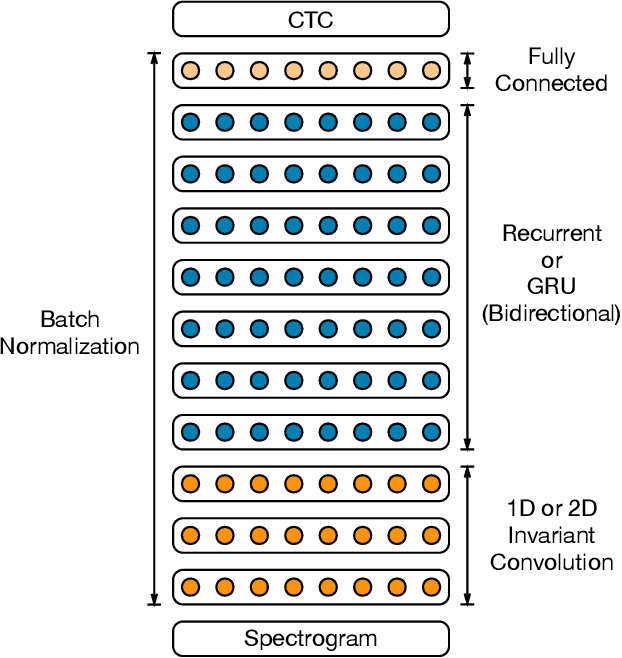
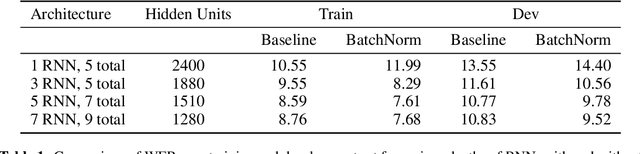
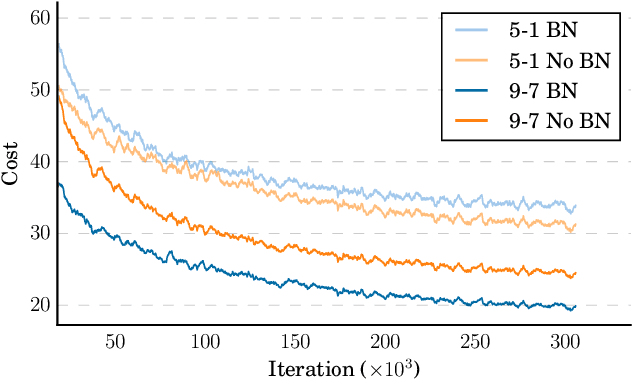
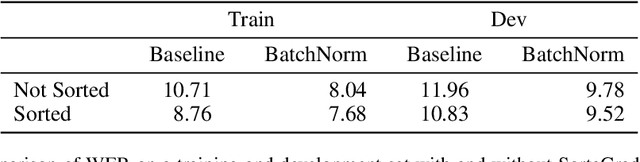
We show that an end-to-end deep learning approach can be used to recognize either English or Mandarin Chinese speech--two vastly different languages. Because it replaces entire pipelines of hand-engineered components with neural networks, end-to-end learning allows us to handle a diverse variety of speech including noisy environments, accents and different languages. Key to our approach is our application of HPC techniques, resulting in a 7x speedup over our previous system. Because of this efficiency, experiments that previously took weeks now run in days. This enables us to iterate more quickly to identify superior architectures and algorithms. As a result, in several cases, our system is competitive with the transcription of human workers when benchmarked on standard datasets. Finally, using a technique called Batch Dispatch with GPUs in the data center, we show that our system can be inexpensively deployed in an online setting, delivering low latency when serving users at scale.
Occam's Gates
Jun 27, 2015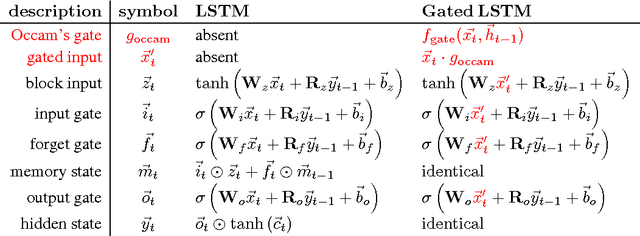
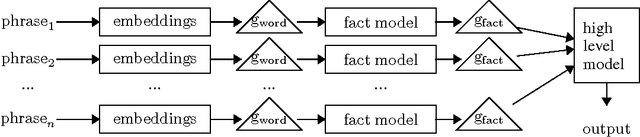
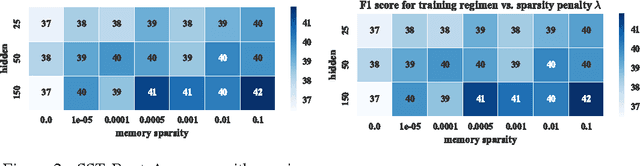
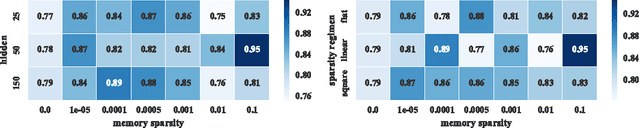
We present a complimentary objective for training recurrent neural networks (RNN) with gating units that helps with regularization and interpretability of the trained model. Attention-based RNN models have shown success in many difficult sequence to sequence classification problems with long and short term dependencies, however these models are prone to overfitting. In this paper, we describe how to regularize these models through an L1 penalty on the activation of the gating units, and show that this technique reduces overfitting on a variety of tasks while also providing to us a human-interpretable visualization of the inputs used by the network. These tasks include sentiment analysis, paraphrase recognition, and question answering.