 Add to Chrome
 Add to Firefox
 Add to Edge
Rendering Novel Views of MRI Using 3D Gaussian Splatting
Jun 24, 2026
The objective of this paper is to improve radiological gradings measured on MRIs of spines, by resampling scans so that the new view planes are better aligned with the target anatomy than the original sparse images. To this end, we adapt 3D Gaussian Splatting to form a volumetric reconstruction starting from sparse anisotropic MRIs, and imaging planes aligned with the anatomy relevant for clinical evaluation are then sampled and rendered. The novel view plane is optimal for diagnostic radiological grading of the target anatomy, whereas the original MRI is not. The resampled scans are then used to predict ordinal severity grades of localised stenosis conditions in spinal MRIs. We compare our method against Voxel Interpolation resampling, which takes the average of inverse-distance weighted nearest neighbour intensities for each target coordinate. Experiments show that across all stenosis conditions, resampled scans using Gaussian Splatting produce more accurate stenosis gradings compared to the raw scans which do not include the complete anatomy in-plane, as well as images resampled using Voxel Interpolation.

Finding the Time to Think: Learning Planning Budgets in Real-Time RL
Jun 24, 2026Deliberating takes time. In real-time settings, that time is not free. Standard reinforcement learning (RL) sidesteps this as the environment waits indefinitely for the agent's decision. Instead, we study real-time RL environments where the environment progresses while waiting for the agent's action. Building on prior real-time formalizations, we introduce variable-delay real-time RL, where the agent chooses how long to deliberate at each decision point since the environment progresses. For the planning agents we use, the right delay is state-dependent, and naively planning how long to plan can paralyze the agent. We instead approach this setting by training a lightweight gating policy on top of a planner to select state-dependent planning budgets. Across real-time Pac-Man, Tetris, Snake, Speed Hex, and Speed Go, our gating policy outperforms fixed-budget and heuristic baselines, and transfers to a real-time setup where the environment and agent run on two different GPUs.
PoseDreamer: Scalable and Photorealistic Human Data Generation Pipeline with Diffusion Models
Mar 30, 2026Acquiring labeled datasets for 3D human mesh estimation is challenging due to depth ambiguities and the inherent difficulty of annotating 3D geometry from monocular images. Existing datasets are either real, with manually annotated 3D geometry and limited scale, or synthetic, rendered from 3D engines that provide precise labels but suffer from limited photorealism, low diversity, and high production costs. In this work, we explore a third path: generated data. We introduce PoseDreamer, a novel pipeline that leverages diffusion models to generate large-scale synthetic datasets with 3D mesh annotations. Our approach combines controllable image generation with Direct Preference Optimization for control alignment, curriculum-based hard sample mining, and multi-stage quality filtering. Together, these components naturally maintain correspondence between 3D labels and generated images, while prioritizing challenging samples to maximize dataset utility. Using PoseDreamer, we generate more than 500,000 high-quality synthetic samples, achieving a 76% improvement in image-quality metrics compared to rendering-based datasets. Models trained on PoseDreamer achieve performance comparable to or superior to those trained on real-world and traditional synthetic datasets. In addition, combining PoseDreamer with synthetic datasets results in better performance than combining real-world and synthetic datasets, demonstrating the complementary nature of our dataset. We will release the full dataset and generation code.
UltraGauss: Ultrafast Gaussian Reconstruction of 3D Ultrasound Volumes
May 08, 2025Ultrasound imaging is widely used due to its safety, affordability, and real-time capabilities, but its 2D interpretation is highly operator-dependent, leading to variability and increased cognitive demand. 2D-to-3D reconstruction mitigates these challenges by providing standardized volumetric views, yet existing methods are often computationally expensive, memory-intensive, or incompatible with ultrasound physics. We introduce UltraGauss: the first ultrasound-specific Gaussian Splatting framework, extending view synthesis techniques to ultrasound wave propagation. Unlike conventional perspective-based splatting, UltraGauss models probe-plane intersections in 3D, aligning with acoustic image formation. We derive an efficient rasterization boundary formulation for GPU parallelization and introduce a numerically stable covariance parametrization, improving computational efficiency and reconstruction accuracy. On real clinical ultrasound data, UltraGauss achieves state-of-the-art reconstructions in 5 minutes, and reaching 0.99 SSIM within 20 minutes on a single GPU. A survey of expert clinicians confirms UltraGauss' reconstructions are the most realistic among competing methods. Our CUDA implementation will be released upon publication.
UniLoc: Towards Universal Place Recognition Using Any Single Modality
Dec 16, 2024To date, most place recognition methods focus on single-modality retrieval. While they perform well in specific environments, cross-modal methods offer greater flexibility by allowing seamless switching between map and query sources. It also promises to reduce computation requirements by having a unified model, and achieving greater sample efficiency by sharing parameters. In this work, we develop a universal solution to place recognition, UniLoc, that works with any single query modality (natural language, image, or point cloud). UniLoc leverages recent advances in large-scale contrastive learning, and learns by matching hierarchically at two levels: instance-level matching and scene-level matching. Specifically, we propose a novel Self-Attention based Pooling (SAP) module to evaluate the importance of instance descriptors when aggregated into a place-level descriptor. Experiments on the KITTI-360 dataset demonstrate the benefits of cross-modality for place recognition, achieving superior performance in cross-modal settings and competitive results also for uni-modal scenarios. Our project page is publicly available at https://yan-xia.github.io/projects/UniLoc/.
TrafficLoc: Localizing Traffic Surveillance Cameras in 3D Scenes
Dec 13, 2024


We tackle the problem of localizing the traffic surveillance cameras in cooperative perception. To overcome the lack of large-scale real-world intersection datasets, we introduce Carla Intersection, a new simulated dataset with 75 urban and rural intersections in Carla. Moreover, we introduce a novel neural network, TrafficLoc, localizing traffic cameras within a 3D reference map. TrafficLoc employs a coarse-to-fine matching pipeline. For image-point cloud feature fusion, we propose a novel Geometry-guided Attention Loss to address cross-modal viewpoint inconsistencies. During coarse matching, we propose an Inter-Intra Contrastive Learning to achieve precise alignment while preserving distinctiveness among local intra-features within image patch-point group pairs. Besides, we introduce Dense Training Alignment with a soft-argmax operator to consider additional features when regressing the final position. Extensive experiments show that our TrafficLoc improves the localization accuracy over the state-of-the-art Image-to-point cloud registration methods by a large margin (up to 86%) on Carla Intersection and generalizes well to real-world data. TrafficLoc also achieves new SOTA performance on KITTI and NuScenes datasets, demonstrating strong localization ability across both in-vehicle and traffic cameras. Our project page is publicly available at https://tum-luk.github.io/projects/trafficloc/.
VisualPredicator: Learning Abstract World Models with Neuro-Symbolic Predicates for Robot Planning
Oct 30, 2024

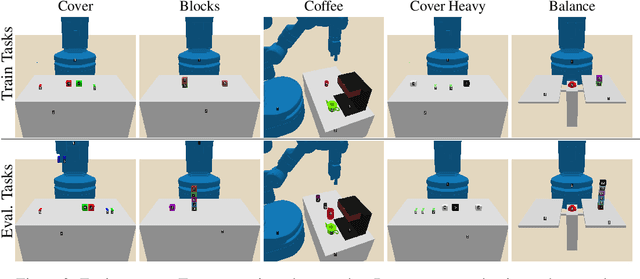

Broadly intelligent agents should form task-specific abstractions that selectively expose the essential elements of a task, while abstracting away the complexity of the raw sensorimotor space. In this work, we present Neuro-Symbolic Predicates, a first-order abstraction language that combines the strengths of symbolic and neural knowledge representations. We outline an online algorithm for inventing such predicates and learning abstract world models. We compare our approach to hierarchical reinforcement learning, vision-language model planning, and symbolic predicate invention approaches, on both in- and out-of-distribution tasks across five simulated robotic domains. Results show that our approach offers better sample complexity, stronger out-of-distribution generalization, and improved interpretability.
Interpretable Representation Learning from Videos using Nonlinear Priors
Oct 24, 2024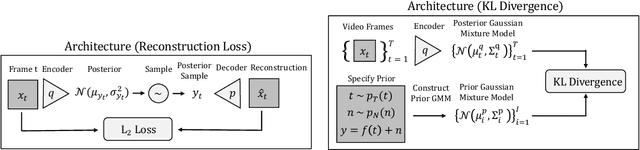

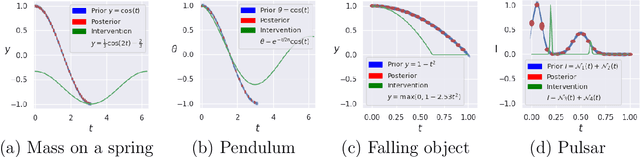

Learning interpretable representations of visual data is an important challenge, to make machines' decisions understandable to humans and to improve generalisation outside of the training distribution. To this end, we propose a deep learning framework where one can specify nonlinear priors for videos (e.g. of Newtonian physics) that allow the model to learn interpretable latent variables and use these to generate videos of hypothetical scenarios not observed at training time. We do this by extending the Variational Auto-Encoder (VAE) prior from a simple isotropic Gaussian to an arbitrary nonlinear temporal Additive Noise Model (ANM), which can describe a large number of processes (e.g. Newtonian physics). We propose a novel linearization method that constructs a Gaussian Mixture Model (GMM) approximating the prior, and derive a numerically stable Monte Carlo estimate of the KL divergence between the posterior and prior GMMs. We validate the method on different real-world physics videos including a pendulum, a mass on a spring, a falling object and a pulsar (rotating neutron star). We specify a physical prior for each experiment and show that the correct variables are learned. Once a model is trained, we intervene on it to change different physical variables (such as oscillation amplitude or adding air drag) to generate physically correct videos of hypothetical scenarios that were not observed previously.
Dissecting Temporal Understanding in Text-to-Audio Retrieval
Sep 01, 2024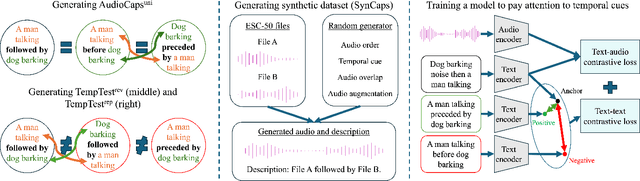
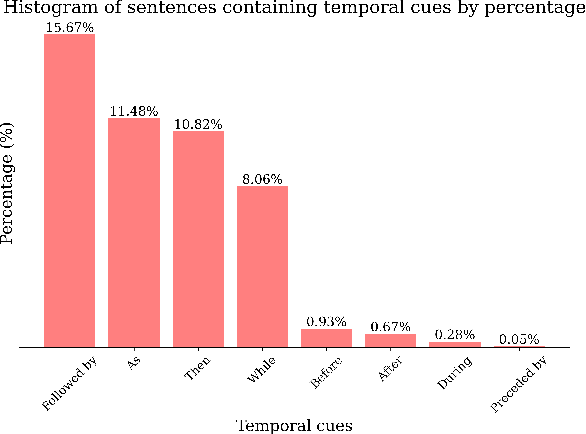
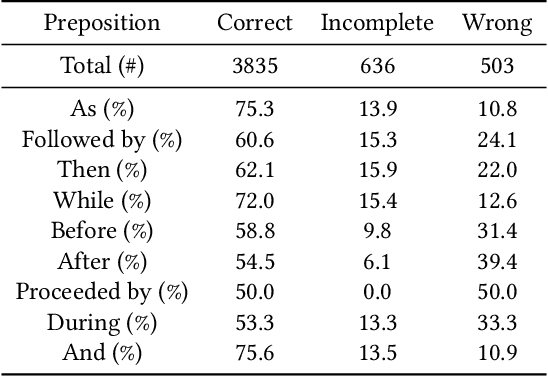
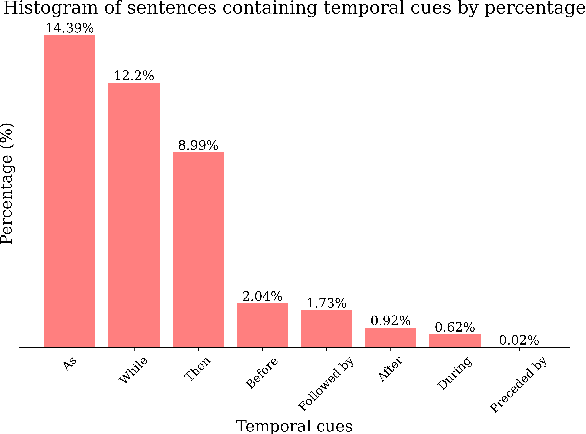
Recent advancements in machine learning have fueled research on multimodal tasks, such as for instance text-to-video and text-to-audio retrieval. These tasks require models to understand the semantic content of video and audio data, including objects, and characters. The models also need to learn spatial arrangements and temporal relationships. In this work, we analyse the temporal ordering of sounds, which is an understudied problem in the context of text-to-audio retrieval. In particular, we dissect the temporal understanding capabilities of a state-of-the-art model for text-to-audio retrieval on the AudioCaps and Clotho datasets. Additionally, we introduce a synthetic text-audio dataset that provides a controlled setting for evaluating temporal capabilities of recent models. Lastly, we present a loss function that encourages text-audio models to focus on the temporal ordering of events. Code and data are available at https://www.robots.ox.ac.uk/~vgg/research/audio-retrieval/dtu/.
3D-Aware Instance Segmentation and Tracking in Egocentric Videos
Aug 19, 2024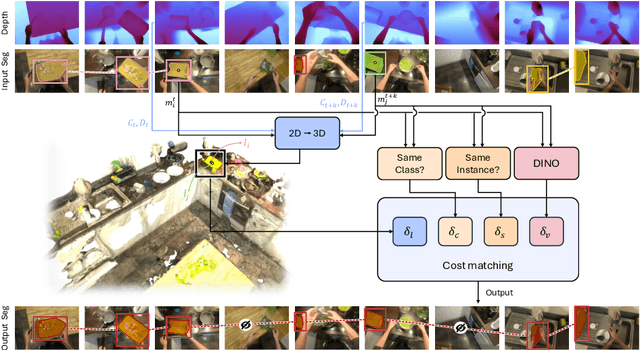
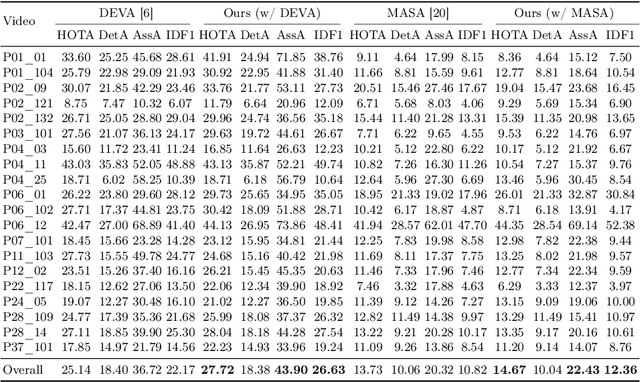
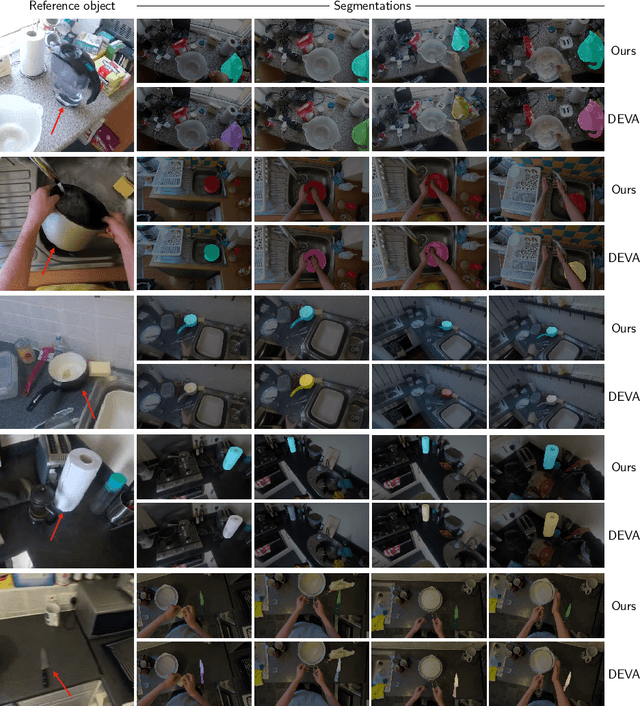
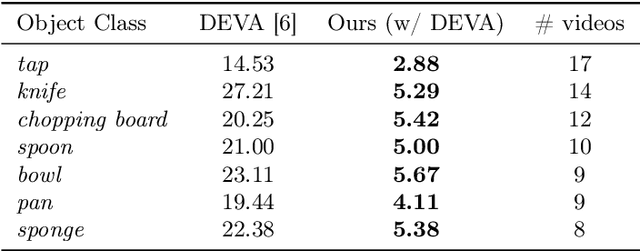
Egocentric videos present unique challenges for 3D scene understanding due to rapid camera motion, frequent object occlusions, and limited object visibility. This paper introduces a novel approach to instance segmentation and tracking in first-person video that leverages 3D awareness to overcome these obstacles. Our method integrates scene geometry, 3D object centroid tracking, and instance segmentation to create a robust framework for analyzing dynamic egocentric scenes. By incorporating spatial and temporal cues, we achieve superior performance compared to state-of-the-art 2D approaches. Extensive evaluations on the challenging EPIC Fields dataset demonstrate significant improvements across a range of tracking and segmentation consistency metrics. Specifically, our method outperforms the next best performing approach by $7$ points in Association Accuracy (AssA) and $4.5$ points in IDF1 score, while reducing the number of ID switches by $73\%$ to $80\%$ across various object categories. Leveraging our tracked instance segmentations, we showcase downstream applications in 3D object reconstruction and amodal video object segmentation in these egocentric settings.