 Add to Chrome
 Add to Firefox
 Add to Edge
MedDDC-Eval: Diagnosis-Decoupled Evaluation of Multi-Turn Medical Consultation Agents
Jul 21, 2026
Multi-turn medical consultation agents must decide what to ask, adapt to patient responses, and determine when the collected evidence is sufficient. However, coupled evaluation conflates the quality of the policy-elicited history with policy-specific terminal diagnosis generation: strong generation can compensate for a thin history, while weaker generation can obscure a rich one. We introduce MedDDC-Eval, a diagnosis-decoupled testbed that treats elicited history as the comparison object and holds the history-to-diagnosis mapping constant through a shared frozen reader. Across two held-out sources, a grounded interface and an auditable diagnosis-trajectory-efficiency (D/T/E) harness measure diagnostic usefulness, information acquisition, and efficiency. Directional semantic coverage followed by deterministic one-to-one assignment yields coherent precision-recall counts for open-ended items, with at most one credited match per prediction or reference. Holding histories fixed, changing only the diagnostic reader shifts diagnosis F1 by 2.2-19.0 points and reverses 18% and 36% of pairwise policy orderings on the Record and Dialogue splits. We further apply standard Group Relative Policy Optimization (GRPO) over interactive multi-turn rollouts to post-train Qwen3-32B using diagnosis-result and trajectory feedback. On the 100-case Record and 70-case Dialogue splits, the trained policy improves over its initialization by 9.7 and 4.6 total-score points; removing either primary signal lowers held-out joint performance. These results show that MedDDC-Eval supports controlled attribution, interpretable elicited-history measurement, and evaluation-guided evidence-acquisition policy development.

NovelSeek: When Agent Becomes the Scientist -- Building Closed-Loop System from Hypothesis to Verification
May 22, 2025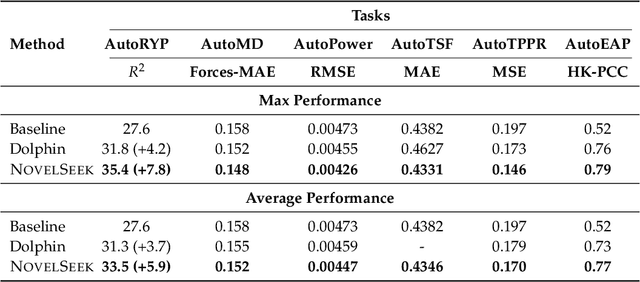
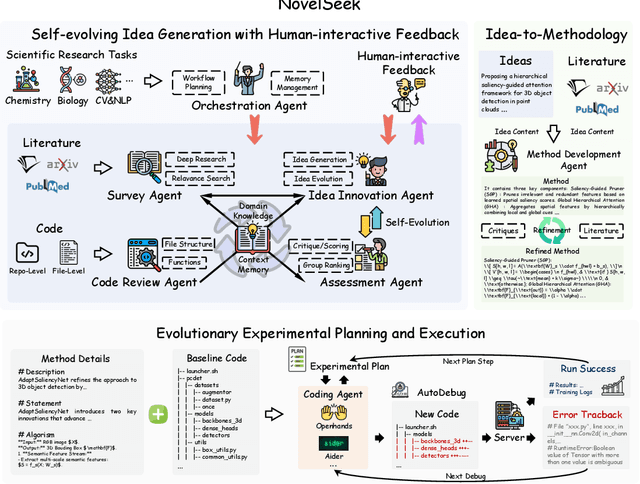
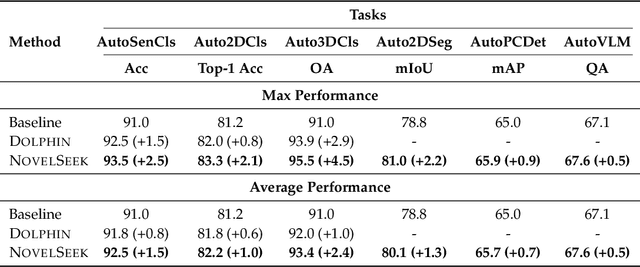
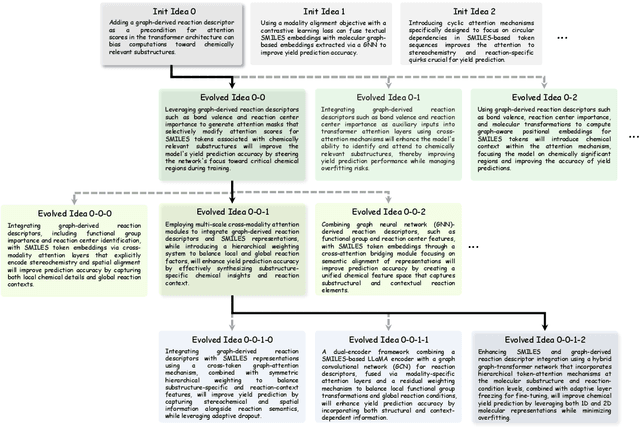
Artificial Intelligence (AI) is accelerating the transformation of scientific research paradigms, not only enhancing research efficiency but also driving innovation. We introduce NovelSeek, a unified closed-loop multi-agent framework to conduct Autonomous Scientific Research (ASR) across various scientific research fields, enabling researchers to tackle complicated problems in these fields with unprecedented speed and precision. NovelSeek highlights three key advantages: 1) Scalability: NovelSeek has demonstrated its versatility across 12 scientific research tasks, capable of generating innovative ideas to enhance the performance of baseline code. 2) Interactivity: NovelSeek provides an interface for human expert feedback and multi-agent interaction in automated end-to-end processes, allowing for the seamless integration of domain expert knowledge. 3) Efficiency: NovelSeek has achieved promising performance gains in several scientific fields with significantly less time cost compared to human efforts. For instance, in reaction yield prediction, it increased from 27.6% to 35.4% in just 12 hours; in enhancer activity prediction, accuracy rose from 0.52 to 0.79 with only 4 hours of processing; and in 2D semantic segmentation, precision advanced from 78.8% to 81.0% in a mere 30 hours.
An Egocentric Vision-Language Model based Portable Real-time Smart Assistant
Mar 06, 2025We present Vinci, a vision-language system designed to provide real-time, comprehensive AI assistance on portable devices. At its core, Vinci leverages EgoVideo-VL, a novel model that integrates an egocentric vision foundation model with a large language model (LLM), enabling advanced functionalities such as scene understanding, temporal grounding, video summarization, and future planning. To enhance its utility, Vinci incorporates a memory module for processing long video streams in real time while retaining contextual history, a generation module for producing visual action demonstrations, and a retrieval module that bridges egocentric and third-person perspectives to provide relevant how-to videos for skill acquisition. Unlike existing systems that often depend on specialized hardware, Vinci is hardware-agnostic, supporting deployment across a wide range of devices, including smartphones and wearable cameras. In our experiments, we first demonstrate the superior performance of EgoVideo-VL on multiple public benchmarks, showcasing its vision-language reasoning and contextual understanding capabilities. We then conduct a series of user studies to evaluate the real-world effectiveness of Vinci, highlighting its adaptability and usability in diverse scenarios. We hope Vinci can establish a new framework for portable, real-time egocentric AI systems, empowering users with contextual and actionable insights. Including the frontend, backend, and models, all codes of Vinci are available at https://github.com/OpenGVLab/vinci.
Vinci: A Real-time Embodied Smart Assistant based on Egocentric Vision-Language Model
Dec 30, 2024


We introduce Vinci, a real-time embodied smart assistant built upon an egocentric vision-language model. Designed for deployment on portable devices such as smartphones and wearable cameras, Vinci operates in an "always on" mode, continuously observing the environment to deliver seamless interaction and assistance. Users can wake up the system and engage in natural conversations to ask questions or seek assistance, with responses delivered through audio for hands-free convenience. With its ability to process long video streams in real-time, Vinci can answer user queries about current observations and historical context while also providing task planning based on past interactions. To further enhance usability, Vinci integrates a video generation module that creates step-by-step visual demonstrations for tasks that require detailed guidance. We hope that Vinci can establish a robust framework for portable, real-time egocentric AI systems, empowering users with contextual and actionable insights. We release the complete implementation for the development of the device in conjunction with a demo web platform to test uploaded videos at https://github.com/OpenGVLab/vinci.