 Add to Chrome
 Add to Firefox
 Add to Edge
Natural Gradient Bayesian Filtering: Geometry-Aware Filter for Dynamical Systems
May 04, 2026
Bayesian filtering is a cornerstone of state estimation in complex systems such as aerospace systems, yet exact solutions are available only for linear Gaussian models. In practice,nonlinear systems are handled through tractable approximations,with Gaussian filters such as the extended and unscented Kalman filters being among the most widely used methods. This tutorial revisits Gaussian filtering from an information-geometric perspective, viewing the prediction and measurement update steps as inference procedures over state distributions. Within this framework, we introduce a geometry-aware Gaussian filtering approach that leverages natural gradient descent on the statistical manifold of Gaussian distributions. The resulting Natural Gradient Gaussian Approximation (NANO) filter iteratively refines the posterior mean and covariance while respecting the intrinsic geometry of the Gaussian family and preserving the positive definiteness of the covariance matrix. We further highlight fundamental connections to the classical Kalman filtering, showing that a single natural-gradient step exactly recovers the Kalman measurement update in the linear-Gaussian case. The practical implications of the proposed framework are illustrated through case studies in representative nonlinear estimation problems,including satellite attitude estimation, simultaneous localization and mapping, and state estimation for robotic systems including quadruped and humanoid robots.

Step-GUI Technical Report
Dec 19, 2025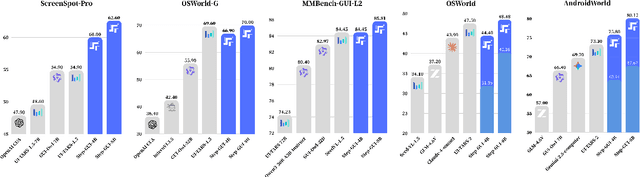
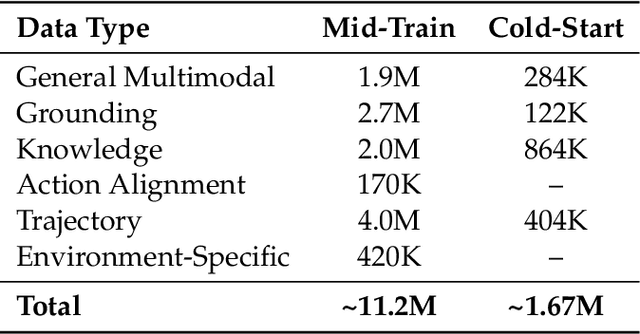
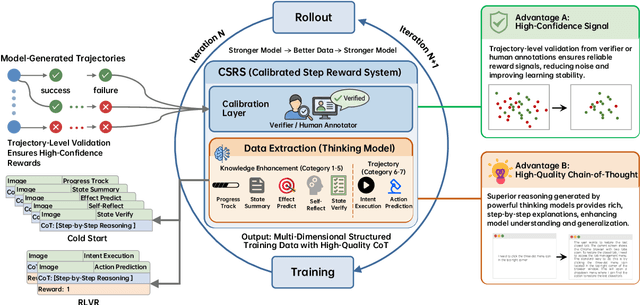
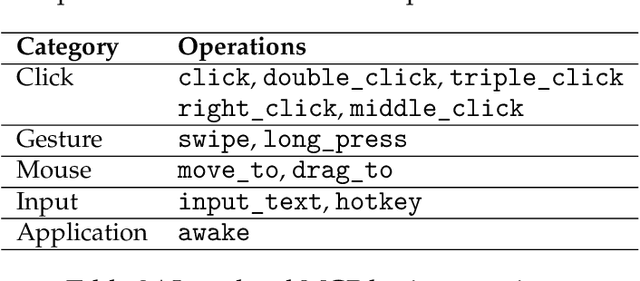
Recent advances in multimodal large language models unlock unprecedented opportunities for GUI automation. However, a fundamental challenge remains: how to efficiently acquire high-quality training data while maintaining annotation reliability? We introduce a self-evolving training pipeline powered by the Calibrated Step Reward System, which converts model-generated trajectories into reliable training signals through trajectory-level calibration, achieving >90% annotation accuracy with 10-100x lower cost. Leveraging this pipeline, we introduce Step-GUI, a family of models (4B/8B) that achieves state-of-the-art GUI performance (8B: 80.2% AndroidWorld, 48.5% OSWorld, 62.6% ScreenShot-Pro) while maintaining robust general capabilities. As GUI agent capabilities improve, practical deployment demands standardized interfaces across heterogeneous devices while protecting user privacy. To this end, we propose GUI-MCP, the first Model Context Protocol for GUI automation with hierarchical architecture that combines low-level atomic operations and high-level task delegation to local specialist models, enabling high-privacy execution where sensitive data stays on-device. Finally, to assess whether agents can handle authentic everyday usage, we introduce AndroidDaily, a benchmark grounded in real-world mobile usage patterns with 3146 static actions and 235 end-to-end tasks across high-frequency daily scenarios (8B: static 89.91%, end-to-end 52.50%). Our work advances the development of practical GUI agents and demonstrates strong potential for real-world deployment in everyday digital interactions.