 Add to Chrome
 Add to Firefox
 Add to Edge
LemonHarness Technical Report
Jun 23, 2026
As large language model (LLM) agents are applied to longer tasks, they increasingly modify workspace state across multiple rounds of iteration. However, agents typically observe only tool outputs and log fragments, while the actual state changes occur in the file system. Without explicit workspace boundaries, state-changing operations such as file writes and temporary artifact generation may scatter changes across paths. Over time, these weakly constrained changes accumulate, making states such as modified files difficult to track. This paper presents LemonHarness, an integrated execution framework for long-horizon agents. LemonHarness establishes an explicit execution boundary by constraining state-changing operations within a clearly defined workspace and bringing model invocation, tool execution, and rule knowledge within a single controlled boundary. State-changing operations, including file writes, dependency installation, and temporary artifact creation, are executed through structured tool interfaces, with execution feedback recorded as observations available to subsequent model decisions. The system also introduces a reusable rule knowledge base, which turns recurring execution rules and acceptance criteria into runtime knowledge. LemonHarness further adds a time-aware execution mechanism that exposes elapsed and remaining budget to the model, so it can rebalance exploration, implementation, and validation effort as time pressure shifts and avoid timeouts from long waits or excessive verification. On Terminal-Bench 2.0, LemonHarness_GPT-5.3-CodeX reached 84.49% accuracy over 445 trials; pairing the same framework with the stronger GPT-5.5 backbone raised the average accuracy to 86.52% across five jobs. The results suggest that a unified runtime boundary, callable rule knowledge, and time-aware execution can improve the stability of long-horizon agent execution.

Sparsity-Aware Event-Driven Impulse Radio Transceivers for Reliable Neuromorphic Inference
Apr 26, 2026The growing number of Internet-of-Things (IoT) based artificial intelligence (AI) applications deployed at resource-constrained network edge call for ultra-reliable and low-latency data processing pipelines from distributed front-end sensors to remote inference units. Meanwhile, brain-inspired neuromorphic computing featuring spiking neural networks (SNNs) have arisen as a new paradigm for energy-efficient AI inference. However, significant energy and time expenses incurred in high-complexity transceivers that combat fading and multi-user interference hinder implementations of multi-user neuromorphic inference for edge intelligence. To address this challenge, we consider in this paper a broadband multi-user remote inference system that integrates event-based sensing and time-hopping (TH) on-off keying (OOK) based ultra-wideband (UWB) communications for reliable neuromorphic inference. Specifically, we propose a novel two-timescale repetition coding that leverages intra-frame pulse sparsity for low-latency repetition. We also develop two neuromorphic inference schemes based on: (i) digital spike encoding that recovers each pixel of the event-frame by threshold-adaptive detection via an SNN based sparsity estimator; and (ii) analog spike encoding that converts noisy correlator outputs at the receiver into analog-valued inputs for end-to-end (E2E) classification. Finally, numerical results validate the effectiveness of the proposed coding schemes, and reveal a signal-to-noise ratio (SNR)-dependent performance crossover between the two inference schemes, indicating that analog spike encoding based schemes are preferable with mild or high SNR while digital spike encoding based schemes remain robust in low SNR regime.
ATLAS: A High-Difficulty, Multidisciplinary Benchmark for Frontier Scientific Reasoning
Nov 18, 2025The rapid advancement of Large Language Models (LLMs) has led to performance saturation on many established benchmarks, questioning their ability to distinguish frontier models. Concurrently, existing high-difficulty benchmarks often suffer from narrow disciplinary focus, oversimplified answer formats, and vulnerability to data contamination, creating a fidelity gap with real-world scientific inquiry. To address these challenges, we introduce ATLAS (AGI-Oriented Testbed for Logical Application in Science), a large-scale, high-difficulty, and cross-disciplinary evaluation suite composed of approximately 800 original problems. Developed by domain experts (PhD-level and above), ATLAS spans seven core scientific fields: mathematics, physics, chemistry, biology, computer science, earth science, and materials science. Its key features include: (1) High Originality and Contamination Resistance, with all questions newly created or substantially adapted to prevent test data leakage; (2) Cross-Disciplinary Focus, designed to assess models' ability to integrate knowledge and reason across scientific domains; (3) High-Fidelity Answers, prioritizing complex, open-ended answers involving multi-step reasoning and LaTeX-formatted expressions over simple multiple-choice questions; and (4) Rigorous Quality Control, employing a multi-stage process of expert peer review and adversarial testing to ensure question difficulty, scientific value, and correctness. We also propose a robust evaluation paradigm using a panel of LLM judges for automated, nuanced assessment of complex answers. Preliminary results on leading models demonstrate ATLAS's effectiveness in differentiating their advanced scientific reasoning capabilities. We plan to develop ATLAS into a long-term, open, community-driven platform to provide a reliable "ruler" for progress toward Artificial General Intelligence.
Unsupervised Learning for AoD Estimation in MISO Downlink LoS Transmissions
Mar 15, 2025
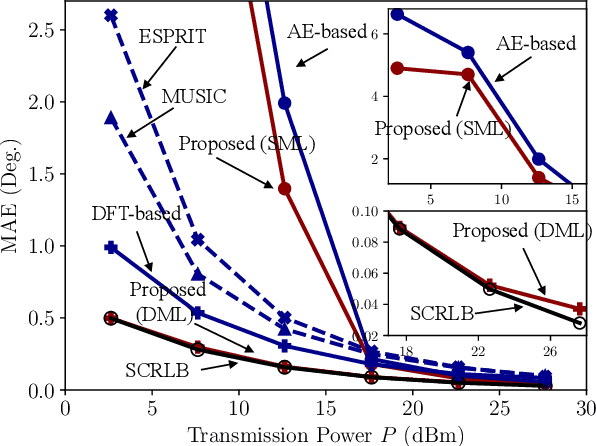
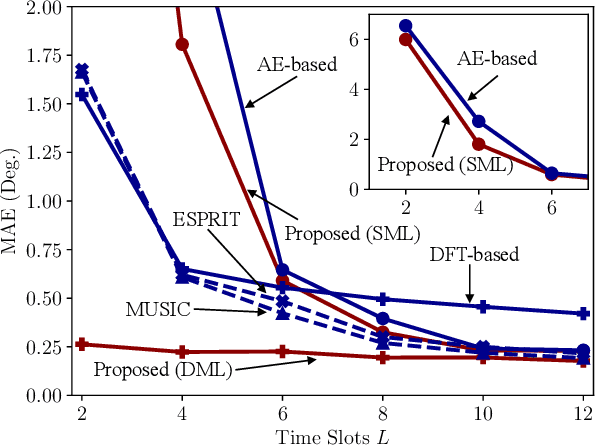
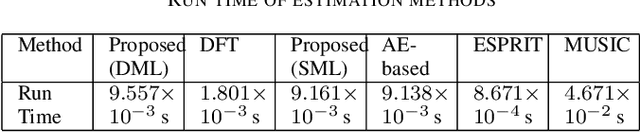
With the emerging of simultaneous localization and communication (SLAC), it becomes more and more attractive to perform angle of departure (AoD) estimation at the receiving Internet of Thing (IoT) user end for improved positioning accuracy, flexibility and enhanced user privacy. To address challenges like large number of real-time measurements required for latency-critical applications and enormous data collection for training deep learning models in conventional AoD estimation methods, we propose in this letter an unsupervised learning framework, which unifies training for both deterministic maximum likelihood (DML) and stochastic maximum likelihood (SML) based AoD estimation in multiple-input single-output (MISO) downlink (DL) wireless transmissions. Specifically, under the line-of-sight (LoS) assumption, we incorporate both the received signals and pilot-sequence information, as per its availability at the DL user, into the input of the deep learning model, and adopt a common neural network architecture compatible with input data in both DML and SML cases. Extensive numerical results validate that the proposed unsupervised learning based AoD estimation not only improves estimation accuracy, but also significantly reduces required number of observations, thereby reducing both estimation overhead and latency compared to various benchmarks.
SOCRATES: Towards a Unified Platform for Neural Network Verification
Jul 22, 2020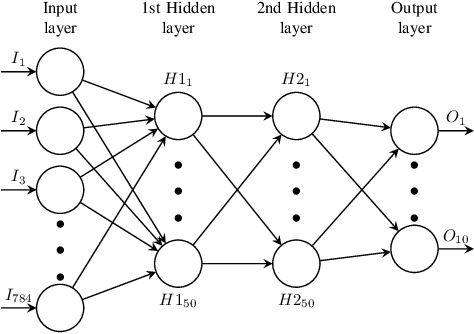
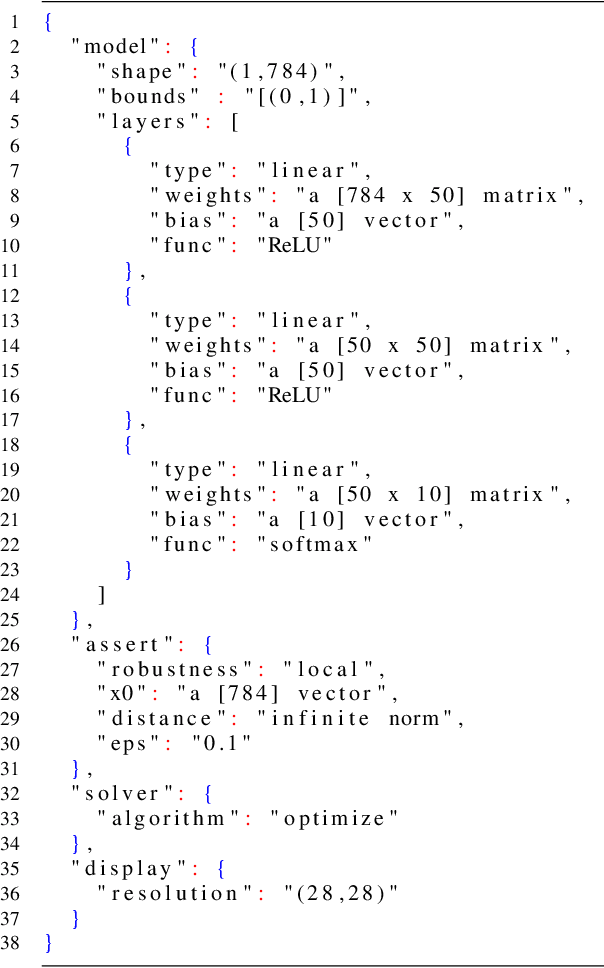
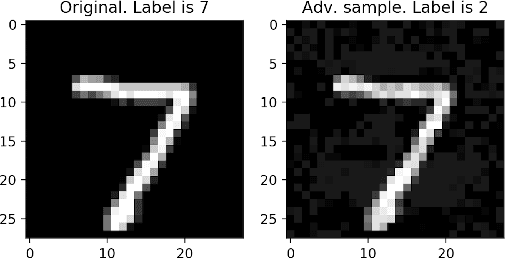
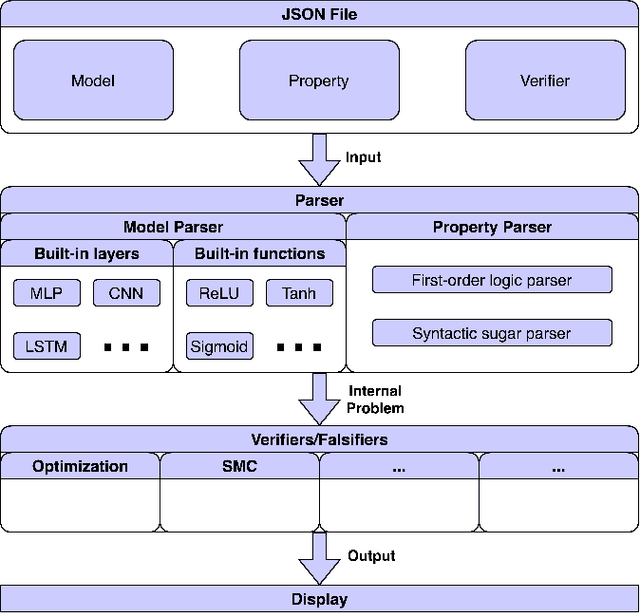
Studies show that neural networks, not unlike traditional programs, are subject to bugs, e.g., adversarial samples that cause classification errors and discriminatory instances that demonstrate the lack of fairness. Given that neural networks are increasingly applied in critical applications (e.g., self-driving cars, face recognition systems and personal credit rating systems), it is desirable that systematic methods are developed to verify or falsify neural networks against desirable properties. Recently, a number of approaches have been developed to verify neural networks. These efforts are however scattered (i.e., each approach tackles some restricted classes of neural networks against certain particular properties), incomparable (i.e., each approach has its own assumptions and input format) and thus hard to apply, reuse or extend. In this project, we aim to build a unified framework for developing verification techniques for neural networks. Towards this goal, we develop a platform called SOCRATES which supports a standardized format for a variety of neural network models, an assertion language for property specification as well as two novel algorithms for verifying or falsifying neural network models. SOCRATES is extensible and thus existing approaches can be easily integrated. Experiment results show that our platform offers better or comparable performance to state-of-the-art approaches. More importantly, it provides a platform for synergistic research on neural network verification.