 Add to Chrome
 Add to Firefox
 Add to Edge
\$OneMillion-Bench: How Far are Language Agents from Human Experts?
Mar 09, 2026
As language models (LMs) evolve from chat assistants to long-horizon agents capable of multi-step reasoning and tool use, existing benchmarks remain largely confined to structured or exam-style tasks that fall short of real-world professional demands. To this end, we introduce \$OneMillion-Bench \$OneMillion-Bench, a benchmark of 400 expert-curated tasks spanning Law, Finance, Industry, Healthcare, and Natural Science, built to evaluate agents across economically consequential scenarios. Unlike prior work, the benchmark requires retrieving authoritative sources, resolving conflicting evidence, applying domain-specific rules, and making constraint decisions, where correctness depends as much on the reasoning process as the final answer. We adopt a rubric-based evaluation protocol scoring factual accuracy, logical coherence, practical feasibility, and professional compliance, focused on expert-level problems to ensure meaningful differentiation across agents. Together, \$OneMillion-Bench provides a unified testbed for assessing agentic reliability, professional depth, and practical readiness in domain-intensive scenarios.

NL2Repo-Bench: Towards Long-Horizon Repository Generation Evaluation of Coding Agents
Dec 14, 2025Recent advances in coding agents suggest rapid progress toward autonomous software development, yet existing benchmarks fail to rigorously evaluate the long-horizon capabilities required to build complete software systems. Most prior evaluations focus on localized code generation, scaffolded completion, or short-term repair tasks, leaving open the question of whether agents can sustain coherent reasoning, planning, and execution over the extended horizons demanded by real-world repository construction. To address this gap, we present NL2Repo Bench, a benchmark explicitly designed to evaluate the long-horizon repository generation ability of coding agents. Given only a single natural-language requirements document and an empty workspace, agents must autonomously design the architecture, manage dependencies, implement multi-module logic, and produce a fully installable Python library. Our experiments across state-of-the-art open- and closed-source models reveal that long-horizon repository generation remains largely unsolved: even the strongest agents achieve below 40% average test pass rates and rarely complete an entire repository correctly. Detailed analysis uncovers fundamental long-horizon failure modes, including premature termination, loss of global coherence, fragile cross-file dependencies, and inadequate planning over hundreds of interaction steps. NL2Repo Bench establishes a rigorous, verifiable testbed for measuring sustained agentic competence and highlights long-horizon reasoning as a central bottleneck for the next generation of autonomous coding agents.
DiscoX: Benchmarking Discourse-Level Translation task in Expert Domains
Nov 14, 2025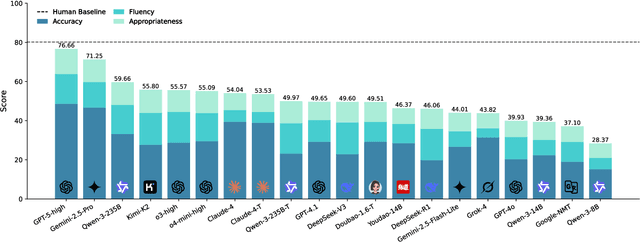

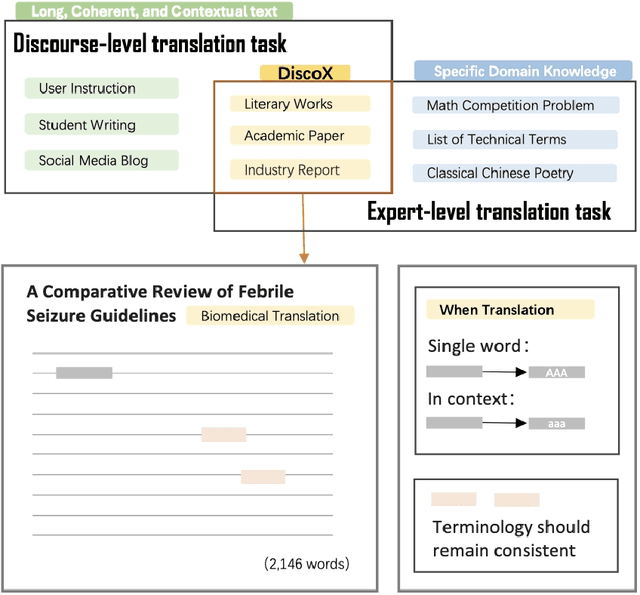
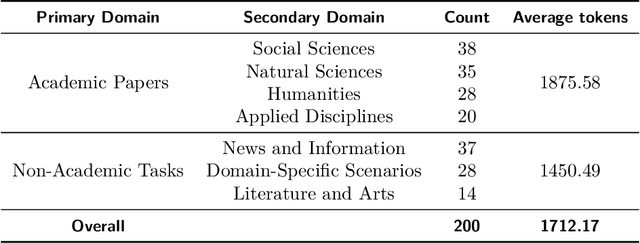
The evaluation of discourse-level translation in expert domains remains inadequate, despite its centrality to knowledge dissemination and cross-lingual scholarly communication. While these translations demand discourse-level coherence and strict terminological precision, current evaluation methods predominantly focus on segment-level accuracy and fluency. To address this limitation, we introduce DiscoX, a new benchmark for discourse-level and expert-level Chinese-English translation. It comprises 200 professionally-curated texts from 7 domains, with an average length exceeding 1700 tokens. To evaluate performance on DiscoX, we also develop Metric-S, a reference-free system that provides fine-grained automatic assessments across accuracy, fluency, and appropriateness. Metric-S demonstrates strong consistency with human judgments, significantly outperforming existing metrics. Our experiments reveal a remarkable performance gap: even the most advanced LLMs still trail human experts on these tasks. This finding validates the difficulty of DiscoX and underscores the challenges that remain in achieving professional-grade machine translation. The proposed benchmark and evaluation system provide a robust framework for more rigorous evaluation, facilitating future advancements in LLM-based translation.
LPFQA: A Long-Tail Professional Forum-based Benchmark for LLM Evaluation
Nov 09, 2025Large Language Models (LLMs) have made rapid progress in reasoning, question answering, and professional applications; however, their true capabilities remain difficult to evaluate using existing benchmarks. Current datasets often focus on simplified tasks or artificial scenarios, overlooking long-tail knowledge and the complexities of real-world applications. To bridge this gap, we propose LPFQA, a long-tail knowledge-based benchmark derived from authentic professional forums across 20 academic and industrial fields, covering 502 tasks grounded in practical expertise. LPFQA introduces four key innovations: fine-grained evaluation dimensions that target knowledge depth, reasoning, terminology comprehension, and contextual analysis; a hierarchical difficulty structure that ensures semantic clarity and unique answers; authentic professional scenario modeling with realistic user personas; and interdisciplinary knowledge integration across diverse domains. We evaluated 12 mainstream LLMs on LPFQA and observed significant performance disparities, especially in specialized reasoning tasks. LPFQA provides a robust, authentic, and discriminative benchmark for advancing LLM evaluation and guiding future model development.
FinSearchComp: Towards a Realistic, Expert-Level Evaluation of Financial Search and Reasoning
Sep 16, 2025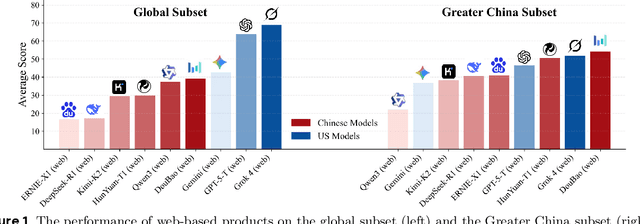
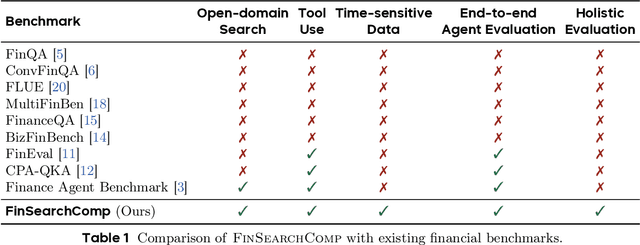
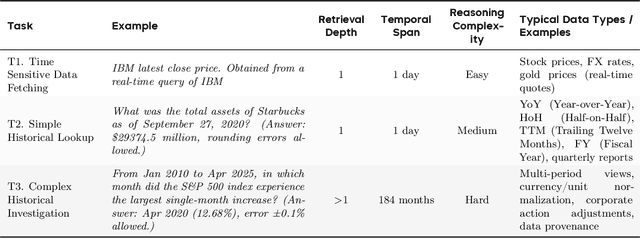
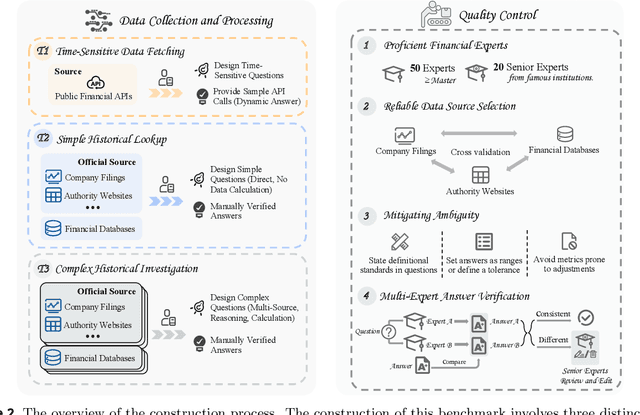
Search has emerged as core infrastructure for LLM-based agents and is widely viewed as critical on the path toward more general intelligence. Finance is a particularly demanding proving ground: analysts routinely conduct complex, multi-step searches over time-sensitive, domain-specific data, making it ideal for assessing both search proficiency and knowledge-grounded reasoning. Yet no existing open financial datasets evaluate data searching capability of end-to-end agents, largely because constructing realistic, complicated tasks requires deep financial expertise and time-sensitive data is hard to evaluate. We present FinSearchComp, the first fully open-source agent benchmark for realistic, open-domain financial search and reasoning. FinSearchComp comprises three tasks -- Time-Sensitive Data Fetching, Simple Historical Lookup, and Complex Historical Investigation -- closely reproduce real-world financial analyst workflows. To ensure difficulty and reliability, we engage 70 professional financial experts for annotation and implement a rigorous multi-stage quality-assurance pipeline. The benchmark includes 635 questions spanning global and Greater China markets, and we evaluate 21 models (products) on it. Grok 4 (web) tops the global subset, approaching expert-level accuracy. DouBao (web) leads on the Greater China subset. Experimental analyses show that equipping agents with web search and financial plugins substantially improves results on FinSearchComp, and the country origin of models and tools impact performance significantly.By aligning with realistic analyst tasks and providing end-to-end evaluation, FinSearchComp offers a professional, high-difficulty testbed for complex financial search and reasoning.
MARS-Bench: A Multi-turn Athletic Real-world Scenario Benchmark for Dialogue Evaluation
May 27, 2025Large Language Models (\textbf{LLMs}), e.g. ChatGPT, have been widely adopted in real-world dialogue applications. However, LLMs' robustness, especially in handling long complex dialogue sessions, including frequent motivation transfer, sophisticated cross-turn dependency, is criticized all along. Nevertheless, no existing benchmarks can fully reflect these weaknesses. We present \textbf{MARS-Bench}, a \textbf{M}ulti-turn \textbf{A}thletic \textbf{R}eal-world \textbf{S}cenario Dialogue \textbf{Bench}mark, designed to remedy the gap. MARS-Bench is constructed from play-by-play text commentary so to feature realistic dialogues specifically designed to evaluate three critical aspects of multi-turn conversations: Ultra Multi-turn, Interactive Multi-turn, and Cross-turn Tasks. Extensive experiments on MARS-Bench also reveal that closed-source LLMs significantly outperform open-source alternatives, explicit reasoning significantly boosts LLMs' robustness on handling long complex dialogue sessions, and LLMs indeed face significant challenges when handling motivation transfer and sophisticated cross-turn dependency. Moreover, we provide mechanistic interpretability on how attention sinks due to special tokens lead to LLMs' performance degradation when handling long complex dialogue sessions based on attention visualization experiment in Qwen2.5-7B-Instruction.
Seed1.5-VL Technical Report
May 11, 2025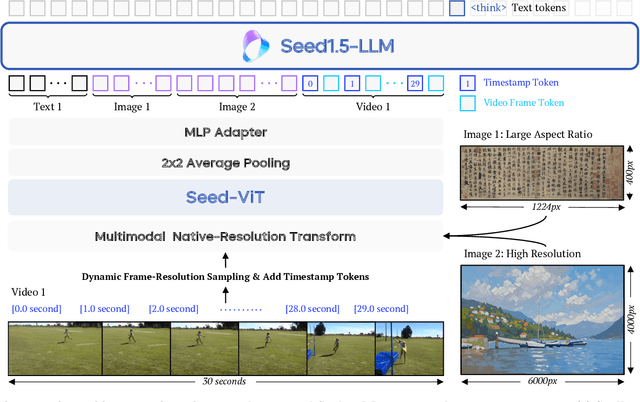

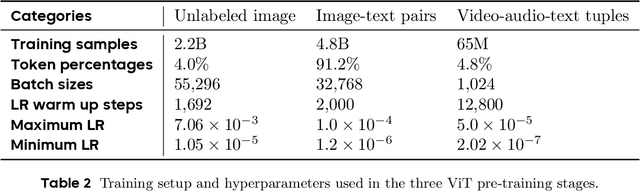
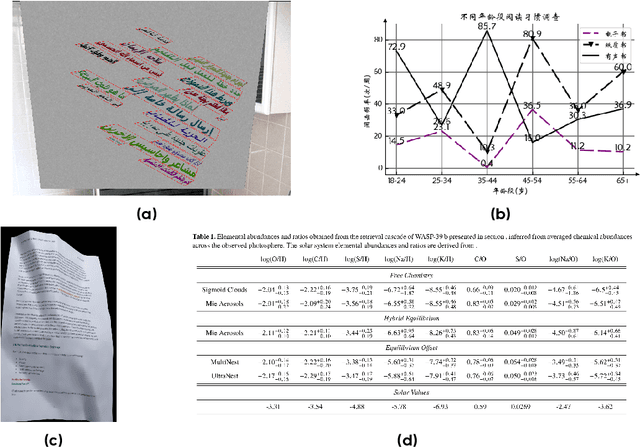
We present Seed1.5-VL, a vision-language foundation model designed to advance general-purpose multimodal understanding and reasoning. Seed1.5-VL is composed with a 532M-parameter vision encoder and a Mixture-of-Experts (MoE) LLM of 20B active parameters. Despite its relatively compact architecture, it delivers strong performance across a wide spectrum of public VLM benchmarks and internal evaluation suites, achieving the state-of-the-art performance on 38 out of 60 public benchmarks. Moreover, in agent-centric tasks such as GUI control and gameplay, Seed1.5-VL outperforms leading multimodal systems, including OpenAI CUA and Claude 3.7. Beyond visual and video understanding, it also demonstrates strong reasoning abilities, making it particularly effective for multimodal reasoning challenges such as visual puzzles. We believe these capabilities will empower broader applications across diverse tasks. In this report, we mainly provide a comprehensive review of our experiences in building Seed1.5-VL across model design, data construction, and training at various stages, hoping that this report can inspire further research. Seed1.5-VL is now accessible at https://www.volcengine.com/ (Volcano Engine Model ID: doubao-1-5-thinking-vision-pro-250428)