 Add to Chrome
 Add to Firefox
 Add to Edge
Semantic Search At LinkedIn
Feb 07, 2026
Semantic search with large language models (LLMs) enables retrieval by meaning rather than keyword overlap, but scaling it requires major inference efficiency advances. We present LinkedIn's LLM-based semantic search framework for AI Job Search and AI People Search, combining an LLM relevance judge, embedding-based retrieval, and a compact Small Language Model trained via multi-teacher distillation to jointly optimize relevance and engagement. A prefill-oriented inference architecture co-designed with model pruning, context compression, and text-embedding hybrid interactions boosts ranking throughput by over 75x under a fixed latency constraint while preserving near-teacher-level NDCG, enabling one of the first production LLM-based ranking systems with efficiency comparable to traditional approaches and delivering significant gains in quality and user engagement.

Outcome-Driven Clustering of Acute Coronary Syndrome Patients using Multi-Task Neural Network with Attention
Mar 27, 2019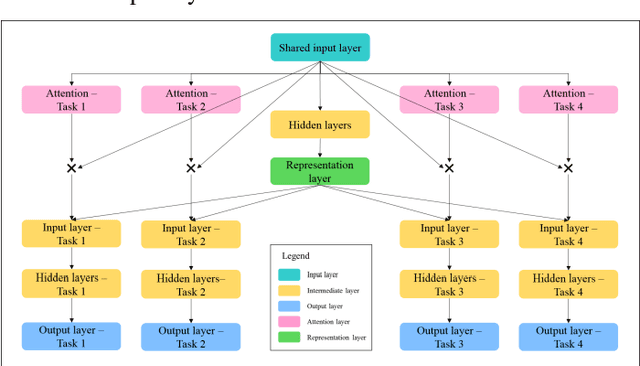
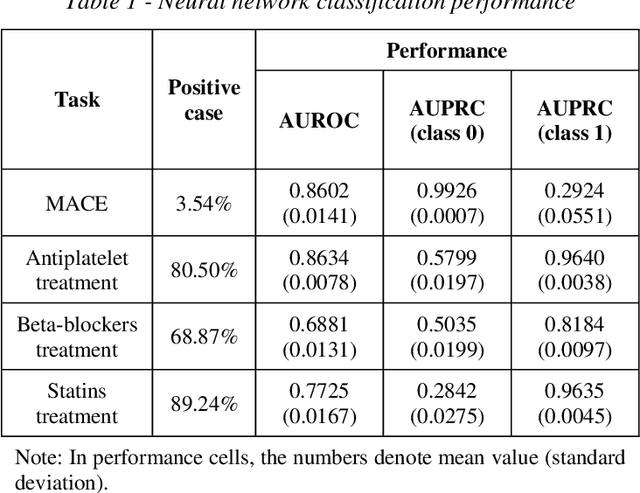
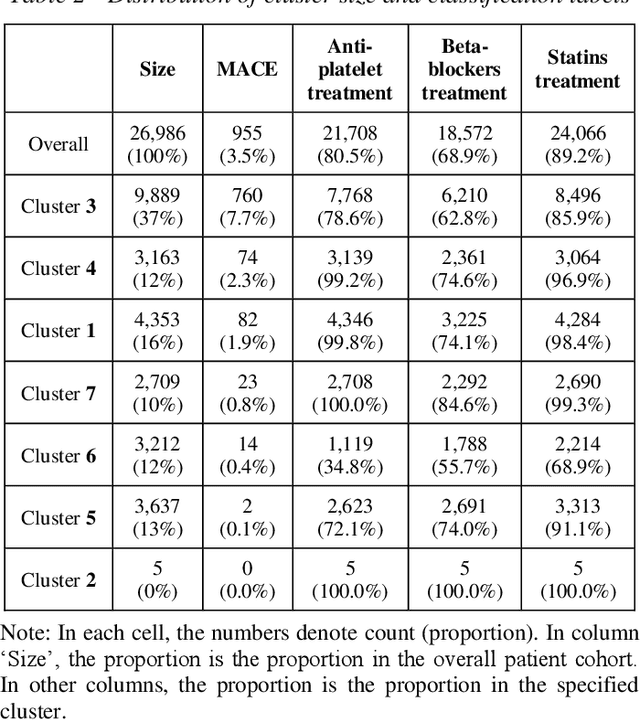
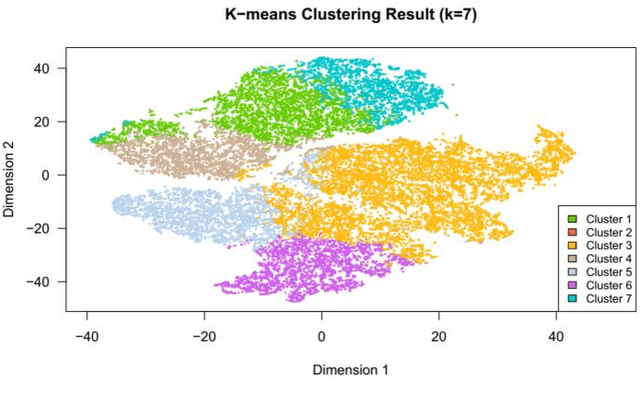
Cluster analysis aims at separating patients into phenotypically heterogenous groups and defining therapeutically homogeneous patient subclasses. It is an important approach in data-driven disease classification and subtyping. Acute coronary syndrome (ACS) is a syndrome due to sudden decrease of coronary artery blood flow, where disease classification would help to inform therapeutic strategies and provide prognostic insights. Here we conducted outcome-driven cluster analysis of ACS patients, which jointly considers treatment and patient outcome as indicators for patient state. Multi-task neural network with attention was used as a modeling framework, including learning of the patient state, cluster analysis, and feature importance profiling. Seven patient clusters were discovered. The clusters have different characteristics, as well as different risk profiles to the outcome of in-hospital major adverse cardiac events. The results demonstrate cluster analysis using outcome-driven multi-task neural network as promising for patient classification and subtyping.