 Add to Chrome
 Add to Firefox
 Add to Edge
ResearchStudio-Reel: Automate the Last Mile of Research from Paper to Poster, Video, and Blog
Jul 05, 2026
Research dissemination, turning a paper into a poster, a talk video, and a blog post, is still a manual last mile. Prior automation treats each artifact in isolation that each re-extract the paper from scratch, usually ship one-way renders the author cannot reopen in PowerPoint or Word, and gates quality on soft VLM-preference scores that plateau while load-bearing sections still read as empty. We argue this last mile is best built as a composition of skills: thin agent-readable contracts that share one upstream extractor and wrap deterministic primitives in a measured-fill loop whose exits are hard pass/fail render gates. We instantiate this as ResearchStudio-Reel, five Claude Code and Codex skills organized into one shared extractor (Paper2Assets), three editable generators (Paper2Poster, Paper2Video, Paper2Blog), and one interactive convergence layer (Paper2Reel). Paper2Assets extracts each paper once into a shared bundle that can be reused by every downstream skill; The three generators produce a print-ready poster, a synchronized talk video, and a bilingual blog that stay factually consistent and round-trip through PowerPoint or Word; Paper2Reel then binds all three into a self-contained HTML viewer whose section-level clicks jump the video, slides, captions, and blog to matching content. On the Paper2Poster benchmark, our posters lead every aesthetic and information sub-criterion against both prior automated systems and single-shot frontier LLMs, surpassing the authors' own on aesthetics under two held-out VLM judges and winning overall on 84% to 93% of papers; capability audits further show that, by uniquely pairing narration-aligned on-slide highlights with a bilingual blog gated by layout-aware DOCX repair, ResearchStudio-Reel is the only pipeline to ship all three editable artifacts. Project is available at https://aka.ms/ResearchStudio

OracleAnalyser: Analysing Implicit Semantics of Oracle Bone Scripts through MLLMs with Post-training
Jun 24, 2026With the advancement of artificial intelligence, research on oracle bone scripts has entered a new era. However, existing methods and benchmarks remain largely confined to recognition tasks, overlooking the equally crucial aspect of oracle bone analysis. To address this gap, we propose OracleAnalyser, a reasoning framework for oracle bone analysis based on post-training techniques. Specifically, we fine-tune Qwen2.5-VL-3B-Instruct through multiple post-training stages and introduce a new preference optimization algorithm, Stable Focal Preference Optimization (SFPO), tailored to the characteristics of oracle bone datasets. In addition, we release both an oracle bone reasoning dataset and an oracle bone preference dataset, and further construct a new benchmark to evaluate models' analytical capabilities for oracle bone scripts. Extensive experiments validate the superior analytical performance of OracleAnalyser, which achieves remarkable results with only 3B parameters, surpassing models with substantially larger scales.
DriveCombo: Benchmarking Compositional Traffic Rule Reasoning in Autonomous Driving
Mar 02, 2026Multimodal Large Language Models (MLLMs) are rapidly becoming the intelligence brain of end-to-end autonomous driving systems. A key challenge is to assess whether MLLMs can truly understand and follow complex real-world traffic rules. However, existing benchmarks mainly focus on single-rule scenarios like traffic sign recognition, neglecting the complexity of multi-rule concurrency and conflicts in real driving. Consequently, models perform well on simple tasks but often fail or violate rules in real world complex situations. To bridge this gap, we propose DriveCombo, a text and vision-based benchmark for compositional traffic rule reasoning. Inspired by human drivers' cognitive development, we propose a systematic Five-Level Cognitive Ladder that evaluates reasoning from single-rule understanding to multi-rule integration and conflict resolution, enabling quantitative assessment across cognitive stages. We further propose a Rule2Scene Agent that maps language-based traffic rules to dynamic driving scenes through rule crafting and scene generation, enabling scene-level traffic rule visual reasoning. Evaluations of 14 mainstream MLLMs reveal performance drops as task complexity grows, particularly during rule conflicts. After splitting the dataset and fine-tuning on the training set, we further observe substantial improvements in both traffic rule reasoning and downstream planning capabilities. These results highlight the effectiveness of DriveCombo in advancing compliant and intelligent autonomous driving systems.
Image Denoising Using Global and Local Circulant Representation
Dec 29, 2025The proliferation of imaging devices and countless image data generated every day impose an increasingly high demand on efficient and effective image denoising. In this paper, we establish a theoretical connection between principal component analysis (PCA) and the Haar transform under circulant representation, and present a computationally simple denoising algorithm. The proposed method, termed Haar-tSVD, exploits a unified tensor singular value decomposition (t-SVD) projection combined with Haar transform to efficiently capture global and local patch correlations. Haar-tSVD operates as a one-step, parallelizable plug-and-play denoiser that eliminates the need for learning local bases, thereby striking a balance between denoising speed and performance. Besides, an adaptive noise estimation scheme is introduced to improve robustness according to eigenvalue analysis of the circulant structure. To further enhance the performance under severe noise conditions, we integrate deep neural networks with Haar-tSVD based on the established Haar-PCA relationship. Experimental results on various denoising datasets demonstrate the efficiency and effectiveness of proposed method for noise removal. Our code is publicly available at https://github.com/ZhaomingKong/Haar-tSVD.
CorrectAD: A Self-Correcting Agentic System to Improve End-to-end Planning in Autonomous Driving
Nov 17, 2025End-to-end planning methods are the de facto standard of the current autonomous driving system, while the robustness of the data-driven approaches suffers due to the notorious long-tail problem (i.e., rare but safety-critical failure cases). In this work, we explore whether recent diffusion-based video generation methods (a.k.a. world models), paired with structured 3D layouts, can enable a fully automated pipeline to self-correct such failure cases. We first introduce an agent to simulate the role of product manager, dubbed PM-Agent, which formulates data requirements to collect data similar to the failure cases. Then, we use a generative model that can simulate both data collection and annotation. However, existing generative models struggle to generate high-fidelity data conditioned on 3D layouts. To address this, we propose DriveSora, which can generate spatiotemporally consistent videos aligned with the 3D annotations requested by PM-Agent. We integrate these components into our self-correcting agentic system, CorrectAD. Importantly, our pipeline is an end-to-end model-agnostic and can be applied to improve any end-to-end planner. Evaluated on both nuScenes and a more challenging in-house dataset across multiple end-to-end planners, CorrectAD corrects 62.5% and 49.8% of failure cases, reducing collision rates by 39% and 27%, respectively.
Efficient Image Denoising Using Global and Local Circulant Representation
Aug 14, 2025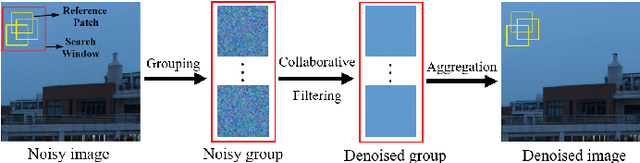
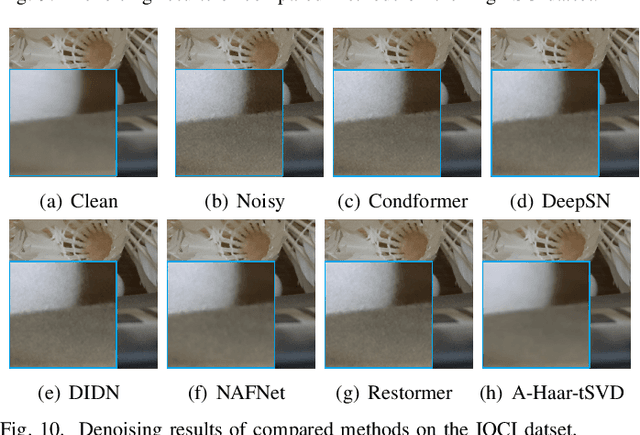
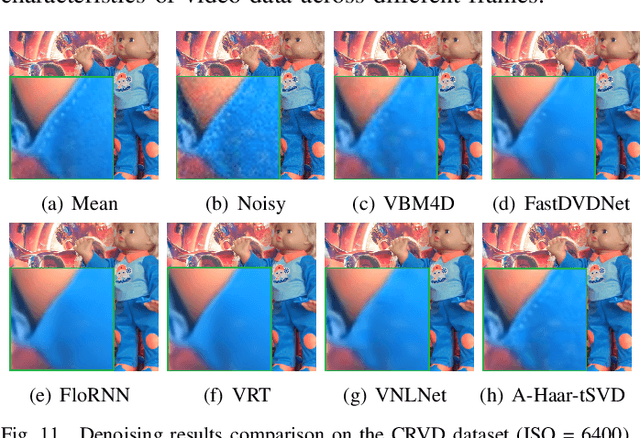
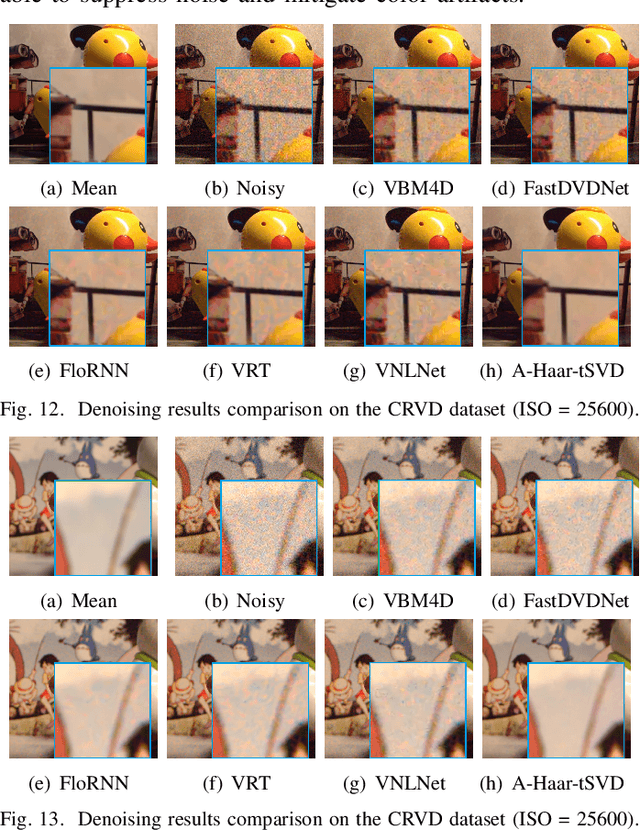
The advancement of imaging devices and countless image data generated everyday impose an increasingly high demand on efficient and effective image denoising. In this paper, we present a computationally simple denoising algorithm, termed Haar-tSVD, aiming to explore the nonlocal self-similarity prior and leverage the connection between principal component analysis (PCA) and the Haar transform under circulant representation. We show that global and local patch correlations can be effectively captured through a unified tensor-singular value decomposition (t-SVD) projection with the Haar transform. This results in a one-step, highly parallelizable filtering method that eliminates the need for learning local bases to represent image patches, striking a balance between denoising speed and performance. Furthermore, we introduce an adaptive noise estimation scheme based on a CNN estimator and eigenvalue analysis to enhance the robustness and adaptability of the proposed method. Experiments on different real-world denoising tasks validate the efficiency and effectiveness of Haar-tSVD for noise removal and detail preservation. Datasets, code and results are publicly available at https://github.com/ZhaomingKong/Haar-tSVD.
SR-LLM: Rethinking the Structured Representation in Large Language Model
Feb 20, 2025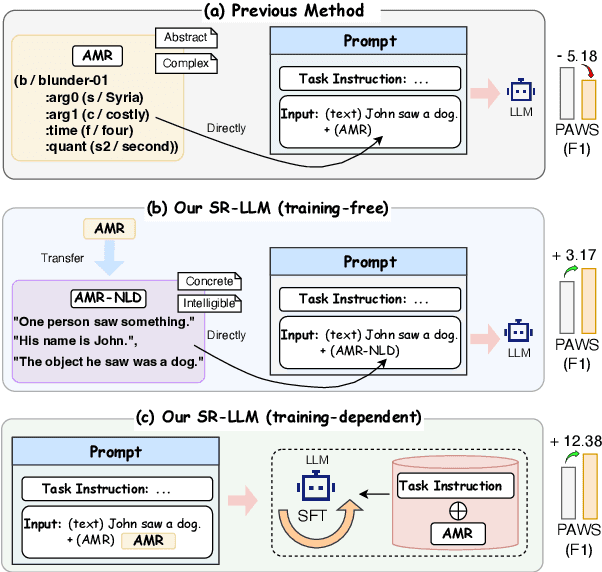
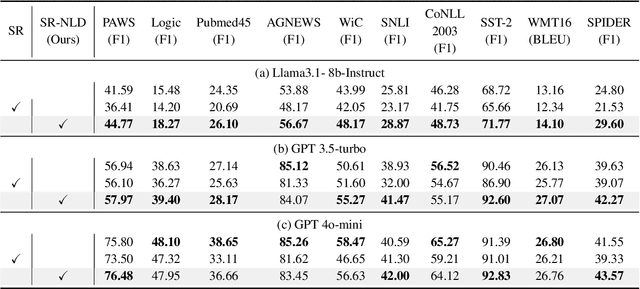
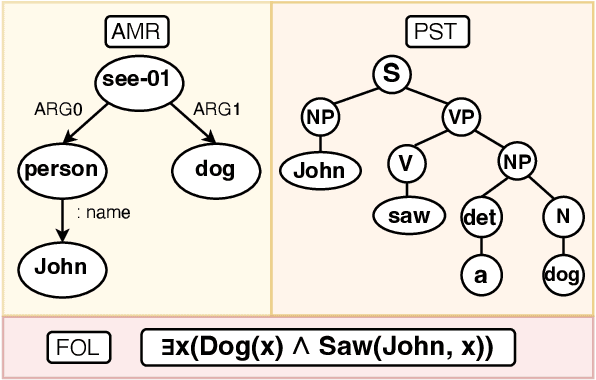
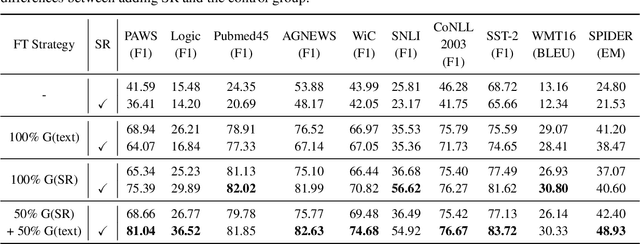
Structured representations, exemplified by Abstract Meaning Representation (AMR), have long been pivotal in computational linguistics. However, their role remains ambiguous in the Large Language Models (LLMs) era. Initial attempts to integrate structured representation into LLMs via a zero-shot setting yielded inferior performance. We hypothesize that such a decline stems from the structure information being passed into LLMs in a code format unfamiliar to LLMs' training corpora. Consequently, we propose SR-LLM, an innovative framework with two settings to explore a superior way of integrating structured representation with LLMs from training-free and training-dependent perspectives. The former integrates structural information through natural language descriptions in LLM prompts, whereas its counterpart augments the model's inference capability through fine-tuning on linguistically described structured representations. Performance improvements were observed in widely downstream datasets, with particularly notable gains of 3.17% and 12.38% in PAWS. To the best of our knowledge, this work represents the pioneering demonstration that leveraging structural representations can substantially enhance LLMs' inference capability. We hope that our work sheds light and encourages future research to enhance the reasoning and interoperability of LLMs by structure data.
LangCell: Language-Cell Pre-training for Cell Identity Understanding
May 09, 2024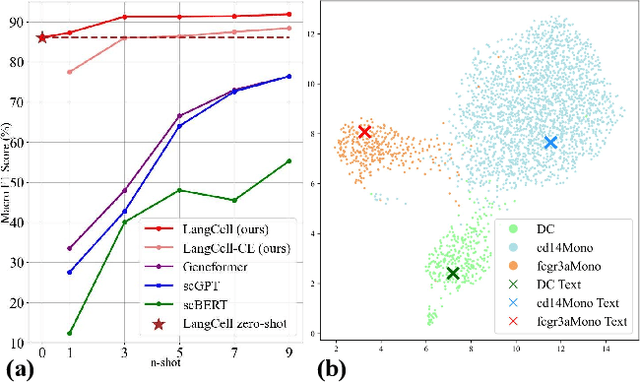
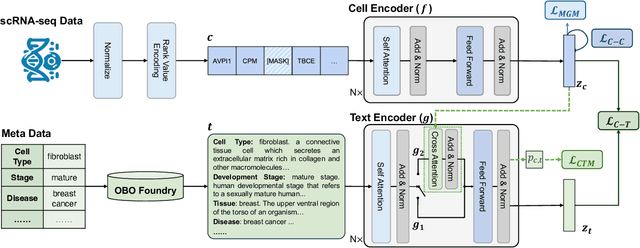
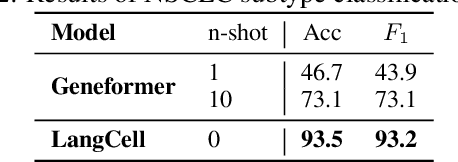
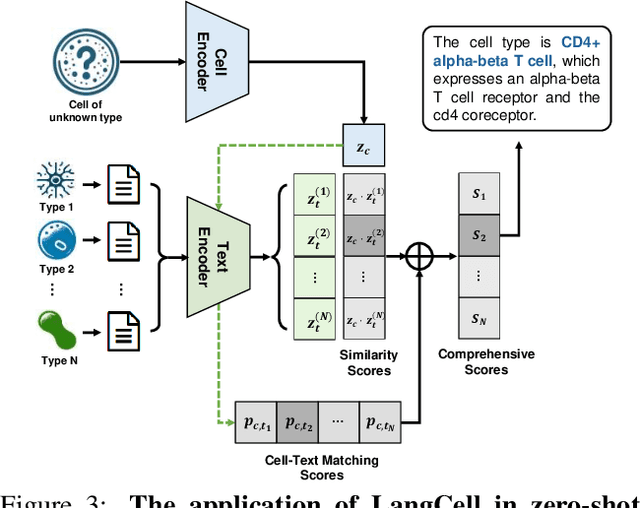
Cell identity encompasses various semantic aspects of a cell, including cell type, pathway information, disease information, and more, which are essential for biologists to gain insights into its biological characteristics. Understanding cell identity from the transcriptomic data, such as annotating cell types, have become an important task in bioinformatics. As these semantic aspects are determined by human experts, it is impossible for AI models to effectively carry out cell identity understanding tasks without the supervision signals provided by single-cell and label pairs. The single-cell pre-trained language models (PLMs) currently used for this task are trained only on a single modality, transcriptomics data, lack an understanding of cell identity knowledge. As a result, they have to be fine-tuned for downstream tasks and struggle when lacking labeled data with the desired semantic labels. To address this issue, we propose an innovative solution by constructing a unified representation of single-cell data and natural language during the pre-training phase, allowing the model to directly incorporate insights related to cell identity. More specifically, we introduce \textbf{LangCell}, the first \textbf{Lang}uage-\textbf{Cell} pre-training framework. LangCell utilizes texts enriched with cell identity information to gain a profound comprehension of cross-modal knowledge. Results from experiments conducted on different benchmarks show that LangCell is the only single-cell PLM that can work effectively in zero-shot cell identity understanding scenarios, and also significantly outperforms existing models in few-shot and fine-tuning cell identity understanding scenarios.
Empowering AI drug discovery with explicit and implicit knowledge
Apr 17, 2023Motivation: Recently, research on independently utilizing either explicit knowledge from knowledge graphs or implicit knowledge from biomedical literature for AI drug discovery has been growing rapidly. These approaches have greatly improved the prediction accuracy of AI models on multiple downstream tasks. However, integrating explicit and implicit knowledge independently hinders their understanding of molecules. Results: We propose DeepEIK, a unified deep learning framework that incorporates both explicit and implicit knowledge for AI drug discovery. We adopt feature fusion to process the multi-modal inputs, and leverage the attention mechanism to denoise the text information. Experiments show that DeepEIK significantly outperforms state-of-the-art methods on crucial tasks in AI drug discovery including drug-target interaction prediction, drug property prediction and protein-protein interaction prediction. Further studies show that benefiting from explicit and implicit knowledge, our framework achieves a deeper understanding of molecules and shows promising potential in facilitating drug discovery applications.