 Add to Chrome
 Add to Firefox
 Add to Edge
PerformRecast: Expression and Head Pose Disentanglement for Portrait Video Editing
Mar 20, 2026
This paper primarily investigates the task of expression-only portrait video performance editing based on a driving video, which plays a crucial role in animation and film industries. Most existing research mainly focuses on portrait animation, which aims to animate a static portrait image according to the facial motion from the driving video. As a consequence, it remains challenging for them to disentangle the facial expression from head pose rotation and thus lack the ability to edit facial expression independently. In this paper, we propose PerformRecast, a versatile expression-only video editing method which is dedicated to recast the performance in existing film and animation. The key insight of our method comes from the characteristics of 3D Morphable Face Model (3DMM), which models the face identity, facial expression and head pose of 3D face mesh with separate parameters. Therefore, we improve the keypoints transformation formula in previous methods to make it more consistent with 3DMM model, which achieves a better disentanglement and provides users with much more fine-grained control. Furthermore, to avoid the misalignment around the boundary of face in generated results, we decouple the facial and non-facial regions of input portrait images and pre-train a teacher model to provide separate supervision for them. Extensive experiments show that our method produces high-quality results which are more faithful to the driving video, outperforming existing methods in both controllability and efficiency. Our code, data and trained models are available at https://youku-aigc.github.io/PerformRecast.

Optimal training-conditional regret for online conformal prediction
Feb 18, 2026We study online conformal prediction for non-stationary data streams subject to unknown distribution drift. While most prior work studied this problem under adversarial settings and/or assessed performance in terms of gaps of time-averaged marginal coverage, we instead evaluate performance through training-conditional cumulative regret. We specifically focus on independently generated data with two types of distribution shift: abrupt change points and smooth drift. When non-conformity score functions are pretrained on an independent dataset, we propose a split-conformal style algorithm that leverages drift detection to adaptively update calibration sets, which provably achieves minimax-optimal regret. When non-conformity scores are instead trained online, we develop a full-conformal style algorithm that again incorporates drift detection to handle non-stationarity; this approach relies on stability - rather than permutation symmetry - of the model-fitting algorithm, which is often better suited to online learning under evolving environments. We establish non-asymptotic regret guarantees for our online full conformal algorithm, which match the minimax lower bound under appropriate restrictions on the prediction sets. Numerical experiments corroborate our theoretical findings.
Decoupled Functional Central Limit Theorems for Two-Time-Scale Stochastic Approximation
Dec 22, 2024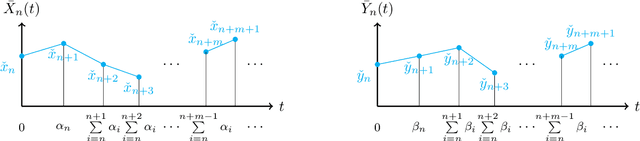
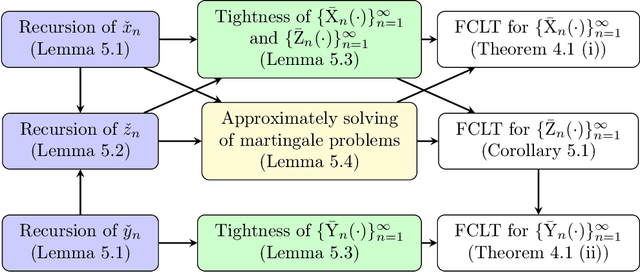
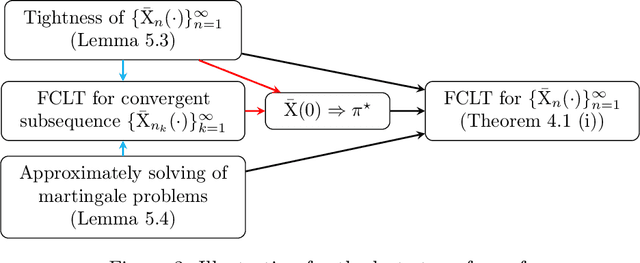
In two-time-scale stochastic approximation (SA), two iterates are updated at different rates, governed by distinct step sizes, with each update influencing the other. Previous studies have demonstrated that the convergence rates of the error terms for these updates depend solely on their respective step sizes, a property known as decoupled convergence. However, a functional version of this decoupled convergence has not been explored. Our work fills this gap by establishing decoupled functional central limit theorems for two-time-scale SA, offering a more precise characterization of its asymptotic behavior. To achieve these results, we leverage the martingale problem approach and establish tightness as a crucial intermediate step. Furthermore, to address the interdependence between different time scales, we introduce an innovative auxiliary sequence to eliminate the primary influence of the fast-time-scale update on the slow-time-scale update.
Asymptotic Time-Uniform Inference for Parameters in Averaged Stochastic Approximation
Oct 19, 2024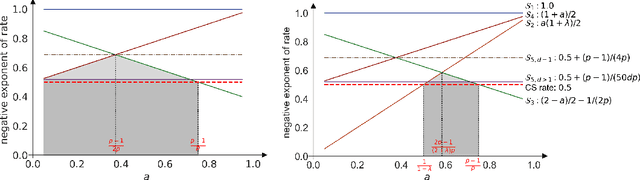
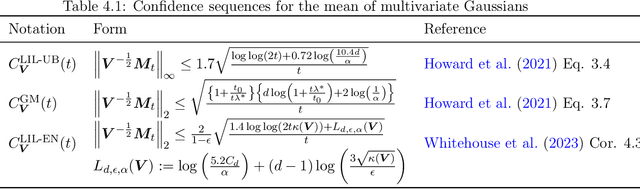
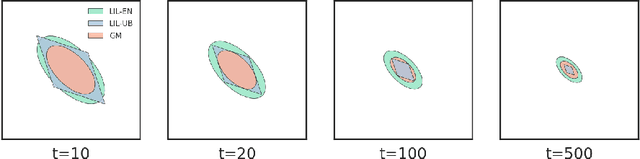
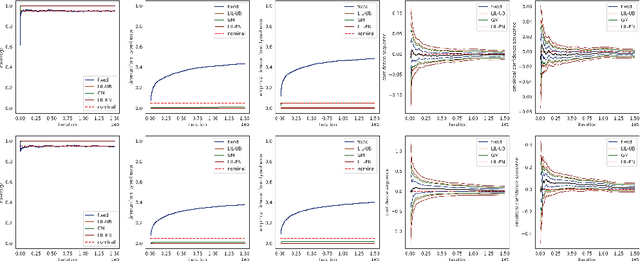
We study time-uniform statistical inference for parameters in stochastic approximation (SA), which encompasses a bunch of applications in optimization and machine learning. To that end, we analyze the almost-sure convergence rates of the averaged iterates to a scaled sum of Gaussians in both linear and nonlinear SA problems. We then construct three types of asymptotic confidence sequences that are valid uniformly across all times with coverage guarantees, in an asymptotic sense that the starting time is sufficiently large. These coverage guarantees remain valid if the unknown covariance matrix is replaced by its plug-in estimator, and we conduct experiments to validate our methodology.
Emotional Conversation: Empowering Talking Faces with Cohesive Expression, Gaze and Pose Generation
Jun 12, 2024Vivid talking face generation holds immense potential applications across diverse multimedia domains, such as film and game production. While existing methods accurately synchronize lip movements with input audio, they typically ignore crucial alignments between emotion and facial cues, which include expression, gaze, and head pose. These alignments are indispensable for synthesizing realistic videos. To address these issues, we propose a two-stage audio-driven talking face generation framework that employs 3D facial landmarks as intermediate variables. This framework achieves collaborative alignment of expression, gaze, and pose with emotions through self-supervised learning. Specifically, we decompose this task into two key steps, namely speech-to-landmarks synthesis and landmarks-to-face generation. The first step focuses on simultaneously synthesizing emotionally aligned facial cues, including normalized landmarks that represent expressions, gaze, and head pose. These cues are subsequently reassembled into relocated facial landmarks. In the second step, these relocated landmarks are mapped to latent key points using self-supervised learning and then input into a pretrained model to create high-quality face images. Extensive experiments on the MEAD dataset demonstrate that our model significantly advances the state-of-the-art performance in both visual quality and emotional alignment.
Estimation and Inference in Distributional Reinforcement Learning
Sep 29, 2023

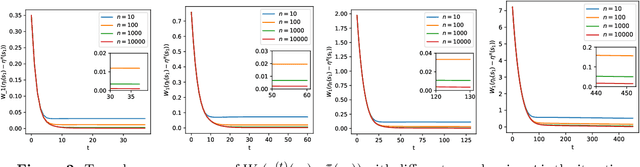

In this paper, we study distributional reinforcement learning from the perspective of statistical efficiency. We investigate distributional policy evaluation, aiming to estimate the complete distribution of the random return (denoted $\eta^\pi$) attained by a given policy $\pi$. We use the certainty-equivalence method to construct our estimator $\hat\eta^\pi$, given a generative model is available. We show that in this circumstance we need a dataset of size $\widetilde O\left(\frac{|\mathcal{S}||\mathcal{A}|}{\epsilon^{2p}(1-\gamma)^{2p+2}}\right)$ to guarantee a $p$-Wasserstein metric between $\hat\eta^\pi$ and $\eta^\pi$ is less than $\epsilon$ with high probability. This implies the distributional policy evaluation problem can be solved with sample efficiency. Also, we show that under different mild assumptions a dataset of size $\widetilde O\left(\frac{|\mathcal{S}||\mathcal{A}|}{\epsilon^{2}(1-\gamma)^{4}}\right)$ suffices to ensure the Kolmogorov metric and total variation metric between $\hat\eta^\pi$ and $\eta^\pi$ is below $\epsilon$ with high probability. Furthermore, we investigate the asymptotic behavior of $\hat\eta^\pi$. We demonstrate that the ``empirical process'' $\sqrt{n}(\hat\eta^\pi-\eta^\pi)$ converges weakly to a Gaussian process in the space of bounded functionals on Lipschitz function class $\ell^\infty(\mathcal{F}_{W_1})$, also in the space of bounded functionals on indicator function class $\ell^\infty(\mathcal{F}_{\mathrm{KS}})$ and bounded measurable function class $\ell^\infty(\mathcal{F}_{\mathrm{TV}})$ when some mild conditions hold. Our findings give rise to a unified approach to statistical inference of a wide class of statistical functionals of $\eta^\pi$.
Asymptotic Behaviors and Phase Transitions in Projected Stochastic Approximation: A Jump Diffusion Approach
Apr 25, 2023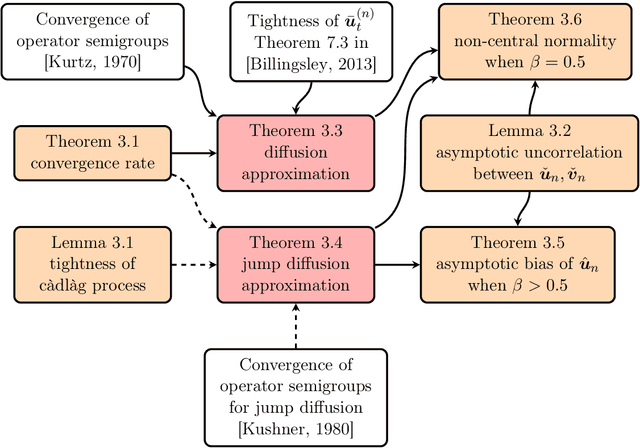

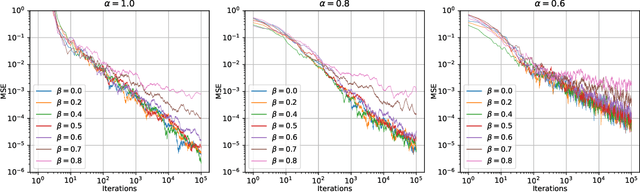
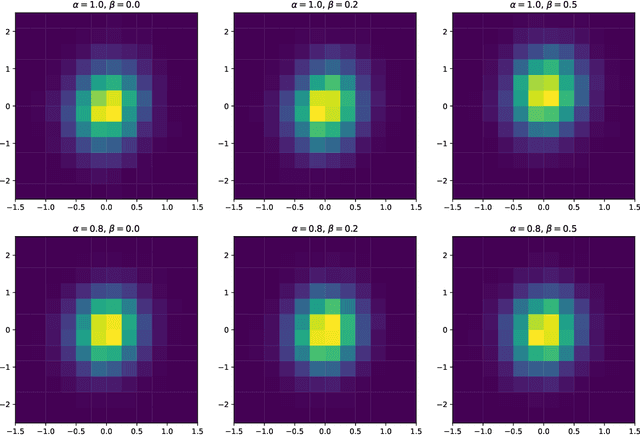
In this paper we consider linearly constrained optimization problems and propose a loopless projection stochastic approximation (LPSA) algorithm. It performs the projection with probability $p_n$ at the $n$-th iteration to ensure feasibility. Considering a specific family of the probability $p_n$ and step size $\eta_n$, we analyze our algorithm from an asymptotic and continuous perspective. Using a novel jump diffusion approximation, we show that the trajectories connecting those properly rescaled last iterates weakly converge to the solution of specific stochastic differential equations (SDEs). By analyzing SDEs, we identify the asymptotic behaviors of LPSA for different choices of $(p_n, \eta_n)$. We find that the algorithm presents an intriguing asymptotic bias-variance trade-off and yields phase transition phenomenons, according to the relative magnitude of $p_n$ w.r.t. $\eta_n$. This finding provides insights on selecting appropriate ${(p_n, \eta_n)}_{n \geq 1}$ to minimize the projection cost. Additionally, we propose the Debiased LPSA (DLPSA) as a practical application of our jump diffusion approximation result. DLPSA is shown to effectively reduce projection complexity compared to vanilla LPSA.
Online Statistical Inference for Nonlinear Stochastic Approximation with Markovian Data
Feb 20, 2023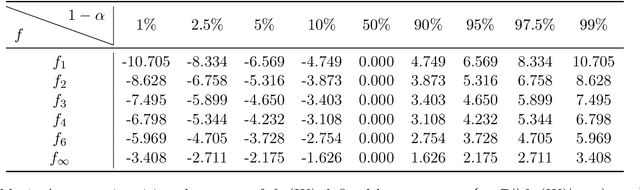
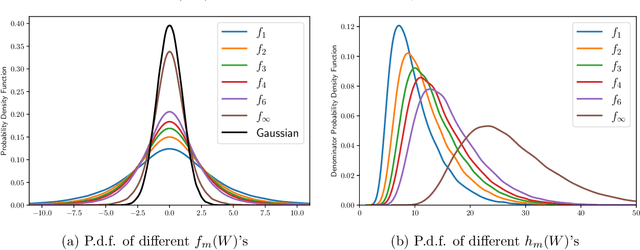
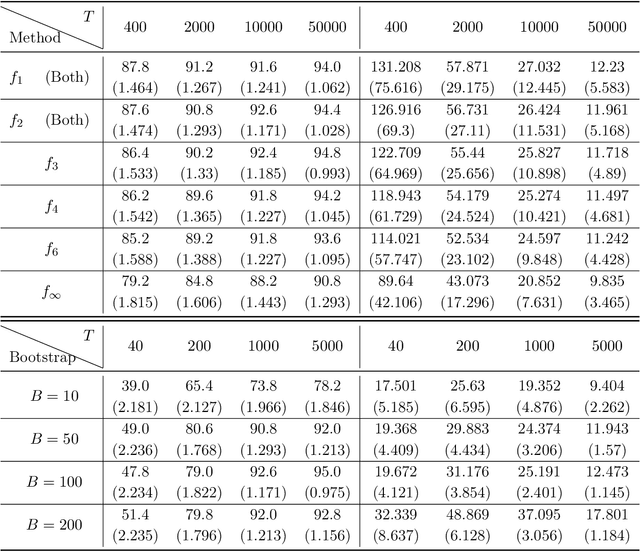
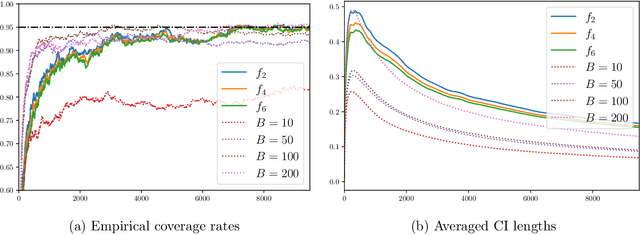
We study the statistical inference of nonlinear stochastic approximation algorithms utilizing a single trajectory of Markovian data. Our methodology has practical applications in various scenarios, such as Stochastic Gradient Descent (SGD) on autoregressive data and asynchronous Q-Learning. By utilizing the standard stochastic approximation (SA) framework to estimate the target parameter, we establish a functional central limit theorem for its partial-sum process, $\boldsymbol{\phi}_T$. To further support this theory, we provide a matching semiparametric efficient lower bound and a non-asymptotic upper bound on its weak convergence, measured in the L\'evy-Prokhorov metric. This functional central limit theorem forms the basis for our inference method. By selecting any continuous scale-invariant functional $f$, the asymptotic pivotal statistic $f(\boldsymbol{\phi}_T)$ becomes accessible, allowing us to construct an asymptotically valid confidence interval. We analyze the rejection probability of a family of functionals $f_m$, indexed by $m \in \mathbb{N}$, through theoretical and numerical means. The simulation results demonstrate the validity and efficiency of our method.
Layout-Bridging Text-to-Image Synthesis
Aug 12, 2022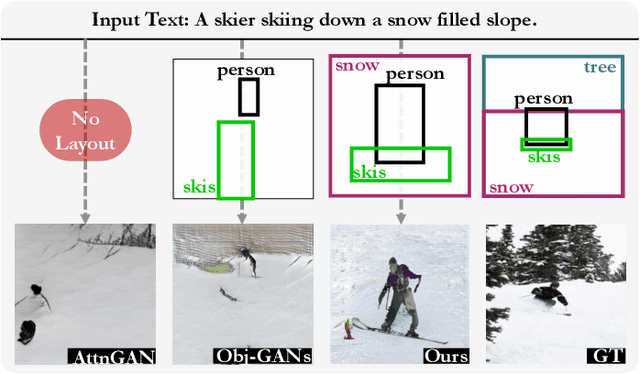
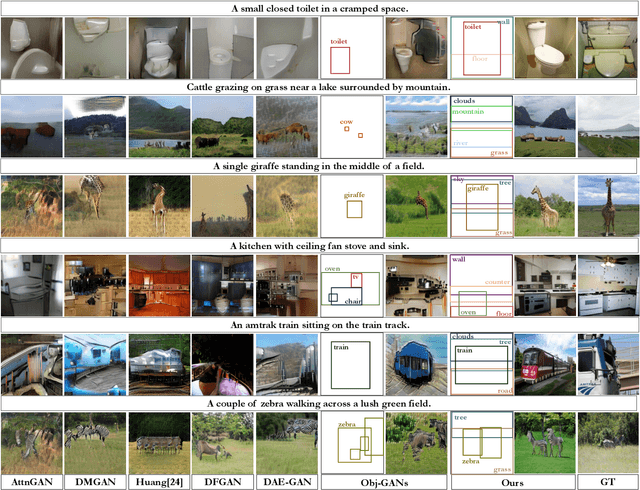
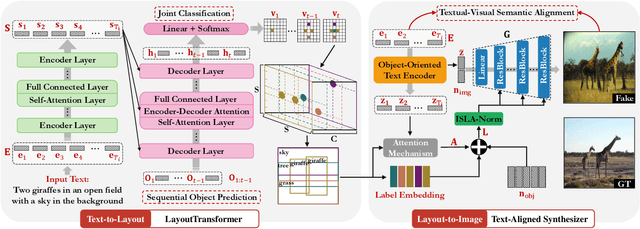
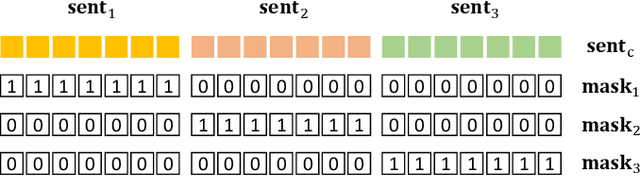
The crux of text-to-image synthesis stems from the difficulty of preserving the cross-modality semantic consistency between the input text and the synthesized image. Typical methods, which seek to model the text-to-image mapping directly, could only capture keywords in the text that indicates common objects or actions but fail to learn their spatial distribution patterns. An effective way to circumvent this limitation is to generate an image layout as guidance, which is attempted by a few methods. Nevertheless, these methods fail to generate practically effective layouts due to the diversity of input text and object location. In this paper we push for effective modeling in both text-to-layout generation and layout-to-image synthesis. Specifically, we formulate the text-to-layout generation as a sequence-to-sequence modeling task, and build our model upon Transformer to learn the spatial relationships between objects by modeling the sequential dependencies between them. In the stage of layout-to-image synthesis, we focus on learning the textual-visual semantic alignment per object in the layout to precisely incorporate the input text into the layout-to-image synthesizing process. To evaluate the quality of generated layout, we design a new metric specifically, dubbed Layout Quality Score, which considers both the absolute distribution errors of bounding boxes in the layout and the mutual spatial relationships between them. Extensive experiments on three datasets demonstrate the superior performance of our method over state-of-the-art methods on both predicting the layout and synthesizing the image from the given text.
Polyak-Ruppert Averaged Q-Leaning is Statistically Efficient
Jan 23, 2022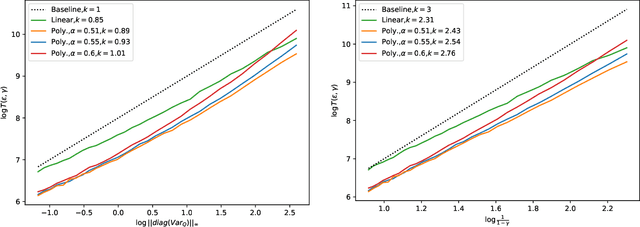
We study synchronous Q-learning with Polyak-Ruppert averaging (a.k.a., averaged Q-learning) in a $\gamma$-discounted MDP. We establish a functional central limit theorem (FCLT) for the averaged iteration $\bar{\boldsymbol{Q}}_T$ and show its standardized partial-sum process weakly converges to a rescaled Brownian motion. Furthermore, we show that $\bar{\boldsymbol{Q}}_T$ is actually a regular asymptotically linear (RAL) estimator for the optimal Q-value function $\boldsymbol{Q}^*$ with the most efficient influence function. This implies the averaged Q-learning iteration has the smallest asymptotic variance among all RAL estimators. In addition, we present a non-asymptotic analysis for the $\ell_{\infty}$ error $\mathbb{E}\|\bar{\boldsymbol{Q}}_T-\boldsymbol{Q}^*\|_{\infty}$, showing for polynomial step sizes it matches the instance-dependent lower bound as well as the optimal minimax complexity lower bound. In short, our theoretical analysis shows averaged Q-learning is statistically efficient.