 Add to Chrome
 Add to Firefox
 Add to Edge
Zero-Shot Iterative Formalization and Planning in Partially Observable Environments
May 19, 2025
In planning, using LLMs not to predict plans but to formalize an environment into the Planning Domain Definition Language (PDDL) has been shown to greatly improve performance and control. While most work focused on fully observable environments, we tackle the more realistic and challenging partially observable environments where existing methods are incapacitated by the lack of complete information. We propose PDDLego+, a framework to iteratively formalize, plan, grow, and refine PDDL representations in a zero-shot manner, without needing access to any existing trajectories. On two textual simulated environments, we show that PDDLego+ not only achieves superior performance, but also shows robustness against problem complexity. We also show that the domain knowledge captured after a successful trial is interpretable and benefits future tasks.

ReWiND: Language-Guided Rewards Teach Robot Policies without New Demonstrations
May 16, 2025

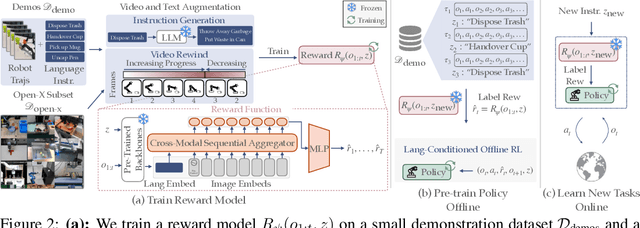
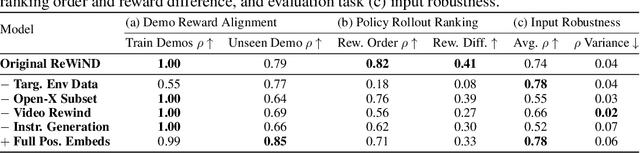
We introduce ReWiND, a framework for learning robot manipulation tasks solely from language instructions without per-task demonstrations. Standard reinforcement learning (RL) and imitation learning methods require expert supervision through human-designed reward functions or demonstrations for every new task. In contrast, ReWiND starts from a small demonstration dataset to learn: (1) a data-efficient, language-conditioned reward function that labels the dataset with rewards, and (2) a language-conditioned policy pre-trained with offline RL using these rewards. Given an unseen task variation, ReWiND fine-tunes the pre-trained policy using the learned reward function, requiring minimal online interaction. We show that ReWiND's reward model generalizes effectively to unseen tasks, outperforming baselines by up to 2.4x in reward generalization and policy alignment metrics. Finally, we demonstrate that ReWiND enables sample-efficient adaptation to new tasks, beating baselines by 2x in simulation and improving real-world pretrained bimanual policies by 5x, taking a step towards scalable, real-world robot learning. See website at https://rewind-reward.github.io/.
Multi-modal Synthetic Data Training and Model Collapse: Insights from VLMs and Diffusion Models
May 10, 2025Recent research has highlighted the risk of generative model collapse, where performance progressively degrades when continually trained on self-generated data. However, existing exploration on model collapse is limited to single, unimodal models, limiting our understanding in more realistic scenarios, such as diverse multi-modal AI agents interacting autonomously through synthetic data and continually evolving. We expand the synthetic data training and model collapse study to multi-modal vision-language generative systems, such as vision-language models (VLMs) and text-to-image diffusion models, as well as recursive generate-train loops with multiple models. We find that model collapse, previously observed in single-modality generative models, exhibits distinct characteristics in the multi-modal context, such as improved vision-language alignment and increased variance in VLM image-captioning task. Additionally, we find that general approaches such as increased decoding budgets, greater model diversity, and relabeling with frozen models can effectively mitigate model collapse. Our findings provide initial insights and practical guidelines for reducing the risk of model collapse in self-improving multi-agent AI systems and curating robust multi-modal synthetic datasets.
Adjust for Trust: Mitigating Trust-Induced Inappropriate Reliance on AI Assistance
Feb 18, 2025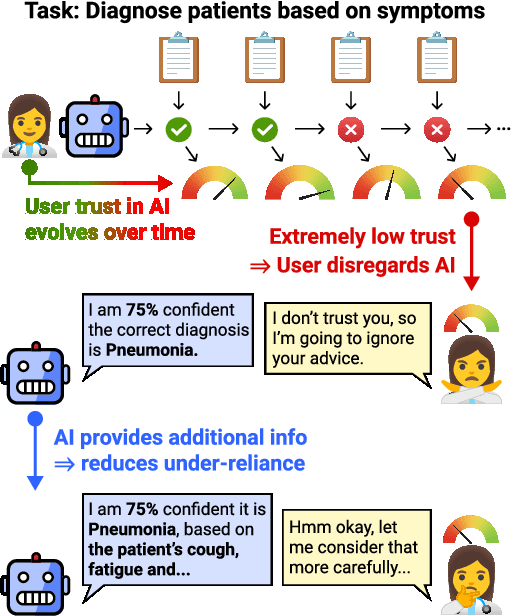
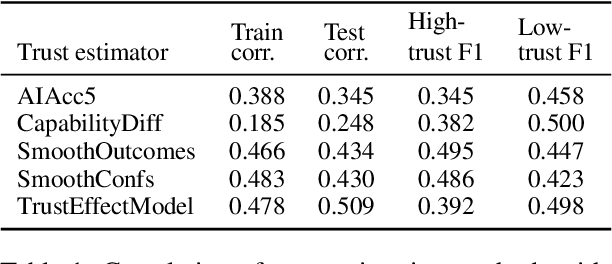
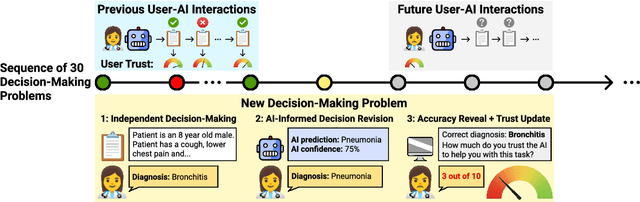
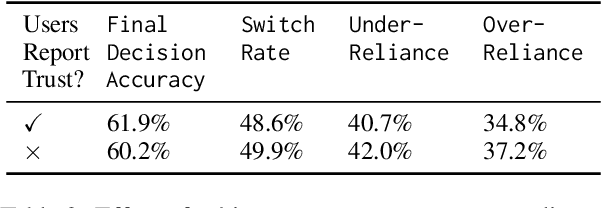
Trust biases how users rely on AI recommendations in AI-assisted decision-making tasks, with low and high levels of trust resulting in increased under- and over-reliance, respectively. We propose that AI assistants should adapt their behavior through trust-adaptive interventions to mitigate such inappropriate reliance. For instance, when user trust is low, providing an explanation can elicit more careful consideration of the assistant's advice by the user. In two decision-making scenarios -- laypeople answering science questions and doctors making medical diagnoses -- we find that providing supporting and counter-explanations during moments of low and high trust, respectively, yields up to 38% reduction in inappropriate reliance and 20% improvement in decision accuracy. We are similarly able to reduce over-reliance by adaptively inserting forced pauses to promote deliberation. Our results highlight how AI adaptation to user trust facilitates appropriate reliance, presenting exciting avenues for improving human-AI collaboration.
Better Slow than Sorry: Introducing Positive Friction for Reliable Dialogue Systems
Jan 31, 2025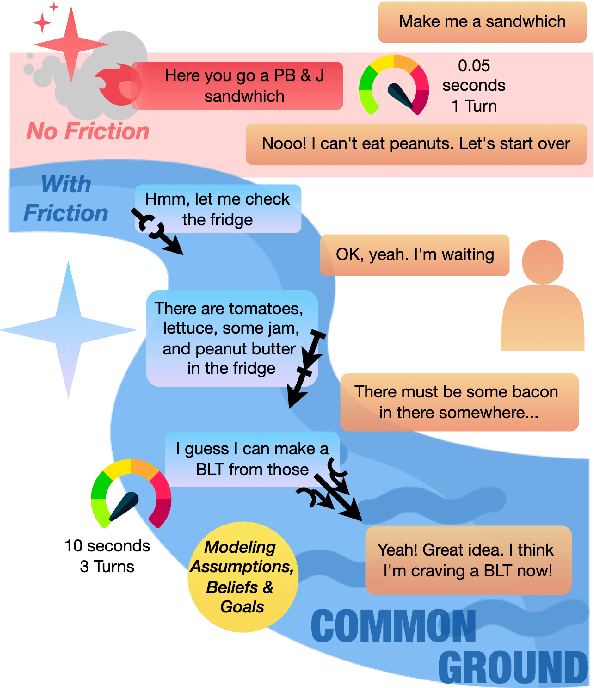


While theories of discourse and cognitive science have long recognized the value of unhurried pacing, recent dialogue research tends to minimize friction in conversational systems. Yet, frictionless dialogue risks fostering uncritical reliance on AI outputs, which can obscure implicit assumptions and lead to unintended consequences. To meet this challenge, we propose integrating positive friction into conversational AI, which promotes user reflection on goals, critical thinking on system response, and subsequent re-conditioning of AI systems. We hypothesize systems can improve goal alignment, modeling of user mental states, and task success by deliberately slowing down conversations in strategic moments to ask questions, reveal assumptions, or pause. We present an ontology of positive friction and collect expert human annotations on multi-domain and embodied goal-oriented corpora. Experiments on these corpora, along with simulated interactions using state-of-the-art systems, suggest incorporating friction not only fosters accountable decision-making, but also enhances machine understanding of user beliefs and goals, and increases task success rates.
Evaluating Creativity and Deception in Large Language Models: A Simulation Framework for Multi-Agent Balderdash
Nov 15, 2024
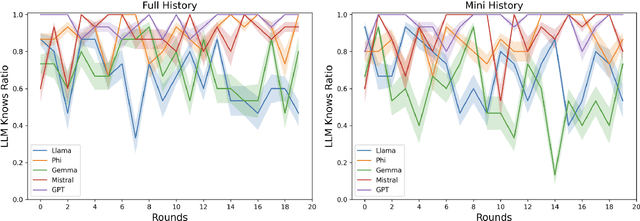
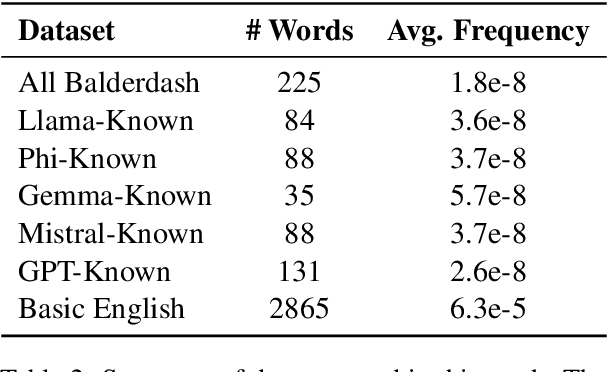
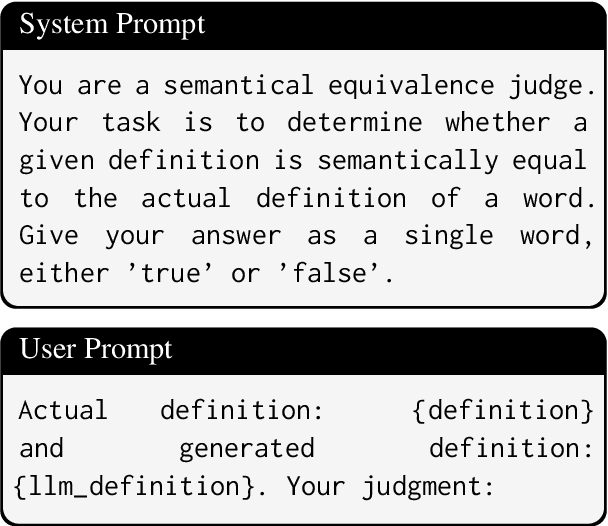
Large Language Models (LLMs) have shown impressive capabilities in complex tasks and interactive environments, yet their creativity remains underexplored. This paper introduces a simulation framework utilizing the game Balderdash to evaluate both the creativity and logical reasoning of LLMs. In Balderdash, players generate fictitious definitions for obscure terms to deceive others while identifying correct definitions. Our framework enables multiple LLM agents to participate in this game, assessing their ability to produce plausible definitions and strategize based on game rules and history. We implemented a centralized game engine featuring various LLMs as participants and a judge LLM to evaluate semantic equivalence. Through a series of experiments, we analyzed the performance of different LLMs, examining metrics such as True Definition Ratio, Deception Ratio, and Correct Guess Ratio. The results provide insights into the creative and deceptive capabilities of LLMs, highlighting their strengths and areas for improvement. Specifically, the study reveals that infrequent vocabulary in LLMs' input leads to poor reasoning on game rules and historical context (https://github.com/ParsaHejabi/Simulation-Framework-for-Multi-Agent-Balderdash).
The American Sign Language Knowledge Graph: Infusing ASL Models with Linguistic Knowledge
Nov 06, 2024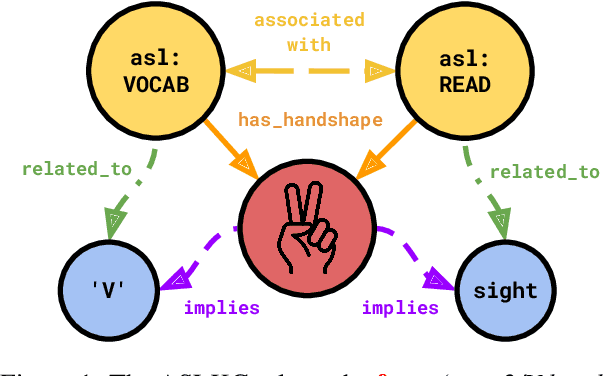
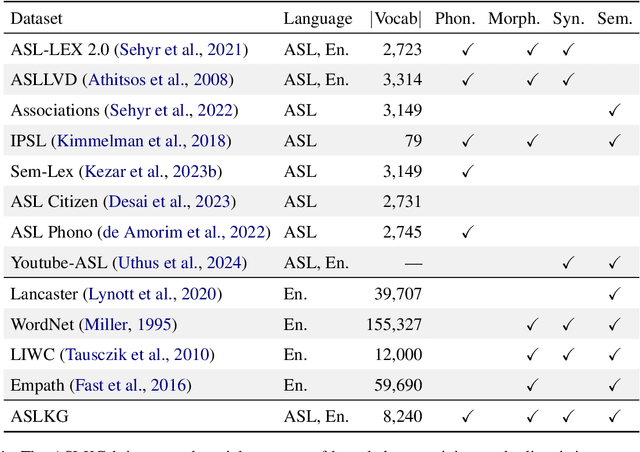
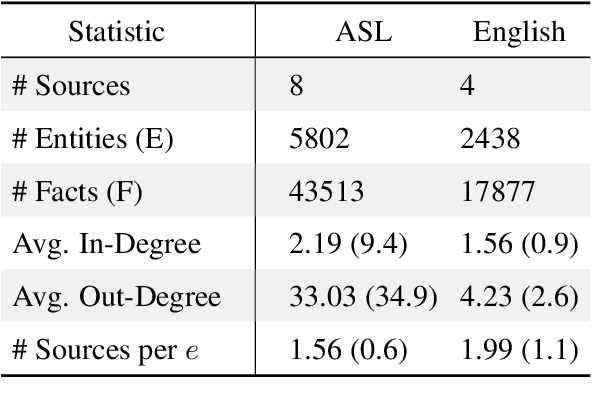
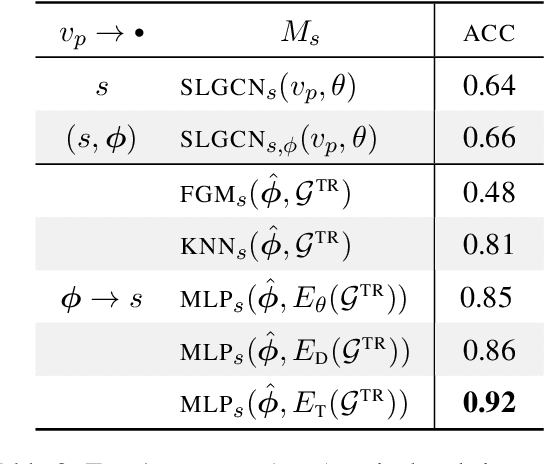
Language models for American Sign Language (ASL) could make language technologies substantially more accessible to those who sign. To train models on tasks such as isolated sign recognition (ISR) and ASL-to-English translation, datasets provide annotated video examples of ASL signs. To facilitate the generalizability and explainability of these models, we introduce the American Sign Language Knowledge Graph (ASLKG), compiled from twelve sources of expert linguistic knowledge. We use the ASLKG to train neuro-symbolic models for 3 ASL understanding tasks, achieving accuracies of 91% on ISR, 14% for predicting the semantic features of unseen signs, and 36% for classifying the topic of Youtube-ASL videos.
Generating Contextually-Relevant Navigation Instructions for Blind and Low Vision People
Jul 11, 2024Navigating unfamiliar environments presents significant challenges for blind and low-vision (BLV) individuals. In this work, we construct a dataset of images and goals across different scenarios such as searching through kitchens or navigating outdoors. We then investigate how grounded instruction generation methods can provide contextually-relevant navigational guidance to users in these instances. Through a sighted user study, we demonstrate that large pretrained language models can produce correct and useful instructions perceived as beneficial for BLV users. We also conduct a survey and interview with 4 BLV users and observe useful insights on preferences for different instructions based on the scenario.
Contrast Sets for Evaluating Language-Guided Robot Policies
Jun 19, 2024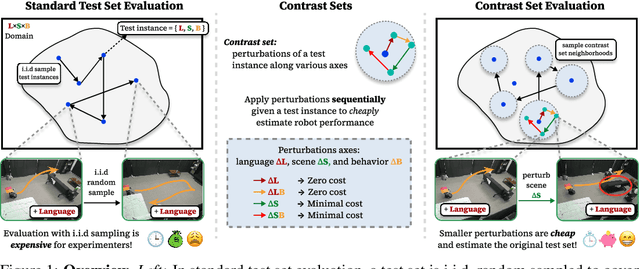
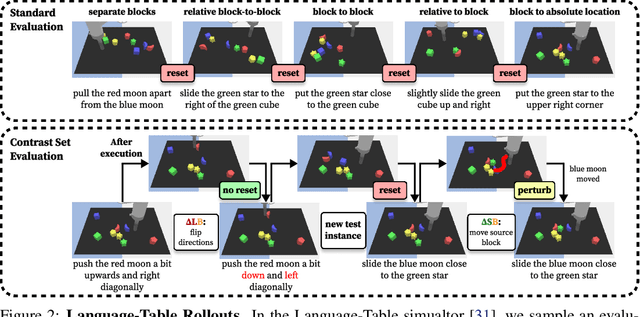
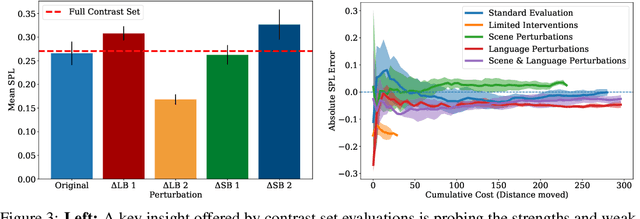
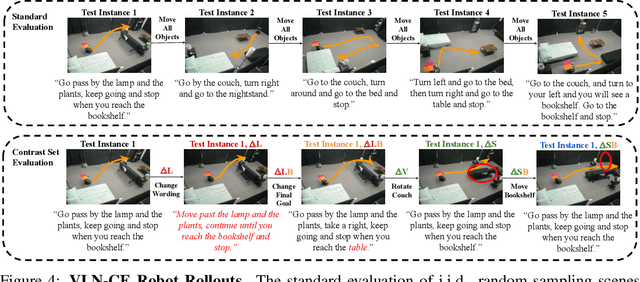
Robot evaluations in language-guided, real world settings are time-consuming and often sample only a small space of potential instructions across complex scenes. In this work, we introduce contrast sets for robotics as an approach to make small, but specific, perturbations to otherwise independent, identically distributed (i.i.d.) test instances. We investigate the relationship between experimenter effort to carry out an evaluation and the resulting estimated test performance as well as the insights that can be drawn from performance on perturbed instances. We use contrast sets to characterize policies at reduced experimenter effort in both a simulated manipulation task and a physical robot vision-and-language navigation task. We encourage the use of contrast set evaluations as a more informative alternative to small scale, i.i.d. demonstrations on physical robots, and as a scalable alternative to industry-scale real world evaluations.
When Parts are Greater Than Sums: Individual LLM Components Can Outperform Full Models
Jun 19, 2024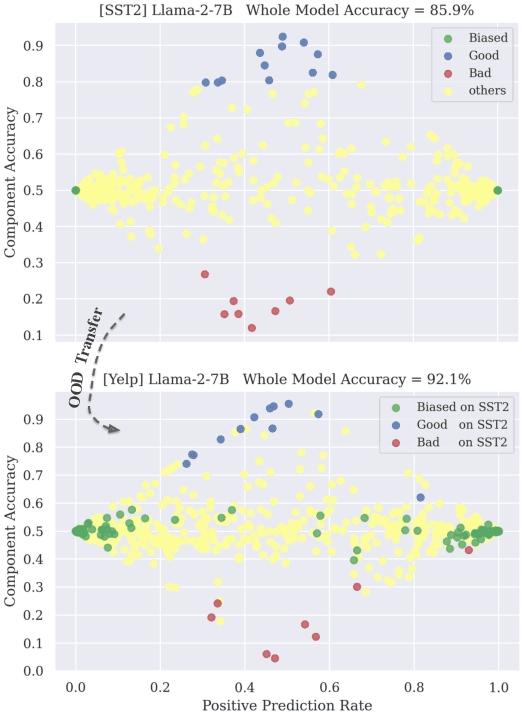


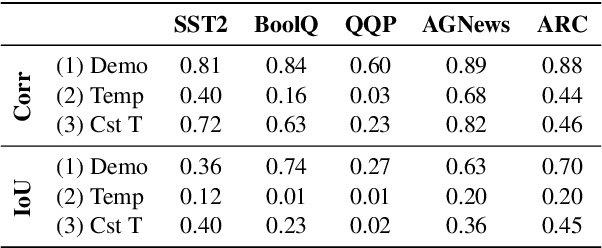
This paper studies in-context learning (ICL) by decomposing the output of large language models into the individual contributions of attention heads and MLPs (components). We observe curious components: good-performing ones that individually do well on a classification task, even when the model performs poorly; bad-performing ones that do much worse than chance; and label-biased components that always predict the same label. We find that component accuracies are well-correlated across different demonstration sets and perturbations of prompt templates, even when the full-model accuracy varies greatly. Based on our findings, we propose component reweighting, which learns to linearly re-scale the component activations from a few labeled examples. Given 24 labeled examples, our method improves by an average of 6.0% accuracy points over 24-shot ICL across 8 tasks on Llama-2-7B. Overall, this paper both enriches our understanding of ICL and provides a practical method for improvement by examining model internals.