 Add to Chrome
 Add to Firefox
 Add to Edge
Hamiltonian Neural Networks
Jul 07, 2019
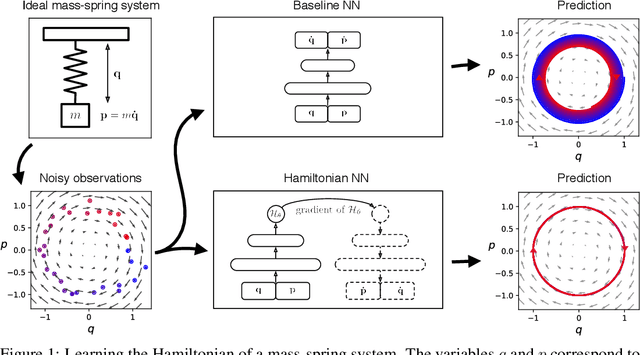
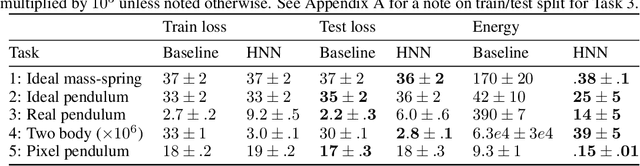
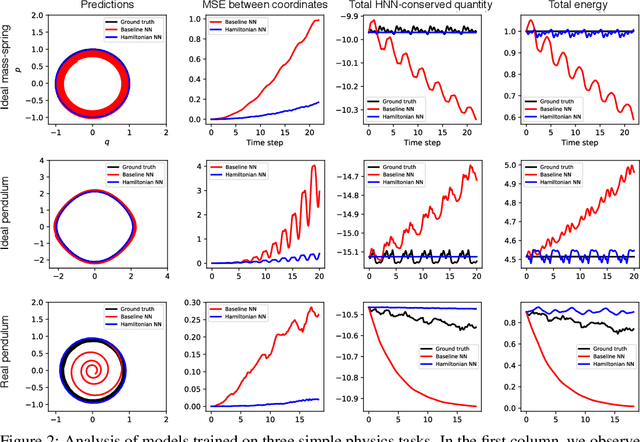

Even though neural networks enjoy widespread use, they still struggle to learn the basic laws of physics. How might we endow them with better inductive biases? In this paper, we draw inspiration from Hamiltonian mechanics to train models that learn and respect exact conservation laws in an unsupervised manner. We evaluate our models on problems where conservation of energy is important, including the two-body problem and pixel observations of a pendulum. Our model trains faster and generalizes better than a regular neural network. An interesting side effect is that our model is perfectly reversible in time.

Deconstructing Lottery Tickets: Zeros, Signs, and the Supermask
May 03, 2019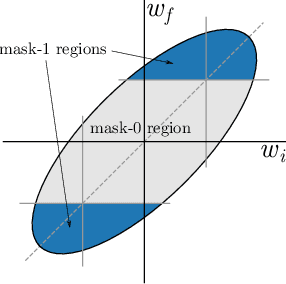
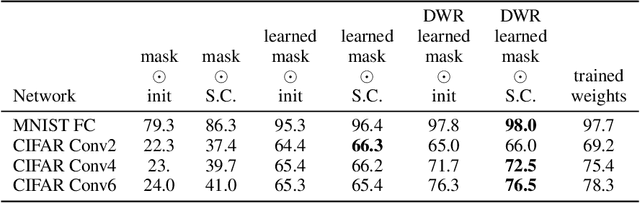
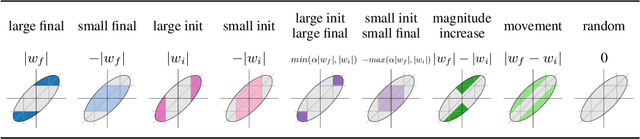
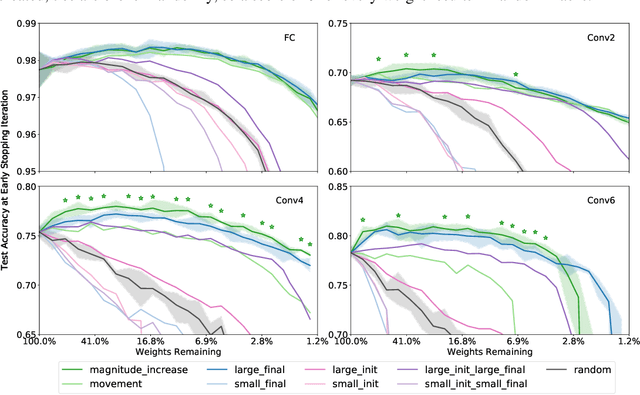
The recent "Lottery Ticket Hypothesis" paper by Frankle & Carbin showed that a simple approach to creating sparse networks (keep the large weights) results in models that are trainable from scratch, but only when starting from the same initial weights. The performance of these networks often exceeds the performance of the non-sparse base model, but for reasons that were not well understood. In this paper we study the three critical components of the Lottery Ticket (LT) algorithm, showing that each may be varied significantly without impacting the overall results. Ablating these factors leads to new insights for why LT networks perform as well as they do. We show why setting weights to zero is important, how signs are all you need to make the re-initialized network train, and why masking behaves like training. Finally, we discover the existence of Supermasks, or masks that can be applied to an untrained, randomly initialized network to produce a model with performance far better than chance (86% on MNIST, 41% on CIFAR-10).
Understanding Neural Networks via Feature Visualization: A survey
Apr 18, 2019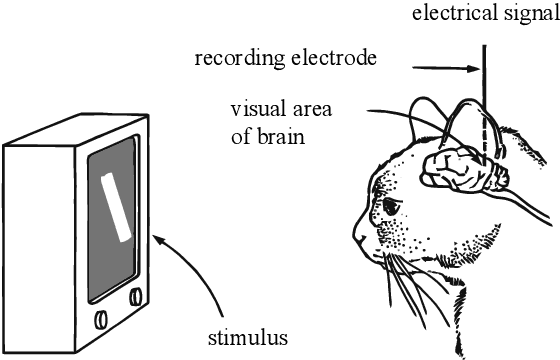
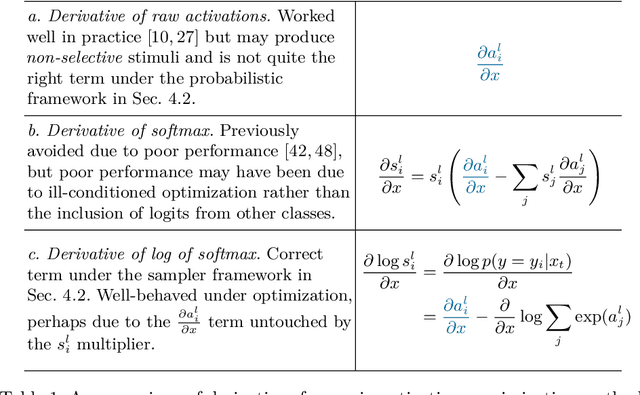
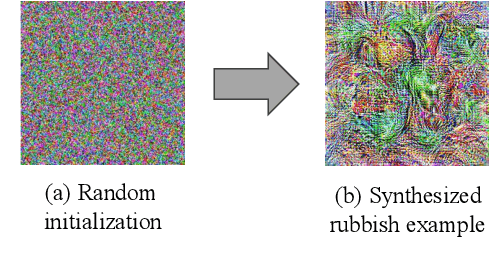
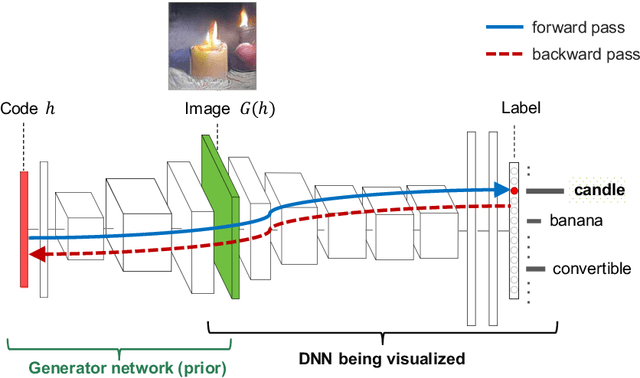
A neuroscience method to understanding the brain is to find and study the preferred stimuli that highly activate an individual cell or groups of cells. Recent advances in machine learning enable a family of methods to synthesize preferred stimuli that cause a neuron in an artificial or biological brain to fire strongly. Those methods are known as Activation Maximization (AM) or Feature Visualization via Optimization. In this chapter, we (1) review existing AM techniques in the literature; (2) discuss a probabilistic interpretation for AM; and (3) review the applications of AM in debugging and explaining networks.
Metropolis-Hastings Generative Adversarial Networks
Nov 28, 2018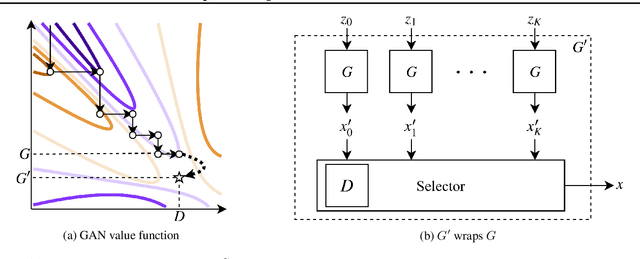
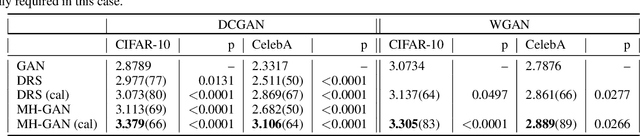
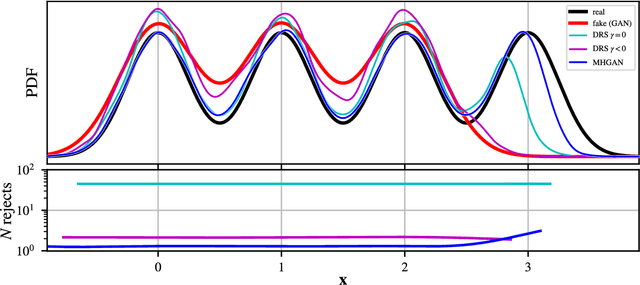
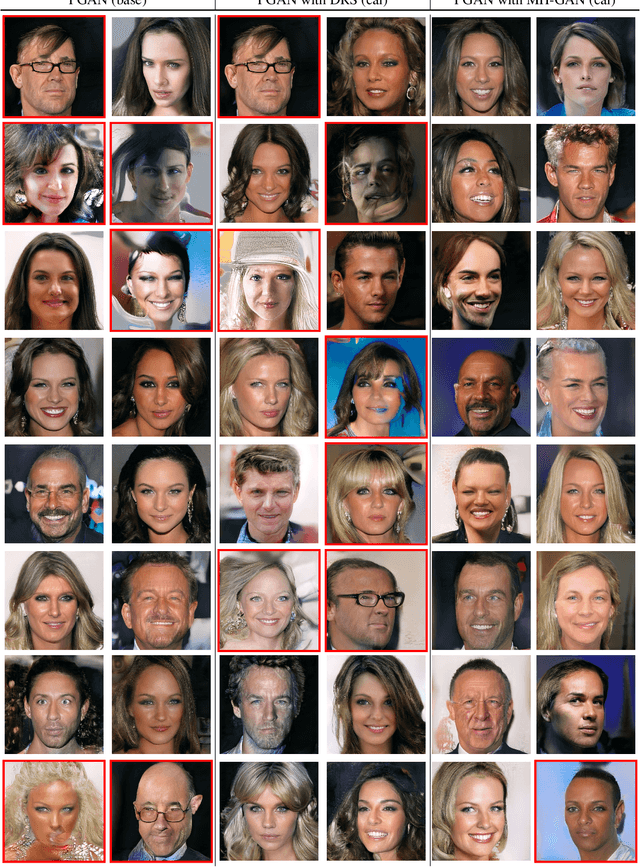
We introduce the Metropolis-Hastings generative adversarial network (MH-GAN), which combines aspects of Markov chain Monte Carlo and GANs. The MH-GAN draws samples from the distribution implicitly defined by a GAN's discriminator-generator pair, as opposed to sampling in a standard GAN which draws samples from the distribution defined by the generator. It uses the discriminator from GAN training to build a wrapper around the generator for improved sampling. With a perfect discriminator, this wrapped generator samples from the true distribution on the data exactly even when the generator is imperfect. We demonstrate the benefits of the improved generator on multiple benchmark datasets, including CIFAR-10 and CelebA, using DCGAN and WGAN.
The Surprising Creativity of Digital Evolution: A Collection of Anecdotes from the Evolutionary Computation and Artificial Life Research Communities
Aug 14, 2018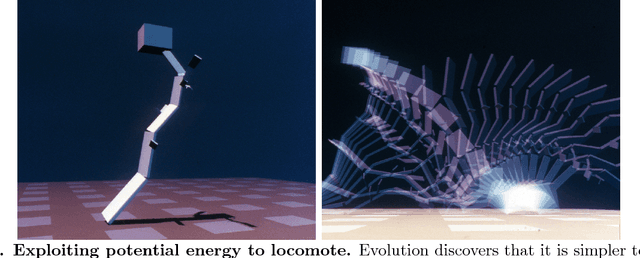
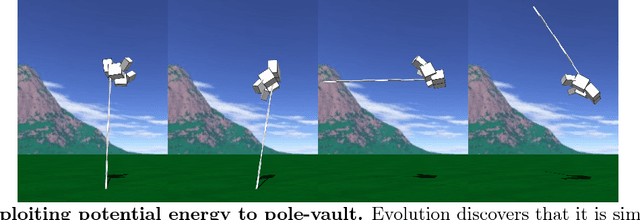

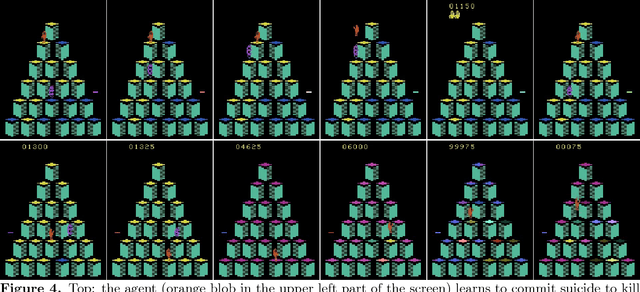
Biological evolution provides a creative fount of complex and subtle adaptations, often surprising the scientists who discover them. However, because evolution is an algorithmic process that transcends the substrate in which it occurs, evolution's creativity is not limited to nature. Indeed, many researchers in the field of digital evolution have observed their evolving algorithms and organisms subverting their intentions, exposing unrecognized bugs in their code, producing unexpected adaptations, or exhibiting outcomes uncannily convergent with ones in nature. Such stories routinely reveal creativity by evolution in these digital worlds, but they rarely fit into the standard scientific narrative. Instead they are often treated as mere obstacles to be overcome, rather than results that warrant study in their own right. The stories themselves are traded among researchers through oral tradition, but that mode of information transmission is inefficient and prone to error and outright loss. Moreover, the fact that these stories tend to be shared only among practitioners means that many natural scientists do not realize how interesting and lifelike digital organisms are and how natural their evolution can be. To our knowledge, no collection of such anecdotes has been published before. This paper is the crowd-sourced product of researchers in the fields of artificial life and evolutionary computation who have provided first-hand accounts of such cases. It thus serves as a written, fact-checked collection of scientifically important and even entertaining stories. In doing so we also present here substantial evidence that the existence and importance of evolutionary surprises extends beyond the natural world, and may indeed be a universal property of all complex evolving systems.
An Intriguing Failing of Convolutional Neural Networks and the CoordConv Solution
Jul 09, 2018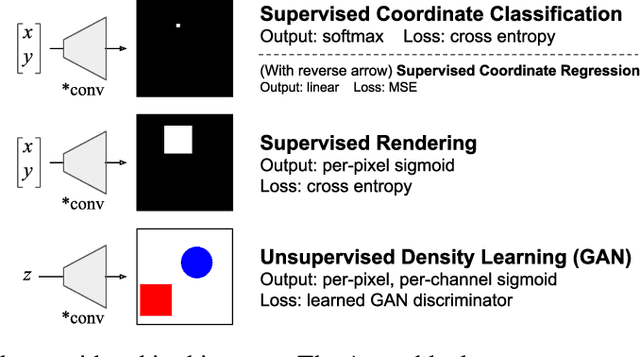
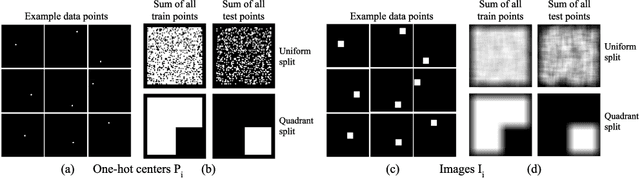
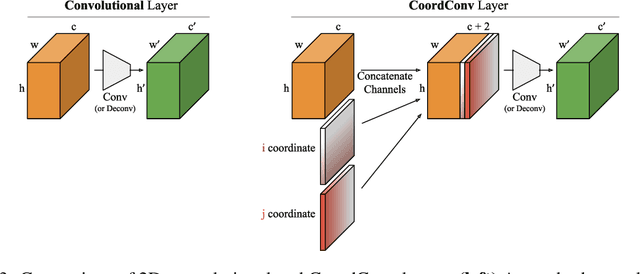
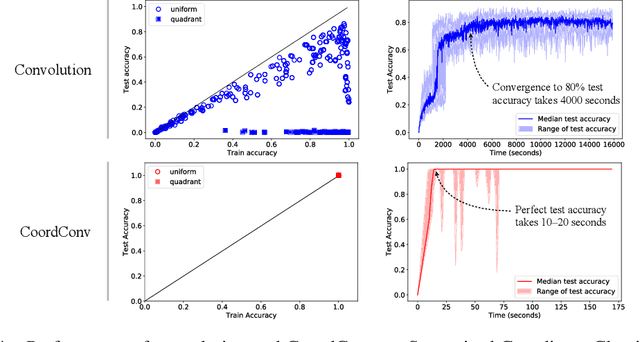
Few ideas have enjoyed as large an impact on deep learning as convolution. For any problem involving pixels or spatial representations, common intuition holds that convolutional neural networks may be appropriate. In this paper we show a striking counterexample to this intuition via the seemingly trivial coordinate transform problem, which simply requires learning a mapping between coordinates in (x,y) Cartesian space and one-hot pixel space. Although convolutional networks would seem appropriate for this task, we show that they fail spectacularly. We demonstrate and carefully analyze the failure first on a toy problem, at which point a simple fix becomes obvious. We call this solution CoordConv, which works by giving convolution access to its own input coordinates through the use of extra coordinate channels. Without sacrificing the computational and parametric efficiency of ordinary convolution, CoordConv allows networks to learn either perfect translation invariance or varying degrees of translation dependence, as required by the task. CoordConv solves the coordinate transform problem with perfect generalization and 150 times faster with 10--100 times fewer parameters than convolution. This stark contrast raises the question: to what extent has this inability of convolution persisted insidiously inside other tasks, subtly hampering performance from within? A complete answer to this question will require further investigation, but we show preliminary evidence that swapping convolution for CoordConv can improve models on a diverse set of tasks. Using CoordConv in a GAN produced less mode collapse as the transform between high-level spatial latents and pixels becomes easier to learn. A Faster R-CNN detection model trained on MNIST detection showed 24% better IOU when using CoordConv, and in the RL domain agents playing Atari games benefit significantly from the use of CoordConv layers.
Measuring the Intrinsic Dimension of Objective Landscapes
Apr 24, 2018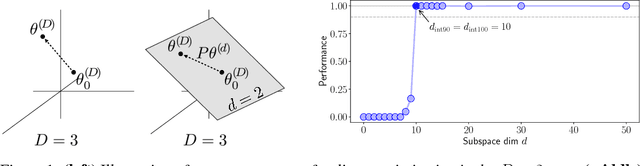
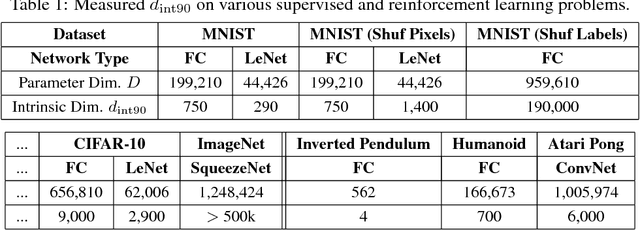
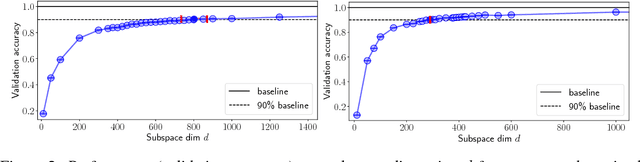
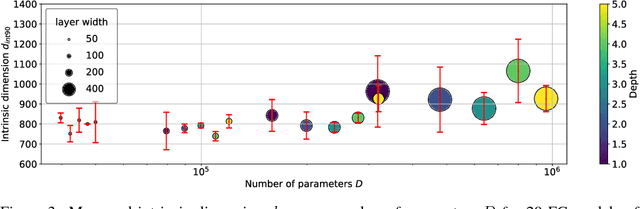
Many recently trained neural networks employ large numbers of parameters to achieve good performance. One may intuitively use the number of parameters required as a rough gauge of the difficulty of a problem. But how accurate are such notions? How many parameters are really needed? In this paper we attempt to answer this question by training networks not in their native parameter space, but instead in a smaller, randomly oriented subspace. We slowly increase the dimension of this subspace, note at which dimension solutions first appear, and define this to be the intrinsic dimension of the objective landscape. The approach is simple to implement, computationally tractable, and produces several suggestive conclusions. Many problems have smaller intrinsic dimensions than one might suspect, and the intrinsic dimension for a given dataset varies little across a family of models with vastly different sizes. This latter result has the profound implication that once a parameter space is large enough to solve a problem, extra parameters serve directly to increase the dimensionality of the solution manifold. Intrinsic dimension allows some quantitative comparison of problem difficulty across supervised, reinforcement, and other types of learning where we conclude, for example, that solving the inverted pendulum problem is 100 times easier than classifying digits from MNIST, and playing Atari Pong from pixels is about as hard as classifying CIFAR-10. In addition to providing new cartography of the objective landscapes wandered by parameterized models, the method is a simple technique for constructively obtaining an upper bound on the minimum description length of a solution. A byproduct of this construction is a simple approach for compressing networks, in some cases by more than 100 times.
Proceedings of NIPS 2017 Symposium on Interpretable Machine Learning
Dec 12, 2017This is the Proceedings of NIPS 2017 Symposium on Interpretable Machine Learning, held in Long Beach, California, USA on December 7, 2017
SVCCA: Singular Vector Canonical Correlation Analysis for Deep Learning Dynamics and Interpretability
Nov 08, 2017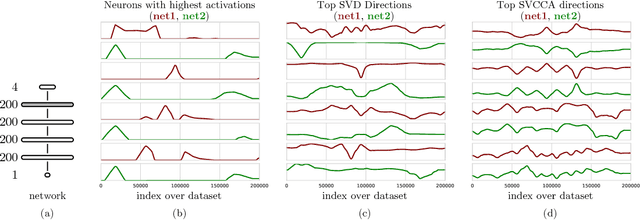
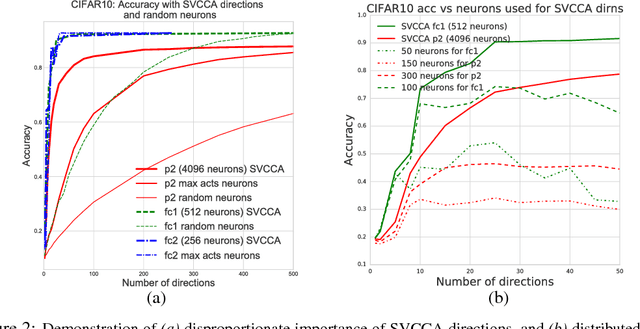
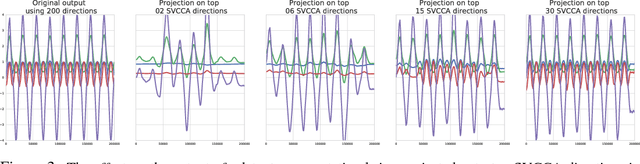

We propose a new technique, Singular Vector Canonical Correlation Analysis (SVCCA), a tool for quickly comparing two representations in a way that is both invariant to affine transform (allowing comparison between different layers and networks) and fast to compute (allowing more comparisons to be calculated than with previous methods). We deploy this tool to measure the intrinsic dimensionality of layers, showing in some cases needless over-parameterization; to probe learning dynamics throughout training, finding that networks converge to final representations from the bottom up; to show where class-specific information in networks is formed; and to suggest new training regimes that simultaneously save computation and overfit less. Code: https://github.com/google/svcca/
Plug & Play Generative Networks: Conditional Iterative Generation of Images in Latent Space
Apr 12, 2017
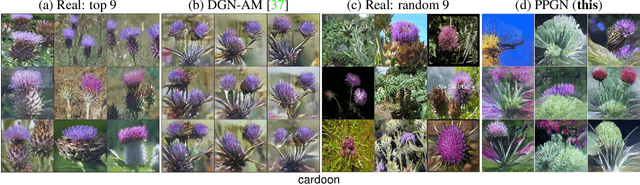
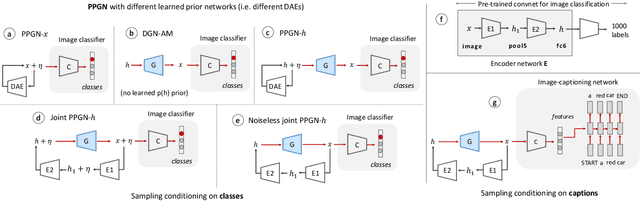
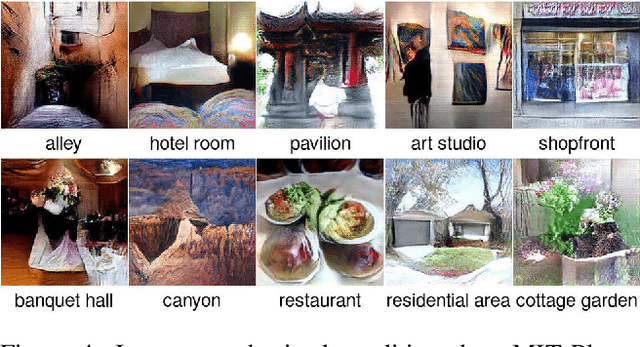
Generating high-resolution, photo-realistic images has been a long-standing goal in machine learning. Recently, Nguyen et al. (2016) showed one interesting way to synthesize novel images by performing gradient ascent in the latent space of a generator network to maximize the activations of one or multiple neurons in a separate classifier network. In this paper we extend this method by introducing an additional prior on the latent code, improving both sample quality and sample diversity, leading to a state-of-the-art generative model that produces high quality images at higher resolutions (227x227) than previous generative models, and does so for all 1000 ImageNet categories. In addition, we provide a unified probabilistic interpretation of related activation maximization methods and call the general class of models "Plug and Play Generative Networks". PPGNs are composed of 1) a generator network G that is capable of drawing a wide range of image types and 2) a replaceable "condition" network C that tells the generator what to draw. We demonstrate the generation of images conditioned on a class (when C is an ImageNet or MIT Places classification network) and also conditioned on a caption (when C is an image captioning network). Our method also improves the state of the art of Multifaceted Feature Visualization, which generates the set of synthetic inputs that activate a neuron in order to better understand how deep neural networks operate. Finally, we show that our model performs reasonably well at the task of image inpainting. While image models are used in this paper, the approach is modality-agnostic and can be applied to many types of data.