 Add to Chrome
 Add to Firefox
 Add to Edge
PyTorch: An Imperative Style, High-Performance Deep Learning Library
Dec 03, 2019
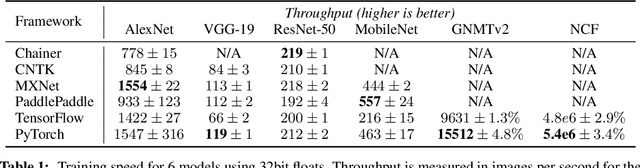

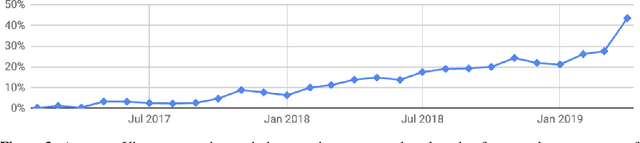
Deep learning frameworks have often focused on either usability or speed, but not both. PyTorch is a machine learning library that shows that these two goals are in fact compatible: it provides an imperative and Pythonic programming style that supports code as a model, makes debugging easy and is consistent with other popular scientific computing libraries, while remaining efficient and supporting hardware accelerators such as GPUs. In this paper, we detail the principles that drove the implementation of PyTorch and how they are reflected in its architecture. We emphasize that every aspect of PyTorch is a regular Python program under the full control of its user. We also explain how the careful and pragmatic implementation of the key components of its runtime enables them to work together to achieve compelling performance. We demonstrate the efficiency of individual subsystems, as well as the overall speed of PyTorch on several common benchmarks.

OpenSpiel: A Framework for Reinforcement Learning in Games
Oct 10, 2019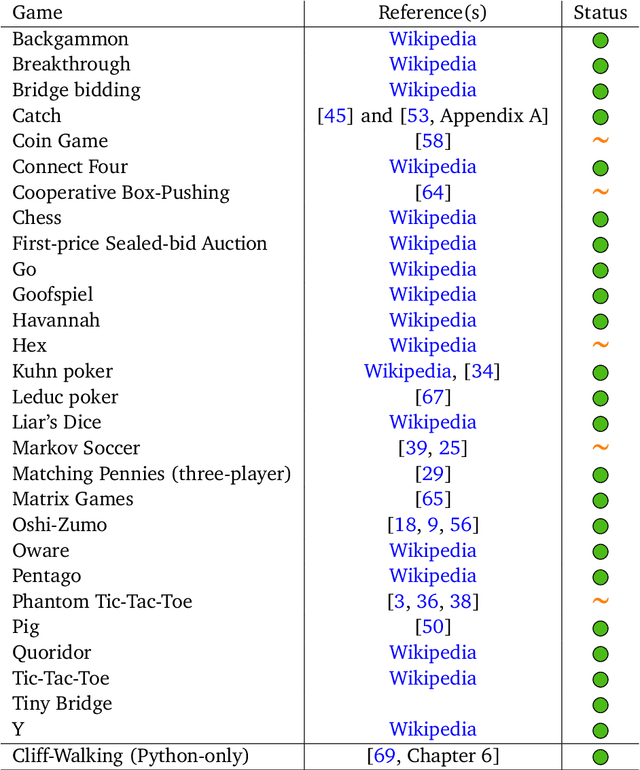
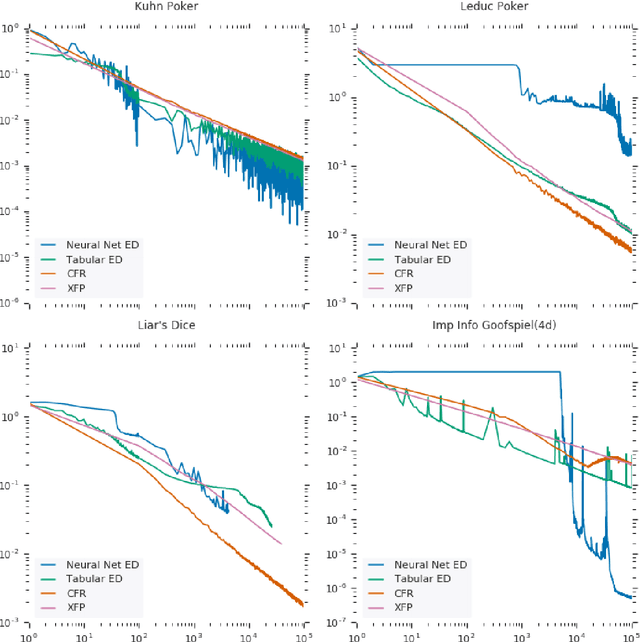
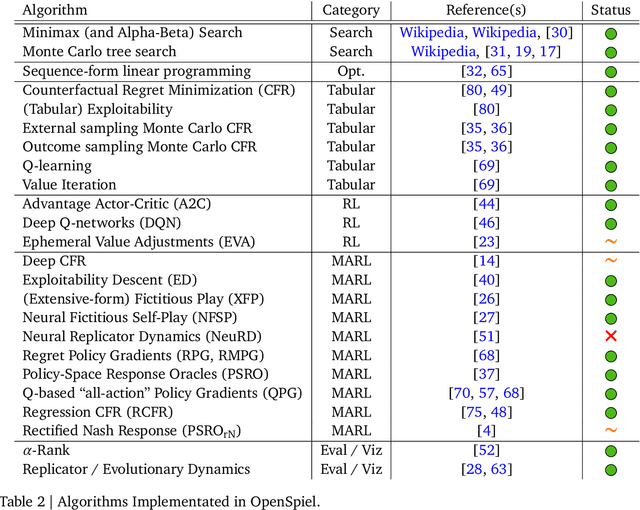
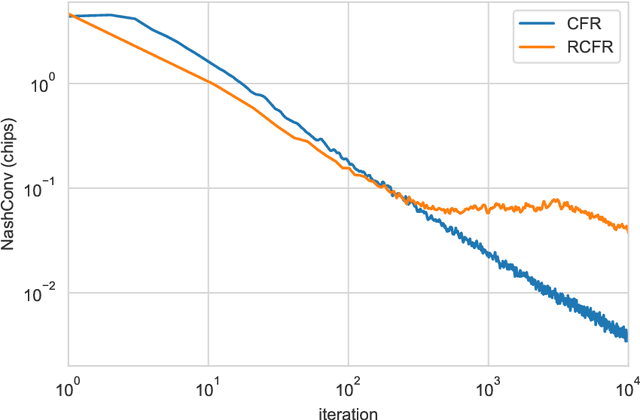
OpenSpiel is a collection of environments and algorithms for research in general reinforcement learning and search/planning in games. OpenSpiel supports n-player (single- and multi- agent) zero-sum, cooperative and general-sum, one-shot and sequential, strictly turn-taking and simultaneous-move, perfect and imperfect information games, as well as traditional multiagent environments such as (partially- and fully- observable) grid worlds and social dilemmas. OpenSpiel also includes tools to analyze learning dynamics and other common evaluation metrics. This document serves both as an overview of the code base and an introduction to the terminology, core concepts, and algorithms across the fields of reinforcement learning, computational game theory, and search.
Learned in Translation: Contextualized Word Vectors
Jun 20, 2018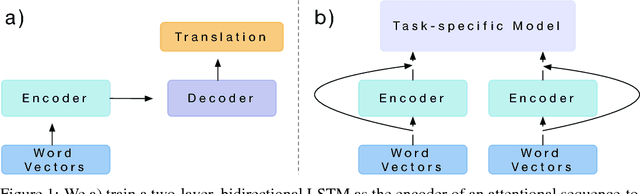
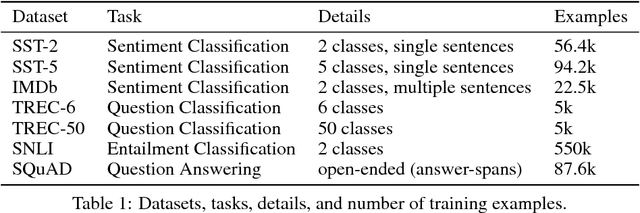
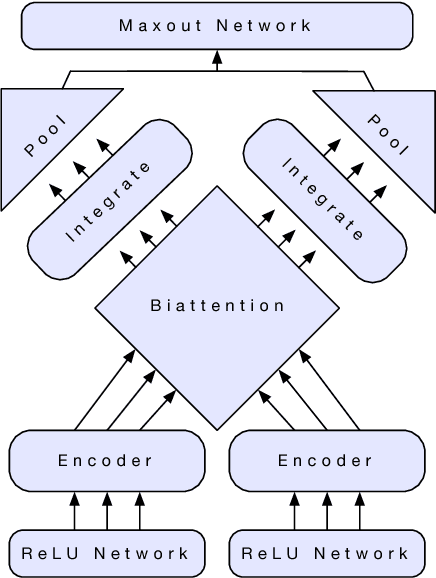
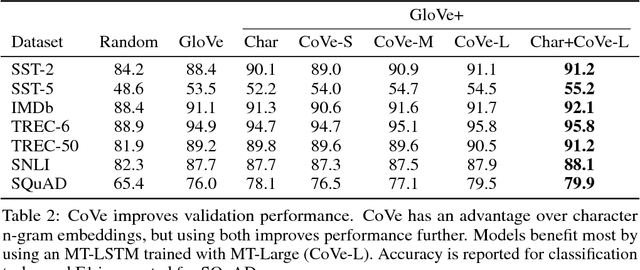
Computer vision has benefited from initializing multiple deep layers with weights pretrained on large supervised training sets like ImageNet. Natural language processing (NLP) typically sees initialization of only the lowest layer of deep models with pretrained word vectors. In this paper, we use a deep LSTM encoder from an attentional sequence-to-sequence model trained for machine translation (MT) to contextualize word vectors. We show that adding these context vectors (CoVe) improves performance over using only unsupervised word and character vectors on a wide variety of common NLP tasks: sentiment analysis (SST, IMDb), question classification (TREC), entailment (SNLI), and question answering (SQuAD). For fine-grained sentiment analysis and entailment, CoVe improves performance of our baseline models to the state of the art.
Non-Autoregressive Neural Machine Translation
Mar 09, 2018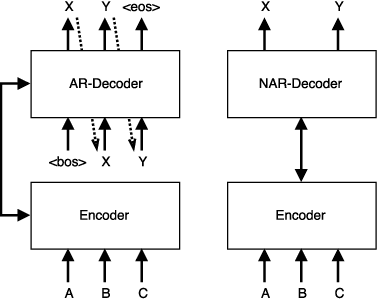
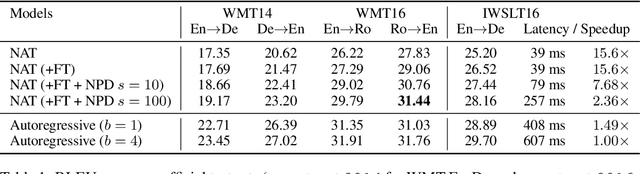
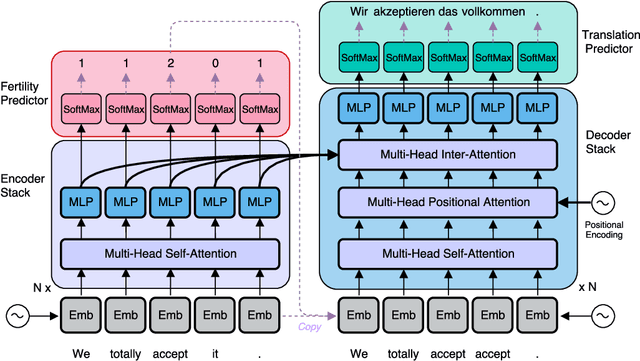
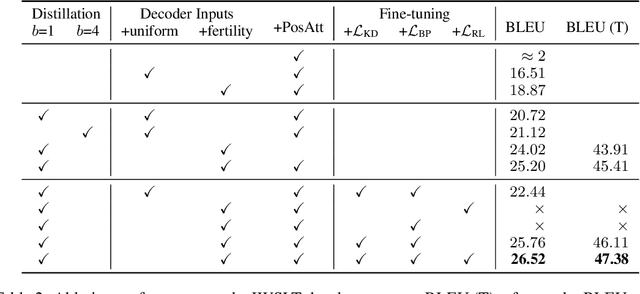
Existing approaches to neural machine translation condition each output word on previously generated outputs. We introduce a model that avoids this autoregressive property and produces its outputs in parallel, allowing an order of magnitude lower latency during inference. Through knowledge distillation, the use of input token fertilities as a latent variable, and policy gradient fine-tuning, we achieve this at a cost of as little as 2.0 BLEU points relative to the autoregressive Transformer network used as a teacher. We demonstrate substantial cumulative improvements associated with each of the three aspects of our training strategy, and validate our approach on IWSLT 2016 English-German and two WMT language pairs. By sampling fertilities in parallel at inference time, our non-autoregressive model achieves near-state-of-the-art performance of 29.8 BLEU on WMT 2016 English-Romanian.
A Flexible Approach to Automated RNN Architecture Generation
Dec 20, 2017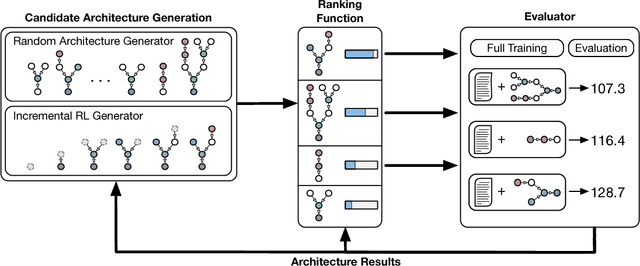
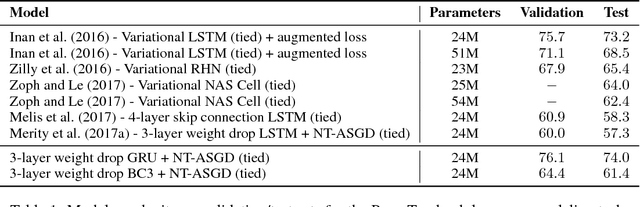
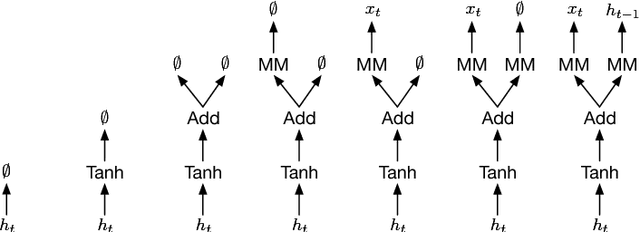
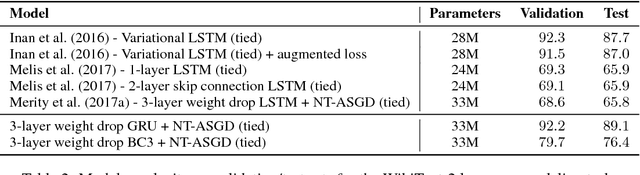
The process of designing neural architectures requires expert knowledge and extensive trial and error. While automated architecture search may simplify these requirements, the recurrent neural network (RNN) architectures generated by existing methods are limited in both flexibility and components. We propose a domain-specific language (DSL) for use in automated architecture search which can produce novel RNNs of arbitrary depth and width. The DSL is flexible enough to define standard architectures such as the Gated Recurrent Unit and Long Short Term Memory and allows the introduction of non-standard RNN components such as trigonometric curves and layer normalization. Using two different candidate generation techniques, random search with a ranking function and reinforcement learning, we explore the novel architectures produced by the RNN DSL for language modeling and machine translation domains. The resulting architectures do not follow human intuition yet perform well on their targeted tasks, suggesting the space of usable RNN architectures is far larger than previously assumed.
Block-diagonal Hessian-free Optimization for Training Neural Networks
Dec 20, 2017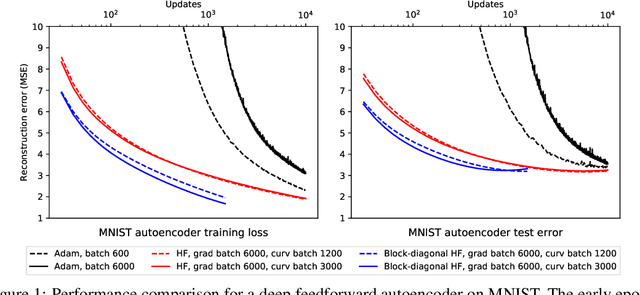
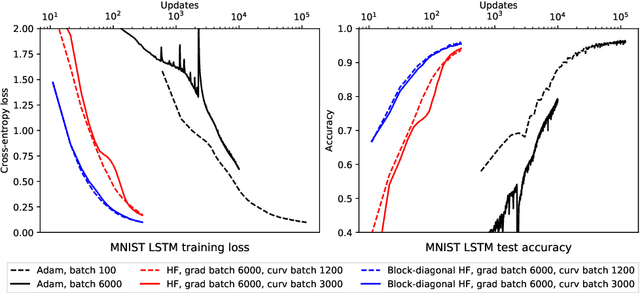
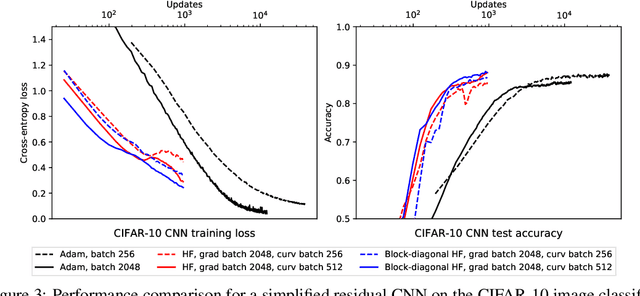
Second-order methods for neural network optimization have several advantages over methods based on first-order gradient descent, including better scaling to large mini-batch sizes and fewer updates needed for convergence. But they are rarely applied to deep learning in practice because of high computational cost and the need for model-dependent algorithmic variations. We introduce a variant of the Hessian-free method that leverages a block-diagonal approximation of the generalized Gauss-Newton matrix. Our method computes the curvature approximation matrix only for pairs of parameters from the same layer or block of the neural network and performs conjugate gradient updates independently for each block. Experiments on deep autoencoders, deep convolutional networks, and multilayer LSTMs demonstrate better convergence and generalization compared to the original Hessian-free approach and the Adam method.
Towards Neural Machine Translation with Latent Tree Attention
Sep 06, 2017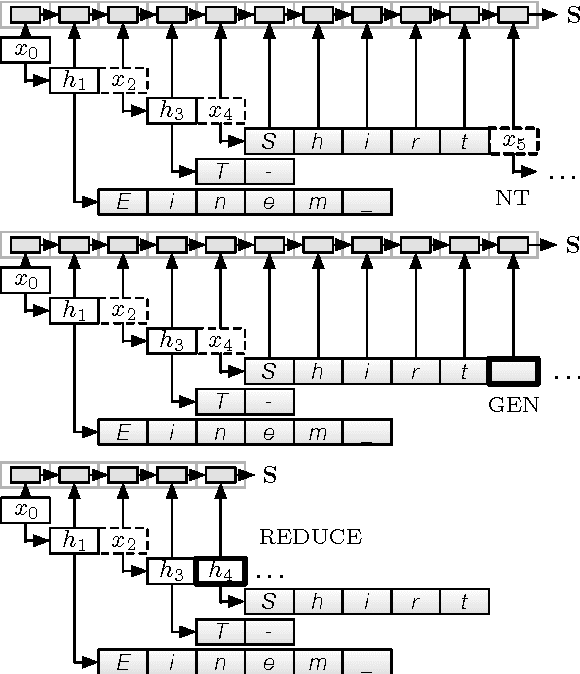
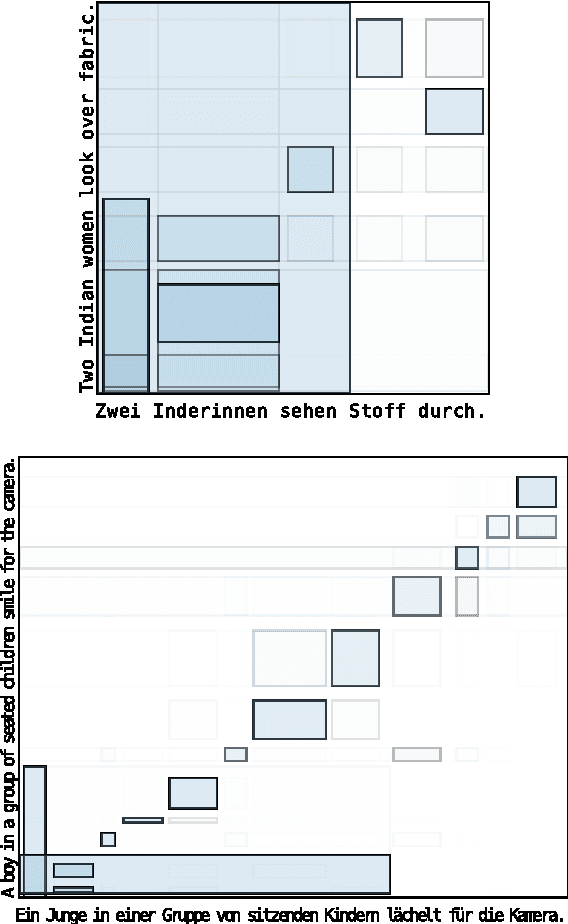
Building models that take advantage of the hierarchical structure of language without a priori annotation is a longstanding goal in natural language processing. We introduce such a model for the task of machine translation, pairing a recurrent neural network grammar encoder with a novel attentional RNNG decoder and applying policy gradient reinforcement learning to induce unsupervised tree structures on both the source and target. When trained on character-level datasets with no explicit segmentation or parse annotation, the model learns a plausible segmentation and shallow parse, obtaining performance close to an attentional baseline.
Quasi-Recurrent Neural Networks
Nov 21, 2016
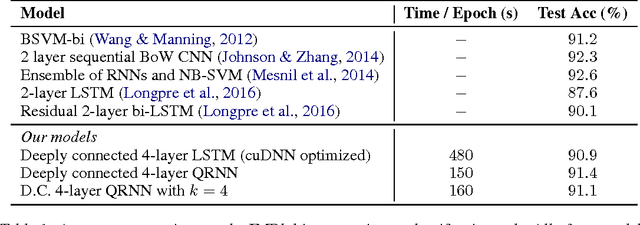
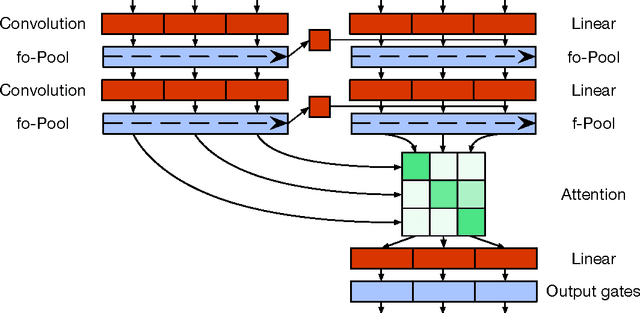
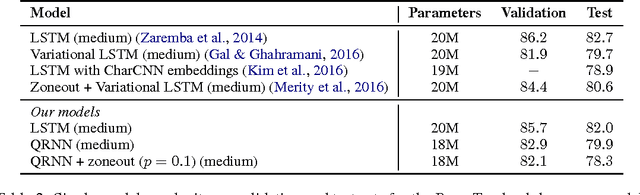
Recurrent neural networks are a powerful tool for modeling sequential data, but the dependence of each timestep's computation on the previous timestep's output limits parallelism and makes RNNs unwieldy for very long sequences. We introduce quasi-recurrent neural networks (QRNNs), an approach to neural sequence modeling that alternates convolutional layers, which apply in parallel across timesteps, and a minimalist recurrent pooling function that applies in parallel across channels. Despite lacking trainable recurrent layers, stacked QRNNs have better predictive accuracy than stacked LSTMs of the same hidden size. Due to their increased parallelism, they are up to 16 times faster at train and test time. Experiments on language modeling, sentiment classification, and character-level neural machine translation demonstrate these advantages and underline the viability of QRNNs as a basic building block for a variety of sequence tasks.
Pointer Sentinel Mixture Models
Sep 26, 2016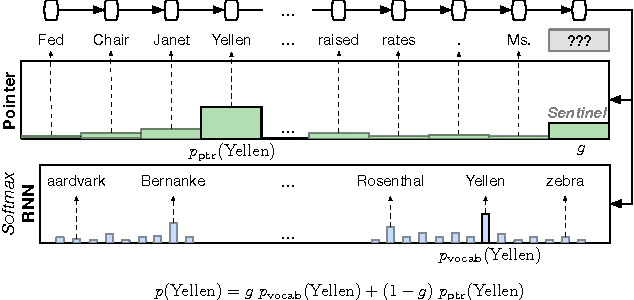
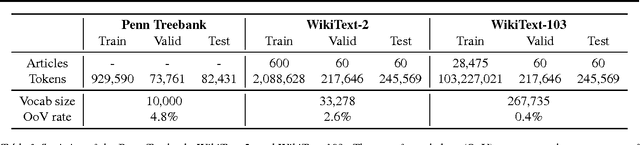
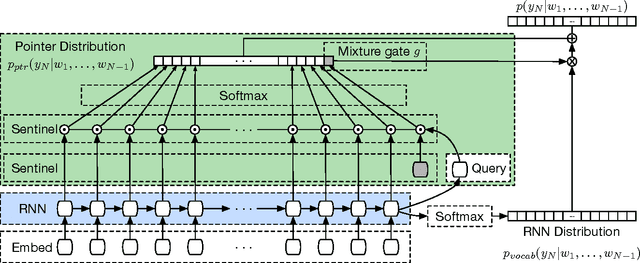
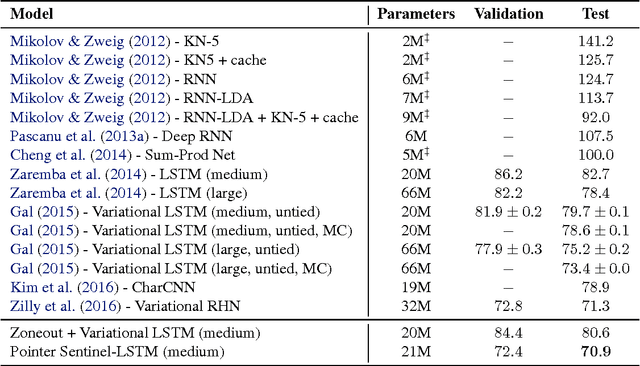
Recent neural network sequence models with softmax classifiers have achieved their best language modeling performance only with very large hidden states and large vocabularies. Even then they struggle to predict rare or unseen words even if the context makes the prediction unambiguous. We introduce the pointer sentinel mixture architecture for neural sequence models which has the ability to either reproduce a word from the recent context or produce a word from a standard softmax classifier. Our pointer sentinel-LSTM model achieves state of the art language modeling performance on the Penn Treebank (70.9 perplexity) while using far fewer parameters than a standard softmax LSTM. In order to evaluate how well language models can exploit longer contexts and deal with more realistic vocabularies and larger corpora we also introduce the freely available WikiText corpus.
Ask Me Anything: Dynamic Memory Networks for Natural Language Processing
Mar 05, 2016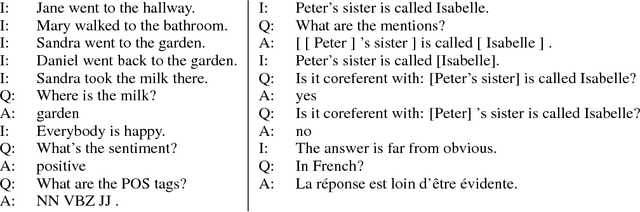
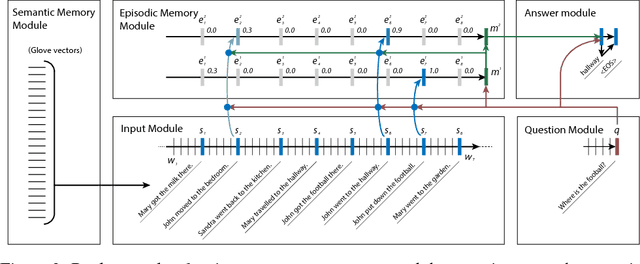
Most tasks in natural language processing can be cast into question answering (QA) problems over language input. We introduce the dynamic memory network (DMN), a neural network architecture which processes input sequences and questions, forms episodic memories, and generates relevant answers. Questions trigger an iterative attention process which allows the model to condition its attention on the inputs and the result of previous iterations. These results are then reasoned over in a hierarchical recurrent sequence model to generate answers. The DMN can be trained end-to-end and obtains state-of-the-art results on several types of tasks and datasets: question answering (Facebook's bAbI dataset), text classification for sentiment analysis (Stanford Sentiment Treebank) and sequence modeling for part-of-speech tagging (WSJ-PTB). The training for these different tasks relies exclusively on trained word vector representations and input-question-answer triplets.