 Add to Chrome
 Add to Firefox
 Add to Edge
Expressive Reasoning Graph Store: A Unified Framework for Managing RDF and Property Graph Databases
Sep 13, 2022
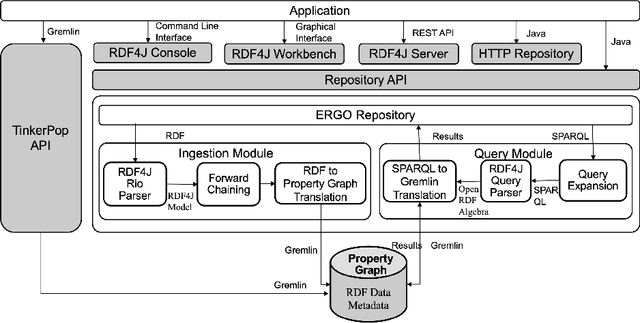
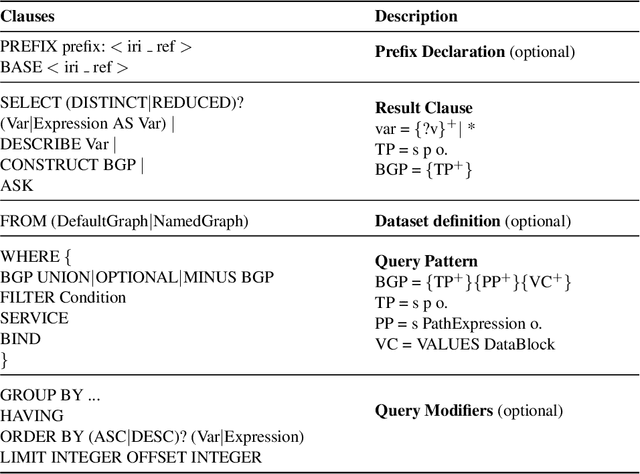
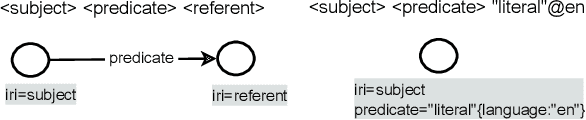
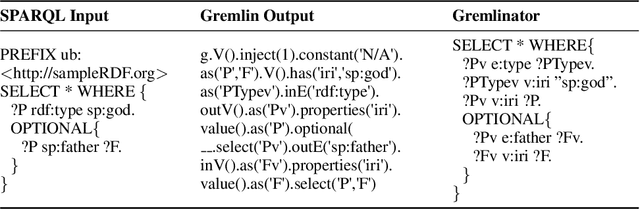
Resource Description Framework (RDF) and Property Graph (PG) are the two most commonly used data models for representing, storing, and querying graph data. We present Expressive Reasoning Graph Store (ERGS) -- a graph store built on top of JanusGraph (a Property Graph store) that also allows storing and querying of RDF datasets. First, we describe how RDF data can be translated into a Property Graph representation and then describe a query translation module that converts SPARQL queries into a series of Gremlin traversals. The converters and translators thus developed can allow any Apache Tinkerpop compliant graph database to store and query RDF datasets. We demonstrate the effectiveness of our proposed approach using JanusGraph as the base Property Graph store and compare its performance with standard RDF systems.

CBR-iKB: A Case-Based Reasoning Approach for Question Answering over Incomplete Knowledge Bases
Apr 18, 2022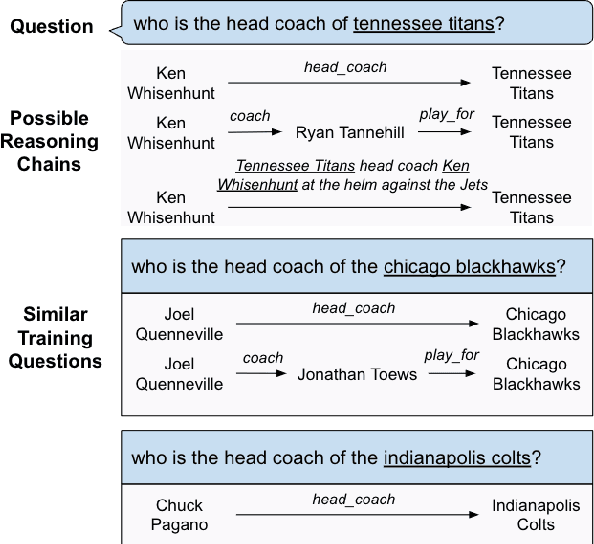
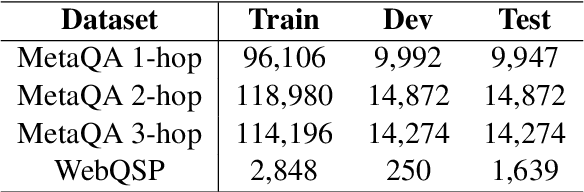
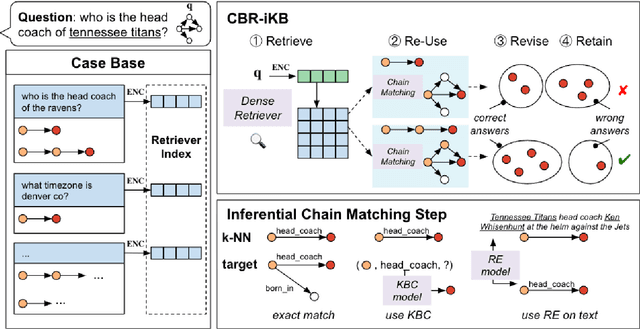
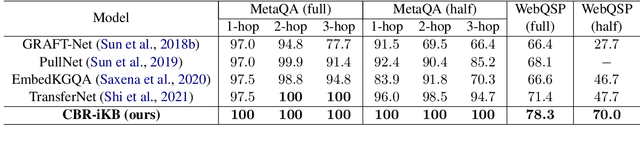
Knowledge bases (KBs) are often incomplete and constantly changing in practice. Yet, in many question answering applications coupled with knowledge bases, the sparse nature of KBs is often overlooked. To this end, we propose a case-based reasoning approach, CBR-iKB, for knowledge base question answering (KBQA) with incomplete-KB as our main focus. Our method ensembles decisions from multiple reasoning chains with a novel nonparametric reasoning algorithm. By design, CBR-iKB can seamlessly adapt to changes in KBs without any task-specific training or fine-tuning. Our method achieves 100% accuracy on MetaQA and establishes new state-of-the-art on multiple benchmarks. For instance, CBR-iKB achieves an accuracy of 70% on WebQSP under the incomplete-KB setting, outperforming the existing state-of-the-art method by 22.3%.
A Benchmark for Generalizable and Interpretable Temporal Question Answering over Knowledge Bases
Jan 15, 2022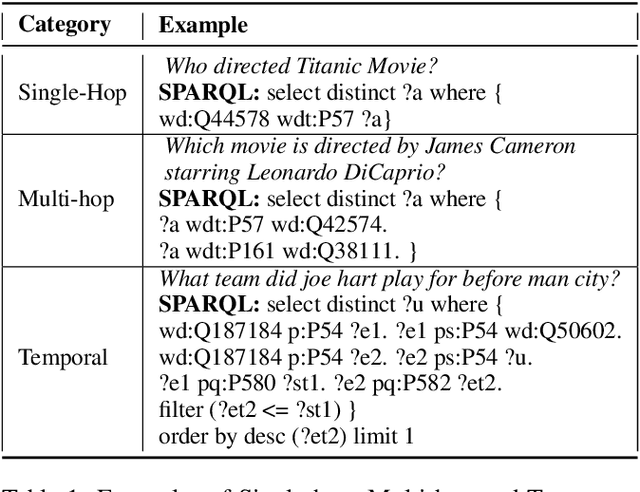
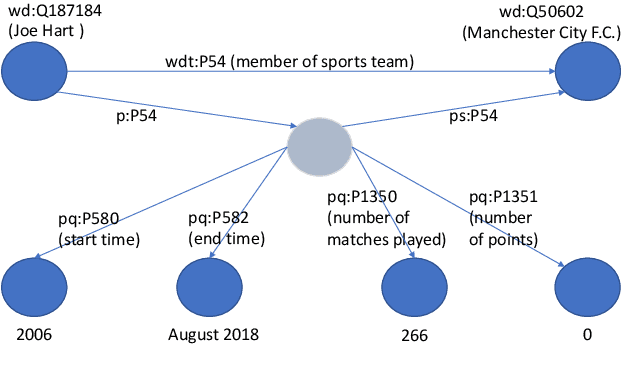
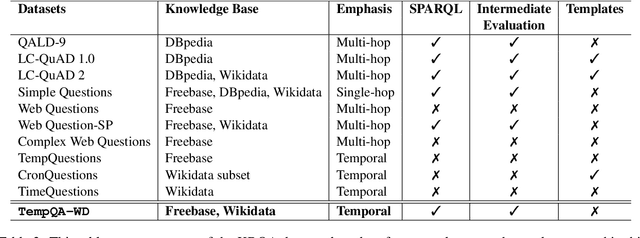
Knowledge Base Question Answering (KBQA) tasks that involve complex reasoning are emerging as an important research direction. However, most existing KBQA datasets focus primarily on generic multi-hop reasoning over explicit facts, largely ignoring other reasoning types such as temporal, spatial, and taxonomic reasoning. In this paper, we present a benchmark dataset for temporal reasoning, TempQA-WD, to encourage research in extending the present approaches to target a more challenging set of complex reasoning tasks. Specifically, our benchmark is a temporal question answering dataset with the following advantages: (a) it is based on Wikidata, which is the most frequently curated, openly available knowledge base, (b) it includes intermediate sparql queries to facilitate the evaluation of semantic parsing based approaches for KBQA, and (c) it generalizes to multiple knowledge bases: Freebase and Wikidata. The TempQA-WD dataset is available at https://github.com/IBM/tempqa-wd.
Learning to Transpile AMR into SPARQL
Dec 15, 2021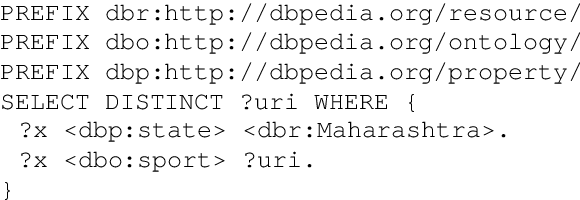
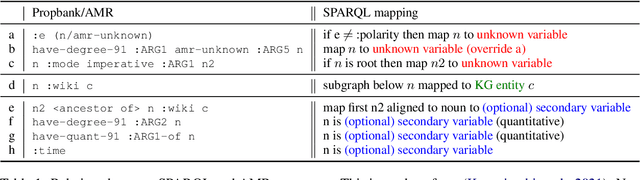
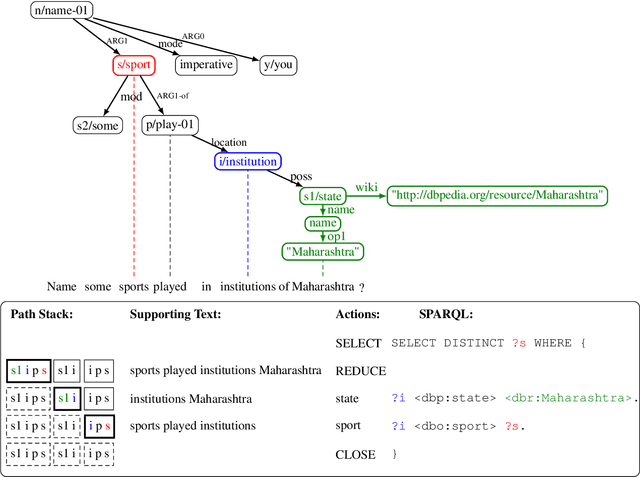
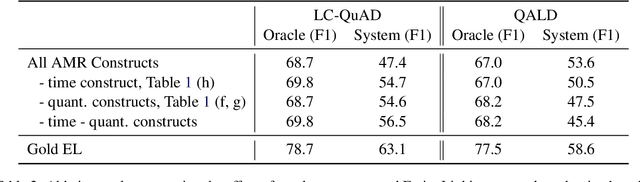
We propose a transition-based system to transpile Abstract Meaning Representation (AMR) into SPARQL for Knowledge Base Question Answering (KBQA). This allows to delegate part of the abstraction problem to a strongly pre-trained semantic parser, while learning transpiling with small amount of paired data. We departure from recent work relating AMR and SPARQL constructs, but rather than applying a set of rules, we teach the BART model to selectively use these relations. Further, we avoid explicitly encoding AMR but rather encode the parser state in the attention mechanism of BART, following recent semantic parsing works. The resulting model is simple, provides supporting text for its decisions, and outperforms recent progress in AMR-based KBQA in LC-QuAD (F1 53.4), matching it in QALD (F1 30.8), while exploiting the same inductive biases.
A Two-Stage Approach towards Generalization in Knowledge Base Question Answering
Nov 17, 2021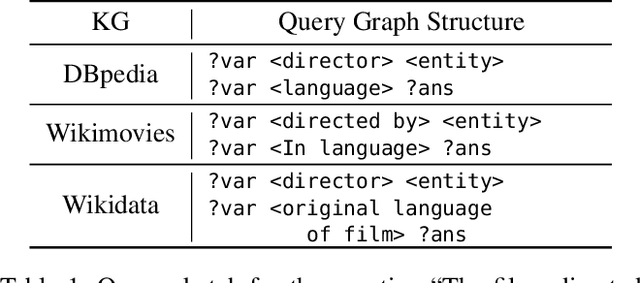
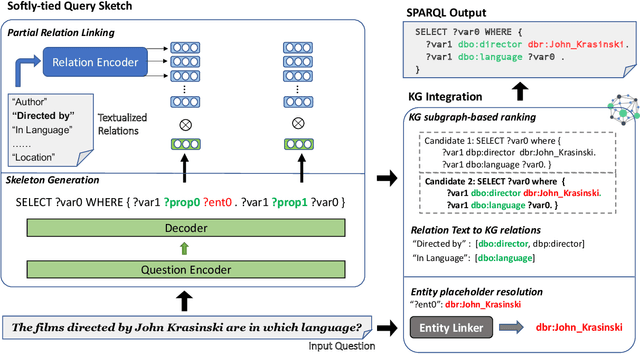
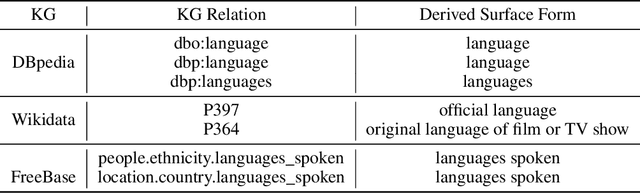
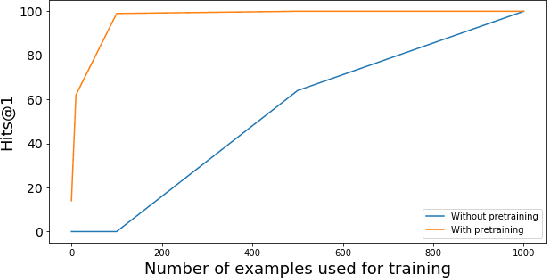
Most existing approaches for Knowledge Base Question Answering (KBQA) focus on a specific underlying knowledge base either because of inherent assumptions in the approach, or because evaluating it on a different knowledge base requires non-trivial changes. However, many popular knowledge bases share similarities in their underlying schemas that can be leveraged to facilitate generalization across knowledge bases. To achieve this generalization, we introduce a KBQA framework based on a 2-stage architecture that explicitly separates semantic parsing from the knowledge base interaction, facilitating transfer learning across datasets and knowledge graphs. We show that pretraining on datasets with a different underlying knowledge base can nevertheless provide significant performance gains and reduce sample complexity. Our approach achieves comparable or state-of-the-art performance for LC-QuAD (DBpedia), WebQSP (Freebase), SimpleQuestions (Wikidata) and MetaQA (Wikimovies-KG).
A Scalable AutoML Approach Based on Graph Neural Networks
Oct 29, 2021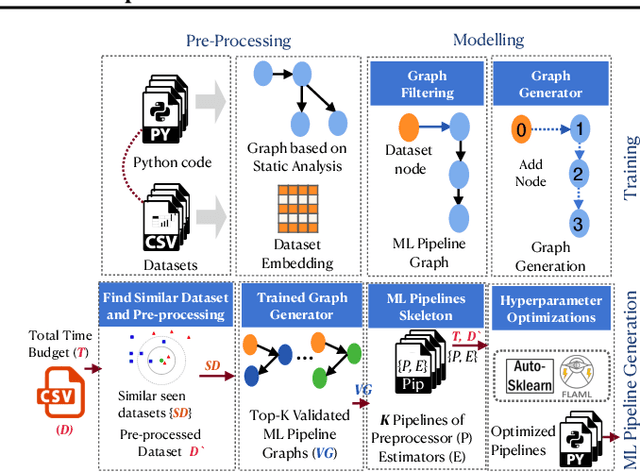
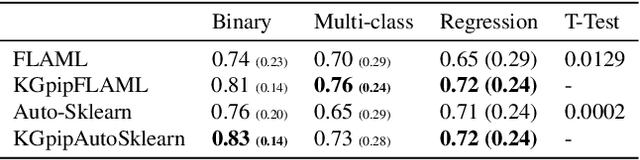
AutoML systems build machine learning models automatically by performing a search over valid data transformations and learners, along with hyper-parameter optimization for each learner. We present a system called KGpip for the selection of transformations and learners, which (1) builds a database of datasets and corresponding historically used pipelines using effective static analysis instead of the typical use of actual runtime information, (2) uses dataset embeddings to find similar datasets in the database based on its content instead of metadata-based features, (3) models AutoML pipeline creation as a graph generation problem, to succinctly characterize the diverse pipelines seen for a single dataset. KGpip is designed as a sub-component for AutoML systems. We demonstrate this ability via integrating KGpip with two AutoML systems and show that it does significantly enhance the performance of existing state-of-the-art systems.
SYGMA: System for Generalizable Modular Question Answering OverKnowledge Bases
Sep 28, 2021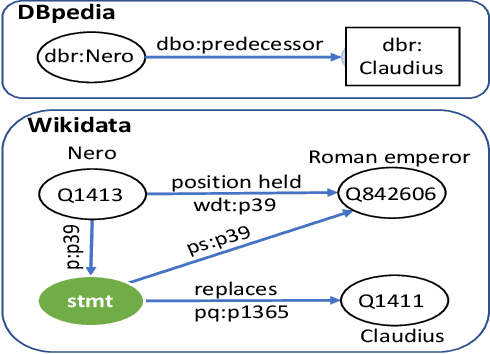
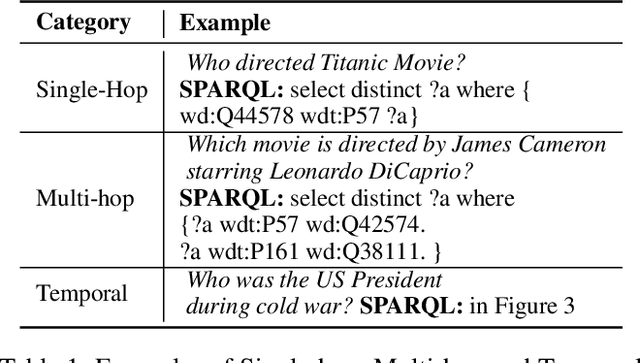
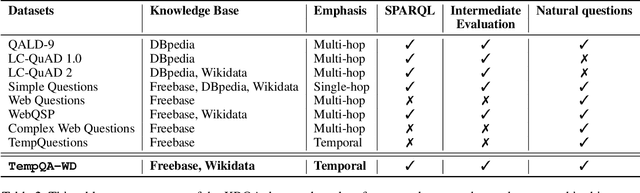

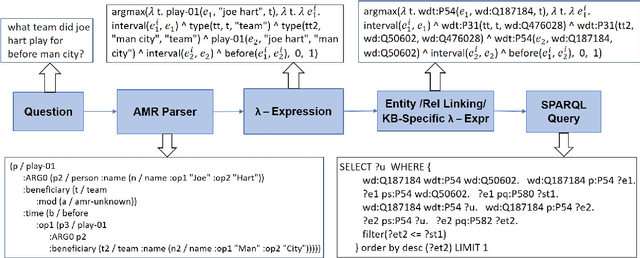
Knowledge Base Question Answering (KBQA) tasks that in-volve complex reasoning are emerging as an important re-search direction. However, most KBQA systems struggle withgeneralizability, particularly on two dimensions: (a) acrossmultiple reasoning types where both datasets and systems haveprimarily focused on multi-hop reasoning, and (b) across mul-tiple knowledge bases, where KBQA approaches are specif-ically tuned to a single knowledge base. In this paper, wepresent SYGMA, a modular approach facilitating general-izability across multiple knowledge bases and multiple rea-soning types. Specifically, SYGMA contains three high levelmodules: 1) KB-agnostic question understanding module thatis common across KBs 2) Rules to support additional reason-ing types and 3) KB-specific question mapping and answeringmodule to address the KB-specific aspects of the answer ex-traction. We demonstrate effectiveness of our system by evalu-ating on datasets belonging to two distinct knowledge bases,DBpedia and Wikidata. In addition, to demonstrate extensi-bility to additional reasoning types we evaluate on multi-hopreasoning datasets and a new Temporal KBQA benchmarkdataset on Wikidata, namedTempQA-WD1, introduced in thispaper. We show that our generalizable approach has bettercompetetive performance on multiple datasets on DBpediaand Wikidata that requires both multi-hop and temporal rea-soning
Combining Rules and Embeddings via Neuro-Symbolic AI for Knowledge Base Completion
Sep 16, 2021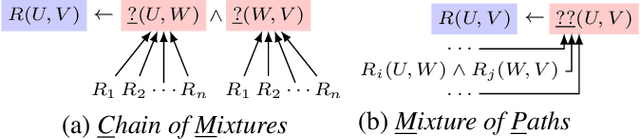
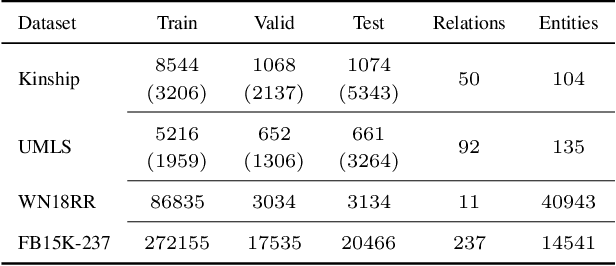
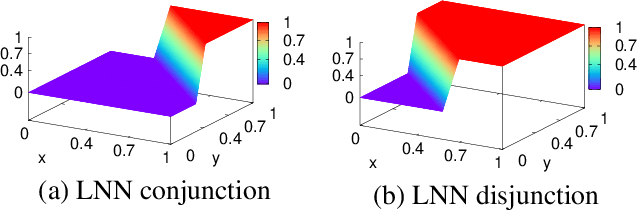
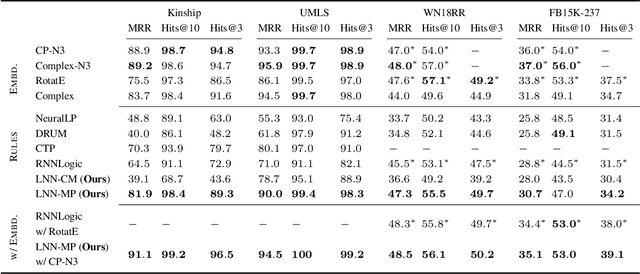
Recent interest in Knowledge Base Completion (KBC) has led to a plethora of approaches based on reinforcement learning, inductive logic programming and graph embeddings. In particular, rule-based KBC has led to interpretable rules while being comparable in performance with graph embeddings. Even within rule-based KBC, there exist different approaches that lead to rules of varying quality and previous work has not always been precise in highlighting these differences. Another issue that plagues most rule-based KBC is the non-uniformity of relation paths: some relation sequences occur in very few paths while others appear very frequently. In this paper, we show that not all rule-based KBC models are the same and propose two distinct approaches that learn in one case: 1) a mixture of relations and the other 2) a mixture of paths. When implemented on top of neuro-symbolic AI, which learns rules by extending Boolean logic to real-valued logic, the latter model leads to superior KBC accuracy outperforming state-of-the-art rule-based KBC by 2-10% in terms of mean reciprocal rank. Furthermore, to address the non-uniformity of relation paths, we combine rule-based KBC with graph embeddings thus improving our results even further and achieving the best of both worlds.
Can Machines Read Coding Manuals Yet? -- A Benchmark for Building Better Language Models for Code Understanding
Sep 15, 2021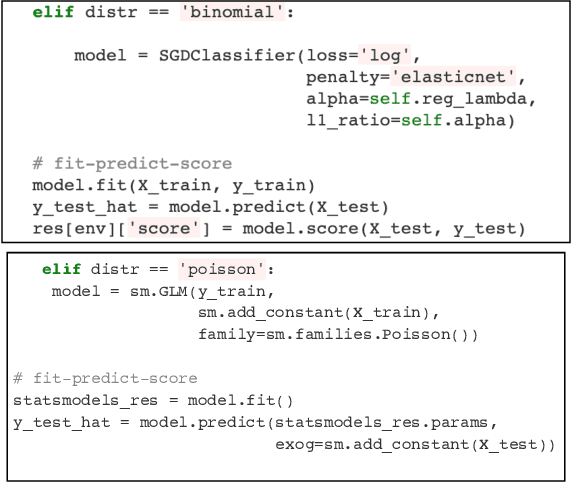
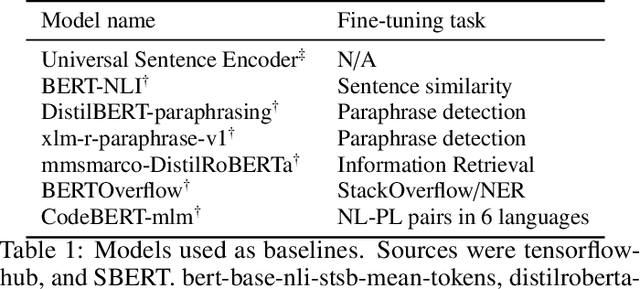
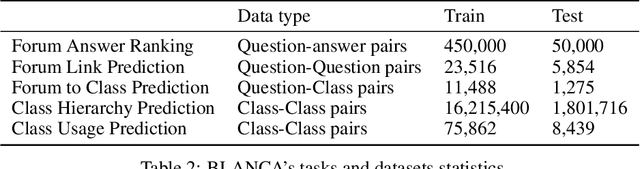
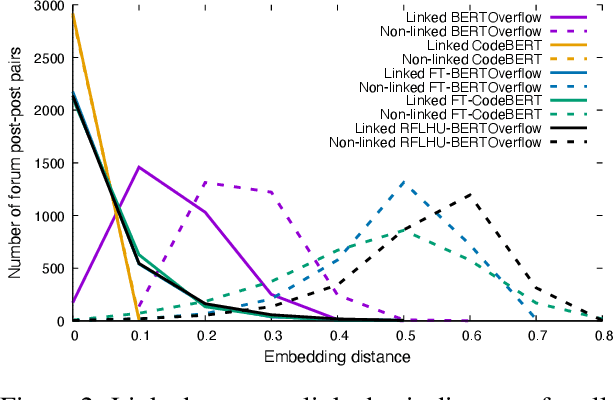
Code understanding is an increasingly important application of Artificial Intelligence. A fundamental aspect of understanding code is understanding text about code, e.g., documentation and forum discussions. Pre-trained language models (e.g., BERT) are a popular approach for various NLP tasks, and there are now a variety of benchmarks, such as GLUE, to help improve the development of such models for natural language understanding. However, little is known about how well such models work on textual artifacts about code, and we are unaware of any systematic set of downstream tasks for such an evaluation. In this paper, we derive a set of benchmarks (BLANCA - Benchmarks for LANguage models on Coding Artifacts) that assess code understanding based on tasks such as predicting the best answer to a question in a forum post, finding related forum posts, or predicting classes related in a hierarchy from class documentation. We evaluate the performance of current state-of-the-art language models on these tasks and show that there is a significant improvement on each task from fine tuning. We also show that multi-task training over BLANCA tasks helps build better language models for code understanding.
Generative Relation Linking for Question Answering over Knowledge Bases
Aug 16, 2021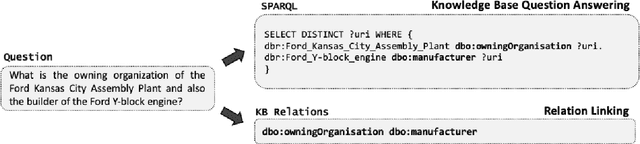
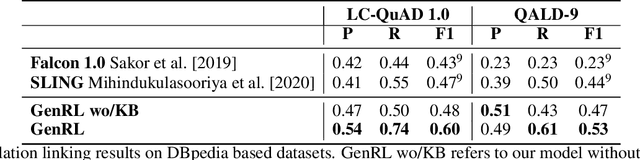
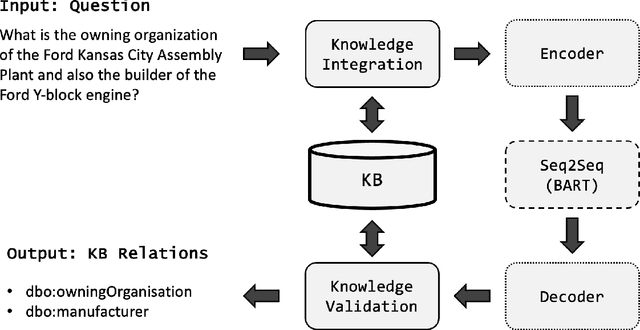
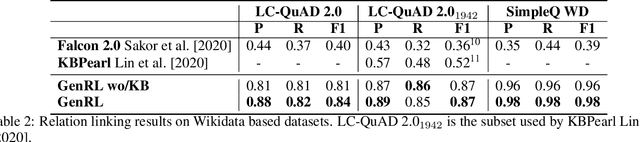
Relation linking is essential to enable question answering over knowledge bases. Although there are various efforts to improve relation linking performance, the current state-of-the-art methods do not achieve optimal results, therefore, negatively impacting the overall end-to-end question answering performance. In this work, we propose a novel approach for relation linking framing it as a generative problem facilitating the use of pre-trained sequence-to-sequence models. We extend such sequence-to-sequence models with the idea of infusing structured data from the target knowledge base, primarily to enable these models to handle the nuances of the knowledge base. Moreover, we train the model with the aim to generate a structured output consisting of a list of argument-relation pairs, enabling a knowledge validation step. We compared our method against the existing relation linking systems on four different datasets derived from DBpedia and Wikidata. Our method reports large improvements over the state-of-the-art while using a much simpler model that can be easily adapted to different knowledge bases.