 Add to Chrome
 Add to Firefox
 Add to Edge
Seedance 2.0: Advancing Video Generation for World Complexity
Apr 15, 2026
Seedance 2.0 is a new native multi-modal audio-video generation model, officially released in China in early February 2026. Compared with its predecessors, Seedance 1.0 and 1.5 Pro, Seedance 2.0 adopts a unified, highly efficient, and large-scale architecture for multi-modal audio-video joint generation. This allows it to support four input modalities: text, image, audio, and video, by integrating one of the most comprehensive suites of multi-modal content reference and editing capabilities available in the industry to date. It delivers substantial, well-rounded improvements across all key sub-dimensions of video and audio generation. In both expert evaluations and public user tests, the model has demonstrated performance on par with the leading levels in the field. Seedance 2.0 supports direct generation of audio-video content with durations ranging from 4 to 15 seconds, with native output resolutions of 480p and 720p. For multi-modal inputs as reference, its current open platform supports up to 3 video clips, 9 images, and 3 audio clips. In addition, we provide Seedance 2.0 Fast version, an accelerated variant of Seedance 2.0 designed to boost generation speed for low-latency scenarios. Seedance 2.0 has delivered significant improvements to its foundational generation capabilities and multi-modal generation performance, bringing an enhanced creative experience for end users.

FedNLP: A Research Platform for Federated Learning in Natural Language Processing
Apr 18, 2021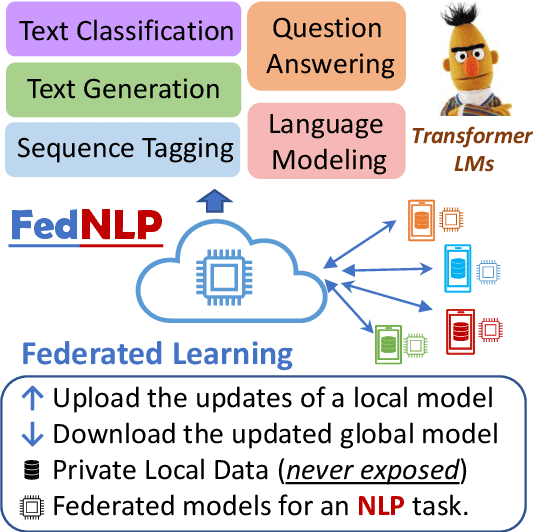
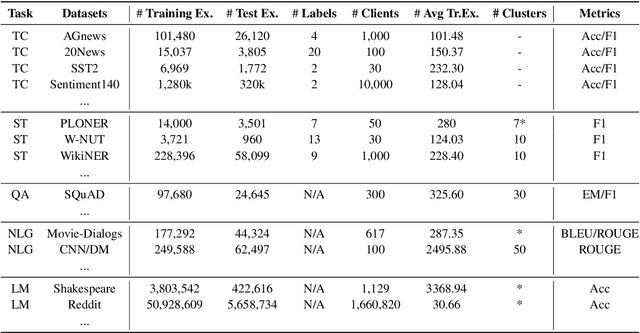
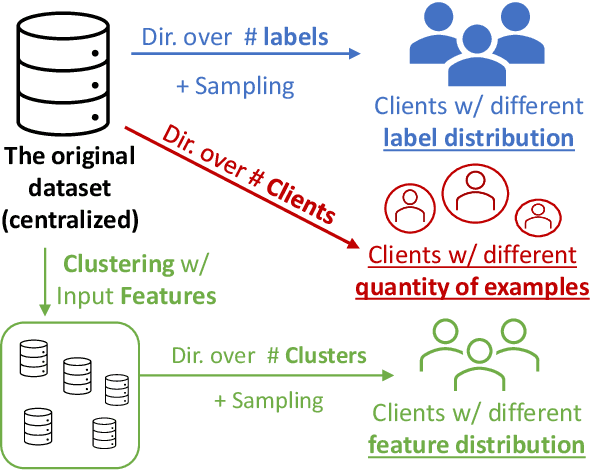
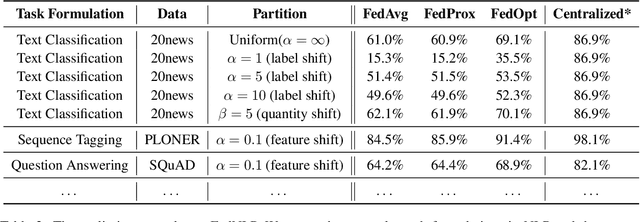
Increasing concerns and regulations about data privacy, necessitate the study of privacy-preserving methods for natural language processing (NLP) applications. Federated learning (FL) provides promising methods for a large number of clients (i.e., personal devices or organizations) to collaboratively learn a shared global model to benefit all clients, while allowing users to keep their data locally. To facilitate FL research in NLP, we present the FedNLP, a research platform for federated learning in NLP. FedNLP supports various popular task formulations in NLP such as text classification, sequence tagging, question answering, seq2seq generation, and language modeling. We also implement an interface between Transformer language models (e.g., BERT) and FL methods (e.g., FedAvg, FedOpt, etc.) for distributed training. The evaluation protocol of this interface supports a comprehensive collection of non-IID partitioning strategies. Our preliminary experiments with FedNLP reveal that there exists a large performance gap between learning on decentralized and centralized datasets -- opening intriguing and exciting future research directions aimed at developing FL methods suited to NLP tasks.
Do People Prefer "Natural" code?
Oct 08, 2019
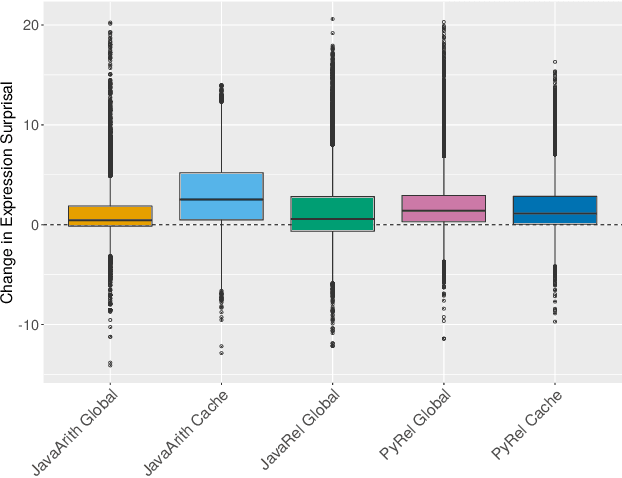
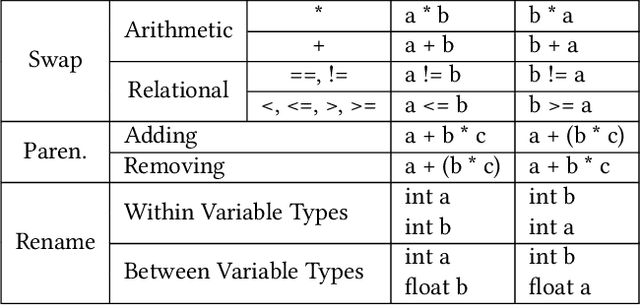
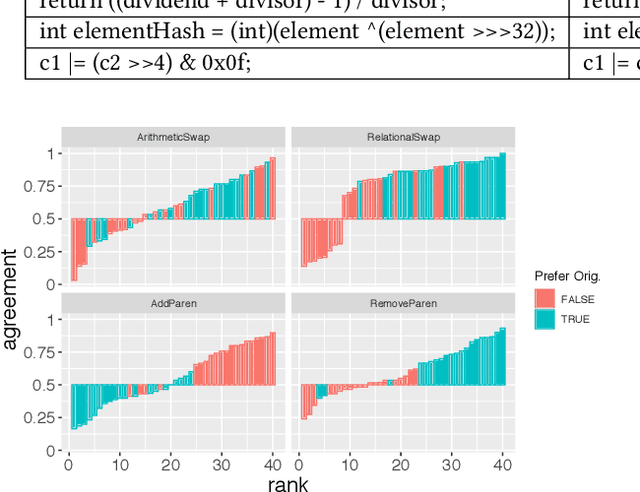
Natural code is known to be very repetitive (much more so than natural language corpora); furthermore, this repetitiveness persists, even after accounting for the simpler syntax of code. However, programming languages are very expressive, allowing a great many different ways (all clear and unambiguous) to express even very simple computations. So why is natural code repetitive? We hypothesize that the reasons for this lie in fact that code is bimodal: it is executed by machines, but also read by humans. This bimodality, we argue, leads developers to write code in certain preferred ways that would be familiar to code readers. To test this theory, we 1) model familiarity using a language model estimated over a large training corpus and 2) run an experiment applying several meaning preserving transformations to Java and Python expressions in a distinct test corpus to see if forms more familiar to readers (as predicted by the language models) are in fact the ones actually written. We find that these transformations generally produce program structures that are less common in practice, supporting the theory that the high repetitiveness in code is a matter of deliberate preference. Finally, 3) we use a human subject study to show alignment between language model score and human preference for the first time in code, providing support for using this measure to improve code.