 Add to Chrome
 Add to Firefox
 Add to Edge
Data Intelligence Agents: Interpreting, Modeling, and Querying Enterprise Data via Autonomous Coding Agents
Jun 17, 2026
Production data integration is bottlenecked by repeated, lossy handoffs between data owners, engineers, and analysts who must collaboratively discover, structure, and query enterprise data. We present Data Intelligence Agents (DIA), a system of three agents (Data Interpreter, Schema Creator, and Query Generator) that compresses this workflow by treating autonomous coding agents (ACAs) as a first-class abstraction: rather than emitting text, the agents generate, execute, validate, and repair concrete artifacts, draw on a shared memory for experience reuse, and surface each for review by domain experts. DIA is deployed in production for enterprise customers. We study the Query Generator in depth and evaluate it in fully autonomous mode across seven SQL benchmarks spanning four task categories and four dialects. It matches or surpasses the best published results on all seven, demonstrating that an architecture grounded in execution, built on ACAs and a shared memory, generalizes across the data intelligence workload with adaptation confined to natural-language instructions.

Giving Sensors a Voice: Multimodal JEPA for Semantic Time-Series Embeddings
May 29, 2026Transformer-based architectures have advanced sequence modeling in language and vision, yet general-purpose representation learning for heterogeneous multivariate time series remains underexplored. We introduce CHARM (Channel-Aware Representation Model), which incorporates channel-level textual descriptions into a Transformer encoder equivariant to channel order. CHARM is trained with a Joint Embedding Predictive Architecture (JEPA) and a novel loss promoting informative, temporally stable embeddings; latent-space prediction encourages robustness to sensor noise while description-aware gating provides interpretability through learned inter-channel relationships. Across anomaly detection, classification, and short- and long-term forecasting, the learned embeddings achieve strong performance using only a linear probe. Performance is driven primarily by the JEPA objective and conditioning architecture, with text descriptions serving as channel identifiers for cross-dataset generalization.
* 9 pages, 5 figures, accepted at ICML 2026. arXiv admin note: substantial text overlap with arXiv:2505.14543
NEMO: Execution-Aware Optimization Modeling via Autonomous Coding Agents
Jan 29, 2026In this paper, we present NEMO, a system that translates Natural-language descriptions of decision problems into formal Executable Mathematical Optimization implementations, operating collaboratively with users or autonomously. Existing approaches typically rely on specialized large language models (LLMs) or bespoke, task-specific agents. Such methods are often brittle, complex and frequently generating syntactically invalid or non-executable code. NEMO instead centers on remote interaction with autonomous coding agents (ACAs), treated as a first-class abstraction analogous to API-based interaction with LLMs. This design enables the construction of higher-level systems around ACAs that structure, consolidate, and iteratively refine task specifications. Because ACAs execute within sandboxed environments, code produced by NEMO is executable by construction, allowing automated validation and repair. Building on this, we introduce novel coordination patterns with and across ACAs, including asymmetric validation loops between independently generated optimizer and simulator implementations (serving as a high-level validation mechanism), external memory for experience reuse, and robustness enhancements via minimum Bayes risk (MBR) decoding and self-consistency. We evaluate NEMO on nine established optimization benchmarks. As depicted in Figure 1, it achieves state-of-the-art performance on the majority of tasks, with substantial margins on several datasets, demonstrating the power of execution-aware agentic architectures for automated optimization modeling.
Time to Embed: Unlocking Foundation Models for Time Series with Channel Descriptions
May 20, 2025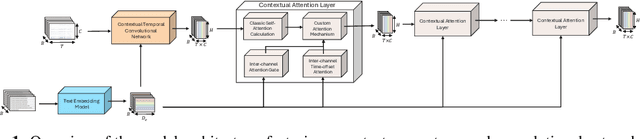
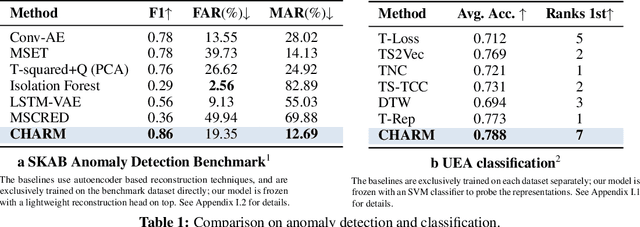
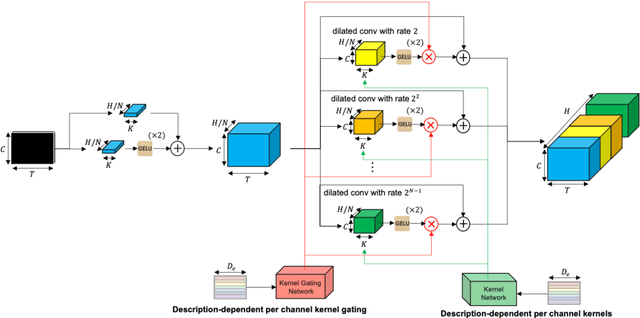
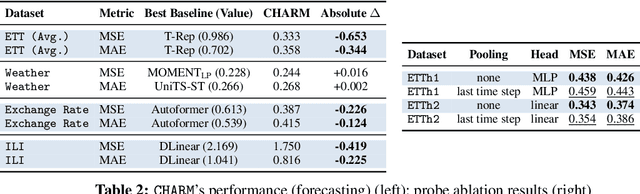
Traditional time series models are task-specific and often depend on dataset-specific training and extensive feature engineering. While Transformer-based architectures have improved scalability, foundation models, commonplace in text, vision, and audio, remain under-explored for time series and are largely restricted to forecasting. We introduce $\textbf{CHARM}$, a foundation embedding model for multivariate time series that learns shared, transferable, and domain-aware representations. To address the unique difficulties of time series foundation learning, $\textbf{CHARM}$ incorporates architectural innovations that integrate channel-level textual descriptions while remaining invariant to channel order. The model is trained using a Joint Embedding Predictive Architecture (JEPA), with novel augmentation schemes and a loss function designed to improve interpretability and training stability. Our $7$M-parameter model achieves state-of-the-art performance across diverse downstream tasks, setting a new benchmark for time series representation learning.
Expert-guided Regularization via Distance Metric Learning
Dec 09, 2019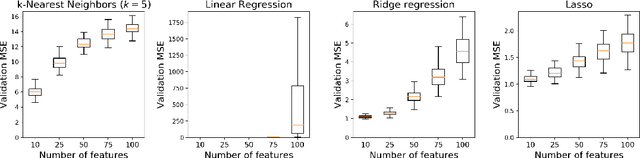
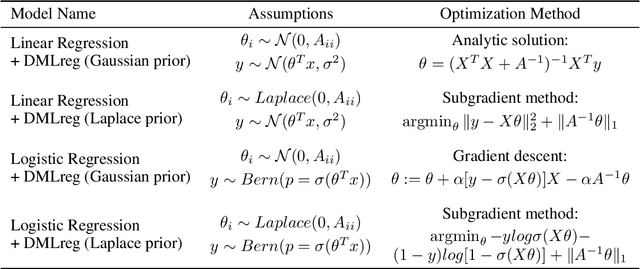
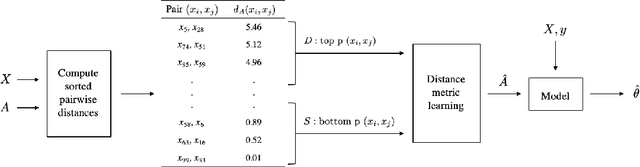
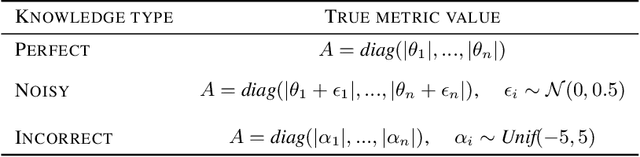
High-dimensional prediction is a challenging problem setting for traditional statistical models. Although regularization improves model performance in high dimensions, it does not sufficiently leverage knowledge on feature importances held by domain experts. As an alternative to standard regularization techniques, we propose Distance Metric Learning Regularization (DMLreg), an approach for eliciting prior knowledge from domain experts and integrating that knowledge into a regularized linear model. First, we learn a Mahalanobis distance metric between observations from pairwise similarity comparisons provided by an expert. Then, we use the learned distance metric to place prior distributions on coefficients in a linear model. Through experimental results on a simulated high-dimensional prediction problem, we show that DMLreg leads to improvements in model performance when the domain expert is knowledgeable.
Finding sparse solutions of systems of polynomial equations via group-sparsity optimization
Jul 16, 2014
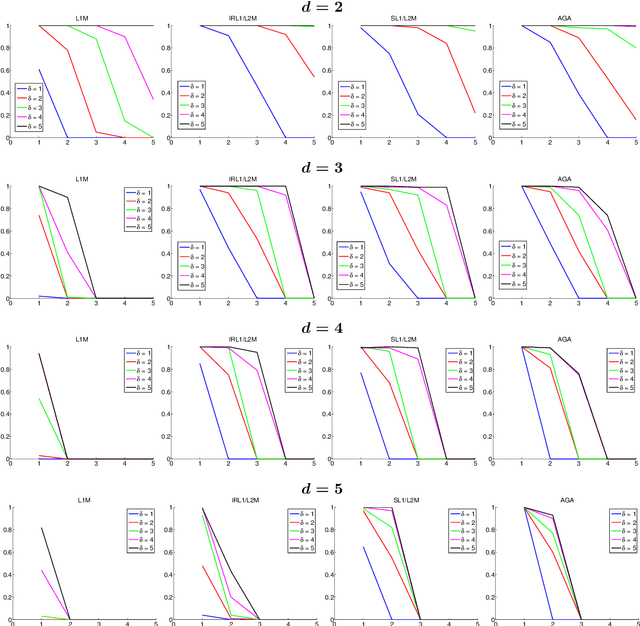
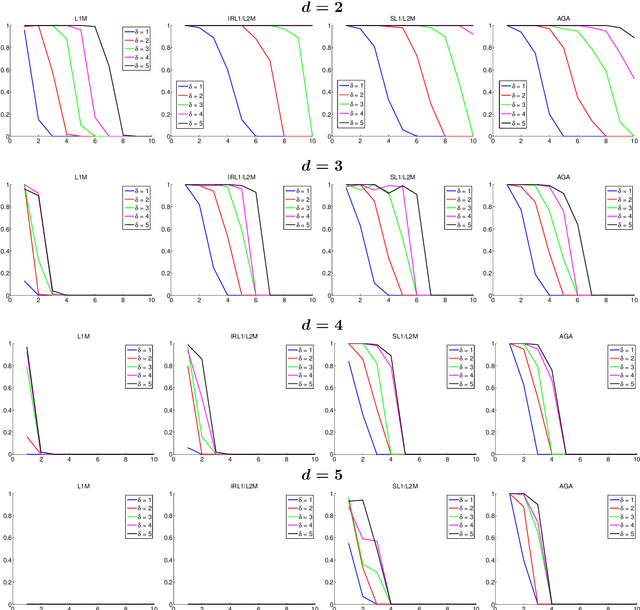
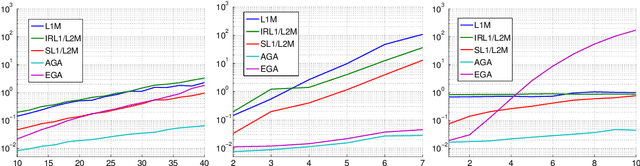
The paper deals with the problem of finding sparse solutions to systems of polynomial equations possibly perturbed by noise. In particular, we show how these solutions can be recovered from group-sparse solutions of a derived system of linear equations. Then, two approaches are considered to find these group-sparse solutions. The first one is based on a convex relaxation resulting in a second-order cone programming formulation which can benefit from efficient reweighting techniques for sparsity enhancement. For this approach, sufficient conditions for the exact recovery of the sparsest solution to the polynomial system are derived in the noiseless setting, while stable recovery results are obtained for the noisy case. Though lacking a similar analysis, the second approach provides a more computationally efficient algorithm based on a greedy strategy adding the groups one-by-one. With respect to previous work, the proposed methods recover the sparsest solution in a very short computing time while remaining at least as accurate in terms of the probability of success. This probability is empirically analyzed to emphasize the relationship between the ability of the methods to solve the polynomial system and the sparsity of the solution.
Sparse phase retrieval via group-sparse optimization
Feb 24, 2014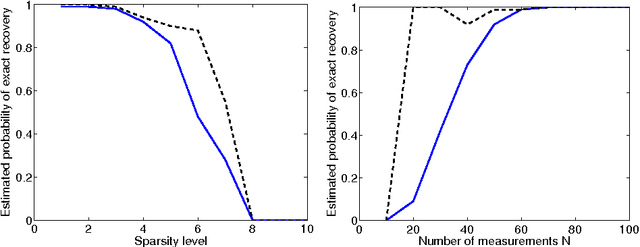
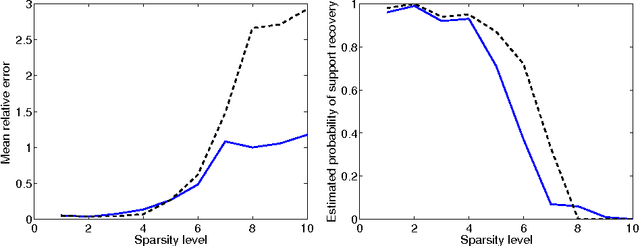
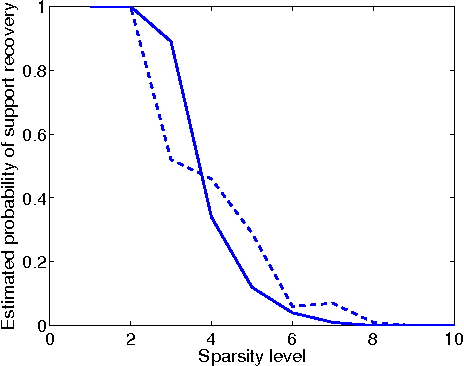
This paper deals with sparse phase retrieval, i.e., the problem of estimating a vector from quadratic measurements under the assumption that few components are nonzero. In particular, we consider the problem of finding the sparsest vector consistent with the measurements and reformulate it as a group-sparse optimization problem with linear constraints. Then, we analyze the convex relaxation of the latter based on the minimization of a block l1-norm and show various exact recovery and stability results in the real and complex cases. Invariance to circular shifts and reflections are also discussed for real vectors measured via complex matrices.
Robust Subspace System Identification via Weighted Nuclear Norm Optimization
Dec 07, 2013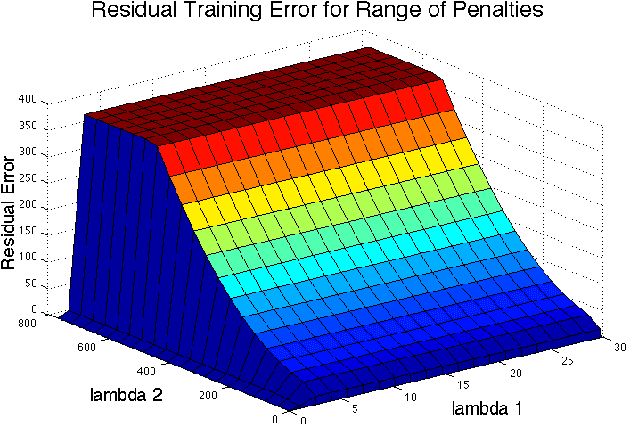
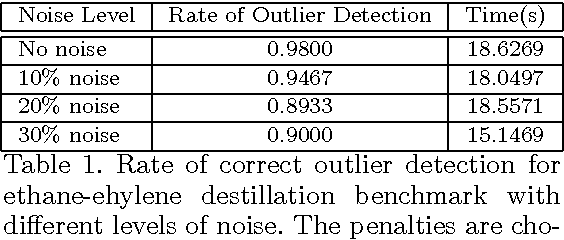
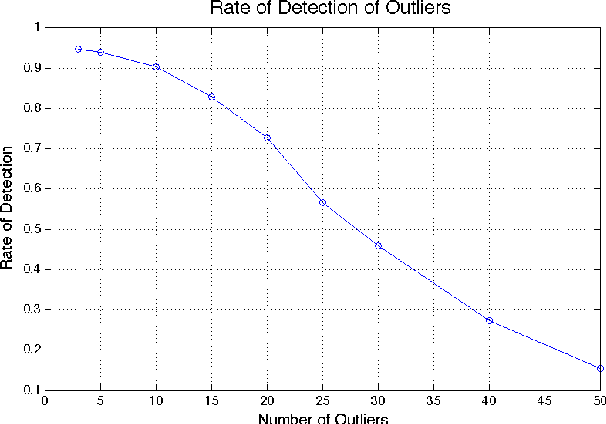
Subspace identification is a classical and very well studied problem in system identification. The problem was recently posed as a convex optimization problem via the nuclear norm relaxation. Inspired by robust PCA, we extend this framework to handle outliers. The proposed framework takes the form of a convex optimization problem with an objective that trades off fit, rank and sparsity. As in robust PCA, it can be problematic to find a suitable regularization parameter. We show how the space in which a suitable parameter should be sought can be limited to a bounded open set of the two dimensional parameter space. In practice, this is very useful since it restricts the parameter space that is needed to be surveyed.
Scalable Anomaly Detection in Large Homogenous Populations
Sep 20, 2013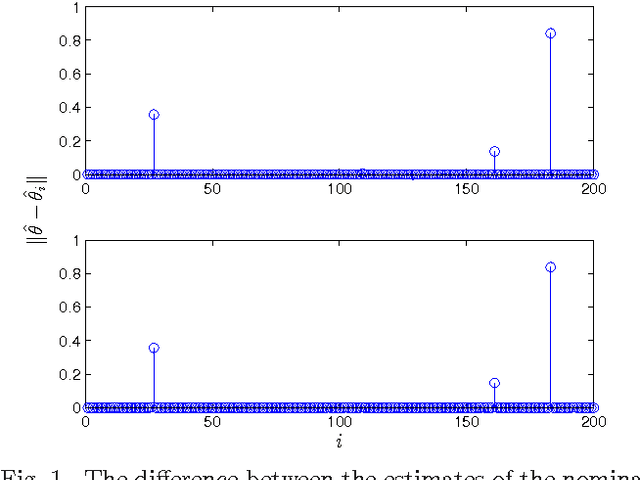
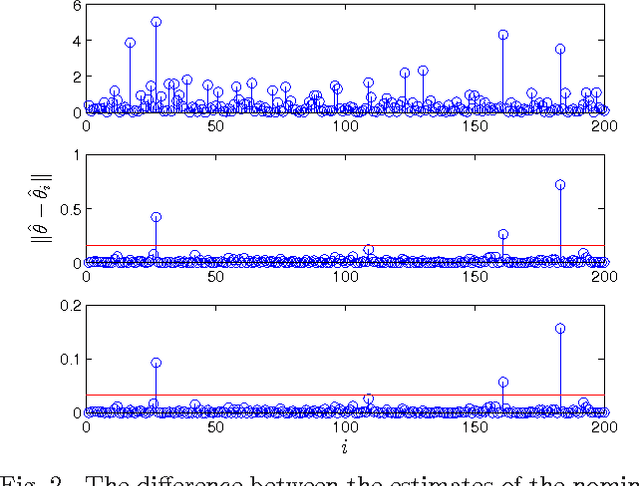
Anomaly detection in large populations is a challenging but highly relevant problem. The problem is essentially a multi-hypothesis problem, with a hypothesis for every division of the systems into normal and anomal systems. The number of hypothesis grows rapidly with the number of systems and approximate solutions become a necessity for any problems of practical interests. In the current paper we take an optimization approach to this multi-hypothesis problem. We first observe that the problem is equivalent to a non-convex combinatorial optimization problem. We then relax the problem to a convex problem that can be solved distributively on the systems and that stays computationally tractable as the number of systems increase. An interesting property of the proposed method is that it can under certain conditions be shown to give exactly the same result as the combinatorial multi-hypothesis problem and the relaxation is hence tight.
Compressive Shift Retrieval
Aug 03, 2013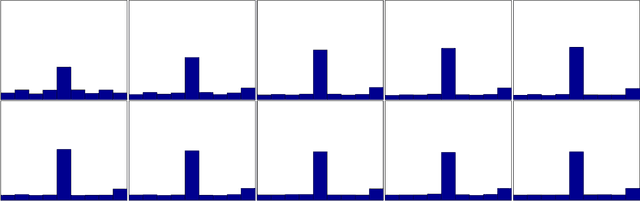
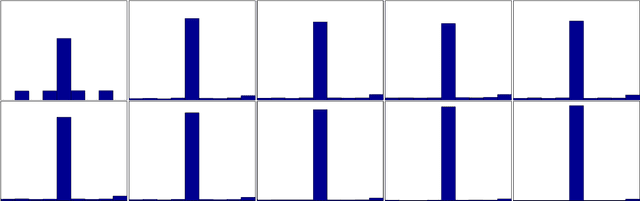
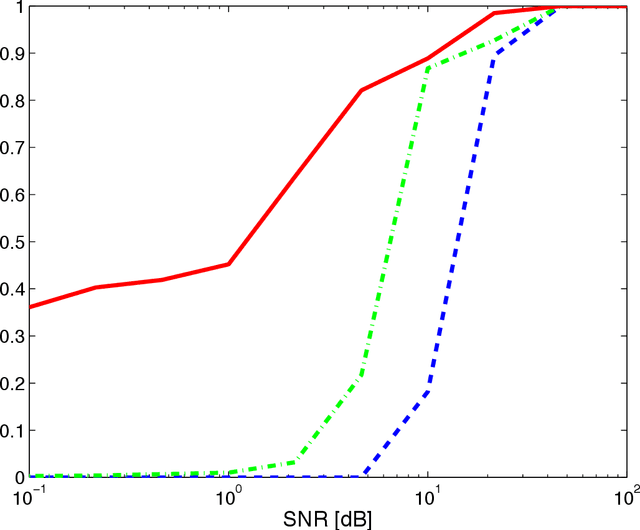
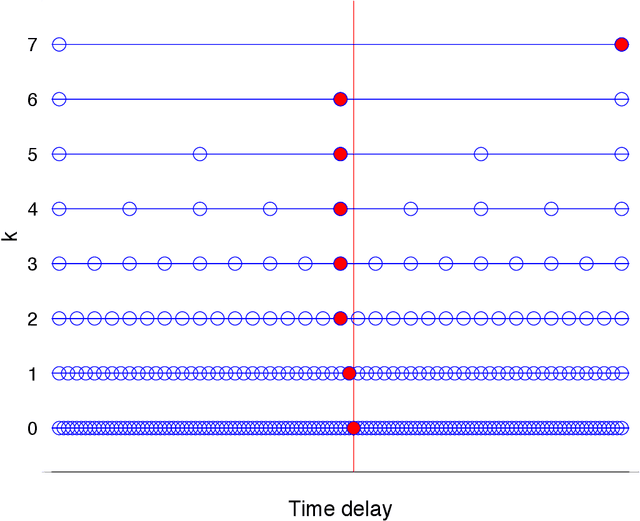
The classical shift retrieval problem considers two signals in vector form that are related by a shift. The problem is of great importance in many applications and is typically solved by maximizing the cross-correlation between the two signals. Inspired by compressive sensing, in this paper, we seek to estimate the shift directly from compressed signals. We show that under certain conditions, the shift can be recovered using fewer samples and less computation compared to the classical setup. Of particular interest is shift estimation from Fourier coefficients. We show that under rather mild conditions only one Fourier coefficient suffices to recover the true shift.