 Add to Chrome
 Add to Firefox
 Add to Edge
When Memory Updates but Behavior Does Not: Repairing Implicit Stale Dependencies in Personalized Agent Responses
Aug 03, 2026
Memory-augmented agents can know that a user's stored state is outdated and still plan around the old value. The STALE benchmark calls this the implicit policy adaptation (IPA) gap. We identify one structural contributor: draft-anchored verification checks what a response says, and in an open-ended response the stale dependency is usually unsaid. StateAuditor therefore audits in the opposite direction, from stored state to draft. An LLM proposes candidate old-to-new transitions from timestamped evidence; deterministic code pins each quotation to a single entry, checks that the new evidence really is newer, and lets only these verified transitions trigger repair. What is verified is provenance and chronology - not semantic supersession. On STALE's full protocol (400 scenarios, 50-session histories, one independent response per query), strict single-query VTA scores .736 against .686 for our locked predecessor under the same judge: a +5.0-point paired gain (95% CI [+2.9, +7.2]) coming almost entirely from IPA and premise resistance (PR). The benchmark's own judge, from a third model family, reproduces the gain (.738 vs. .680). On an independent cross-family preference-evolution benchmark (HorizonBench), the full draft-audit-repair pipeline over a gold-derived structured store raises current-preference accuracy (user-clustered p<.01), though a matched control shows most of this external gain is the draft-side audit itself; a harder authored lifecycle set gives no gain, bounding the claim while false invalidation stays controlled. On STALE, by contrast, a matched control (same evidence, adapter, and call budget) scores only .692 (+0.6 over the predecessor, n.s.), attributing the STALE gain to the transition machinery rather than added context or calls. We make no claim about general-purpose agent memory.

A plug-and-play generative framework for multi-satellite precipitation estimation
May 14, 2026Reliable precipitation monitoring is essential for disaster risk reduction, water resources management, and agricultural decision-making. Multi-source satellite observations, particularly the combination of geostationary infrared and passive microwave measurements, have become a primary means of precipitation detection. Traditional multi-source satellite precipitation estimation methods remain computationally inefficient, and many deep learning methods lack the flexibility to incorporate new sensors without retraining the full model. Here we introduce PRISMA (Precipitation Inference from Satellite Modalities via generAtive modeling), a plug-and-play latent generative framework for multi-sensor precipitation estimation. PRISMA learns an unconditional precipitation prior from IMERG Final fields and constrains it through independently trained, sensor-specific conditional branches, allowing new observation sources to be incorporated without retraining the generative backbone. Applied to FY-4B AGRI infrared and GPM GMI microwave observations, PRISMA improves Critical Success Index by up to 40.3% and reduces root-mean-square error by 22.6% relative to infrared-only estimation within microwave swaths, while also improving probabilistic skill and maintaining an average inference time of about 37 s. Independent rain-gauge validation across China confirms consistent gains, and typhoon case studies show that microwave conditioning restores eyewall and spiral rainband structures, reducing storm-core mean absolute error by up to 42.3%. PRISMA thus provides an extensible and efficient framework for multi-sensor precipitation estimation.
ProactiveMobile: A Comprehensive Benchmark for Boosting Proactive Intelligence on Mobile Devices
Feb 26, 2026Multimodal large language models (MLLMs) have made significant progress in mobile agent development, yet their capabilities are predominantly confined to a reactive paradigm, where they merely execute explicit user commands. The emerging paradigm of proactive intelligence, where agents autonomously anticipate needs and initiate actions, represents the next frontier for mobile agents. However, its development is critically bottlenecked by the lack of benchmarks that can address real-world complexity and enable objective, executable evaluation. To overcome these challenges, we introduce ProactiveMobile, a comprehensive benchmark designed to systematically advance research in this domain. ProactiveMobile formalizes the proactive task as inferring latent user intent across four dimensions of on-device contextual signals and generating an executable function sequence from a comprehensive function pool of 63 APIs. The benchmark features over 3,660 instances of 14 scenarios that embrace real-world complexity through multi-answer annotations. To ensure quality, a team of 30 experts conducts a final audit of the benchmark, verifying factual accuracy, logical consistency, and action feasibility, and correcting any non-compliant entries. Extensive experiments demonstrate that our fine-tuned Qwen2.5-VL-7B-Instruct achieves a success rate of 19.15%, outperforming o1 (15.71%) and GPT-5 (7.39%). This result indicates that proactivity is a critical competency widely lacking in current MLLMs, yet it is learnable, emphasizing the importance of the proposed benchmark for proactivity evaluation.
Nowcast3D: Reliable precipitation nowcasting via gray-box learning
Nov 06, 2025Extreme precipitation nowcasting demands high spatiotemporal fidelity and extended lead times, yet existing approaches remain limited. Numerical Weather Prediction (NWP) and its deep-learning emulations are too slow and coarse for rapidly evolving convection, while extrapolation and purely data-driven models suffer from error accumulation and excessive smoothing. Hybrid 2D radar-based methods discard crucial vertical information, preventing accurate reconstruction of height-dependent dynamics. We introduce a gray-box, fully three-dimensional nowcasting framework that directly processes volumetric radar reflectivity and couples physically constrained neural operators with datadriven learning. The model learns vertically varying 3D advection fields under a conservative advection operator, parameterizes spatially varying diffusion, and introduces a Brownian-motion--inspired stochastic term to represent unresolved motions. A residual branch captures small-scale convective initiation and microphysical variability, while a diffusion-based stochastic module estimates uncertainty. The framework achieves more accurate forecasts up to three-hour lead time across precipitation regimes and ranked first in 57\% of cases in a blind evaluation by 160 meteorologists. By restoring full 3D dynamics with physical consistency, it offers a scalable and robust pathway for skillful and reliable nowcasting of extreme precipitation.
SoK: Knowledge is All You Need: Last Mile Delivery for Automated Provenance-based Intrusion Detection with LLMs
Mar 05, 2025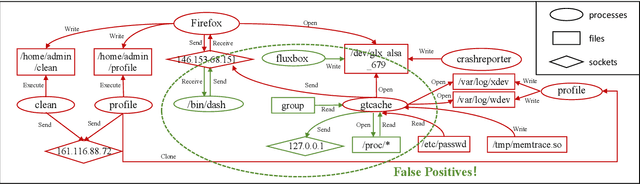
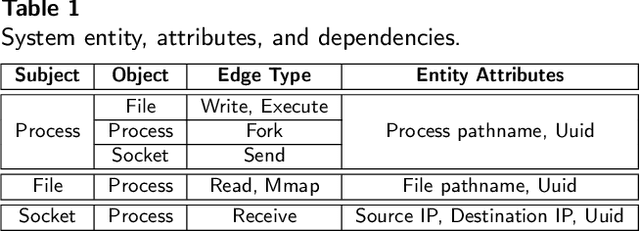
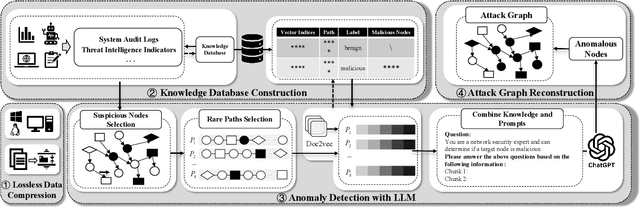
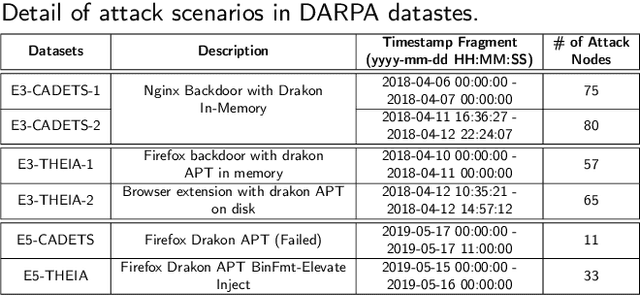
Recently, provenance-based intrusion detection systems (PIDSes) have been widely proposed for endpoint threat analysis. However, due to the lack of systematic integration and utilization of knowledge, existing PIDSes still require significant manual intervention for practical deployment, making full automation challenging. This paper presents a disruptive innovation by categorizing PIDSes according to the types of knowledge they utilize. In response to the prevalent issue of ``knowledge silos problem'' in existing research, we introduce a novel knowledge-driven provenance-based intrusion detection framework, powered by large language models (LLMs). We also present OmniSec, a best practice system built upon this framework. By integrating attack representation knowledge, threat intelligence knowledge, and benign behavior knowledge, OmniSec outperforms the state-of-the-art approaches on public benchmark datasets. OmniSec is available online at https://anonymous.4open.science/r/PIDS-with-LLM-613B.