 Add to Chrome
 Add to Firefox
 Add to Edge
Fast Numbers, Slow Language: Bridging Quantitative and Qualitative Earnings Signals
Jun 29, 2026
Earnings announcements release two types of information sequentially: quantitative surprise (numeric earnings-per-share (EPS)/revenue versus analyst estimate) arrives first in press releases and financial news, processed by algorithmic traders within minutes; qualitative language (management tone, guidance, question-and-answer (Q&A) credibility) arrives 30-90 min later in the earnings conference call transcript (ECT), requiring human interpretation overnight. Financial economists have studied quantitative surprise for 50 years; natural language processing (NLP) researchers have studied qualitative ECT signals for a decade. Despite studying the same event, the two communities used incompatible frameworks: different targets (return vs. volatility), trading setups (long top-decile and short bottom-decile vs. trade-all), and metrics (return spread between top and bottom 20% (Q5-Q1) vs. mean squared error (MSE)), making direct comparison and connection challenging. We bridge these communities with EarningsInOne, the first corpus aligning earnings news, ECTs, and intraday and next-day prices across SP 1500 (broad U.S. equity universe, 2022-2025). Applying unified trading and evaluation tools to both signal types, we confirm a clean speed separation, fast numbers, slow language: quantitative surprise peaks at announcement and is largely eliminated by the next market open; qualitative ECT sentiment peaks on the next trading day, real and tradeable, but hidden under prior transcript-based evaluation that optimised sign-agnostic volatility with pointwise MSE.

Style or Content? Evaluating Style Classifiers with Controlled Content Overlap
Jun 05, 2026Style classifiers can use content cues that correlate with style labels in naturally collected data, yet we lack a systematic way to measure this reliance. We study this problem with a controlled content overlap setup built on parallel Bible translations. Specifically, we define the overlap parameter $α$ as the normalized residual of mutual information between content identity and style label, so that it measures how much content is shared across style classes: from no shared content ($α=0$) to fully shared content ($α=1$). Cross-overlap evaluation of RoBERTa-based classifiers shows that low-overlap models degrade when content cues are removed, while high-overlap models transfer more robustly. A cross-style content retrieval probe further shows that content becomes less recoverable as $α$ increases, with training dynamics showing this removal occurs gradually. Together, these results suggest that controlled overlap provides a simple diagnostic for separating style learning from content shortcuts.
Uncovering Symmetry Transfer in Large Language Models via Layer-Peeled Optimization
May 12, 2026Large language models (LLMs) are pretrained by minimizing the cross-entropy loss for next-token prediction. In this paper, we study whether this optimization strategy can induce geometric structure in the learned model weights and context embeddings. We approach this problem by analyzing a constrained layer-peeled optimization program, which serves as a mathematically tractable surrogate for LLMs by treating the output projection matrix and last-layer context embeddings as optimization variables. Our analysis of this nonconvex optimization program demonstrates that symmetries in the target next-token distributions are transferred to the global minimizers of the layer-peeled model in a precise group-theoretic sense. Specifically, we prove that when the target tokens exhibit a cyclic-shift symmetry (such as the seven days of the week or the twelve months of the year), the optimal logit matrix is exactly circulant, and the Gram matrices of both the output projections and the context embeddings form circulant geometries as well. Next, for exchangeable target distributions invariant under the symmetric group and, more generally, under two-transitive group actions, we show that the global optimal output projection matrix forms a simplex equiangular tight frame, while the optimal logit matrix and context embeddings inherit the permutation symmetries present in the input data. A key technical step is to reduce the constrained nonconvex factorized problem to an explicit logit-level convex characterization for cyclic symmetry and to a symmetry-based lower bound for permutation symmetry, together with a sharp characterization of the optimal factorization. Finally, we empirically demonstrate that open-source LLMs naturally exhibit symmetries consistent with our theoretical predictions, despite being trained without any explicit regularization promoting such geometric structure.
Replicating Human Motivated Reasoning Studies with LLMs
Jan 22, 2026Motivated reasoning -- the idea that individuals processing information may be motivated to reach a certain conclusion, whether it be accurate or predetermined -- has been well-explored as a human phenomenon. However, it is unclear whether base LLMs mimic these motivational changes. Replicating 4 prior political motivated reasoning studies, we find that base LLM behavior does not align with expected human behavior. Furthermore, base LLM behavior across models shares some similarities, such as smaller standard deviations and inaccurate argument strength assessments. We emphasize the importance of these findings for researchers using LLMs to automate tasks such as survey data collection and argument assessment.
Mitigating Hallucinations in Multimodal Spatial Relations through Constraint-Aware Prompting
Feb 12, 2025Spatial relation hallucinations pose a persistent challenge in large vision-language models (LVLMs), leading to generate incorrect predictions about object positions and spatial configurations within an image. To address this issue, we propose a constraint-aware prompting framework designed to reduce spatial relation hallucinations. Specifically, we introduce two types of constraints: (1) bidirectional constraint, which ensures consistency in pairwise object relations, and (2) transitivity constraint, which enforces relational dependence across multiple objects. By incorporating these constraints, LVLMs can produce more spatially coherent and consistent outputs. We evaluate our method on three widely-used spatial relation datasets, demonstrating performance improvements over existing approaches. Additionally, a systematic analysis of various bidirectional relation analysis choices and transitivity reference selections highlights greater possibilities of our methods in incorporating constraints to mitigate spatial relation hallucinations.
Same Company, Same Signal: The Role of Identity in Earnings Call Transcripts
Dec 23, 2024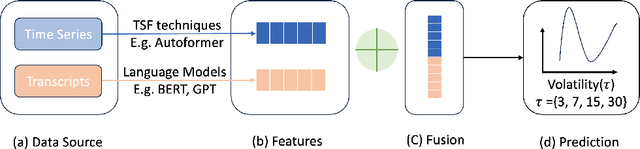



Post-earnings volatility prediction is critical for investors, with previous works often leveraging earnings call transcripts under the assumption that their rich semantics contribute significantly. To further investigate how transcripts impact volatility, we introduce DEC, a dataset featuring accurate volatility calculations enabled by the previously overlooked beforeAfterMarket attribute and dense ticker coverage. Unlike established benchmarks, where each ticker has only around two earnings, DEC provides 20 earnings records per ticker. Using DEC, we reveal that post-earnings volatility undergoes significant shifts, with each ticker displaying a distinct volatility distribution. To leverage historical post-earnings volatility and capture ticker-specific patterns, we propose two training-free baselines: Post-earnings Volatility (PEV) and Same-ticker Post-earnings Volatility (STPEV). These baselines surpass all transcripts-based models on DEC as well as on established benchmarks. Additionally, we demonstrate that current transcript representations predominantly capture ticker identity rather than offering financially meaningful insights specific to each earnings. This is evidenced by two key observations: earnings representations from the same ticker exhibit significantly higher similarity compared to those from different tickers, and predictions from transcript-based models show strong correlations with prior post-earnings volatility.
On the Role of Model Prior in Real-World Inductive Reasoning
Dec 18, 2024
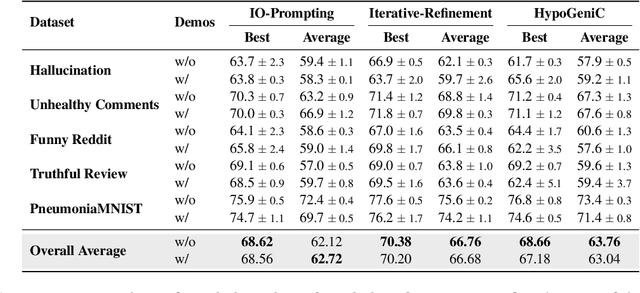


Large Language Models (LLMs) show impressive inductive reasoning capabilities, enabling them to generate hypotheses that could generalize effectively to new instances when guided by in-context demonstrations. However, in real-world applications, LLMs' hypothesis generation is not solely determined by these demonstrations but is significantly shaped by task-specific model priors. Despite their critical influence, the distinct contributions of model priors versus demonstrations to hypothesis generation have been underexplored. This study bridges this gap by systematically evaluating three inductive reasoning strategies across five real-world tasks with three LLMs. Our empirical findings reveal that, hypothesis generation is primarily driven by the model's inherent priors; removing demonstrations results in minimal loss of hypothesis quality and downstream usage. Further analysis shows the result is consistent across various label formats with different label configurations, and prior is hard to override, even under flipped labeling. These insights advance our understanding of the dynamics of hypothesis generation in LLMs and highlight the potential for better utilizing model priors in real-world inductive reasoning tasks.
MMCOMPOSITION: Revisiting the Compositionality of Pre-trained Vision-Language Models
Oct 13, 2024

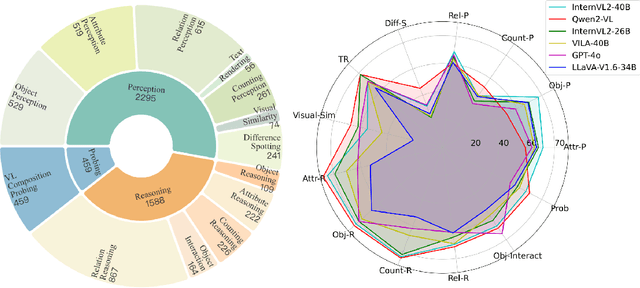
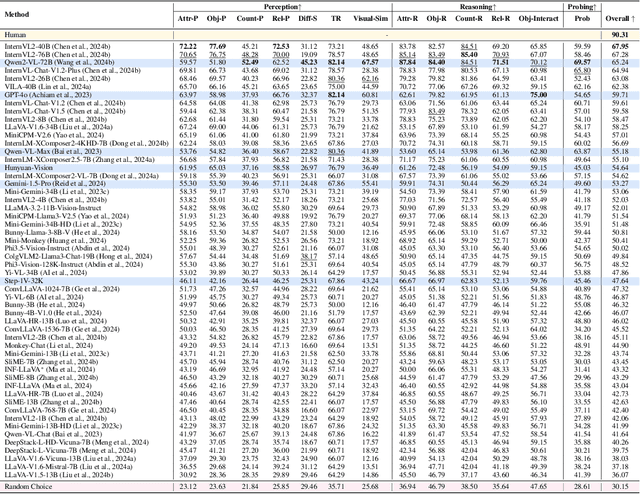
The advent of large Vision-Language Models (VLMs) has significantly advanced multimodal understanding, enabling more sophisticated and accurate integration of visual and textual information across various tasks, including image and video captioning, visual question answering, and cross-modal retrieval. Despite VLMs' superior capabilities, researchers lack a comprehensive understanding of their compositionality -- the ability to understand and produce novel combinations of known visual and textual components. Prior benchmarks provide only a relatively rough compositionality evaluation from the perspectives of objects, relations, and attributes while neglecting deeper reasoning about object interactions, counting, and complex compositions. However, compositionality is a critical ability that facilitates coherent reasoning and understanding across modalities for VLMs. To address this limitation, we propose MMCOMPOSITION, a novel human-annotated benchmark for comprehensively and accurately evaluating VLMs' compositionality. Our proposed benchmark serves as a complement to these earlier works. With MMCOMPOSITION, we can quantify and explore the compositionality of the mainstream VLMs. Surprisingly, we find GPT-4o's compositionality inferior to the best open-source model, and we analyze the underlying reasons. Our experimental analysis reveals the limitations of VLMs in fine-grained compositional perception and reasoning, and points to areas for improvement in VLM design and training. Resources available at: https://hanghuacs.github.io/MMComposition/
A Law of Next-Token Prediction in Large Language Models
Aug 24, 2024
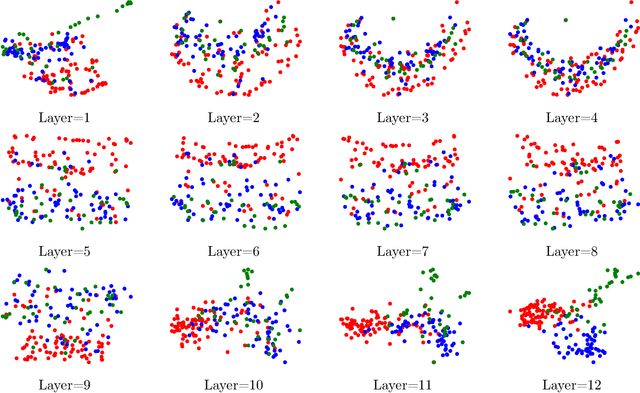
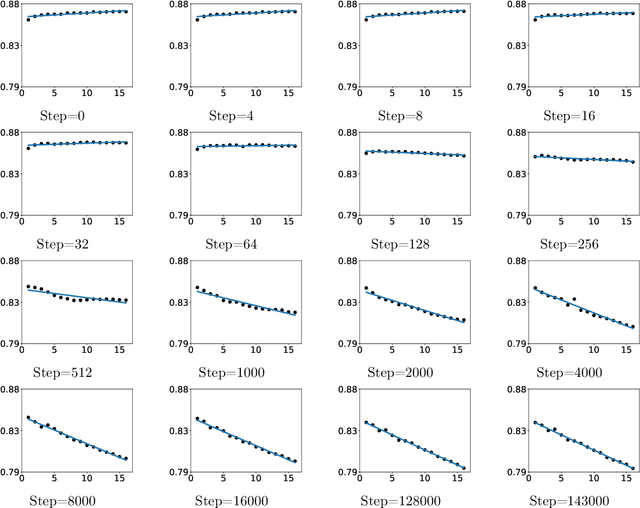

Large language models (LLMs) have been widely employed across various application domains, yet their black-box nature poses significant challenges to understanding how these models process input data internally to make predictions. In this paper, we introduce a precise and quantitative law that governs the learning of contextualized token embeddings through intermediate layers in pre-trained LLMs for next-token prediction. Our findings reveal that each layer contributes equally to enhancing prediction accuracy, from the lowest to the highest layer -- a universal phenomenon observed across a diverse array of open-source LLMs, built on architectures such as Transformer, RWKV, and Mamba. We demonstrate that this law offers new perspectives and insights to inform and guide practices in LLM development and applications, including model scaling, pre-training tasks, and information flow. Overall, our law enables more fine-grained approaches to the design, training, and interpretation of LLMs through scrutinizing their internal data processing mechanisms.
An Empirical Analysis on Large Language Models in Debate Evaluation
Jun 04, 2024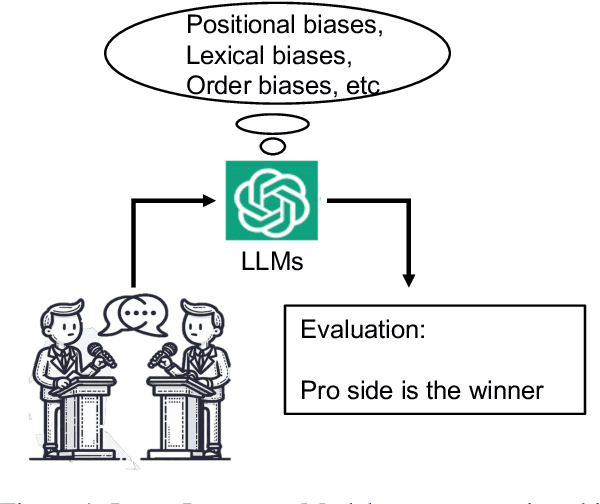
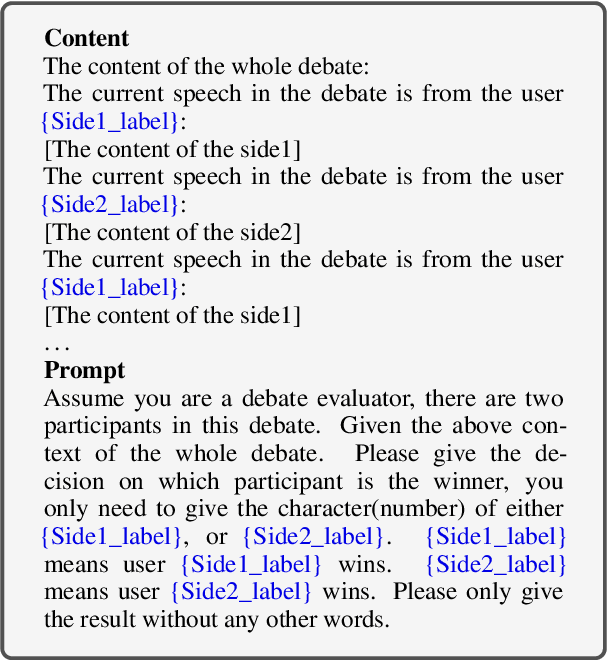
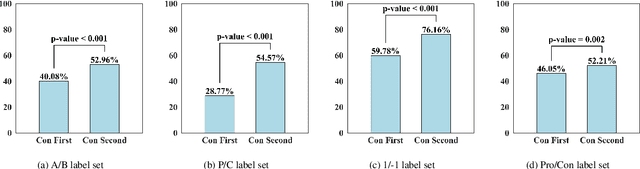
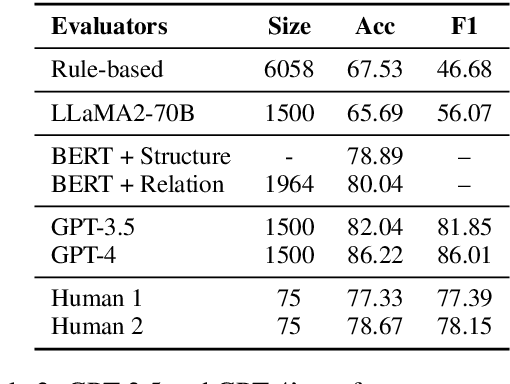
In this study, we investigate the capabilities and inherent biases of advanced large language models (LLMs) such as GPT-3.5 and GPT-4 in the context of debate evaluation. We discover that LLM's performance exceeds humans and surpasses the performance of state-of-the-art methods fine-tuned on extensive datasets in debate evaluation. We additionally explore and analyze biases present in LLMs, including positional bias, lexical bias, order bias, which may affect their evaluative judgments. Our findings reveal a consistent bias in both GPT-3.5 and GPT-4 towards the second candidate response presented, attributed to prompt design. We also uncover lexical biases in both GPT-3.5 and GPT-4, especially when label sets carry connotations such as numerical or sequential, highlighting the critical need for careful label verbalizer selection in prompt design. Additionally, our analysis indicates a tendency of both models to favor the debate's concluding side as the winner, suggesting an end-of-discussion bias.