 Add to Chrome
 Add to Firefox
 Add to Edge
Explore-on-Graph: Incentivizing Autonomous Exploration of Large Language Models on Knowledge Graphs with Path-refined Reward Modeling
Feb 25, 2026
The reasoning process of Large Language Models (LLMs) is often plagued by hallucinations and missing facts in question-answering tasks. A promising solution is to ground LLMs' answers in verifiable knowledge sources, such as Knowledge Graphs (KGs). Prevailing KG-enhanced methods typically constrained LLM reasoning either by enforcing rules during generation or by imitating paths from a fixed set of demonstrations. However, they naturally confined the reasoning patterns of LLMs within the scope of prior experience or fine-tuning data, limiting their generalizability to out-of-distribution graph reasoning problems. To tackle this problem, in this paper, we propose Explore-on-Graph (EoG), a novel framework that encourages LLMs to autonomously explore a more diverse reasoning space on KGs. To incentivize exploration and discovery of novel reasoning paths, we propose to introduce reinforcement learning during training, whose reward is the correctness of the reasoning paths' final answers. To enhance the efficiency and meaningfulness of the exploration, we propose to incorporate path information as additional reward signals to refine the exploration process and reduce futile efforts. Extensive experiments on five KGQA benchmark datasets demonstrate that, to the best of our knowledge, our method achieves state-of-the-art performance, outperforming not only open-source but also even closed-source LLMs.

New Era of Deeplearning-Based Malware Intrusion Detection: The Malware Detection and Prediction Based On Deep Learning
Jul 19, 2019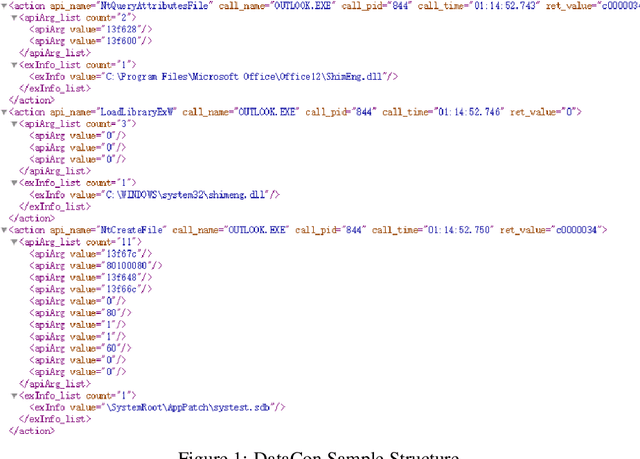
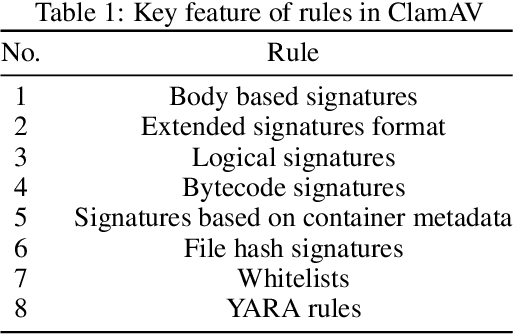
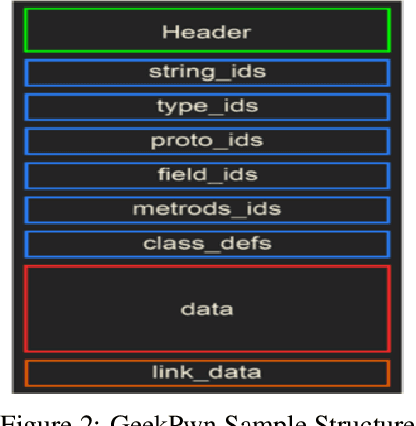
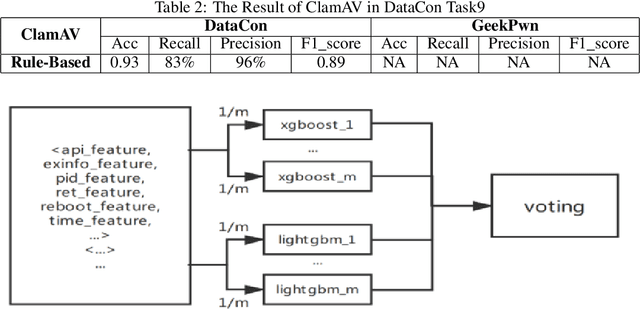
With the development of artificial intelligence algorithms like deep learning models and the successful applications in many different fields, further similar trails of deep learning technology have been made in cyber security area. It shows the preferable performance not only in academic security research but also in industry practices when dealing with part of cyber security issues by deep learning methods compared to those conventional rules. Especially for the malware detection and classification tasks, it saves generous time cost and promotes the accuracy for a total pipeline of malware detection system. In this paper, we construct special deep neural network, ie, MalDeepNet (TB-Malnet and IB-Malnet) for malware dynamic behavior classification tasks. Then we build the family clustering algorithm based on deep learning and fulfil related testing. Except that, we also design a novel malware prediction model which could detect the malware coming in future through the Mal Generative Adversarial Network (Mal-GAN) implementation. All those algorithms present fairly considerable value in related datasets afterwards.