 Add to Chrome
 Add to Firefox
 Add to Edge
InfoDense: Density-Aware Regional Decisive Replay for Memory-Efficient Incremental Face Forgery Detection
Jul 18, 2026
The rapid evolution of face forgery techniques has introduced an increasing variety of manipulations. Incremental Face Forgery Detection (IFFD), which incrementally adds new forgery data to fine-tune previously trained models, has emerged as a promising approach to handle evolving forgery threats. However, conventional replay-based IFFD methods suffer from catastrophic forgetting. Storing full historical images under limited memory often either fails to preserve subtle forgery cues or introduces domain bias, reducing the model's ability to learn intrinsic and transferable manipulation characteristics. In this paper, we propose a Density-Aware Regional Decisive replay strategy, termed InfoDense, to address these challenges. InfoDense prioritizes artifact-dense and forgery-critical regions, significantly reducing storage requirements while maintaining high-fidelity forgery evidence. We first introduce InfoDense Cut to localize decisive patches using CLIP-based embeddings. Then, InfoDense Select ranks candidate segments by combining latent-space representativeness and decisive patch counts, ensuring both diversity and information density in the replay buffer. Finally, InfoDense Fuse reconstructs unbiased training inputs by adaptively merging stored segments with current-task samples, enhancing knowledge retention and generalization. Extensive experiments on challenging incremental deepfake benchmarks demonstrate that InfoDense effectively mitigates catastrophic forgetting while improving cross-domain generalization.

A Multimodal Dangerous State Recognition and Early Warning System for Elderly with Intermittent Dementia
May 30, 2024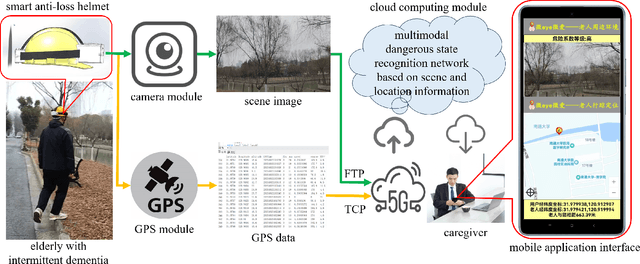
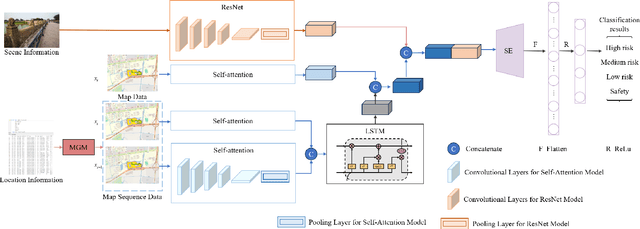
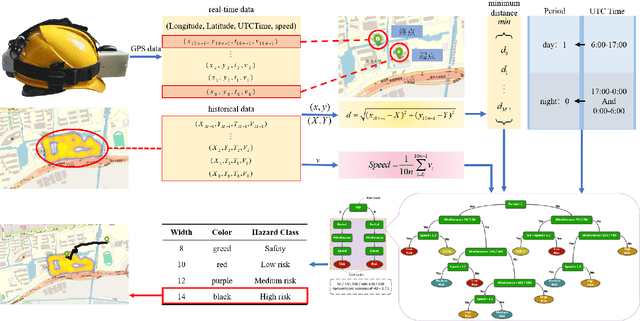
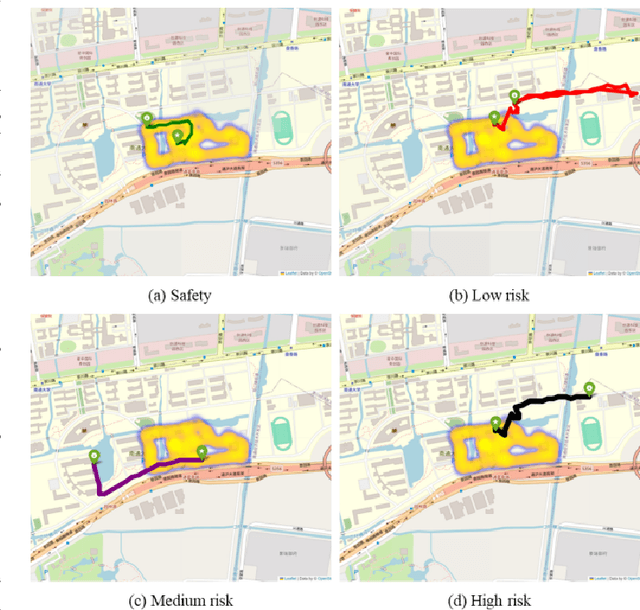
In response to the social issue of the increasing number of elderly vulnerable groups going missing due to the aggravating aging population in China, our team has developed a wearable anti-loss device and intelligent early warning system for elderly individuals with intermittent dementia using artificial intelligence and IoT technology. This system comprises an anti-loss smart helmet, a cloud computing module, and an intelligent early warning application on the caregiver's mobile device. The smart helmet integrates a miniature camera module, a GPS module, and a 5G communication module to collect first-person images and location information of the elderly. Data is transmitted remotely via 5G, FTP, and TCP protocols. In the cloud computing module, our team has proposed for the first time a multimodal dangerous state recognition network based on scene and location information to accurately assess the risk of elderly individuals going missing. Finally, the application software interface designed for the caregiver's mobile device implements multi-level early warnings. The system developed by our team requires no operation or response from the elderly, achieving fully automatic environmental perception, risk assessment, and proactive alarming. This overcomes the limitations of traditional monitoring devices, which require active operation and response, thus avoiding the issue of the digital divide for the elderly. It effectively prevents accidental loss and potential dangers for elderly individuals with dementia.
When Face Recognition Meets Occlusion: A New Benchmark
Mar 04, 2021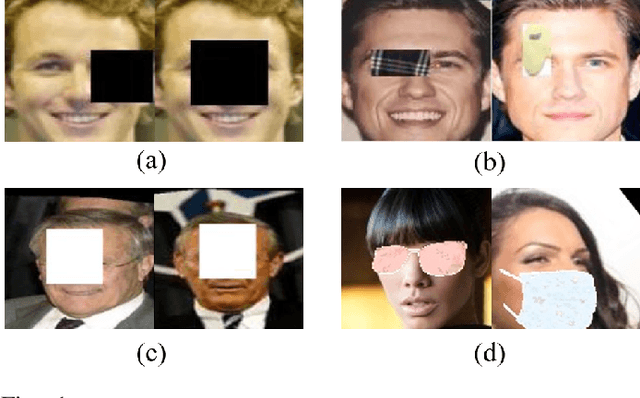
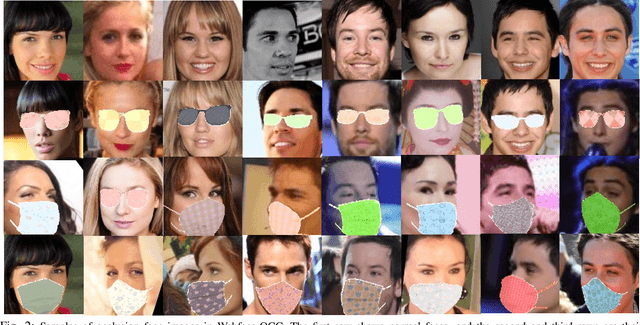
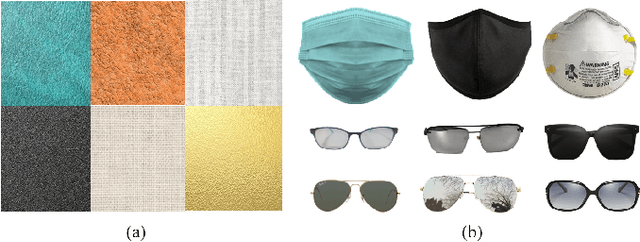
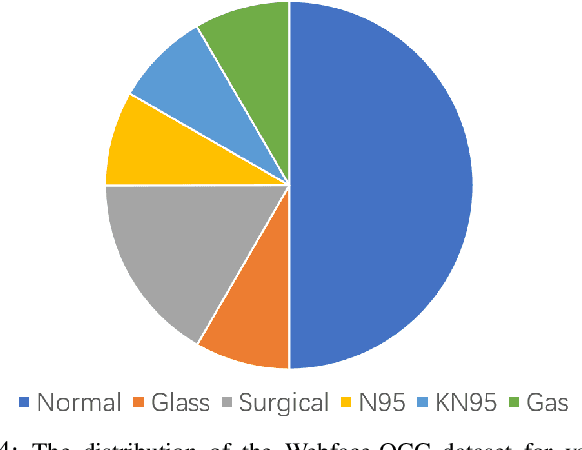
The existing face recognition datasets usually lack occlusion samples, which hinders the development of face recognition. Especially during the COVID-19 coronavirus epidemic, wearing a mask has become an effective means of preventing the virus spread. Traditional CNN-based face recognition models trained on existing datasets are almost ineffective for heavy occlusion. To this end, we pioneer a simulated occlusion face recognition dataset. In particular, we first collect a variety of glasses and masks as occlusion, and randomly combine the occlusion attributes (occlusion objects, textures,and colors) to achieve a large number of more realistic occlusion types. We then cover them in the proper position of the face image with the normal occlusion habit. Furthermore, we reasonably combine original normal face images and occluded face images to form our final dataset, termed as Webface-OCC. It covers 804,704 face images of 10,575 subjects, with diverse occlusion types to ensure its diversity and stability. Extensive experiments on public datasets show that the ArcFace retrained by our dataset significantly outperforms the state-of-the-arts. Webface-OCC is available at https://github.com/Baojin-Huang/Webface-OCC.
Masked Face Recognition Dataset and Application
Mar 23, 2020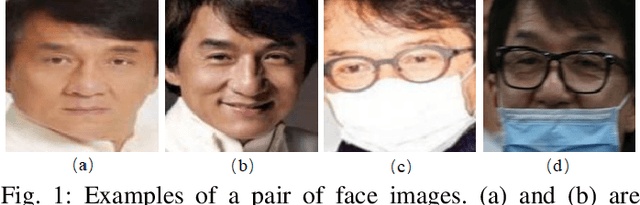
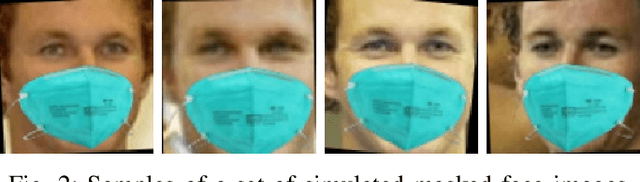
In order to effectively prevent the spread of COVID-19 virus, almost everyone wears a mask during coronavirus epidemic. This almost makes conventional facial recognition technology ineffective in many cases, such as community access control, face access control, facial attendance, facial security checks at train stations, etc. Therefore, it is very urgent to improve the recognition performance of the existing face recognition technology on the masked faces. Most current advanced face recognition approaches are designed based on deep learning, which depend on a large number of face samples. However, at present, there are no publicly available masked face recognition datasets. To this end, this work proposes three types of masked face datasets, including Masked Face Detection Dataset (MFDD), Real-world Masked Face Recognition Dataset (RMFRD) and Simulated Masked Face Recognition Dataset (SMFRD). Among them, to the best of our knowledge, RMFRD is currently theworld's largest real-world masked face dataset. These datasets are freely available to industry and academia, based on which various applications on masked faces can be developed. The multi-granularity masked face recognition model we developed achieves 95% accuracy, exceeding the results reported by the industry. Our datasets are available at: https://github.com/X-zhangyang/Real-World-Masked-Face-Dataset.