 Add to Chrome
 Add to Firefox
 Add to Edge
Splat-based 3D Scene Reconstruction with Extreme Motion-blur
Jul 18, 2026
We propose a splat-based 3D scene reconstruction method from RGB-D input that effectively handles extreme motion blur, a frequent challenge in low-light environments. Under dim illumination, RGB frames often suffer from severe motion blur due to extended exposure times, causing traditional camera pose estimation methods, such as COLMAP, to fail. This results in inaccurate camera pose and blurry color input, compromising the quality of 3D reconstructions. Although recent 3D reconstruction techniques like Neural Radiance Fields and Gaussian Splatting have demonstrated impressive results, they rely on accurate camera trajectory estimation, which becomes challenging under fast motion or poor lighting conditions. Furthermore, rapid camera movement and the limited field of view of depth sensors reduce point cloud overlap, limiting the effectiveness of pose estimation with the ICP algorithm. To address these issues, we introduce a method that combines camera pose estimation and image deblurring using a Gaussian Splatting framework, leveraging both 3D Gaussian splats and depth inputs for enhanced scene representation. Our method first aligns consecutive RGB-D frames through optical flow and ICP, then refines camera poses and 3D geometry by adjusting Gaussian positions for optimal depth alignment. To handle motion blur, we model camera movement during exposure and deblur images by comparing the input with a series of sharp, rendered frames. Experiments on a new RGB-D dataset with extreme motion blur show that our method outperforms existing approaches, enabling high-quality reconstructions even in challenging conditions. This approach has broad implications for 3D mapping applications in robotics, autonomous navigation, and augmented reality. Both code and dataset are publicly available on https://github.com/KAIST-VCLAB/gs-extreme-motion-blur.

ICPR 2026 Competition on Low-Resolution License Plate Recognition
Apr 24, 2026Low-Resolution License Plate Recognition (LRLPR) remains a challenging problem in real-world surveillance scenarios, where long capture distances, compression artifacts, and adverse imaging conditions can severely degrade license plate legibility. To promote progress in this area, we organized the ICPR 2026 Competition on Low-Resolution License Plate Recognition, the first competition specifically dedicated to LRLPR using real low-quality data collected under operationally relevant conditions. The competition was based on the LRLPR-26 dataset, which comprises 20,000 training tracks and 3,000 test tracks; each training track contains five low-resolution and five high-resolution images of the same license plate. Notably, a total of 269 teams from 41 countries registered for the competition, and 99 teams submitted valid entries in the Blind Test Phase. The winning team achieved a Recognition Rate of 82.13%, and four teams surpassed the 80% mark, highlighting both the high level of competition at the top of the leaderboard and the continued difficulty of the task. In addition to presenting the competition design, evaluation protocol, and main results, this paper summarizes the methods adopted by the top-5 teams and discusses current trends and promising directions for future research on LRLPR. The competition webpage is available at https://icpr26lrlpr.github.io/
NTIRE 2026 3D Restoration and Reconstruction in Real-world Adverse Conditions: RealX3D Challenge Results
Apr 05, 2026This paper presents a comprehensive review of the NTIRE 2026 3D Restoration and Reconstruction (3DRR) Challenge, detailing the proposed methods and results. The challenge seeks to identify robust reconstruction pipelines that are robust under real-world adverse conditions, specifically extreme low-light and smoke-degraded environments, as captured by our RealX3D benchmark. A total of 279 participants registered for the competition, of whom 33 teams submitted valid results. We thoroughly evaluate the submitted approaches against state-of-the-art baselines, revealing significant progress in 3D reconstruction under adverse conditions. Our analysis highlights shared design principles among top-performing methods and provides insights into effective strategies for handling 3D scene degradation.
Mapper-GIN: Lightweight Structural Graph Abstraction for Corrupted 3D Point Cloud Classification
Feb 05, 2026Robust 3D point cloud classification is often pursued by scaling up backbones or relying on specialized data augmentation. We instead ask whether structural abstraction alone can improve robustness, and study a simple topology-inspired decomposition based on the Mapper algorithm. We propose Mapper-GIN, a lightweight pipeline that partitions a point cloud into overlapping regions using Mapper (PCA lens, cubical cover, and followed by density-based clustering), constructs a region graph from their overlaps, and performs graph classification with a Graph Isomorphism Network. On the corruption benchmark ModelNet40-C, Mapper-GIN achieves competitive and stable accuracy under Noise and Transformation corruptions with only 0.5M parameters. In contrast to prior approaches that require heavier architectures or additional mechanisms to gain robustness, Mapper-GIN attains strong corruption robustness through simple region-level graph abstraction and GIN message passing. Overall, our results suggest that region-graph structure offers an efficient and interpretable source of robustness for 3D visual recognition.
BEAT2AASIST model with layer fusion for ESDD 2026 Challenge
Dec 17, 2025Recent advances in audio generation have increased the risk of realistic environmental sound manipulation, motivating the ESDD 2026 Challenge as the first large-scale benchmark for Environmental Sound Deepfake Detection (ESDD). We propose BEAT2AASIST which extends BEATs-AASIST by splitting BEATs-derived representations along frequency or channel dimension and processing them with dual AASIST branches. To enrich feature representations, we incorporate top-k transformer layer fusion using concatenation, CNN-gated, and SE-gated strategies. In addition, vocoder-based data augmentation is applied to improve robustness against unseen spoofing methods. Experimental results on the official test sets demonstrate that the proposed approach achieves competitive performance across the challenge tracks.
Polarimetric BSSRDF Acquisition of Dynamic Faces
Dec 29, 2024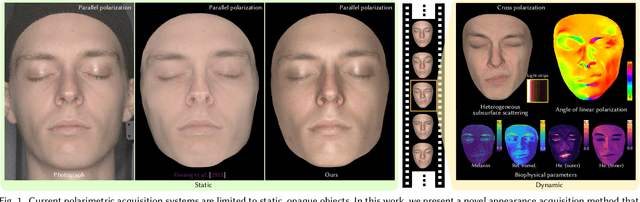
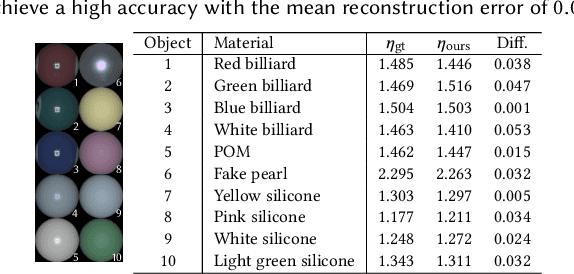
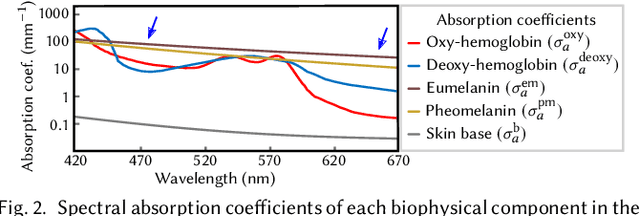
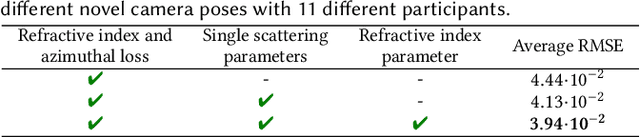
Acquisition and modeling of polarized light reflection and scattering help reveal the shape, structure, and physical characteristics of an object, which is increasingly important in computer graphics. However, current polarimetric acquisition systems are limited to static and opaque objects. Human faces, on the other hand, present a particularly difficult challenge, given their complex structure and reflectance properties, the strong presence of spatially-varying subsurface scattering, and their dynamic nature. We present a new polarimetric acquisition method for dynamic human faces, which focuses on capturing spatially varying appearance and precise geometry, across a wide spectrum of skin tones and facial expressions. It includes both single and heterogeneous subsurface scattering, index of refraction, and specular roughness and intensity, among other parameters, while revealing biophysically-based components such as inner- and outer-layer hemoglobin, eumelanin and pheomelanin. Our method leverages such components' unique multispectral absorption profiles to quantify their concentrations, which in turn inform our model about the complex interactions occurring within the skin layers. To our knowledge, our work is the first to simultaneously acquire polarimetric and spectral reflectance information alongside biophysically-based skin parameters and geometry of dynamic human faces. Moreover, our polarimetric skin model integrates seamlessly into various rendering pipelines.
PCA, SVD, and Centering of Data
Jul 27, 2023The research detailed in this paper scrutinizes Principal Component Analysis (PCA), a seminal method employed in statistics and machine learning for the purpose of reducing data dimensionality. Singular Value Decomposition (SVD) is often employed as the primary means for computing PCA, a process that indispensably includes the step of centering - the subtraction of the mean location from the data set. In our study, we delve into a detailed exploration of the influence of this critical yet often ignored or downplayed data centering step. Our research meticulously investigates the conditions under which two PCA embeddings, one derived from SVD with centering and the other without, can be viewed as aligned. As part of this exploration, we analyze the relationship between the first singular vector and the mean direction, subsequently linking this observation to the congruity between two SVDs of centered and uncentered matrices. Furthermore, we explore the potential implications arising from the absence of centering in the context of performing PCA via SVD from a spectral analysis standpoint. Our investigation emphasizes the importance of a comprehensive understanding and acknowledgment of the subtleties involved in the computation of PCA. As such, we believe this paper offers a crucial contribution to the nuanced understanding of this foundational statistical method and stands as a valuable addition to the academic literature in the field of statistics.