 Add to Chrome
 Add to Firefox
 Add to Edge
Shared Circuits for Shared Grammar: Tracing Subject-Verb Agreement Across Languages
Aug 19, 2026
Multilingual large language models often generalize across languages, and prior work suggests that their internal mechanisms can overlap cross-lingually. It remains unclear, however, when such sharing emerges and whether it varies with the overt realization of the same grammatical operation. We investigate this question for present-tense subject-verb agreement, a morphosyntactic process that varies substantially across languages and is only weakly expressed in English. Using activation patching and attention analysis across 29 languages and five open-source model families, we identify the attention heads causally implicated in agreement and compare these head-level signatures across languages. We find that languages with overt person/number inflection exhibit more similar agreement circuitry than non-conjugating languages, with the strongest sharing appearing when the analysis isolates recovery of the inflectional contrast itself. English provides an informative bridge case, becoming more similar to conjugating languages precisely in contexts where overt agreement is required. Finally, many implicated heads display similar attention patterns across languages, suggesting that cross-lingual overlap reflects shared functional roles as well as shared localization. Together, these results indicate that multilingual LLMs reuse partially shared computational structure for morphosyntactic agreement rather than relying on fully separate language-specific solutions.

CreativityNeuro: Steering Language Model Weights to Improve Divergent Thinking and Reduce Mode Collapse
Jul 01, 2026Divergent thinking is a crucial aspect of creativity, yet large language models (LLMs) tend to consistently generate similar responses to open-ended questions, in what has been termed the artificial hivemind effect. Here, we introduce CreativityNeuro, a data-free method for enhancing divergent thinking in LLMs via contrastive weight steering. We evaluate our method across multiple creativity assessments and report several main findings. On the Divergent Association Task (DAT), a vocabulary-space creativity test, CreativityNeuro improves performance by up to 14 human percentile points. Next, in a large-scale human evaluation (N=720) on the Alternative Uses Test (AUT) and the Task Task, CreativityNeuro achieves significant improvements in originality, surprise, and creativity, transferring to longer-form and more open-ended tasks. Importantly, we find that across all three tasks, CreativityNeuro demonstrably reduces measures of mode collapse. Moreover, activation steering achieves comparable performance to CreativityNeuro on the DAT, but it does not transfer to the AUT and Task Task, demonstrating the effectiveness of weight-space steering in generalizing to unseen tasks. In conclusion, CreativityNeuro improves divergent thinking and reduces mode collapse without requiring behavioral data, re-training, or gradient-based fine-tuning, providing a straightforward way to enhance LLM performance in creative domains.
Viral Proteins Reveal Geometry of Protein Language Models
Jun 10, 2026Protein language models are trained on highly imbalanced datasets, raising the question of how they represent underrepresented biological sequences. Using viral proteins as a case study across ESM model families, we identify a dominant nativeness axis in embedding space, aligned with masked reconstruction perplexity, that orders sequences from well-modeled cellular proteins through viral proteins to shuffled and random sequences. Scaling contracts this axis unevenly across viral families. Despite this, protein language model embeddings retain viral-specific signal: viral proteins remain linearly separable beyond zero-shot perplexity and shallow sequence features. Together, these results suggest that pLM representations are structured by a general notion of nativeness while preserving information specific to distinct biological groups.
Agents' Last Exam
Jun 03, 2026Recent AI systems have achieved strong results on a wide range of benchmarks, yet these gains have not translated into economically meaningful deployment across many professional domains. We argue that this gap is largely an evaluation problem: widely used benchmarks lack sustained performance measurement on real and economically valuable workflows. This paper introduces Agents' Last Exam (ALE), a benchmark designed to evaluate AI agents on long-horizon, economically valuable, real-world tasks with verifiable outcomes. Developed in collaboration with 250+ industry experts, ALE covers non-physical industries defined with reference to O*NET / SOC 2018 (the U.S. federal occupational taxonomy). It is organized around a task taxonomy with 55 subfields grouped into 13 industry clusters covering 1K+ tasks. Current results show that the hardest tier remains far from saturated: across mainstream harness and backbone configurations, the average full pass rate is 2.6%. ALE is designed as a living benchmark: its task pool grows continuously as new workflows and industries are onboarded. More broadly, ALE is intended not merely as another leaderboard, but as an instrument for closing the gap between benchmark success and GDP-relevant impact.
Mechanisms of Misgeneralization in Physical Sequence Modeling
May 19, 2026Generative sequence models are often trained to plan motion in physical domains, from robotics to mechanical simulations. When constructing a dataset to train such a model, engineers may curate demonstrations to specify how trajectories should be distributed over a physical quantity like travel distance or mechanical energy. For example, a roboticist building a maze navigation agent might choose demonstrations whose travel distances cover a fixed range uniformly, hoping to constrain the agent's expected power usage. We find that standard deep learning can violate this intent: each generated trajectory can seem plausible on its own, but the aggregate distribution over the physical quantity is wrong. We call this failure physical misgeneralization, and develop an account of its mechanism. Using controlled synthetic tasks, we show that physical misgeneralization arises when local errors typical of the model class propagate through the physical measurement to shift the recovered distribution. We estimate these errors with a data deviation kernel, and we use it to predict which physical quantities gain or lose mass in both our synthetic and more applied maze navigation and double-pendulum motion tasks. Finally, our mechanistic interpretation helps identify which mitigation strategies are structurally promising, and we use it to propose a kernel-informed intervention.
Convergent World Representations and Divergent Tasks
Jan 31, 2026While neural representations are central to modern deep learning, the conditions governing their geometry and their roles in downstream adaptability remain poorly understood. We develop a framework clearly separating the underlying world, the data generation process and the resulting model representations to study these questions in a controlled setup. 5,075 city coordinates define the world and 7 geometric tasks generate the training data for autoregressive training. We find that different tasks give rise to qualitatively and quantitatively distinct world representation geometries. However, multi-task training drives convergence of world representations: models trained on non-overlapping tasks develop aligned geometric representations, providing controlled evidence for the Multitask Scaling Hypothesis of the Platonic Representation Hypothesis. To study adaptation, we pretrain models on all tasks, then test whether new entities (cities) can be consistently integrated into the representation space via fine-tuning. Surprisingly, we find that despite multi-task pretraining, some tasks, which we call divergent, actively harm the representational integration of new entities and harm generalization. Our results show that training on multiple relational tasks reliably produces convergent world representations, but lurking divergent tasks can catastrophically harm new entity integration via fine-tuning.
Decomposing Elements of Problem Solving: What "Math" Does RL Teach?
May 28, 2025Mathematical reasoning tasks have become prominent benchmarks for assessing the reasoning capabilities of LLMs, especially with reinforcement learning (RL) methods such as GRPO showing significant performance gains. However, accuracy metrics alone do not support fine-grained assessment of capabilities and fail to reveal which problem-solving skills have been internalized. To better understand these capabilities, we propose to decompose problem solving into fundamental capabilities: Plan (mapping questions to sequences of steps), Execute (correctly performing solution steps), and Verify (identifying the correctness of a solution). Empirically, we find that GRPO mainly enhances the execution skill-improving execution robustness on problems the model already knows how to solve-a phenomenon we call temperature distillation. More importantly, we show that RL-trained models struggle with fundamentally new problems, hitting a 'coverage wall' due to insufficient planning skills. To explore RL's impact more deeply, we construct a minimal, synthetic solution-tree navigation task as an analogy for mathematical problem-solving. This controlled setup replicates our empirical findings, confirming RL primarily boosts execution robustness. Importantly, in this setting, we identify conditions under which RL can potentially overcome the coverage wall through improved exploration and generalization to new solution paths. Our findings provide insights into the role of RL in enhancing LLM reasoning, expose key limitations, and suggest a path toward overcoming these barriers. Code is available at https://github.com/cfpark00/RL-Wall.
$\textit{New News}$: System-2 Fine-tuning for Robust Integration of New Knowledge
May 03, 2025Humans and intelligent animals can effortlessly internalize new information ("news") and accurately extract the implications for performing downstream tasks. While large language models (LLMs) can achieve this through in-context learning (ICL) when the news is explicitly given as context, fine-tuning remains challenging for the models to consolidate learning in weights. In this paper, we introduce $\textit{New News}$, a dataset composed of hypothetical yet plausible news spanning multiple domains (mathematics, coding, discoveries, leaderboards, events), accompanied by downstream evaluation questions whose correct answers critically depend on understanding and internalizing the news. We first demonstrate a substantial gap between naive fine-tuning and in-context learning (FT-ICL gap) on our news dataset. To address this gap, we explore a suite of self-play data generation protocols -- paraphrases, implications and Self-QAs -- designed to distill the knowledge from the model with context into the weights of the model without the context, which we term $\textit{System-2 Fine-tuning}$ (Sys2-FT). We systematically evaluate ICL and Sys2-FT performance across data domains and model scales with the Qwen 2.5 family of models. Our results demonstrate that the self-QA protocol of Sys2-FT significantly improves models' in-weight learning of the news. Furthermore, we discover the $\textit{contexual shadowing effect}$, where training with the news $\textit{in context}$ followed by its rephrases or QAs degrade learning of the news. Finally, we show preliminary evidence of an emerging scaling law of Sys2-FT.
ICLR: In-Context Learning of Representations
Dec 29, 2024

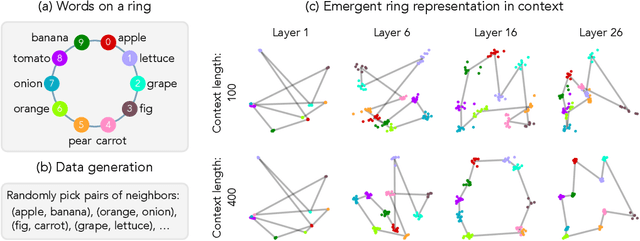
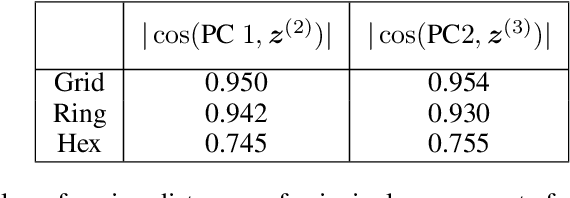
Recent work has demonstrated that semantics specified by pretraining data influence how representations of different concepts are organized in a large language model (LLM). However, given the open-ended nature of LLMs, e.g., their ability to in-context learn, we can ask whether models alter these pretraining semantics to adopt alternative, context-specified ones. Specifically, if we provide in-context exemplars wherein a concept plays a different role than what the pretraining data suggests, do models reorganize their representations in accordance with these novel semantics? To answer this question, we take inspiration from the theory of conceptual role semantics and define a toy "graph tracing" task wherein the nodes of the graph are referenced via concepts seen during training (e.g., apple, bird, etc.) and the connectivity of the graph is defined via some predefined structure (e.g., a square grid). Given exemplars that indicate traces of random walks on the graph, we analyze intermediate representations of the model and find that as the amount of context is scaled, there is a sudden re-organization from pretrained semantic representations to in-context representations aligned with the graph structure. Further, we find that when reference concepts have correlations in their semantics (e.g., Monday, Tuesday, etc.), the context-specified graph structure is still present in the representations, but is unable to dominate the pretrained structure. To explain these results, we analogize our task to energy minimization for a predefined graph topology, providing evidence towards an implicit optimization process to infer context-specified semantics. Overall, our findings indicate scaling context-size can flexibly re-organize model representations, possibly unlocking novel capabilities.
Competition Dynamics Shape Algorithmic Phases of In-Context Learning
Dec 01, 2024


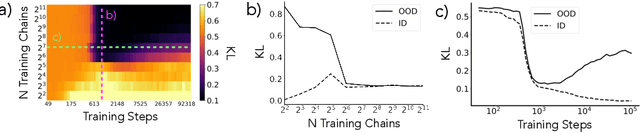
In-Context Learning (ICL) has significantly expanded the general-purpose nature of large language models, allowing them to adapt to novel tasks using merely the inputted context. This has motivated a series of papers that analyze tractable synthetic domains and postulate precise mechanisms that may underlie ICL. However, the use of relatively distinct setups that often lack a sequence modeling nature to them makes it unclear how general the reported insights from such studies are. Motivated by this, we propose a synthetic sequence modeling task that involves learning to simulate a finite mixture of Markov chains. As we show, models trained on this task reproduce most well-known results on ICL, hence offering a unified setting for studying the concept. Building on this setup, we demonstrate we can explain a model's behavior by decomposing it into four broad algorithms that combine a fuzzy retrieval vs. inference approach with either unigram or bigram statistics of the context. These algorithms engage in a competition dynamics to dominate model behavior, with the precise experimental conditions dictating which algorithm ends up superseding others: e.g., we find merely varying context size or amount of training yields (at times sharp) transitions between which algorithm dictates the model behavior, revealing a mechanism that explains the transient nature of ICL. In this sense, we argue ICL is best thought of as a mixture of different algorithms, each with its own peculiarities, instead of a monolithic capability. This also implies that making general claims about ICL that hold universally across all settings may be infeasible.