 Add to Chrome
 Add to Firefox
 Add to Edge
ColD Fusion: Collaborative Descent for Distributed Multitask Finetuning
Dec 02, 2022
Pretraining has been shown to scale well with compute, data size and data diversity. Multitask learning trains on a mixture of supervised datasets and produces improved performance compared to self-supervised pretraining. Until now, massively multitask learning required simultaneous access to all datasets in the mixture and heavy compute resources that are only available to well-resourced teams. In this paper, we propose ColD Fusion, a method that provides the benefits of multitask learning but leverages distributed computation and requires limited communication and no sharing of data. Consequentially, ColD Fusion can create a synergistic loop, where finetuned models can be recycled to continually improve the pretrained model they are based on. We show that ColD Fusion yields comparable benefits to multitask pretraining by producing a model that (a) attains strong performance on all of the datasets it was multitask trained on and (b) is a better starting point for finetuning on unseen datasets. We find ColD Fusion outperforms RoBERTa and even previous multitask models. Specifically, when training and testing on 35 diverse datasets, ColD Fusion-based model outperforms RoBERTa by 2.45 points in average without any changes to the architecture.

Evaluating the Factual Consistency of Large Language Models Through Summarization
Nov 15, 2022While large language models (LLMs) have proven to be effective on a large variety of tasks, they are also known to hallucinate information. To measure whether an LLM prefers factually consistent continuations of its input, we propose a new benchmark called FIB(Factual Inconsistency Benchmark) that focuses on the task of summarization. Specifically, our benchmark involves comparing the scores an LLM assigns to a factually consistent versus a factually inconsistent summary for an input news article. For factually consistent summaries, we use human-written reference summaries that we manually verify as factually consistent. To generate summaries that are factually inconsistent, we generate summaries from a suite of summarization models that we have manually annotated as factually inconsistent. A model's factual consistency is then measured according to its accuracy, i.e.\ the proportion of documents where it assigns a higher score to the factually consistent summary. To validate the usefulness of FIB, we evaluate 23 large language models ranging from 1B to 176B parameters from six different model families including BLOOM and OPT. We find that existing LLMs generally assign a higher score to factually consistent summaries than to factually inconsistent summaries. However, if the factually inconsistent summaries occur verbatim in the document, then LLMs assign a higher score to these factually inconsistent summaries than factually consistent summaries. We validate design choices in our benchmark including the scoring method and source of distractor summaries. Our code and benchmark data can be found at https://github.com/r-three/fib.
Large Language Models Struggle to Learn Long-Tail Knowledge
Nov 15, 2022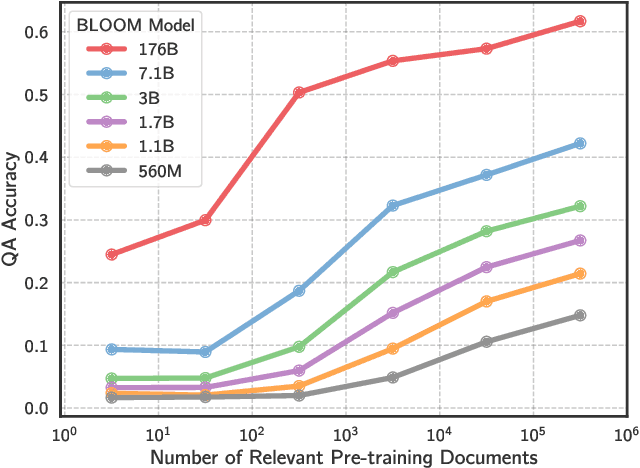
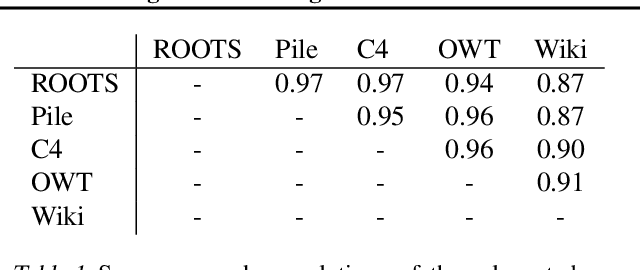
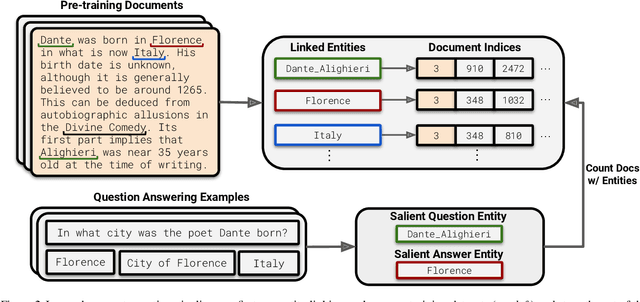
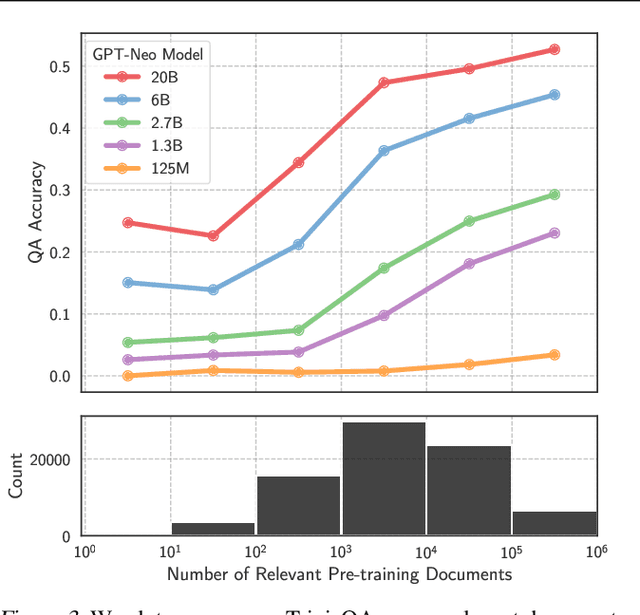
The internet contains a wealth of knowledge -- from the birthdays of historical figures to tutorials on how to code -- all of which may be learned by language models. However, there is a huge variability in the number of times a given piece of information appears on the web. In this paper, we study the relationship between the knowledge memorized by large language models and the information in their pre-training datasets. In particular, we show that a language model's ability to answer a fact-based question relates to how many documents associated with that question were seen during pre-training. We identify these relevant documents by entity linking pre-training datasets and counting documents that contain the same entities as a given question-answer pair. Our results demonstrate strong correlational and causal relationships between accuracy and relevant document count for numerous question answering datasets (e.g., TriviaQA), pre-training corpora (e.g., ROOTS), and model sizes (e.g., 176B parameters). Moreover, we find that while larger models are better at learning long-tail knowledge, we estimate that today's models must be scaled by many orders of magnitude to reach competitive QA performance on questions with little support in the pre-training data. Finally, we show that retrieval-augmentation can reduce the dependence on relevant document count, presenting a promising approach for capturing the long-tail.
BLOOM: A 176B-Parameter Open-Access Multilingual Language Model
Nov 09, 2022Large language models (LLMs) have been shown to be able to perform new tasks based on a few demonstrations or natural language instructions. While these capabilities have led to widespread adoption, most LLMs are developed by resource-rich organizations and are frequently kept from the public. As a step towards democratizing this powerful technology, we present BLOOM, a 176B-parameter open-access language model designed and built thanks to a collaboration of hundreds of researchers. BLOOM is a decoder-only Transformer language model that was trained on the ROOTS corpus, a dataset comprising hundreds of sources in 46 natural and 13 programming languages (59 in total). We find that BLOOM achieves competitive performance on a wide variety of benchmarks, with stronger results after undergoing multitask prompted finetuning. To facilitate future research and applications using LLMs, we publicly release our models and code under the Responsible AI License.
What Language Model to Train if You Have One Million GPU Hours?
Nov 08, 2022


The crystallization of modeling methods around the Transformer architecture has been a boon for practitioners. Simple, well-motivated architectural variations can transfer across tasks and scale, increasing the impact of modeling research. However, with the emergence of state-of-the-art 100B+ parameters models, large language models are increasingly expensive to accurately design and train. Notably, it can be difficult to evaluate how modeling decisions may impact emergent capabilities, given that these capabilities arise mainly from sheer scale alone. In the process of building BLOOM--the Big Science Large Open-science Open-access Multilingual language model--our goal is to identify an architecture and training setup that makes the best use of our 1,000,000 A100-GPU-hours budget. Specifically, we perform an ablation study at the billion-parameter scale comparing different modeling practices and their impact on zero-shot generalization. In addition, we study the impact of various popular pre-training corpora on zero-shot generalization. We also study the performance of a multilingual model and how it compares to the English-only one. Finally, we consider the scaling behaviour of Transformers to choose the target model size, shape, and training setup. All our models and code are open-sourced at https://huggingface.co/bigscience .
Crosslingual Generalization through Multitask Finetuning
Nov 03, 2022Multitask prompted finetuning (MTF) has been shown to help large language models generalize to new tasks in a zero-shot setting, but so far explorations of MTF have focused on English data and models. We apply MTF to the pretrained multilingual BLOOM and mT5 model families to produce finetuned variants called BLOOMZ and mT0. We find finetuning large multilingual language models on English tasks with English prompts allows for task generalization to non-English languages that appear only in the pretraining corpus. Finetuning on multilingual tasks with English prompts further improves performance on English and non-English tasks leading to various state-of-the-art zero-shot results. We also investigate finetuning on multilingual tasks with prompts that have been machine-translated from English to match the language of each dataset. We find training on these machine-translated prompts leads to better performance on human-written prompts in the respective languages. Surprisingly, we find models are capable of zero-shot generalization to tasks in languages they have never intentionally seen. We conjecture that the models are learning higher-level capabilities that are both task- and language-agnostic. In addition, we introduce xP3, a composite of supervised datasets in 46 languages with English and machine-translated prompts. Our code, datasets and models are publicly available at https://github.com/bigscience-workshop/xmtf.
Compositional Generalization in Unsupervised Compositional Representation Learning: A Study on Disentanglement and Emergent Language
Oct 05, 2022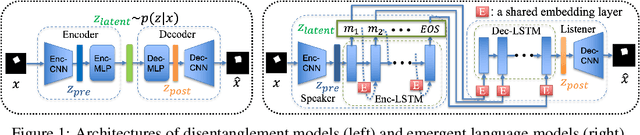
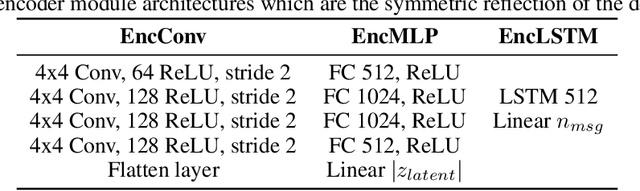
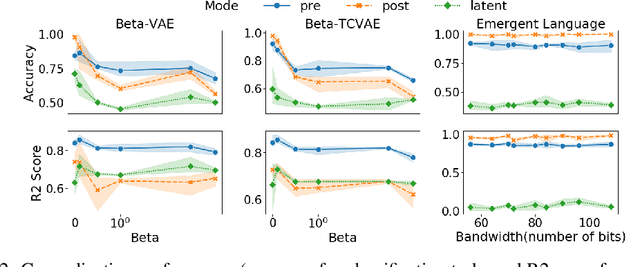
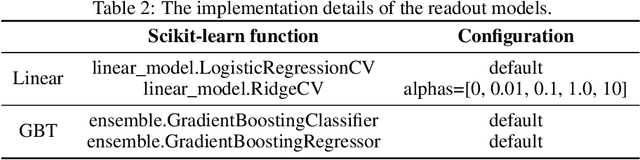
Deep learning models struggle with compositional generalization, i.e. the ability to recognize or generate novel combinations of observed elementary concepts. In hopes of enabling compositional generalization, various unsupervised learning algorithms have been proposed with inductive biases that aim to induce compositional structure in learned representations (e.g. disentangled representation and emergent language learning). In this work, we evaluate these unsupervised learning algorithms in terms of how well they enable compositional generalization. Specifically, our evaluation protocol focuses on whether or not it is easy to train a simple model on top of the learned representation that generalizes to new combinations of compositional factors. We systematically study three unsupervised representation learning algorithms - $\beta$-VAE, $\beta$-TCVAE, and emergent language (EL) autoencoders - on two datasets that allow directly testing compositional generalization. We find that directly using the bottleneck representation with simple models and few labels may lead to worse generalization than using representations from layers before or after the learned representation itself. In addition, we find that the previously proposed metrics for evaluating the levels of compositionality are not correlated with actual compositional generalization in our framework. Surprisingly, we find that increasing pressure to produce a disentangled representation produces representations with worse generalization, while representations from EL models show strong compositional generalization. Taken together, our results shed new light on the compositional generalization behavior of different unsupervised learning algorithms with a new setting to rigorously test this behavior, and suggest the potential benefits of delevoping EL learning algorithms for more generalizable representations.
A Combinatorial Perspective on the Optimization of Shallow ReLU Networks
Oct 01, 2022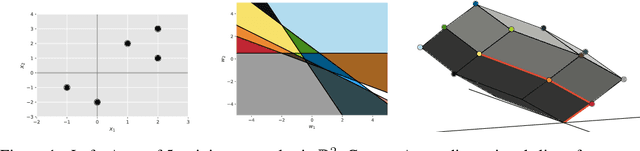

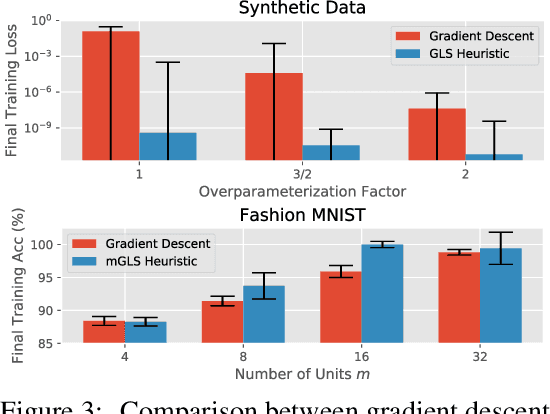
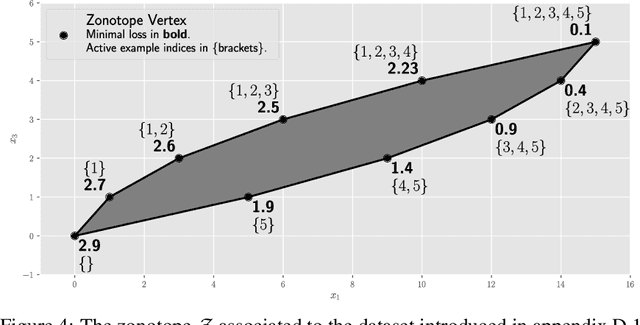
The NP-hard problem of optimizing a shallow ReLU network can be characterized as a combinatorial search over each training example's activation pattern followed by a constrained convex problem given a fixed set of activation patterns. We explore the implications of this combinatorial aspect of ReLU optimization in this work. We show that it can be naturally modeled via a geometric and combinatoric object known as a zonotope with its vertex set isomorphic to the set of feasible activation patterns. This assists in analysis and provides a foundation for further research. We demonstrate its usefulness when we explore the sensitivity of the optimal loss to perturbations of the training data. Later we discuss methods of zonotope vertex selection and its relevance to optimization. Overparameterization assists in training by making a randomly chosen vertex more likely to contain a good solution. We then introduce a novel polynomial-time vertex selection procedure that provably picks a vertex containing the global optimum using only double the minimum number of parameters required to fit the data. We further introduce a local greedy search heuristic over zonotope vertices and demonstrate that it outperforms gradient descent on underparameterized problems.
Bidirectional Language Models Are Also Few-shot Learners
Sep 29, 2022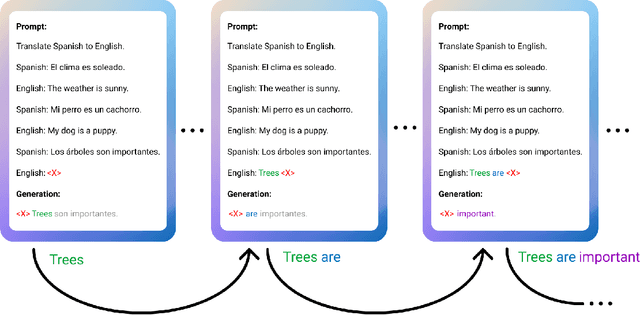
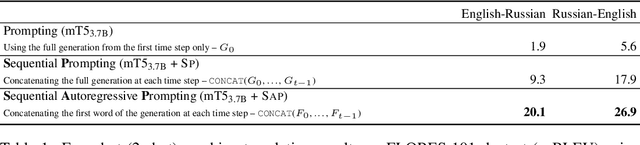
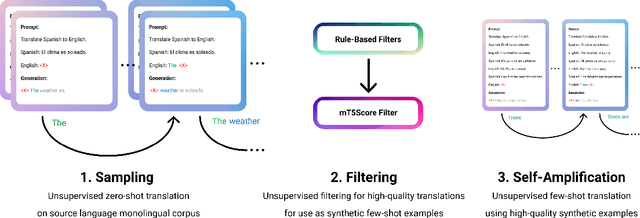
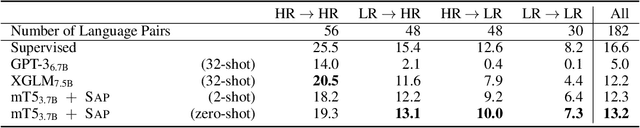
Large language models such as GPT-3 (Brown et al., 2020) can perform arbitrary tasks without undergoing fine-tuning after being prompted with only a few labeled examples. An arbitrary task can be reformulated as a natural language prompt, and a language model can be asked to generate the completion, indirectly performing the task in a paradigm known as prompt-based learning. To date, emergent prompt-based learning capabilities have mainly been demonstrated for unidirectional language models. However, bidirectional language models pre-trained on denoising objectives such as masked language modeling produce stronger learned representations for transfer learning. This motivates the possibility of prompting bidirectional models, but their pre-training objectives have made them largely incompatible with the existing prompting paradigm. We present SAP (Sequential Autoregressive Prompting), a technique that enables the prompting of bidirectional models. Utilizing the machine translation task as a case study, we prompt the bidirectional mT5 model (Xue et al., 2021) with SAP and demonstrate its few-shot and zero-shot translations outperform the few-shot translations of unidirectional models like GPT-3 and XGLM (Lin et al., 2021), despite mT5's approximately 50% fewer parameters. We further show SAP is effective on question answering and summarization. For the first time, our results demonstrate prompt-based learning is an emergent property of a broader class of language models, rather than only unidirectional models.
Petals: Collaborative Inference and Fine-tuning of Large Models
Sep 02, 2022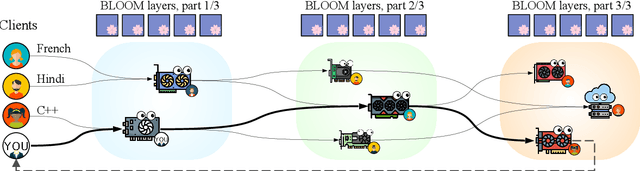
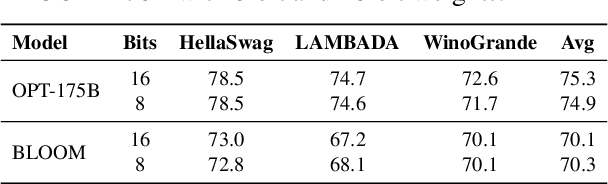
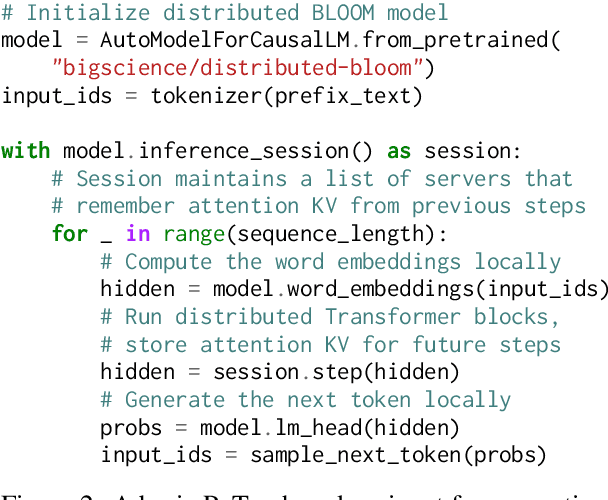
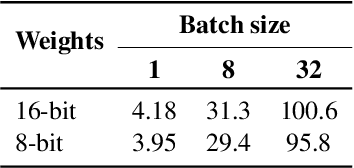
Many NLP tasks benefit from using large language models (LLMs) that often have more than 100 billion parameters. With the release of BLOOM-176B and OPT-175B, everyone can download pretrained models of this scale. Still, using these models requires high-end hardware unavailable to many researchers. In some cases, LLMs can be used more affordably via RAM offloading or hosted APIs. However, these techniques have innate limitations: offloading is too slow for interactive inference, while APIs are not flexible enough for research. In this work, we propose Petals $-$ a system for inference and fine-tuning of large models collaboratively by joining the resources of multiple parties trusted to process client's data. We demonstrate that this strategy significantly outperforms offloading for very large models, running inference of BLOOM-176B on consumer GPUs with $\approx$ 1 step per second. Unlike most inference APIs, Petals also natively exposes the hidden states of served models, allowing its users to train and share custom model extensions based on efficient fine-tuning methods.