 Add to Chrome
 Add to Firefox
 Add to Edge
RSONet: Region-guided Selective Optimization Network for RGB-T Salient Object Detection
Mar 13, 2026
This paper focuses on the inconsistency in salient regions between RGB and thermal images. To address this issue, we propose the Region-guided Selective Optimization Network for RGB-T Salient Object Detection, which consists of the region guidance stage and saliency generation stage. In the region guidance stage, three parallel branches with same encoder-decoder structure equipped with the context interaction (CI) module and spatial-aware fusion (SF) module are designed to generate the guidance maps which are leveraged to calculate similarity scores. Then, in the saliency generation stage, the selective optimization (SO) module fuses RGB and thermal features based on the previously obtained similarity values to mitigate the impact of inconsistent distribution of salient targets between the two modalities. After that, to generate high-quality detection result, the dense detail enhancement (DDE) module which adopts the multiple dense connections and visual state space blocks is applied to low-level features for optimizing the detail information. In addition, the mutual interaction semantic (MIS) module is placed in the high-level features to dig the location cues by the mutual fusion strategy. We conduct extensive experiments on the RGB-T dataset, and the results demonstrate that the proposed RSONet achieves competitive performance against 27 state-of-the-art SOD methods.

Bin~Wan,G2HFNet: GeoGran-Aware Hierarchical Feature Fusion Network for Salient Object Detection in Optical Remote Sensing Images
Mar 13, 2026Remote sensing images captured from aerial perspectives often exhibit significant scale variations and complex backgrounds, posing challenges for salient object detection (SOD). Existing methods typically extract multi-level features at a single scale using uniform attention mechanisms, leading to suboptimal representations and incomplete detection results. To address these issues, we propose a GeoGran-Aware Hierarchical Feature Fusion Network (G2HFNet) that fully exploits geometric and granular cues in optical remote sensing images. Specifically, G2HFNet adopts Swin Transformer as the backbone to extract multi-level features and integrates three key modules: the multi-scale detail enhancement (MDE) module to handle object scale variations and enrich fine details, the dual-branch geo-gran complementary (DGC) module to jointly capture fine-grained details and positional information in mid-level features, and the deep semantic perception (DSP) module to refine high-level positional cues via self-attention. Additionally, a local-global guidance fusion (LGF) module is introduced to replace traditional convolutions for effective multi-level feature integration. Extensive experiments demonstrate that G2HFNet achieves high-quality saliency maps and significantly improves detection performance in challenging remote sensing scenarios.
RDNet: Region Proportion-Aware Dynamic Adaptive Salient Object Detection Network in Optical Remote Sensing Images
Mar 12, 2026Salient object detection (SOD) in remote sensing images faces significant challenges due to large variations in object sizes, the computational cost of self-attention mechanisms, and the limitations of CNN-based extractors in capturing global context and long-range dependencies. Existing methods that rely on fixed convolution kernels often struggle to adapt to diverse object scales, leading to detail loss or irrelevant feature aggregation. To address these issues, this work aims to enhance robustness to scale variations and achieve precise object localization. We propose the Region Proportion-Aware Dynamic Adaptive Salient Object Detection Network (RDNet), which replaces the CNN backbone with the SwinTransformer for global context modeling and introduces three key modules: (1) the Dynamic Adaptive Detail-aware (DAD) module, which applies varied convolution kernels guided by object region proportions; (2) the Frequency-matching Context Enhancement (FCE) module, which enriches contextual information through wavelet interactions and attention; and (3) the Region Proportion-aware Localization (RPL) module, which employs cross-attention to highlight semantic details and integrates a Proportion Guidance (PG) block to assist the DAD module. By combining these modules, RDNet achieves robustness against scale variations and accurate localization, delivering superior detection performance compared with state-of-the-art methods.
Divide-and-Conquer Decoupled Network for Cross-Domain Few-Shot Segmentation
Nov 11, 2025Cross-domain few-shot segmentation (CD-FSS) aims to tackle the dual challenge of recognizing novel classes and adapting to unseen domains with limited annotations. However, encoder features often entangle domain-relevant and category-relevant information, limiting both generalization and rapid adaptation to new domains. To address this issue, we propose a Divide-and-Conquer Decoupled Network (DCDNet). In the training stage, to tackle feature entanglement that impedes cross-domain generalization and rapid adaptation, we propose the Adversarial-Contrastive Feature Decomposition (ACFD) module. It decouples backbone features into category-relevant private and domain-relevant shared representations via contrastive learning and adversarial learning. Then, to mitigate the potential degradation caused by the disentanglement, the Matrix-Guided Dynamic Fusion (MGDF) module adaptively integrates base, shared, and private features under spatial guidance, maintaining structural coherence. In addition, in the fine-tuning stage, to enhanced model generalization, the Cross-Adaptive Modulation (CAM) module is placed before the MGDF, where shared features guide private features via modulation ensuring effective integration of domain-relevant information. Extensive experiments on four challenging datasets show that DCDNet outperforms existing CD-FSS methods, setting a new state-of-the-art for cross-domain generalization and few-shot adaptation.
A Confounding Factors-Inhibition Adversarial Learning Framework for Multi-site fMRI Mental Disorder Identification
Apr 12, 2025In open data sets of functional magnetic resonance imaging (fMRI), the heterogeneity of the data is typically attributed to a combination of factors, including differences in scanning procedures, the presence of confounding effects, and population diversities between multiple sites. These factors contribute to the diminished effectiveness of representation learning, which in turn affects the overall efficacy of subsequent classification procedures. To address these limitations, we propose a novel multi-site adversarial learning network (MSalNET) for fMRI-based mental disorder detection. Firstly, a representation learning module is introduced with a node information assembly (NIA) mechanism to better extract features from functional connectivity (FC). This mechanism aggregates edge information from both horizontal and vertical directions, effectively assembling node information. Secondly, to generalize the feature across sites, we proposed a site-level feature extraction module that can learn from individual FC data, which circumvents additional prior information. Lastly, an adversarial learning network is proposed as a means of balancing the trade-off between individual classification and site regression tasks, with the introduction of a novel loss function. The proposed method was evaluated on two multi-site fMRI datasets, i.e., Autism Brain Imaging Data Exchange (ABIDE) and ADHD-200. The results indicate that the proposed method achieves a better performance than other related algorithms with the accuracy of 75.56 and 68.92 in ABIDE and ADHD-200 datasets, respectively. Furthermore, the result of the site regression indicates that the proposed method reduces site variability from a data-driven perspective. The most discriminative brain regions revealed by NIA are consistent with statistical findings, uncovering the "black box" of deep learning to a certain extent.
A Combination Model for Time Series Prediction using LSTM via Extracting Dynamic Features Based on Spatial Smoothing and Sequential General Variational Mode Decomposition
Jun 05, 2024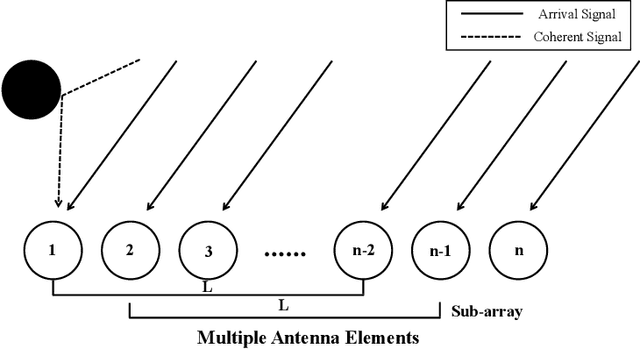


In order to solve the problems such as difficult to extract effective features and low accuracy of sales volume prediction caused by complex relationships such as market sales volume in time series prediction, we proposed a time series prediction method of market sales volume based on Sequential General VMD and spatial smoothing Long short-term memory neural network (SS-LSTM) combination model. Firstly, the spatial smoothing algorithm is used to decompose and calculate the sample data of related industry sectors affected by the linkage effect of market sectors, extracting modal features containing information via Sequential General VMD on overall market and specific price trends; Then, according to the background of different Market data sets, LSTM network is used to model and predict the price of fundamental data and modal characteristics. The experimental results of data prediction with seasonal and periodic trends show that this method can achieve higher price prediction accuracy and more accurate accuracy in specific market contexts compared to traditional prediction methods Describe the changes in market sales volume.