 Add to Chrome
 Add to Firefox
 Add to Edge
Beyond Correctness: Enhancing Architectural Reasoning in Code LLMs via Scalable Labeling with Agentic Judgment
Jun 12, 2026
LLMs have substantially improved software engineering yet real-world development requires architectural understanding. Such understanding is prohibitively expensive to label manually and impossible to verify through tests alone. We propose an agentic judging pipeline using a strong LLM as a scalable proxy for expert architectural evaluation, comprising two judges: the Architecture Complexity Judge (ACJ), which estimates codebase-specific architectural understanding a task demands, and the Architecture Quality Judge (AQJ), which evaluates patch conformance to repository-specific architectural conventions via source-grounded rubrics. Fine-tuning Qwen3-8B/14B/32B on 3,360 curated instances achieves resolved rates of up to 27.2% on SWE-bench Verified - up to 540% over the base model and 256% over unfiltered fine-tuning. Meanwhile, the trained models achieve strong cross-language generalization and consistent improvements in architectural patch quality.

Inside the Scaffold: A Source-Code Taxonomy of Coding Agent Architectures
Apr 03, 2026LLM-based coding agents can localize bugs, generate patches, and run tests with diminishing human oversight, yet the scaffolding code that surrounds the language model (the control loop, tool definitions, state management, and context strategy) remains poorly understood. Existing surveys classify agents by abstract capabilities (tool use, planning, reflection) that cannot distinguish between architecturally distinct systems, and trajectory studies observe what agents do without examining the scaffold code that determines why. This paper presents a source-code-level architectural taxonomy derived from analysis of 13 open-source coding agent scaffolds at pinned commit hashes. Each agent is characterized across 12 dimensions organized into three layers: control architecture, tool and environment interface, and resource management. The analysis reveals that scaffold architectures resist discrete classification: control strategies range from fixed pipelines to Monte Carlo Tree Search, tool counts range from 0 to 37, and context compaction spans seven distinct strategies. Five loop primitives (ReAct, generate-test-repair, plan-execute, multi-attempt retry, tree search) function as composable building blocks that agents layer in different combinations; 11 of 13 agents compose multiple primitives rather than relying on a single control structure. Dimensions converge where external constraints dominate (tool capability categories, edit formats, execution isolation) and diverge where open design questions remain (context compaction, state management, multi-model routing). All taxonomic claims are grounded in file paths and line numbers, providing a reusable reference for researchers studying agent behavior and practitioners designing new scaffolds.
The Hitchhikers Guide to Production-ready Trustworthy Foundation Model powered Software (FMware)
May 15, 2025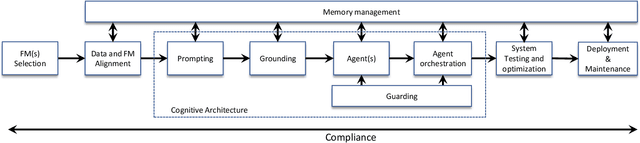
Foundation Models (FMs) such as Large Language Models (LLMs) are reshaping the software industry by enabling FMware, systems that integrate these FMs as core components. In this KDD 2025 tutorial, we present a comprehensive exploration of FMware that combines a curated catalogue of challenges with real-world production concerns. We first discuss the state of research and practice in building FMware. We further examine the difficulties in selecting suitable models, aligning high-quality domain-specific data, engineering robust prompts, and orchestrating autonomous agents. We then address the complex journey from impressive demos to production-ready systems by outlining issues in system testing, optimization, deployment, and integration with legacy software. Drawing on our industrial experience and recent research in the area, we provide actionable insights and a technology roadmap for overcoming these challenges. Attendees will gain practical strategies to enable the creation of trustworthy FMware in the evolving technology landscape.
Watson: A Cognitive Observability Framework for the Reasoning of Foundation Model-Powered Agents
Nov 05, 2024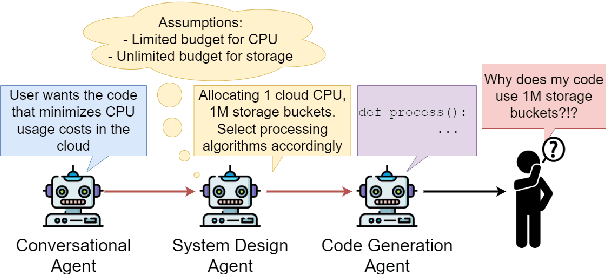

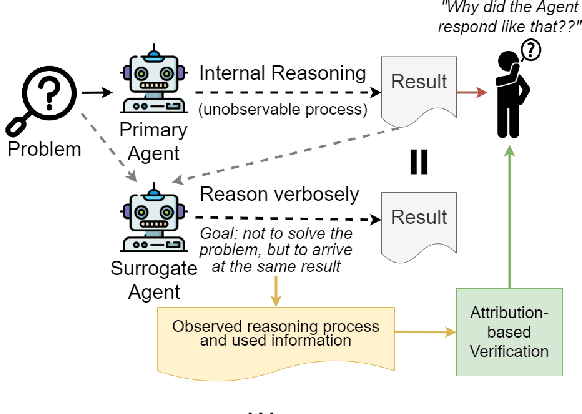
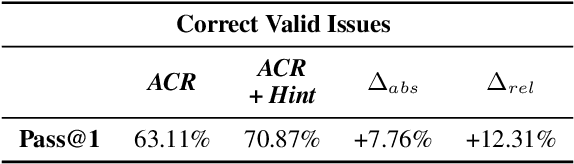
As foundation models (FMs) play an increasingly prominent role in complex software systems, such as FM-powered agentic software (i.e., Agentware), they introduce significant challenges for developers regarding observability. Unlike traditional software, agents operate autonomously, using extensive data and opaque implicit reasoning, making it difficult to observe and understand their behavior during runtime, especially when they take unexpected actions or encounter errors. In this paper, we highlight the limitations of traditional operational observability in the context of FM-powered software, and introduce cognitive observability as a new type of required observability that has emerged for such innovative systems. We then propose a novel framework that provides cognitive observability into the implicit reasoning processes of agents (a.k.a. reasoning observability), and demonstrate the effectiveness of our framework in boosting the debuggability of Agentware and, in turn, the abilities of an Agentware through a case study on AutoCodeRover, a cuttingedge Agentware for autonomous program improvement.