 Add to Chrome
 Add to Firefox
 Add to Edge
SeBERTis: A Framework for Producing Classifiers of Security-Related Issue Reports
Dec 17, 2025
Monitoring issue tracker submissions is a crucial software maintenance activity. A key goal is the prioritization of high risk, security-related bugs. If such bugs can be recognized early, the risk of propagation to dependent products and endangerment of stakeholder benefits can be mitigated. To assist triage engineers with this task, several automatic detection techniques, from Machine Learning (ML) models to prompting Large Language Models (LLMs), have been proposed. Although promising to some extent, prior techniques often memorize lexical cues as decision shortcuts, yielding low detection rate specifically for more complex submissions. As such, these classifiers do not yet reach the practical expectations of a real-time detector of security-related issues. To address these limitations, we propose SEBERTIS, a framework to train Deep Neural Networks (DNNs) as classifiers independent of lexical cues, so that they can confidently detect fully unseen security-related issues. SEBERTIS capitalizes on fine-tuning bidirectional transformer architectures as Masked Language Models (MLMs) on a series of semantically equivalent vocabulary to prediction labels (which we call Semantic Surrogates) when they have been replaced with a mask. Our SEBERTIS-trained classifier achieves a 0.9880 F1-score in detecting security-related issues of a curated corpus of 10,000 GitHub issue reports, substantially outperforming state-of-the-art issue classifiers, with 14.44%-96.98%, 15.40%-93.07%, and 14.90%-94.72% higher detection precision, recall, and F1-score over ML-based baselines. Our classifier also substantially surpasses LLM baselines, with an improvement of 23.20%-63.71%, 36.68%-85.63%, and 39.49%-74.53% for precision, recall, and F1-score.

Watson: A Cognitive Observability Framework for the Reasoning of Foundation Model-Powered Agents
Nov 05, 2024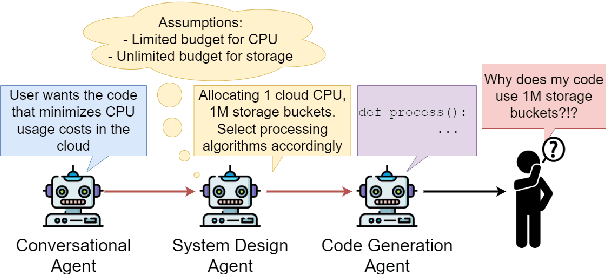

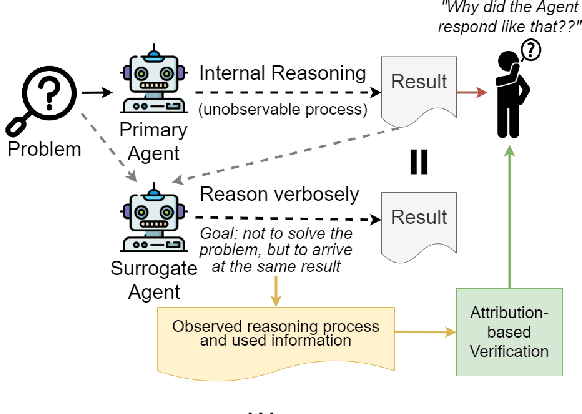
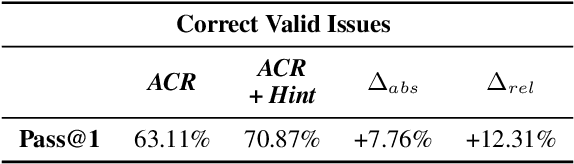
As foundation models (FMs) play an increasingly prominent role in complex software systems, such as FM-powered agentic software (i.e., Agentware), they introduce significant challenges for developers regarding observability. Unlike traditional software, agents operate autonomously, using extensive data and opaque implicit reasoning, making it difficult to observe and understand their behavior during runtime, especially when they take unexpected actions or encounter errors. In this paper, we highlight the limitations of traditional operational observability in the context of FM-powered software, and introduce cognitive observability as a new type of required observability that has emerged for such innovative systems. We then propose a novel framework that provides cognitive observability into the implicit reasoning processes of agents (a.k.a. reasoning observability), and demonstrate the effectiveness of our framework in boosting the debuggability of Agentware and, in turn, the abilities of an Agentware through a case study on AutoCodeRover, a cuttingedge Agentware for autonomous program improvement.