 Add to Chrome
 Add to Firefox
 Add to Edge
MINT-Bench: A Comprehensive Multilingual Benchmark for Instruction-Following Text-to-Speech
Apr 20, 2026
Instruction-following text-to-speech (TTS) has emerged as an important capability for controllable and expressive speech generation, yet its evaluation remains underdeveloped due to limited benchmark coverage, weak diagnostic granularity, and insufficient multilingual support. We present \textbf{MINT-Bench}, a comprehensive multilingual benchmark for instruction-following TTS. MINT-Bench is built upon a hierarchical multi-axis taxonomy, a scalable multi-stage data construction pipeline, and a hierarchical hybrid evaluation protocol that jointly assesses content consistency, instruction following, and perceptual quality. Experiments across ten languages show that current systems remain far from solved: frontier commercial systems lead overall, while leading open-source models become highly competitive and can even outperform commercial counterparts in localized settings such as Chinese. The benchmark further reveals that harder compositional and paralinguistic controls remain major bottlenecks for current systems. We release MINT-Bench together with the data construction and evaluation toolkit to support future research on controllable, multilingual, and diagnostically grounded TTS evaluation. The leaderboard and demo are available at https://longwaytog0.github.io/MINT-Bench/

VoiceSculptor: Your Voice, Designed By You
Jan 15, 2026Despite rapid progress in text-to-speech (TTS), open-source systems still lack truly instruction-following, fine-grained control over core speech attributes (e.g., pitch, speaking rate, age, emotion, and style). We present VoiceSculptor, an open-source unified system that bridges this gap by integrating instruction-based voice design and high-fidelity voice cloning in a single framework. It generates controllable speaker timbre directly from natural-language descriptions, supports iterative refinement via Retrieval-Augmented Generation (RAG), and provides attribute-level edits across multiple dimensions. The designed voice is then rendered into a prompt waveform and fed into a cloning model to enable high-fidelity timbre transfer for downstream speech synthesis. VoiceSculptor achieves open-source state-of-the-art (SOTA) on InstructTTSEval-Zh, and is fully open-sourced, including code and pretrained models, to advance reproducible instruction-controlled TTS research.
AISHELL-1: An Open-Source Mandarin Speech Corpus and A Speech Recognition Baseline
Sep 16, 2017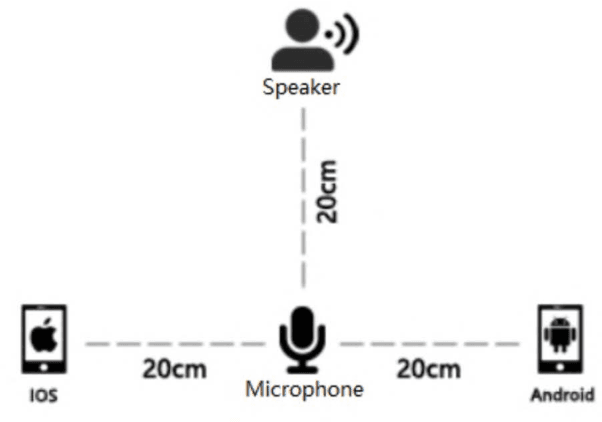
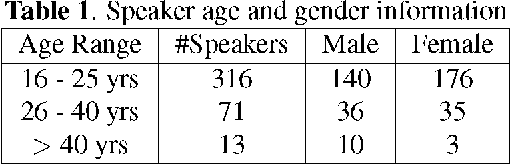
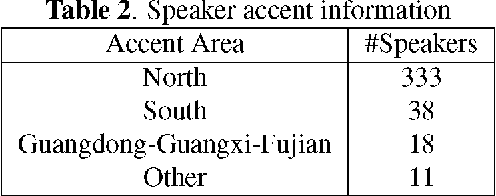
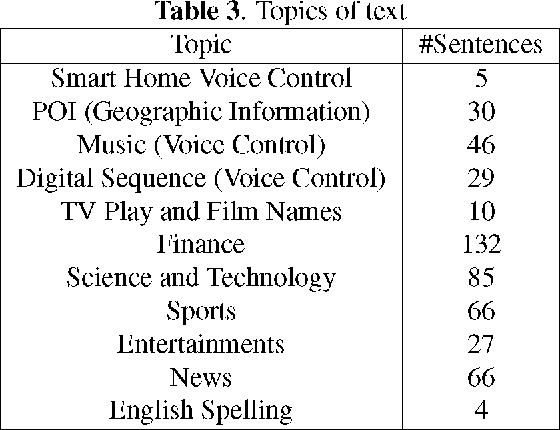
An open-source Mandarin speech corpus called AISHELL-1 is released. It is by far the largest corpus which is suitable for conducting the speech recognition research and building speech recognition systems for Mandarin. The recording procedure, including audio capturing devices and environments are presented in details. The preparation of the related resources, including transcriptions and lexicon are described. The corpus is released with a Kaldi recipe. Experimental results implies that the quality of audio recordings and transcriptions are promising.