 Add to Chrome
 Add to Firefox
 Add to Edge
PriCoRec: A Privacy-Aware Cloud-Device Collaborative Framework for Ad Recommendation under Feature Constraints
Aug 14, 2026
Privacy regulations increasingly restrict cloud processing of sensitive user data (e.g., age, gender), hindering traditional cloud-only recommendation models. To mitigate this challenge, we propose a Privacy-aware Collaborative cloud-device ads Recommendation framework (PriCoRec) which personalizes recommendations while keeping sensitive features on-device. While separating recommendation into cloud-based and on-device stages enables privacy-aware deployment, naive splitting suffers from degraded shortlist quality and inefficient on-device inference due to limited private features. We therefore design a collaborative framework that comprises a cloud-based pre-ranking stage using cloud-accessible features, and an on-device ranking stage that locally incorporates highly personalized features. We introduce a diversity regularizer to pre-ranking to improve candidate quality. Moreover, to control device power consumption and computational cost, we incorporate a cloud-guided training mechanism that enhances device model performance while keeping the model lightweight. Experiments demonstrate that the proposed framework maintains strong recommendation performance while keeping sensitive features on-device.

RAMP: Robust Ad Recommendation Under Limited Personalized-Feature Availability via Masking and Alignment Pathways
Jul 20, 2026Click-through rate (CTR) and conversion rate (CVR) prediction are fundamental tasks in online advertising, aiming to estimate the likelihood of user interactions based on various features. While personalized attributes such as age and gender can significantly enhance predictive accuracy, their use is increasingly restricted by privacy regulations, thereby limiting available data for both training and inference. To address this challenge, we propose RAMP (Robust Ad Recommendation Under Limited Personalized-Feature Availability via Masking and Alignment Pathways), which is designed to improve CTR/CVR prediction accuracy when personalized features are not accessible, thus supporting deployment in privacy-constrained settings.RAMP consists of (i) a personalized pathway built upon a dual-tower component with identical inputs but independent parameters, where output masking separates predictions for personalized and non-personalized signals, (ii) a separate non-personalized pathway trained with non-personalized features only, and (iii) a distillation-inspired prediction-alignment architecture between (i) and (ii) that improves prediction when personalized features are unavailable. We conduct comprehensive experiments using both public benchmarks and industrial datasets to evaluate the performance of RAMP. Our evaluation spans multiple backbone models and different settings: with and without access to personalized features. The results show that RAMP consistently outperforms state-of-the-art methods when personalized features are missing, while maintaining competitive performance when all features are available. %demonstrating its effectiveness and practicality for real-world advertising systems. Our code is publicly available at https://github.com/Ruixinhua/RAMP.
From Raw IDs to Semantic Planning: How Recommender Systems Utilize Information at Scale
Jul 13, 2026The evolution of recommender systems can be explored by asking how they utilize information at scale. Throughout most of the historical period under consideration during the past two decades, industrial systems have relied on raw IDs, which are discrete, globally unique, and semantically opaque identifiers that enable exact lookup, logging, and item-specific memorization at scale. Over time, however, recommender systems have sought to utilize richer sources of information, including item content, context, multimodal signals, and cross-domain structure. This development has led to a new stage in which part of such information is no longer used solely as auxiliary features around item identity, but is increasingly encapsulated in semantic IDs that provide a more structured, model-facing form of identity. We argue that this shift goes beyond the rise of generative recommendation over traditional methods. Indeed, it reflects a broader evolution in how recommender systems utilize information under industrial-scale constraints. This paper looks at the past, present, and future to examine three connected questions: why raw IDs dominated the early development of recommender systems, why semantic information is increasingly being encapsulated in IDs today, and what may come next once recommendations move beyond semantic retrieval. In particular, we introduce semantic planning as a possible future direction in which the system first predicts the semantic target of the next exposure, and only then instantiates that target as a specific item or generated creative. We further argue that such a shift may require changes not only in model design but also in evaluation and in the way recommender systems coordinate the objectives of users, platforms, and providers.
Contrastive Learning of Asset Embeddings from Financial Time Series
Jul 26, 2024Representation learning has emerged as a powerful paradigm for extracting valuable latent features from complex, high-dimensional data. In financial domains, learning informative representations for assets can be used for tasks like sector classification, and risk management. However, the complex and stochastic nature of financial markets poses unique challenges. We propose a novel contrastive learning framework to generate asset embeddings from financial time series data. Our approach leverages the similarity of asset returns over many subwindows to generate informative positive and negative samples, using a statistical sampling strategy based on hypothesis testing to address the noisy nature of financial data. We explore various contrastive loss functions that capture the relationships between assets in different ways to learn a discriminative representation space. Experiments on real-world datasets demonstrate the effectiveness of the learned asset embeddings on benchmark industry classification and portfolio optimization tasks. In each case our novel approaches significantly outperform existing baselines highlighting the potential for contrastive learning to capture meaningful and actionable relationships in financial data.
The Role of Document Embedding in Research Paper Recommender Systems: To Breakdown or to Bolster Disciplinary Borders?
Sep 26, 2023
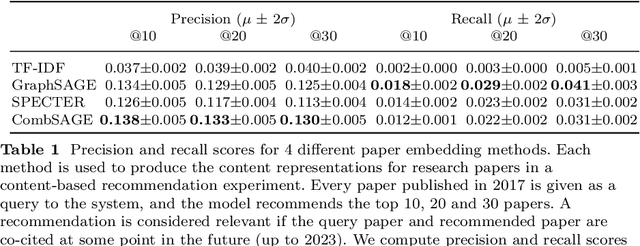
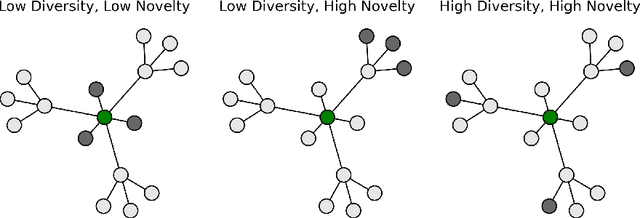
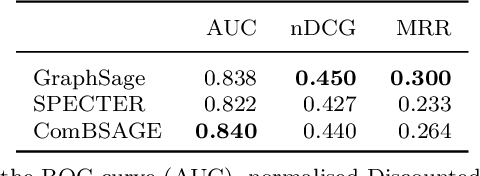
In the extensive recommender systems literature, novelty and diversity have been identified as key properties of useful recommendations. However, these properties have received limited attention in the specific sub-field of research paper recommender systems. In this work, we argue for the importance of offering novel and diverse research paper recommendations to scientists. This approach aims to reduce siloed reading, break down filter bubbles, and promote interdisciplinary research. We propose a novel framework for evaluating the novelty and diversity of research paper recommendations that leverages methods from network analysis and natural language processing. Using this framework, we show that the choice of representational method within a larger research paper recommendation system can have a measurable impact on the nature of downstream recommendations, specifically on their novelty and diversity. We introduce a novel paper embedding method, which we demonstrate offers more innovative and diverse recommendations without sacrificing precision, compared to other state-of-the-art baselines.
Industry Classification Using a Novel Financial Time-Series Case Representation
Apr 29, 2023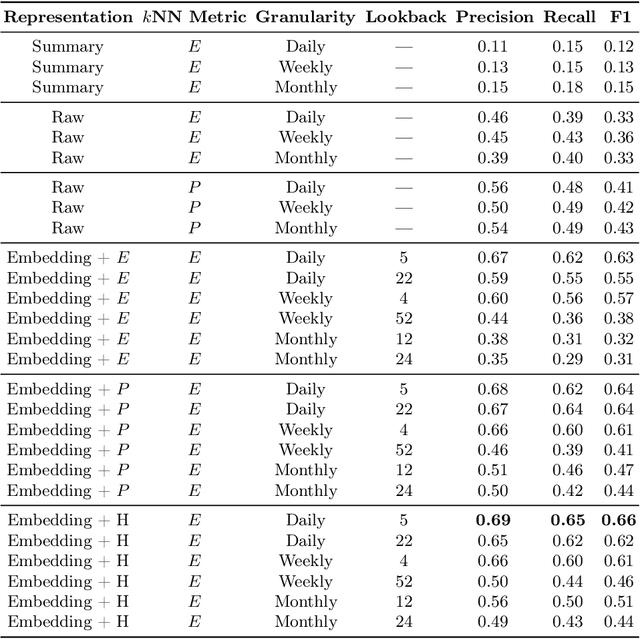
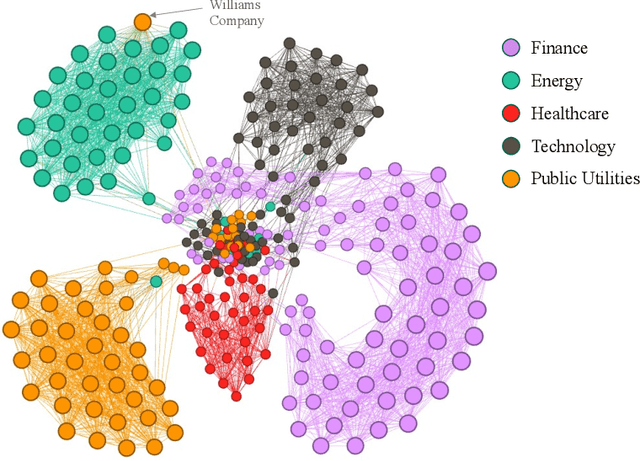
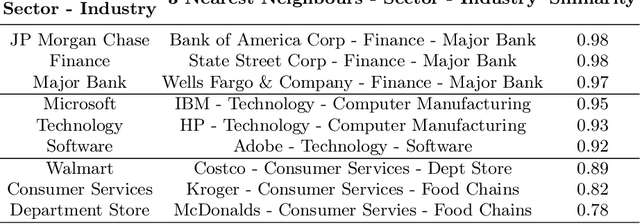
The financial domain has proven to be a fertile source of challenging machine learning problems across a variety of tasks including prediction, clustering, and classification. Researchers can access an abundance of time-series data and even modest performance improvements can be translated into significant additional value. In this work, we consider the use of case-based reasoning for an important task in this domain, by using historical stock returns time-series data for industry sector classification. We discuss why time-series data can present some significant representational challenges for conventional case-based reasoning approaches, and in response, we propose a novel representation based on stock returns embeddings, which can be readily calculated from raw stock returns data. We argue that this representation is well suited to case-based reasoning and evaluate our approach using a large-scale public dataset for the industry sector classification task, demonstrating substantial performance improvements over several baselines using more conventional representations.
Item Graph Convolution Collaborative Filtering for Inductive Recommendations
Mar 28, 2023Graph Convolutional Networks (GCN) have been recently employed as core component in the construction of recommender system algorithms, interpreting user-item interactions as the edges of a bipartite graph. However, in the absence of side information, the majority of existing models adopt an approach of randomly initialising the user embeddings and optimising them throughout the training process. This strategy makes these algorithms inherently transductive, curtailing their ability to generate predictions for users that were unseen at training time. To address this issue, we propose a convolution-based algorithm, which is inductive from the user perspective, while at the same time, depending only on implicit user-item interaction data. We propose the construction of an item-item graph through a weighted projection of the bipartite interaction network and to employ convolution to inject higher order associations into item embeddings, while constructing user representations as weighted sums of the items with which they have interacted. Despite not training individual embeddings for each user our approach achieves state of-the-art recommendation performance with respect to transductive baselines on four real-world datasets, showing at the same time robust inductive performance.
Stock Embeddings: Learning Distributed Representations for Financial Assets
Feb 14, 2022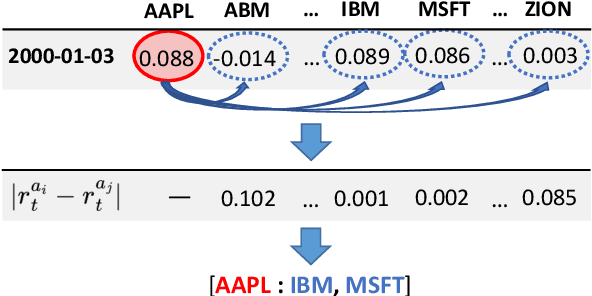
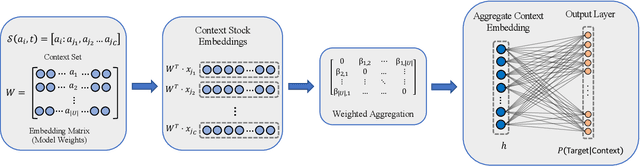
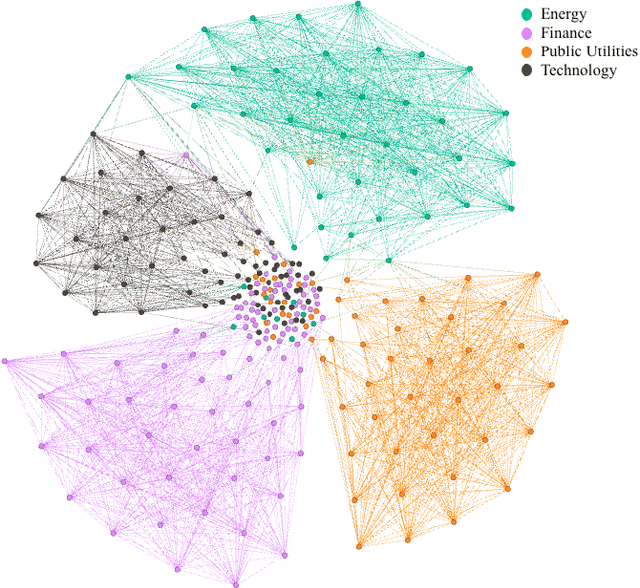
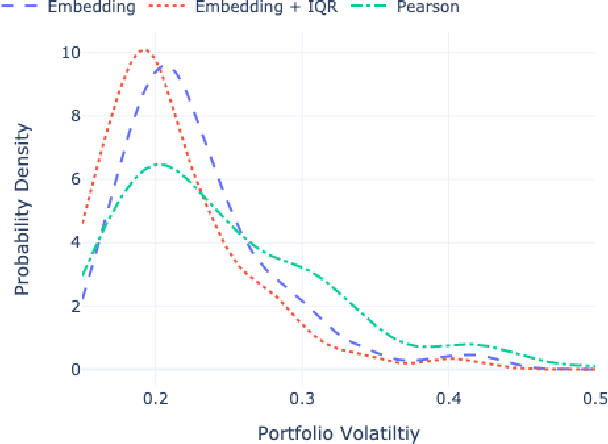
Identifying meaningful relationships between the price movements of financial assets is a challenging but important problem in a variety of financial applications. However with recent research, particularly those using machine learning and deep learning techniques, focused mostly on price forecasting, the literature investigating the modelling of asset correlations has lagged somewhat. To address this, inspired by recent successes in natural language processing, we propose a neural model for training stock embeddings, which harnesses the dynamics of historical returns data in order to learn the nuanced relationships that exist between financial assets. We describe our approach in detail and discuss a number of ways that it can be used in the financial domain. Furthermore, we present the evaluation results to demonstrate the utility of this approach, compared to several important benchmarks, in two real-world financial analytics tasks.
NumHTML: Numeric-Oriented Hierarchical Transformer Model for Multi-task Financial Forecasting
Jan 05, 2022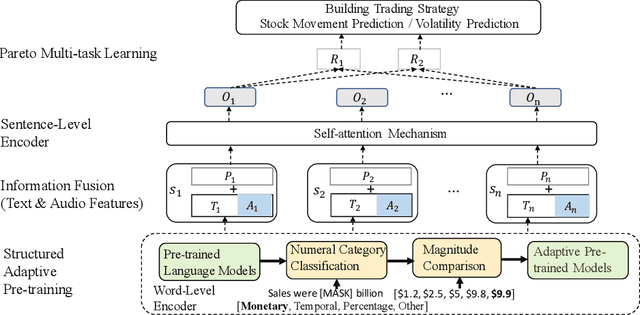
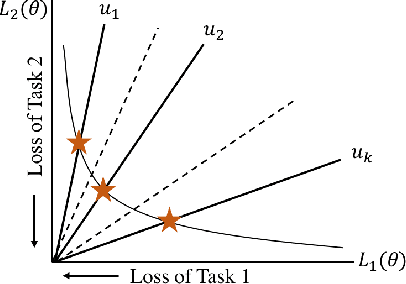

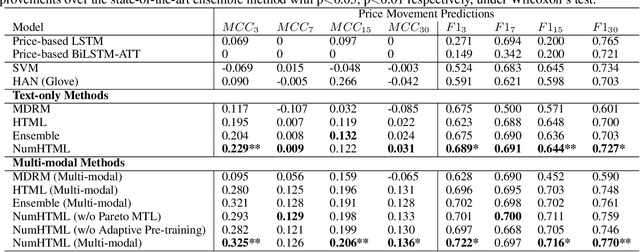
Financial forecasting has been an important and active area of machine learning research because of the challenges it presents and the potential rewards that even minor improvements in prediction accuracy or forecasting may entail. Traditionally, financial forecasting has heavily relied on quantitative indicators and metrics derived from structured financial statements. Earnings conference call data, including text and audio, is an important source of unstructured data that has been used for various prediction tasks using deep earning and related approaches. However, current deep learning-based methods are limited in the way that they deal with numeric data; numbers are typically treated as plain-text tokens without taking advantage of their underlying numeric structure. This paper describes a numeric-oriented hierarchical transformer model to predict stock returns, and financial risk using multi-modal aligned earnings calls data by taking advantage of the different categories of numbers (monetary, temporal, percentages etc.) and their magnitude. We present the results of a comprehensive evaluation of NumHTML against several state-of-the-art baselines using a real-world publicly available dataset. The results indicate that NumHTML significantly outperforms the current state-of-the-art across a variety of evaluation metrics and that it has the potential to offer significant financial gains in a practical trading context.
Investigating Health-Aware Smart-Nudging with Machine Learning to Help People Pursue Healthier Eating-Habits
Oct 05, 2021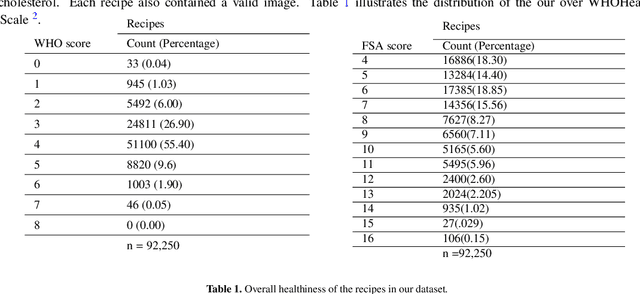
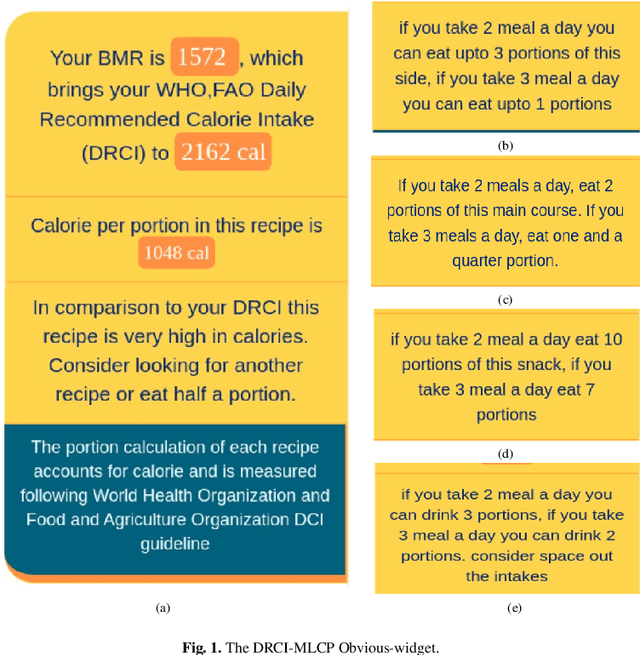
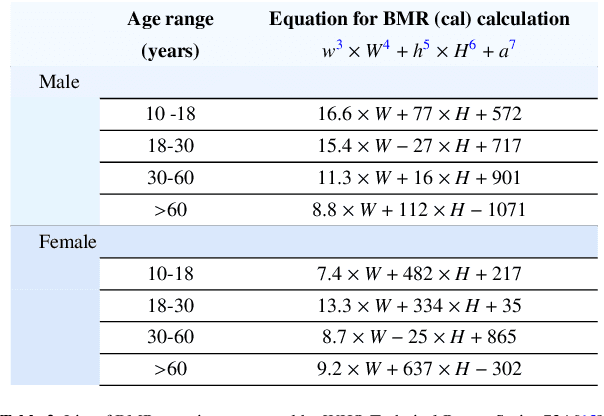
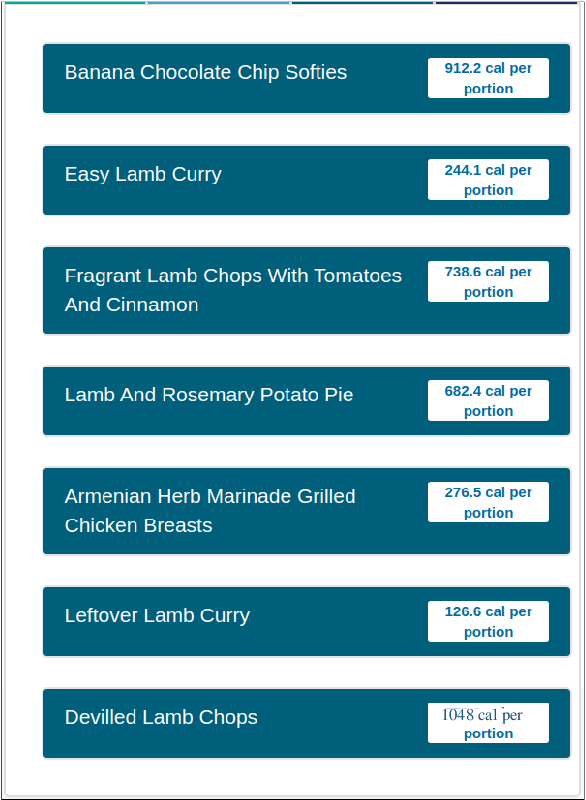
Food-choices and eating-habits directly contribute to our long-term health. This makes the food recommender system a potential tool to address the global crisis of obesity and malnutrition. Over the past decade, artificial-intelligence and medical researchers became more invested in researching tools that can guide and help people make healthy and thoughtful decisions around food and diet. In many typical (Recommender System) RS domains, smart nudges have been proven effective in shaping users' consumption patterns. In recent years, knowledgeable nudging and incentifying choices started getting attention in the food domain as well. To develop smart nudging for promoting healthier food choices, we combined Machine Learning and RS technology with food-healthiness guidelines from recognized health organizations, such as the World Health Organization, Food Standards Agency, and the National Health Service United Kingdom. In this paper, we discuss our research on, persuasive visualization for making users aware of the healthiness of the recommended recipes. Here, we propose three novel nudging technology, the WHO-BubbleSlider, the FSA-ColorCoading, and the DRCI-MLCP, that encourage users to choose healthier recipes. We also propose a Topic Modeling based portion-size recommendation algorithm. To evaluate our proposed smart-nudges, we conducted an online user study with 96 participants and 92250 recipes. Results showed that, during the food decision-making process, appropriate healthiness cues make users more likely to click, browse, and choose healthier recipes over less healthy ones.