 Add to Chrome
 Add to Firefox
 Add to Edge
From Pixels to Concepts: Growing Rich 3D Semantic Scene Graph Forests utilizing Foundation Models
Jun 22, 2026
Operating in complex real-world environments requires robots to understand their surroundings on a functional semantic level. This demands a detailed multi-layer world model capturing the complex relations of its surroundings. Hierarchical 3D scene graphs address this challenge by integrating geometric, semantic, and relational data within a unified spatial framework. However, current 3D scene graph approaches often restrict themselves to rigid structures of pre-determined relationship classes, mostly neglecting important semantic connections, like causal connections or environmental contexts. This paper explores the potential of foundation models to build forests of 3D scene graphs with open semantic relationships to improve scene understanding and robotic task execution. We propose a method where instance-specific concept-nodes and relationships are first identified by a VLM and extended upon by a LLM, inferring broader, more abstract concept-nodes and relationships through reasoning. These object-nodes, concept-nodes, and relationships are then assembled into a forest of hierarchical 3D scene graphs, enhanced with concept-nodes to represent abstract concepts. Evaluations were conducted on the uHumans2 and ScanNet indoor dataset, validating the accuracy and relevance of the generated relationships. Downstream suitability of scene-graph forests for robotics applications is demonstrated in an open-vocabulary object-retrieval task utilizing both ScanNet data and a real-world indoor deployment using a Boston Dynamics Spot. This paper leverages foundation models to create more expressive, semantically deep 3D hierarchical scene graphs and demonstrates their potential to advance semantic and environmental understanding in robotics.

Sensor Configuration Matters: A Systematic Evaluation of Multimodal SLAM on Quadruped Robots
Jun 17, 2026Autonomous navigation of quadrupedal robots in diverse environments fundamentally relies on resilient Simultaneous Localization and Mapping (SLAM). While visual-inertial SLAM has matured across wheeled, handheld, and aerial platforms, a critical evaluation gap remains regarding how hardware-level sensor configurations affect performance under the aggressive dynamics of legged locomotion. Quadrupeds introduce distinct embodiment-induced sensory challenges, including foot-impact shocks, high-frequency mechanical vibrations, and rapid angular rotations, which degrade standard perception pipelines. To address this gap, we present a systematic evaluation of state-of-the-art visual, visual-inertial, and LiDAR-visual-inertial SLAM methods using the GrandTour dataset recorded on an ANYmal D quadruped. We isolate and quantify the impacts of camera modalities, shutter techniques, and inertial sensor tiers, analyzing their trade-offs across localization accuracy, algorithmic robustness, and computational resource utilization. Our empirical findings demonstrate that hardware selection has substantial influence on system resilience: stereo configurations consistently outperform monocular and RGB-D modalities, global shutter cameras significantly mitigate motion-induced tracking failures compared to rolling shutter cameras, and, crucially, standard inertial integration can degrade the performance of primarily vision-based frameworks under harsh legged locomotion. These insights additionally offer concrete design guidelines for tailoring custom sensor payloads to achieve dependable perception on agile legged systems.
MOSAIC: Modular Scalable Autonomy for Intelligent Coordination of Heterogeneous Robotic Teams
Jan 30, 2026Mobile robots have become indispensable for exploring hostile environments, such as in space or disaster relief scenarios, but often remain limited to teleoperation by a human operator. This restricts the deployment scale and requires near-continuous low-latency communication between the operator and the robot. We present MOSAIC: a scalable autonomy framework for multi-robot scientific exploration using a unified mission abstraction based on Points of Interest (POIs) and multiple layers of autonomy, enabling supervision by a single operator. The framework dynamically allocates exploration and measurement tasks based on each robot's capabilities, leveraging team-level redundancy and specialization to enable continuous operation. We validated the framework in a space-analog field experiment emulating a lunar prospecting scenario, involving a heterogeneous team of five robots and a single operator. Despite the complete failure of one robot during the mission, the team completed 82.3% of assigned tasks at an Autonomy Ratio of 86%, while the operator workload remained at only 78.2%. These results demonstrate that the proposed framework enables robust, scalable multi-robot scientific exploration with limited operator intervention. We further derive practical lessons learned in robot interoperability, networking architecture, team composition, and operator workload management to inform future multi-robot exploration missions.
A Practical Framework of Key Performance Indicators for Multi-Robot Lunar and Planetary Field Tests
Jan 28, 2026Robotic prospecting for critical resources on the Moon, such as ilmenite, rare earth elements, and water ice, requires robust exploration methods given the diverse terrain and harsh environmental conditions. Although numerous analog field trials address these goals, comparing their results remains challenging because of differences in robot platforms and experimental setups. These missions typically assess performance using selected, scenario-specific engineering metrics that fail to establish a clear link between field performance and science-driven objectives. In this paper, we address this gap by deriving a structured framework of KPI from three realistic multi-robot lunar scenarios reflecting scientific objectives and operational constraints. Our framework emphasizes scenario-dependent priorities in efficiency, robustness, and precision, and is explicitly designed for practical applicability in field deployments. We validated the framework in a multi-robot field test and found it practical and easy to apply for efficiency- and robustness-related KPI, whereas precision-oriented KPI require reliable ground-truth data that is not always feasible to obtain in outdoor analog environments. Overall, we propose this framework as a common evaluation standard enabling consistent, goal-oriented comparison of multi-robot field trials and supporting systematic development of robotic systems for future planetary exploration.
LAURON VI: A Six-Legged Robot for Dynamic Walking
Aug 11, 2025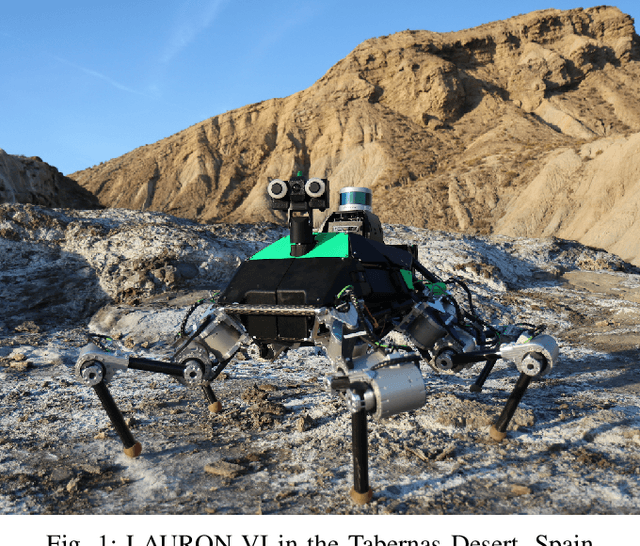
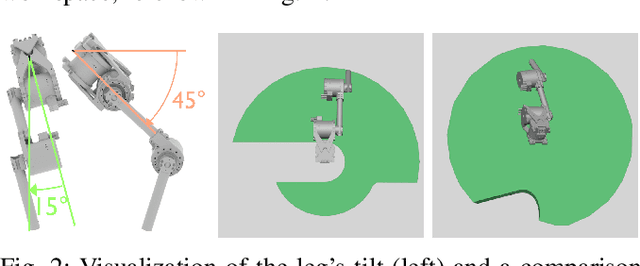
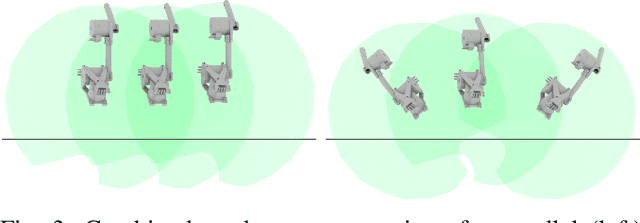
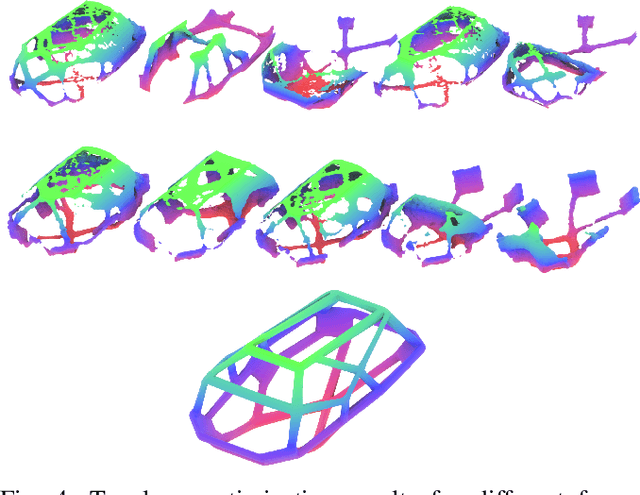
Legged locomotion enables robotic systems to traverse extremely challenging terrains. In many real-world scenarios, the terrain is not that difficult and these mixed terrain types introduce the need for flexible use of different walking strategies to achieve mission goals in a fast, reliable, and energy-efficient way. Six-legged robots have a high degree of flexibility and inherent stability that aids them in traversing even some of the most difficult terrains, such as collapsed buildings. However, their lack of fast walking gaits for easier surfaces is one reason why they are not commonly applied in these scenarios. This work presents LAURON VI, a six-legged robot platform for research on dynamic walking gaits as well as on autonomy for complex field missions. The robot's 18 series elastic joint actuators offer high-frequency interfaces for Cartesian impedance and pure torque control. We have designed, implemented, and compared three control approaches: kinematic-based, model-predictive, and reinforcement-learned controllers. The robot hardware and the different control approaches were extensively tested in a lab environment as well as on a Mars analog mission. The introduction of fast locomotion strategies for LAURON VI makes six-legged robots vastly more suitable for a wide range of real-world applications.
Cleaning Robots in Public Spaces: A Survey and Proposal for Benchmarking Based on Stakeholders Interviews
Jul 23, 2024Autonomous cleaning robots for public spaces have potential for addressing current societal challenges, such as labor shortages and cleanliness in public spaces. Other application domains like autonomous driving, bin picking, or search and rescue have shown that benchmarking platforms and approaches in competitive settings can advance their respective research fields, resulting in more applicable systems under real-world conditions. For this paper, we analyzed seven semi-structured, qualitative stakeholder interviews about outdoor cleaning, identified current needs as well as limitations, and considered those results for the development of a benchmarking scenario based on the previous observations.
Behavior Tree Capabilities for Dynamic Multi-Robot Task Allocation with Heterogeneous Robot Teams
Feb 05, 2024
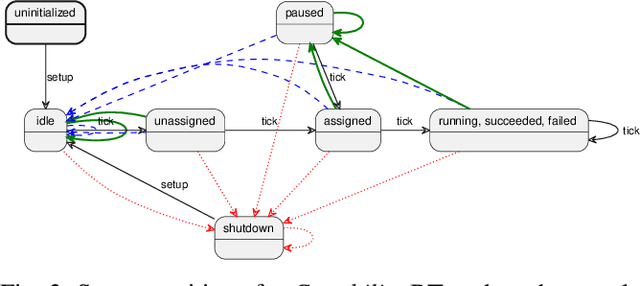


While individual robots are becoming increasingly capable, with new sensors and actuators, the complexity of expected missions increased exponentially in comparison. To cope with this complexity, heterogeneous teams of robots have become a significant research interest in recent years. Making effective use of the robots and their unique skills in a team is challenging. Dynamic runtime conditions often make static task allocations infeasible, therefore requiring a dynamic, capability-aware allocation of tasks to team members. To this end, we propose and implement a system that allows a user to specify missions using Bheavior Trees (BTs), which can then, at runtime, be dynamically allocated to the current robot team. The system allows to statically model an individual robot's capabilities within our ros_bt_py BT framework. It offers a runtime auction system to dynamically allocate tasks to the most capable robot in the current team. The system leverages utility values and pre-conditions to ensure that the allocation improves the overall mission execution quality while preventing faulty assignments. To evaluate the system, we simulated a find-and-decontaminate mission with a team of three heterogeneous robots and analyzed the utilization and overall mission times as metrics. Our results show that our system can improve the overall effectiveness of a team while allowing for intuitive mission specification and flexibility in the team composition.
Efficient Gesture Recognition on Spiking Convolutional Networks Through Sensor Fusion of Event-Based and Depth Data
Jan 30, 2024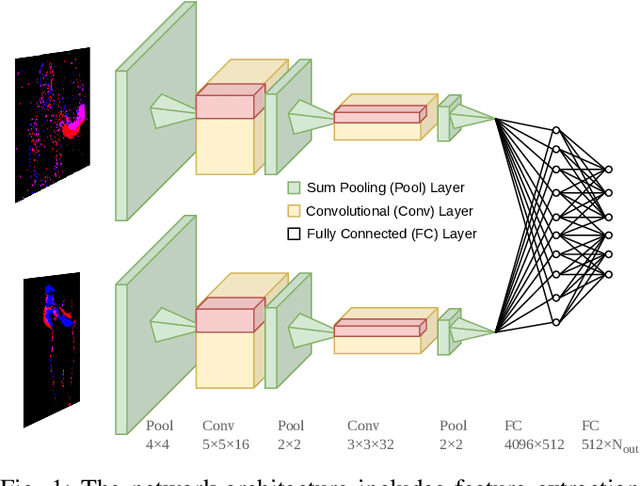

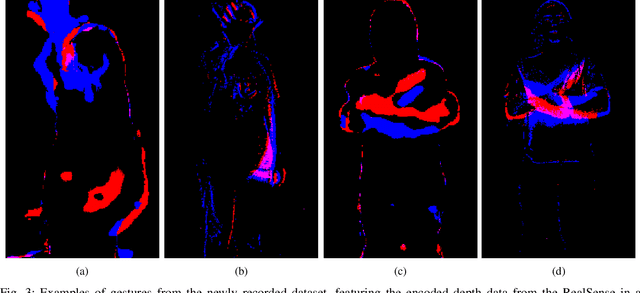
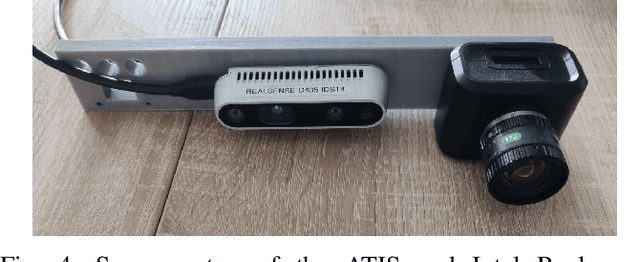
As intelligent systems become increasingly important in our daily lives, new ways of interaction are needed. Classical user interfaces pose issues for the physically impaired and are partially not practical or convenient. Gesture recognition is an alternative, but often not reactive enough when conventional cameras are used. This work proposes a Spiking Convolutional Neural Network, processing event- and depth data for gesture recognition. The network is simulated using the open-source neuromorphic computing framework LAVA for offline training and evaluation on an embedded system. For the evaluation three open source data sets are used. Since these do not represent the applied bi-modality, a new data set with synchronized event- and depth data was recorded. The results show the viability of temporal encoding on depth information and modality fusion, even on differently encoded data, to be beneficial to network performance and generalization capabilities.
HoLLiE C -- A Multifunctional Bimanual Mobile Robot Supporting Versatile Care Applications
Dec 11, 2023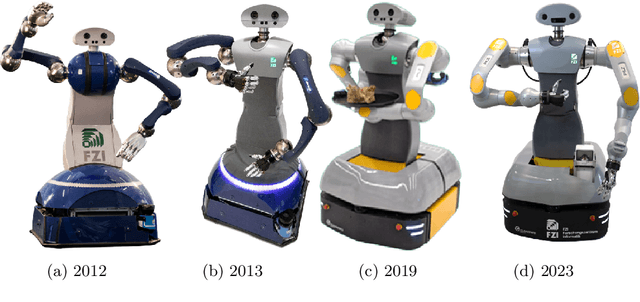
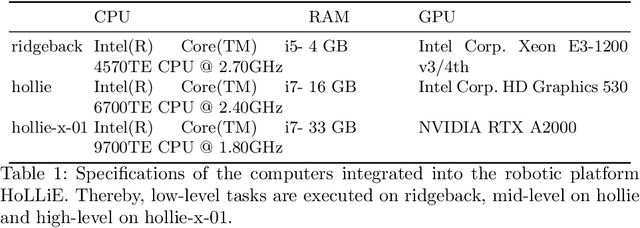
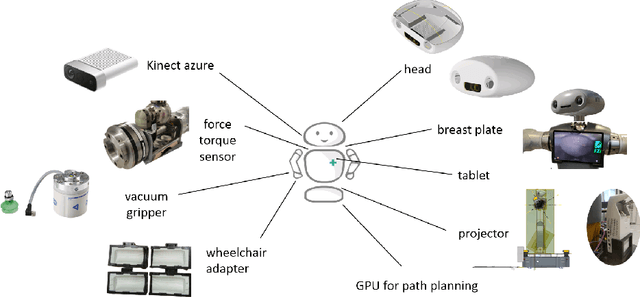
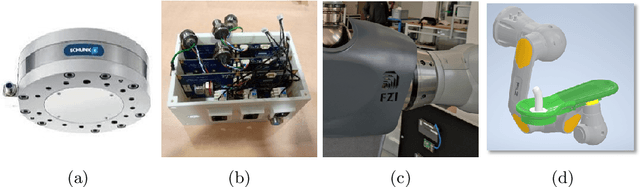
Care robotics as a research field has developed a lot in recent years, driven by the rapidly increasing need for it. However, these technologies are mostly limited to a very concrete and usually relatively simple use case. The bimanual robot House of Living Labs intelligent Escort (HoLLiE) includes an omnidirectional mobile platform. This paper presents how HoLLiE is adapted, by flexible software and hardware modules, for different care applications. The design goal of HoLLiE was to be human-like but abstract enough to ensure a high level of acceptance, which is very advantageous for its use in hospitals. After a short retrospect of previous generations of HoLLiE, it is highlighted how the current version is equipped with a variety of additional sensors and actuators to allow a wide range of possible applications. Then, the software stack of HoLLiE is depicted, with the focus on navigation and force sensitive intention recognition.
Distributed Behavior Trees for Heterogeneous Robot Teams
Sep 15, 2023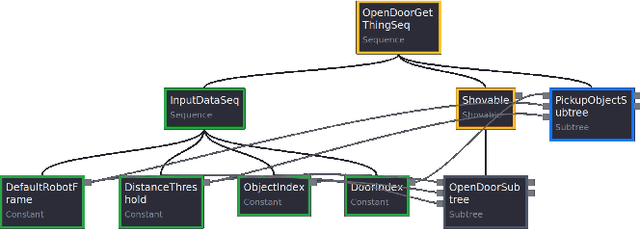
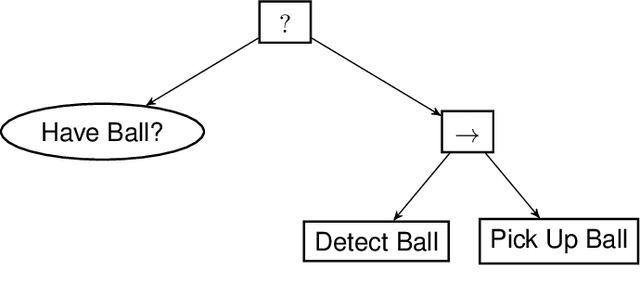
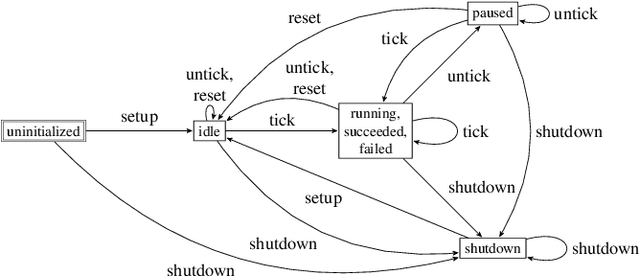
Heterogeneous Robot Teams can provide a wide range of capabilities and therefore significant benefits when handling a mission. However, they also require new approaches to capability and mission definition that are not only suitable to handle heterogeneous capabilities but furthermore allow a combination or distribution of them with a coherent representation that is not limiting the individual robot. Behavior Trees offer many of the required properties, are growing in popularity for robot control and have been proposed for multirobot coordination, but always as separate behavior tree, defined in advance and without consideration for a changing team. In this paper, we propose a new behavior tree approach that is capable to handle complex real world robotic missions and is geared towards a distributed execution by providing built in functionalities for cost calculation, subtree distribution and data wiring. We present a formal definition, its open source implementation as ros_bt_py library and experimental verification of its capabilities.