 Add to Chrome
 Add to Firefox
 Add to Edge
Generative Testing of Automated Speech Recognition Systems
Jul 10, 2026
Automatic speech recognition (ASR) systems have achieved high accuracy with transformer-based models, enabling deployment in critical applications. However, they remain vulnerable to adversarial manipulation, particularly in black-box settings where attacks must preserve perceptual naturalness. This work introduces GATAS, a black-box testing approach that generates failure inducing inputs by operating in the phoneme-level latent space of a text- to-speech model. Instead of perturbing waveforms directly, the approach interpolates latent representations to induce transcription errors while remaining within the manifold of natural speech. The attack is formulated as a multi-objective optimization problem balancing semantic divergence and perceptual quality. Our empirical evaluation against both white-box and black-box baselines shows that GATAS achieves a 98% success rate while producing lower distortion and higher perceptual quality, as confirmed by human studies. Despite operating without gradient access, GATAS remains competitive against white-box methods, highlighting that representation and perceptual alignment are more critical than access to model internals. Overall, our results demonstrate that untargeted latent-space optimization enables the efficient generation of realistic and effective test cases for ASR systems.

Real-World Perturbation Testing of Autonomous Driving Systems
Jul 06, 2026Autonomous Driving Systems (ADS) must operate reliably under diverse conditions, yet representative data for rare or adverse scenarios is difficult to obtain. Perturbation-based testing is widely used to assess robustness, but most studies focus on offline datasets or simulation, leaving open questions about how such results translate to real-world driving. We present a large-scale study of 72 camera and LiDAR perturbations, evaluated across three testing modalities: offline model-level analysis, hardware-in-the-loop execution, and closed-loop system-level testing on a full-scale autonomous vehicle. The study covers both an end-to-end vision-based driving model and a modular LiDAR-based perception and planning stack. Our results reveal a clear gap between testing levels. For camera-based systems, perturbations with limited offline impact can still induce unstable control and failures in real-world driving. For LiDAR-based systems, degradation is more consistent at the perception level but weakly predictive of system-level failures. Across both modalities, model-level metrics alone are insufficient to identify the most harmful perturbations. We further show that real-time feasibility is a key constraint in real-world testing, and that robustness observations obtained from recorded data do not consistently transfer to closed-loop behavior on a physical vehicle, highlighting the importance of complementary real-world, system-level evaluation.
Search-based Testing of Vision Language Models for In-Car Scene Understanding
Jul 02, 2026In the automotive domain, in-car scene understanding (ISU) enables the detection of safety-critical events, such as driver distraction, and supports drivers or passengers by analyzing the in-car scene and adapting the environment (e.g., ambient lighting). The industry is increasingly exploring vision-language models (VLMs) to interpret camera-recorded in-car scenes and extract information for downstream reasoning tasks. However, VLMs may generate incomplete, erroneous, or misleading scene descriptions, highlighting the need for systematic testing. Collecting real in-vehicle data is costly, difficult to scale, and often infeasible, particularly in early design stages. In this paper, we present ISU-Test, an automated testing approach that combines rendering-based scene generation with search-based testing to evaluate ISU systems. By framing testing as an optimization problem and systematically modifying scene parameters, our method generates diverse in-car scenarios and explores a wide range of configurations. We evaluate ISU-Test on both an industrial prototype and open-source VLMs across two case studies: question answering and captioning, comparing against randomized scenario generation. Results show that ISU-Test significantly outperforms the baseline, achieving up to 10 times higher failure rates and up to 3.6 times higher failure coverage.
Latent Regularization in Generative Test Input Generation
Feb 17, 2026This study investigates the impact of regularization of latent spaces through truncation on the quality of generated test inputs for deep learning classifiers. We evaluate this effect using style-based GANs, a state-of-the-art generative approach, and assess quality along three dimensions: validity, diversity, and fault detection. We evaluate our approach on the boundary testing of deep learning image classifiers across three datasets, MNIST, Fashion MNIST, and CIFAR-10. We compare two truncation strategies: latent code mixing with binary search optimization and random latent truncation for generative exploration. Our experiments show that the latent code-mixing approach yields a higher fault detection rate than random truncation, while also improving both diversity and validity.
HyperNet-Adaptation for Diffusion-Based Test Case Generation
Jan 21, 2026The increasing deployment of deep learning systems requires systematic evaluation of their reliability in real-world scenarios. Traditional gradient-based adversarial attacks introduce small perturbations that rarely correspond to realistic failures and mainly assess robustness rather than functional behavior. Generative test generation methods offer an alternative but are often limited to simple datasets or constrained input domains. Although diffusion models enable high-fidelity image synthesis, their computational cost and limited controllability restrict their applicability to large-scale testing. We present HyNeA, a generative testing method that enables direct and efficient control over diffusion-based generation. HyNeA provides dataset-free controllability through hypernetworks, allowing targeted manipulation of the generative process without relying on architecture-specific conditioning mechanisms or dataset-driven adaptations such as fine-tuning. HyNeA employs a distinct training strategy that supports instance-level tuning to identify failure-inducing test cases without requiring datasets that explicitly contain examples of similar failures. This approach enables the targeted generation of realistic failure cases at substantially lower computational cost than search-based methods. Experimental results show that HyNeA improves controllability and test diversity compared to existing generative test generators and generalizes to domains where failure-labeled training data is unavailable.
Benchmarking Contextual Understanding for In-Car Conversational Systems
Dec 12, 2025
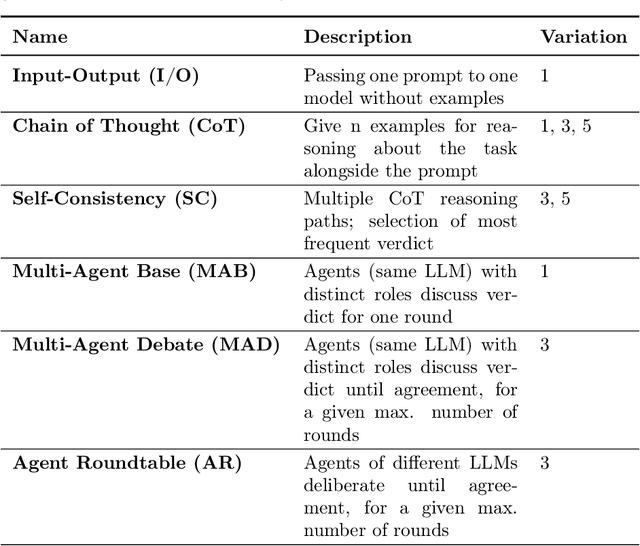
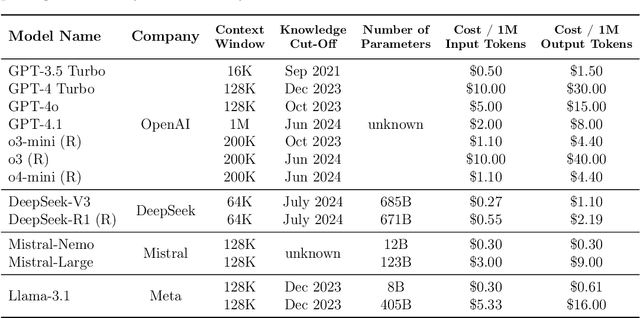
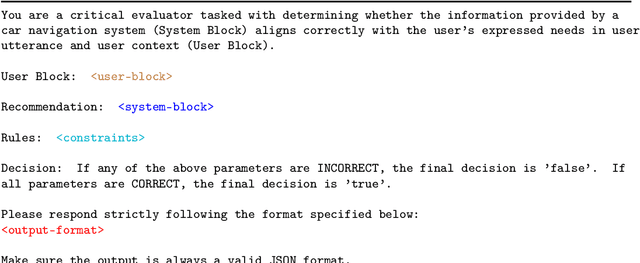
In-Car Conversational Question Answering (ConvQA) systems significantly enhance user experience by enabling seamless voice interactions. However, assessing their accuracy and reliability remains a challenge. This paper explores the use of Large Language Models (LLMs) alongside advanced prompting techniques and agent-based methods to evaluate the extent to which ConvQA system responses adhere to user utterances. The focus lies on contextual understanding and the ability to provide accurate venue recommendations considering user constraints and situational context. To evaluate utterance-response coherence using an LLM, we synthetically generate user utterances accompanied by correct and modified failure-containing system responses. We use input-output, chain-of-thought, self-consistency prompting, and multi-agent prompting techniques with 13 reasoning and non-reasoning LLMs of varying sizes and providers, including OpenAI, DeepSeek, Mistral AI, and Meta. We evaluate our approach on a case study involving restaurant recommendations. The most substantial improvements occur for small non-reasoning models when applying advanced prompting techniques, particularly multi-agent prompting. However, reasoning models consistently outperform non-reasoning models, with the best performance achieved using single-agent prompting with self-consistency. Notably, DeepSeek-R1 reaches an F1-score of 0.99 at a cost of 0.002 USD per request. Overall, the best balance between effectiveness and cost-time efficiency is reached with the non-reasoning model DeepSeek-V3. Our findings show that LLM-based evaluation offers a scalable and accurate alternative to traditional human evaluation for benchmarking contextual understanding in ConvQA systems.
A Multi-Modality Evaluation of the Reality Gap in Autonomous Driving Systems
Sep 26, 2025Simulation-based testing is a cornerstone of Autonomous Driving System (ADS) development, offering safe and scalable evaluation across diverse driving scenarios. However, discrepancies between simulated and real-world behavior, known as the reality gap, challenge the transferability of test results to deployed systems. In this paper, we present a comprehensive empirical study comparing four representative testing modalities: Software-in-the-Loop (SiL), Vehicle-in-the-Loop (ViL), Mixed-Reality (MR), and full real-world testing. Using a small-scale physical vehicle equipped with real sensors (camera and LiDAR) and its digital twin, we implement each setup and evaluate two ADS architectures (modular and end-to-end) across diverse indoor driving scenarios involving real obstacles, road topologies, and indoor environments. We systematically assess the impact of each testing modality along three dimensions of the reality gap: actuation, perception, and behavioral fidelity. Our results show that while SiL and ViL setups simplify critical aspects of real-world dynamics and sensing, MR testing improves perceptual realism without compromising safety or control. Importantly, we identify the conditions under which failures do not transfer across testing modalities and isolate the underlying dimensions of the gap responsible for these discrepancies. Our findings offer actionable insights into the respective strengths and limitations of each modality and outline a path toward more robust and transferable validation of autonomous driving systems.
Mapping Neural Theories of Consciousness onto the Common Model of Cognition
Jun 13, 2025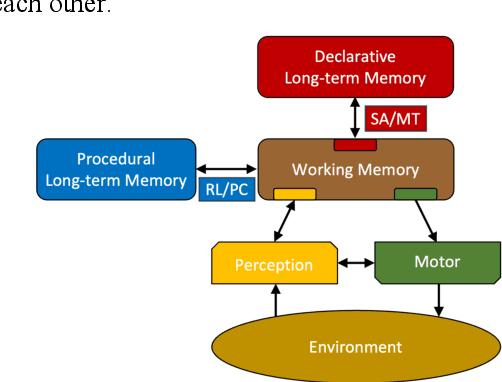
A beginning is made at mapping four neural theories of consciousness onto the Common Model of Cognition. This highlights how the four jointly depend on recurrent local modules plus a cognitive cycle operating on a global working memory with complex states, and reveals how an existing integrative view of consciousness from a neural perspective aligns with the Com-mon Model.
Foundation Models in Autonomous Driving: A Survey on Scenario Generation and Scenario Analysis
Jun 13, 2025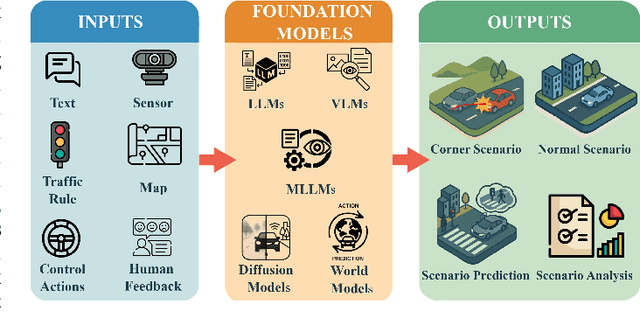
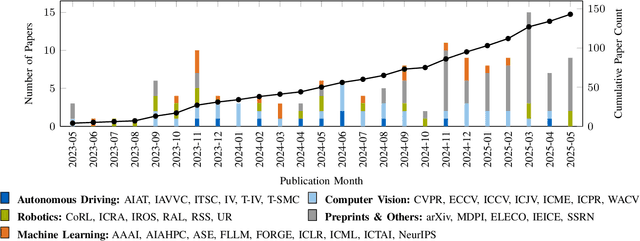
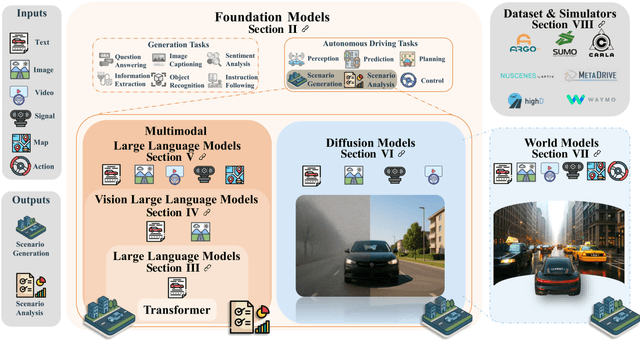
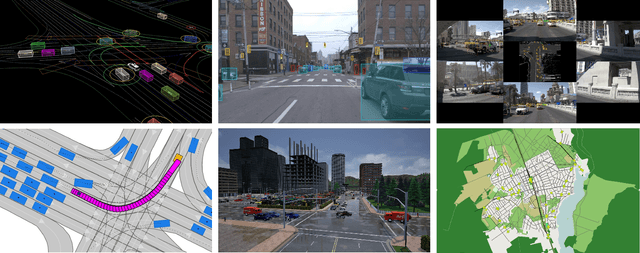
For autonomous vehicles, safe navigation in complex environments depends on handling a broad range of diverse and rare driving scenarios. Simulation- and scenario-based testing have emerged as key approaches to development and validation of autonomous driving systems. Traditional scenario generation relies on rule-based systems, knowledge-driven models, and data-driven synthesis, often producing limited diversity and unrealistic safety-critical cases. With the emergence of foundation models, which represent a new generation of pre-trained, general-purpose AI models, developers can process heterogeneous inputs (e.g., natural language, sensor data, HD maps, and control actions), enabling the synthesis and interpretation of complex driving scenarios. In this paper, we conduct a survey about the application of foundation models for scenario generation and scenario analysis in autonomous driving (as of May 2025). Our survey presents a unified taxonomy that includes large language models, vision-language models, multimodal large language models, diffusion models, and world models for the generation and analysis of autonomous driving scenarios. In addition, we review the methodologies, open-source datasets, simulation platforms, and benchmark challenges, and we examine the evaluation metrics tailored explicitly to scenario generation and analysis. Finally, the survey concludes by highlighting the open challenges and research questions, and outlining promising future research directions. All reviewed papers are listed in a continuously maintained repository, which contains supplementary materials and is available at https://github.com/TUM-AVS/FM-for-Scenario-Generation-Analysis.
A Proposal to Extend the Common Model of Cognition with Metacognition
Jun 09, 2025The Common Model of Cognition (CMC) provides an abstract characterization of the structure and processing required by a cognitive architecture for human-like minds. We propose a unified approach to integrating metacognition within the CMC. We propose that metacognition involves reasoning over explicit representations of an agent's cognitive capabilities and processes in working memory. Our proposal exploits the existing cognitive capabilities of the CMC, making minimal extensions in the structure and information available within working memory. We provide examples of metacognition within our proposal.