 Add to Chrome
 Add to Firefox
 Add to Edge
HASSL: Hierarchy-Aware Self-Supervised Learning Framework for Single Cell Microscopy
Jul 05, 2026
Hierarchical structure is common in image data, where fine-grained clusters often merge into larger, coarser semantic groups. In biological cell images, current self-supervised learning models often suppress this hierarchy, as coarse factors such as imaging modality can obscure finer morphological attributes in the latent space. We propose a hierarchy-aware self-supervised training framework to address this problem. Our method combines two components: a distillation framework with a segmentation teacher to improve morphological awareness in the latent space, and a hierarchy-aware contrastive loss based on HDBSCAN to improve decision boundaries between closely related subtypes at different hierarchical levels. Together, these components reduce the tendency of self-supervised learning to overemphasize coarse factors and instead align embeddings with semantic and morphological cues. This yields biologically meaningful sub-clusters driven by fine morphological detail. We train and evaluate our method on a curated corpus of 2.3 million single cells aggregated from 20 microscopy datasets, both labeled and unlabeled, covering 208 cell classes. Our method improves over baseline and counterpart methods, increasing average top-K accuracy by 2.8%, top-9 retrieval on the dataset with the deepest hierarchy by 6.3%, and downstream F1-score for biologically relevant drug classification from perturbed cell morphology by 7.8%.

Benchmarking Image Perturbations for Testing Automated Driving Assistance Systems
Jan 21, 2025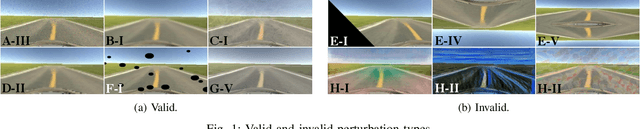
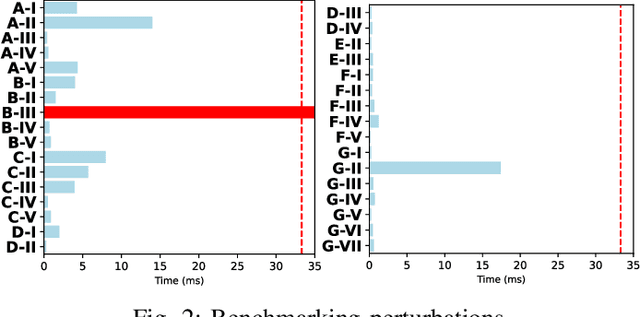
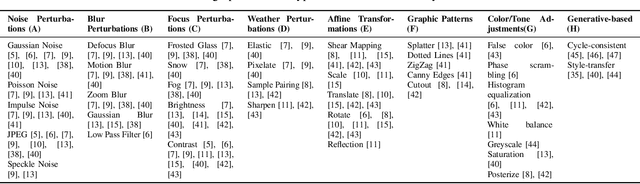
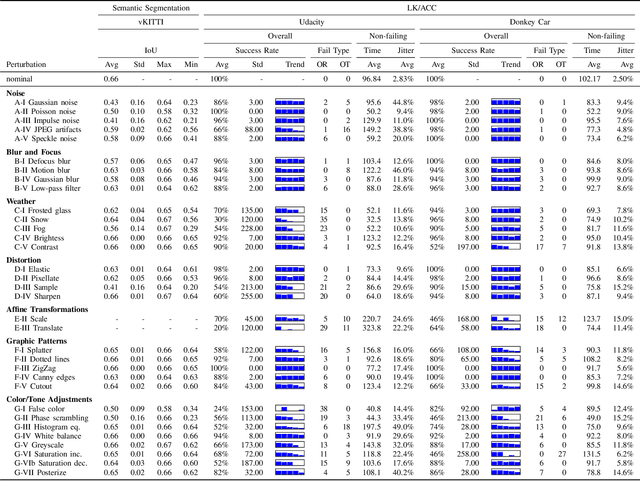
Advanced Driver Assistance Systems (ADAS) based on deep neural networks (DNNs) are widely used in autonomous vehicles for critical perception tasks such as object detection, semantic segmentation, and lane recognition. However, these systems are highly sensitive to input variations, such as noise and changes in lighting, which can compromise their effectiveness and potentially lead to safety-critical failures. This study offers a comprehensive empirical evaluation of image perturbations, techniques commonly used to assess the robustness of DNNs, to validate and improve the robustness and generalization of ADAS perception systems. We first conducted a systematic review of the literature, identifying 38 categories of perturbations. Next, we evaluated their effectiveness in revealing failures in two different ADAS, both at the component and at the system level. Finally, we explored the use of perturbation-based data augmentation and continuous learning strategies to improve ADAS adaptation to new operational design domains. Our results demonstrate that all categories of image perturbations successfully expose robustness issues in ADAS and that the use of dataset augmentation and continuous learning significantly improves ADAS performance in novel, unseen environments.