 Add to Chrome
 Add to Firefox
 Add to Edge
Robust Near-Field Beam Focusing Under Imperfect Localization
Aug 19, 2026
The transition to 6G-and-beyond wireless systems with large-scale antenna arrays and high-frequency deployments significantly extends the near-field region, where channels exhibit a strong dependence on user location. While this enables location-based beam focusing as a low-overhead alternative to conventional channel estimation, its performance is highly sensitive to localization errors. In this paper, we study robust near-field beam focusing under imperfect user localization. We explicitly characterize the impact of localization errors on the line-of-sight-dominated channel by deriving a tractable uncertainty model via a first-order Taylor approximation, which captures the coupled effects of distance and angle in near-field propagation. Building on this model, we formulate a max-min signal-to-interference-plus-noise ratio optimization problem that guarantees performance under worst-case channel realizations induced by bounded localization errors. The resulting problem is reformulated into a feasibility problem using semidefinite relaxation. Numerical results demonstrate that the proposed robust design significantly improves the worst-user rate compared to non-robust beam focusing, particularly under high total transmit power levels and large localization error ranges.

Holographic Beamforming for Range-Doppler Sidelobe Suppression in OFDM-ISAC
Aug 19, 2026This paper investigates range--Doppler (RD) sidelobe suppression in an integrated sensing and communications system with a reconfigurable holographic surface (RHS). We jointly design the digital feed precoders and RHS amplitudes to minimize the integrated RD sidelobe level subject to transmit-power, target-illumination, and communication constraints. For this, we develop an alternating successive convex approximation method updating both variable blocks through quadratic subproblems. Numerical results reveal diminishing returns from additional feeds, while increasing the aperture remains more effective and allows the RHS design to reduce sidelobe level.
Beam Selection for Delay-Doppler Visibility in Multi-Target MIMO-OFDM Sensing
Jul 28, 2026This paper studies leakage-aware beam selection for multi-target multiple-input multiple-output (MIMO)-orthogonal frequency-division multiplexing (OFDM) sensing. We focus on ensuring that each hypothesized target remains detectable at its own delay-Doppler (DD) bin despite leakage from other targets. For this, we derive a visibility metric that separates the desired focused power from pairwise leakage caused by the finite-grid OFDM ambiguity kernel, receive angular coupling, and transmit codebook gains. Then, we formulate a max-min beam-selection and power-allocation problem in which the sensing signal over the fixed OFDM time-frequency grid is transmitted by a limited number of selected beams. The resulting problem is solved via a bisection-based mixed-integer successive convex approximation framework. A time-sharing formulation is also presented as a globally solvable benchmark. Numerical results show that the proposed pairwise leakage-aware design achieves higher worst-target visibility than the time-sharing, global leakage-suppression, illumination-based, and random beam-selection baselines, especially when targets are close in angle or DD.
Toward Proactive RF Charging Scheduling: Generative AI for Decision Support
Jun 09, 2026Radio frequency wireless power transfer (RF-WPT) is an enabling technology for supporting uninterrupted communications in future Internet of Things systems by reducing the need for battery replacement and mitigating battery-waste-related issues. For large-scale RF-WPT deployment, one of the main challenges is the scheduler-level resource allocation. Specifically, the transmitter must decide how much energy to deliver, when, and to whom, under limited charging resources, incomplete receiver-side information, and uncertain near-future charging conditions. This article positions generative artificial intelligence (GenAI) as a promising tool for this setting because it can foresee multiple plausible charging scenarios conditioned on coarse operational context and receiver-side information. We propose GenAI to act as an uncertainty-aware support layer for the RF-WPT scheduler rather than as a standalone forecasting or decision-making tool. To this end, we first revisit the main challenges of RF-WPT scheduling, and discuss how major GenAI families can support uncertainty-aware charging decisions by generating scenario-based inputs for downstream tasks. We then present a warehouse-style case study showing that preserving uncertainty through the sampling capability of generative models can improve robust charging decisions compared with deterministic prediction and simple non-learning baselines, especially under risk-sensitive objectives. Finally, we identify key open challenges and present some directions for future research.
Discrete Diffusion for Codebook-Based Beam Candidate Generation
Apr 09, 2026Millimeter-wave (mmWave) communication enables high data rates through large bandwidths and highly directional beamforming, but its sensitivity to blockage and mobility makes reliable beam alignment a central challenge. Limited-probing beam management is a fundamental problem in codebook-based mmWave systems, where only a small subset of beams can be evaluated simultaneously, and the serving decision is restricted to the probed set. Under mobility and noisy feedback, this leads to a sequential and partially observable decision problem in which performance depends critically on the quality of the proposed beam candidates. In this paper, we consider limited-probing beam management and develop a history-conditioned discrete denoising diffusion probabilistic model for beam candidate generation. The proposed method learns from logged probing histories a conditional distribution over promising beam indices, which is then used to construct probing candidates online. Numerical analysis shows that the proposed approach consistently achieves better signal-to-noise ratio, beam-miss probability, and conditional probe regret under tight probing budgets compared with strong learning-based and discriminative baselines. The gains are especially pronounced in low-probing regimes, where accurate candidate generation is most critical.
On the Deployment of Multiple Radio Stripes for Large-Scale Near-Field RF Wireless Power Transfer
Aug 29, 2025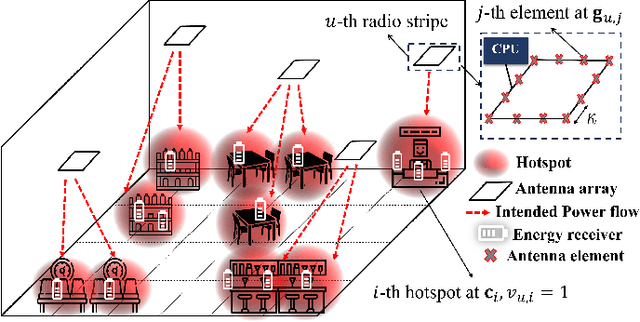
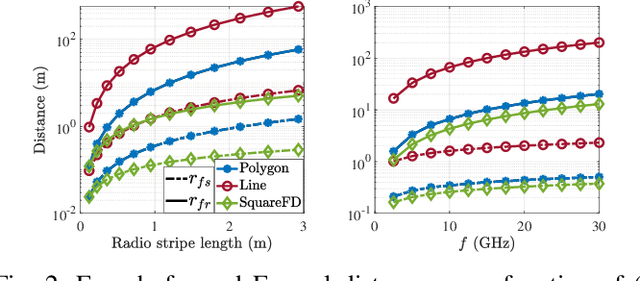
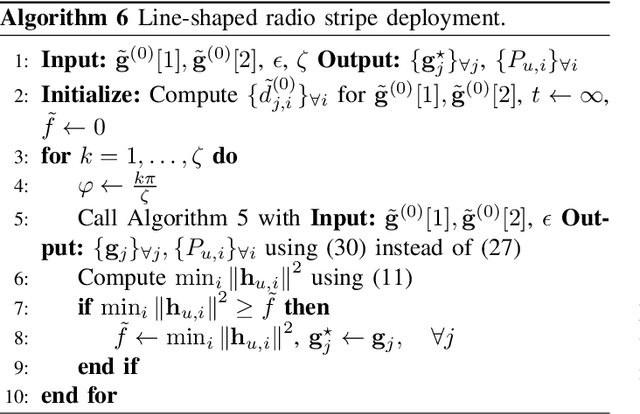
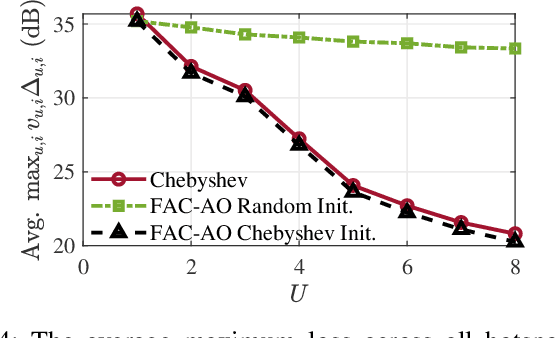
This paper investigates the deployment of radio stripe systems for indoor radio-frequency (RF) wireless power transfer (WPT) in line-of-sight near-field scenarios. The focus is on environments where energy demand is concentrated in specific areas, referred to as 'hotspots', spatial zones with higher user density or consistent energy requirements. We formulate a joint clustering and radio stripe deployment problem that aims to maximize the minimum received power across all hotspots. To address the complexity, we decouple the problem into two stages: i) clustering for assigning radio stripes to hotspots based on their spatial positions and near-field propagation characteristics, and ii) antenna element placement optimization. In particular, we propose four radio stripe deployment algorithms. Two are based on general successive convex approximation (SCA) and signomial programming (SGP) methods. The other two are shape-constrained solutions where antenna elements are arranged along either straight lines or regular polygons, enabling simpler deployment. Numerical results show that the proposed clustering method converges effectively, with Chebyshev initialization significantly outperforming random initialization. The optimized deployments consistently outperform baseline benchmarks across a wide range of frequencies and radio stripe lengths, while the polygon-shaped deployment achieves better performance compared to other approaches. Meanwhile, the line-shaped deployment demonstrates an advantage under high boresight gain settings, benefiting from increased spatial diversity and broader angular coverage.
Sense-then-Charge: Wireless Power Transfer to Unresponsive Devices with Unknown Location
Apr 29, 2025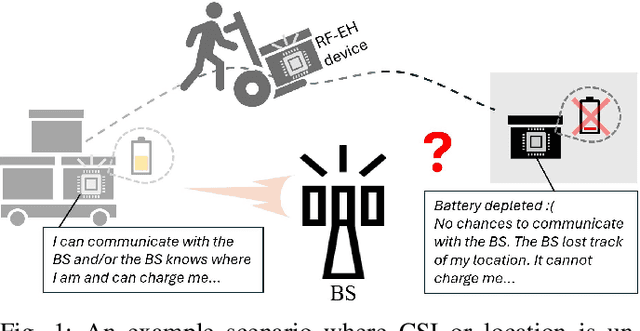
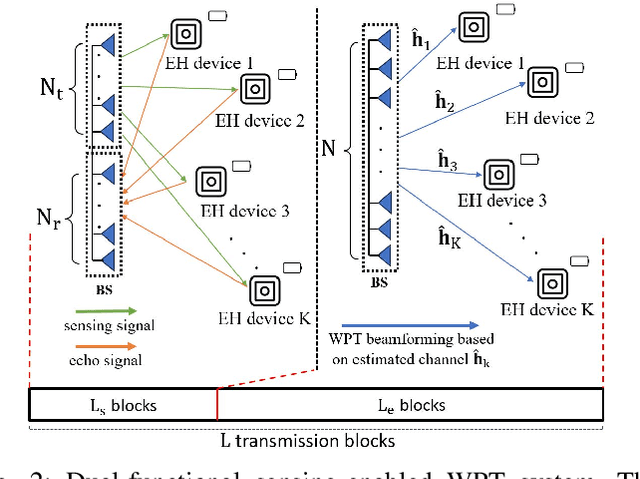
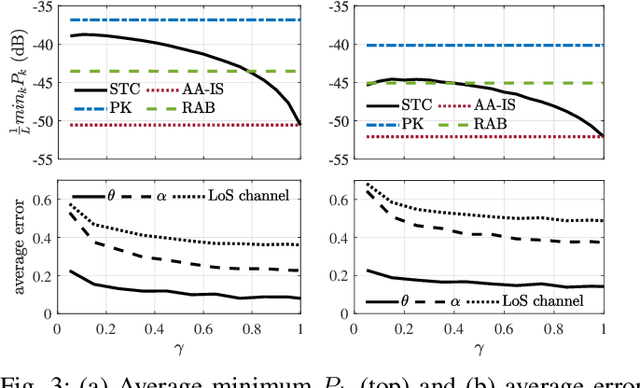
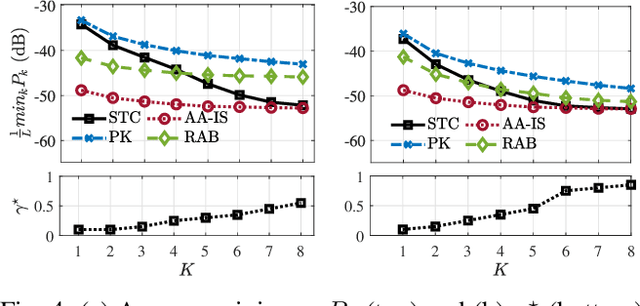
This paper explores a multi-antenna dual-functional radio frequency (RF) wireless power transfer (WPT) and radar system to charge multiple unresponsive devices. We formulate a beamforming problem to maximize the minimum received power at the devices without prior location and channel state information (CSI) knowledge. We propose dividing transmission blocks into sensing and charging phases. First, the location of the devices is estimated by sending sensing signals and performing multiple signal classification and least square estimation on the received echo. Then, the estimations are used for CSI prediction and RF-WPT beamforming. Simulation results reveal that there is an optimal number of blocks allocated for sensing and charging depending on the system setup. Our sense-then-charge (STC) protocol can outperform CSI-free benchmarks and achieve near-optimal performance with a sufficient number of receive antennas and transmit power. However, STC struggles if using insufficient antennas or power as device numbers grow.
Beamforming and Waveform Optimization for RF Wireless Power Transfer with Beyond Diagonal Reconfigurable Intelligent Surfaces
Feb 26, 2025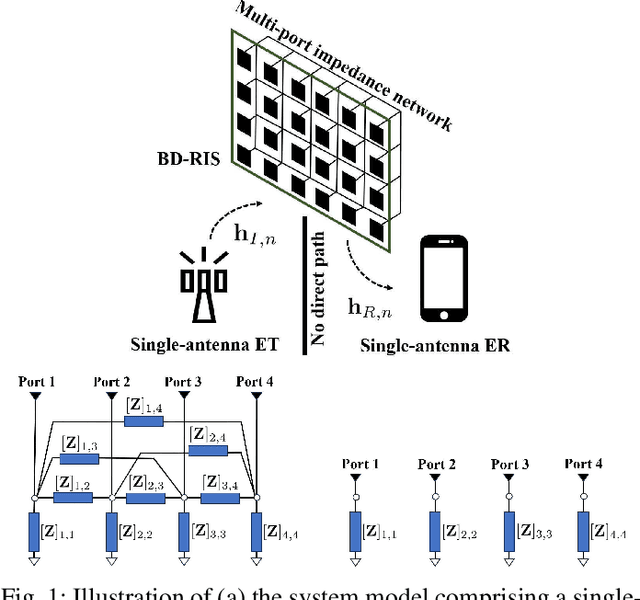

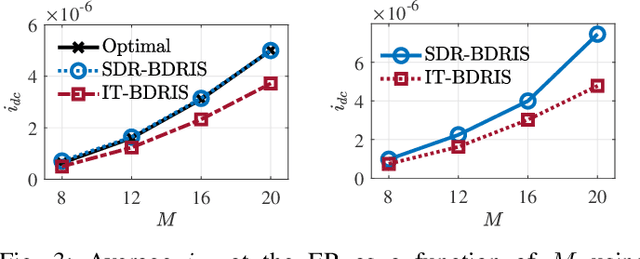
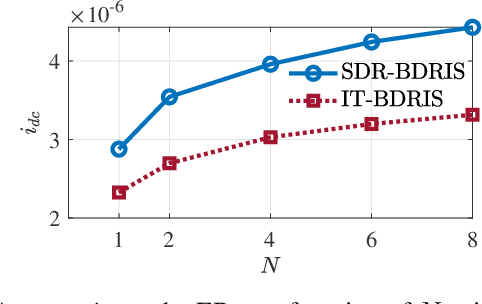
Radio frequency (RF) wireless power transfer (WPT) is a promising technology to seamlessly charge low-power devices, but its low end-to-end power transfer efficiency remains a critical challenge. To address the latter, low-cost transmit/radiating architectures, e.g., based on reconfigurable intelligent surfaces (RISs), have shown great potential. Beyond diagonal (BD) RIS is a novel branch of RIS offering enhanced performance over traditional diagonal RIS (D-RIS) in wireless communications, but its potential gains in RF-WPT remain unexplored. Motivated by this, we analyze a BD-RIS-assisted single-antenna RF-WPT system to charge a single rectifier, and formulate a joint beamforming and multi-carrier waveform optimization problem aiming to maximize the harvested power. We propose two solutions relying on semi-definite programming for fully connected BD-RIS and an efficient low-complexity iterative method relying on successive convex approximation. Numerical results show that the proposed algorithms converge to a local optimum and that adding transmit sub-carriers or RIS elements improves the harvesting performance. We show that the transmit power budget impacts the relative power allocation among different sub-carriers depending on the rectifier's operating regime, while BD-RIS shapes the cascade channel differently for frequency-selective and flat scenarios. Finally, we verify by simulation that BD-RIS and D-RIS achieve the same performance under pure far-field line-of-sight conditions (in the absence of mutual coupling). Meanwhile, BD-RIS outperforms D-RIS as the non-line-of-sight components of the channel become dominant.
End-to-End Waveform and Beamforming Optimization for RF Wireless Power Transfer
May 09, 2024
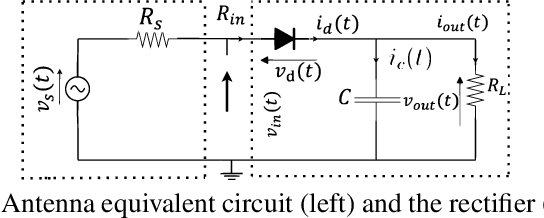
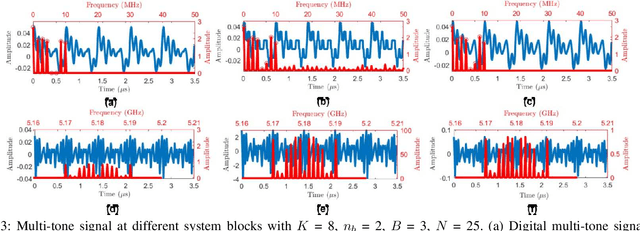
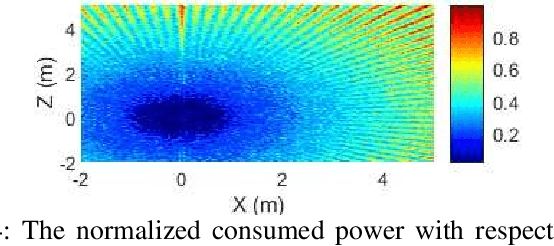
Radio frequency (RF) wireless power transfer (WPT) is a key technology for future low-power wireless systems. However, the inherently low end-to-end power transfer efficiency (PTE) is challenging for practical applications. The main factors contributing to it are the channel losses, transceivers' power consumption, and losses related, e.g., to the digital-to-analog converter (DAC), high-power amplifier, and rectenna. Optimizing PTE requires careful consideration of these factors, motivating the current work. Herein, we consider an analog multi-antenna power transmitter that aims to charge a single energy harvester. We first provide a mathematical framework to calculate the harvested power from multi-tone signal transmissions and the system power consumption. Then, we formulate the joint waveform and analog beamforming design problem to minimize power consumption and meet the charging requirements. Finally, we propose an optimization approach relying on swarm intelligence to solve the specified problem. Simulation results quantify the power consumption reduction as the DAC, phase shifters resolution, and antenna length are increased, while it is seen that increasing system frequency results in higher power consumption.
Zero-energy Devices for 6G: Technical Enablers at a Glance
Feb 14, 2024Low-cost, resource-constrained, maintenance-free, and energy-harvesting (EH) Internet of Things (IoT) devices, referred to as zero-energy devices (ZEDs), are rapidly attracting attention from industry and academia due to their myriad of applications. To date, such devices remain primarily unsupported by modern IoT connectivity solutions due to their intrinsic fabrication, hardware, deployment, and operation limitations, while lacking clarity on their key technical enablers and prospects. Herein, we address this by discussing the main characteristics and enabling technologies of ZEDs within the next generation of mobile networks, specifically focusing on unconventional EH sources, multi-source EH, power management, energy storage solutions, manufacturing material and practices, backscattering, and low-complexity receivers. Moreover, we highlight the need for lightweight and energy-aware computing, communication, and scheduling protocols, while discussing potential approaches related to TinyML, duty cycling, and infrastructure enablers like radio frequency wireless power transfer and wake-up protocols. Challenging aspects and open research directions are identified and discussed in all the cases. Finally, we showcase an experimental ZED proof-of-concept related to ambient cellular backscattering.