 Add to Chrome
 Add to Firefox
 Add to Edge
Toward Proactive RF Charging Scheduling: Generative AI for Decision Support
Jun 09, 2026
Radio frequency wireless power transfer (RF-WPT) is an enabling technology for supporting uninterrupted communications in future Internet of Things systems by reducing the need for battery replacement and mitigating battery-waste-related issues. For large-scale RF-WPT deployment, one of the main challenges is the scheduler-level resource allocation. Specifically, the transmitter must decide how much energy to deliver, when, and to whom, under limited charging resources, incomplete receiver-side information, and uncertain near-future charging conditions. This article positions generative artificial intelligence (GenAI) as a promising tool for this setting because it can foresee multiple plausible charging scenarios conditioned on coarse operational context and receiver-side information. We propose GenAI to act as an uncertainty-aware support layer for the RF-WPT scheduler rather than as a standalone forecasting or decision-making tool. To this end, we first revisit the main challenges of RF-WPT scheduling, and discuss how major GenAI families can support uncertainty-aware charging decisions by generating scenario-based inputs for downstream tasks. We then present a warehouse-style case study showing that preserving uncertainty through the sampling capability of generative models can improve robust charging decisions compared with deterministic prediction and simple non-learning baselines, especially under risk-sensitive objectives. Finally, we identify key open challenges and present some directions for future research.

Wireless Energy Transfer from Space to Ground via Satellite Constellation Grids
Apr 05, 2026This letter presents a framework for space-to-ground wireless energy transfer (WET) for wirelessly chargeable devices (WCD) located in remote areas or disaster situations. We consider a grid of multi-antenna satellites that charge a WCD within line-of-sight. Closed-form expressions for harvested energy are derived considering maximum ratio transmission (MRT) ensuring that the WCD meets its circuit charging threshold $P_{th}$. Simulations elucidate that milli-joule-level energy can be harvested during satellite grid visibility, with charging efficiency influenced by the number of satellites, their altitude, charging frequency, and grid inclination.
Energy-Sustainable IoT Connectivity: Vision, Technological Enablers, Challenges, and Future Directions
Jun 04, 2023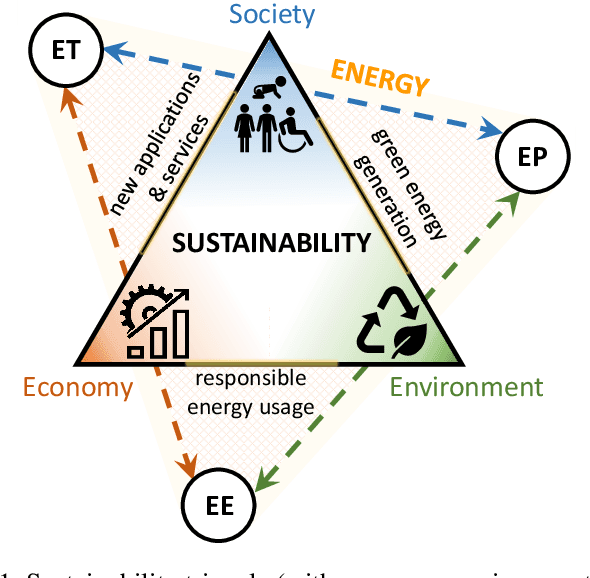
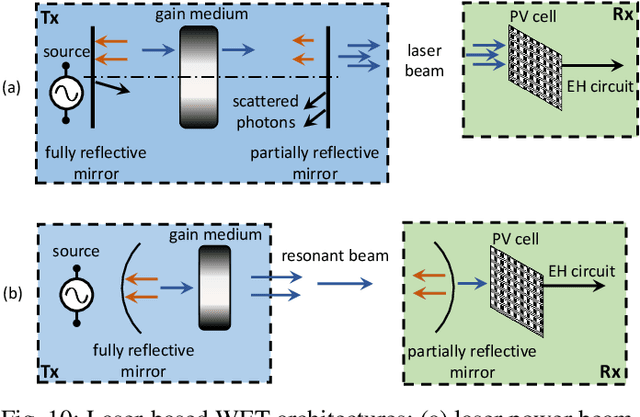
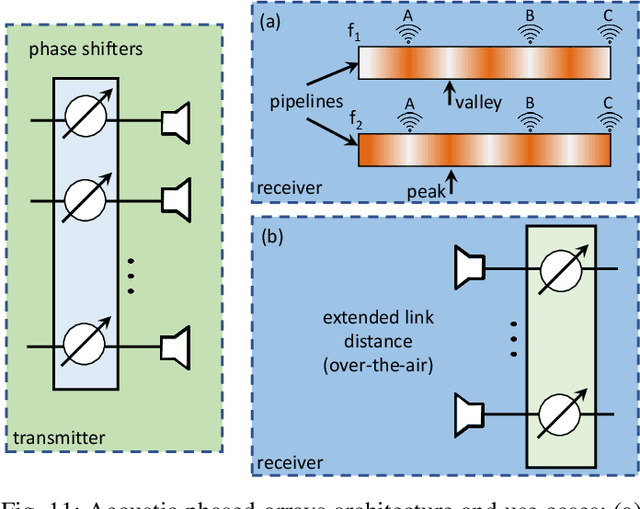
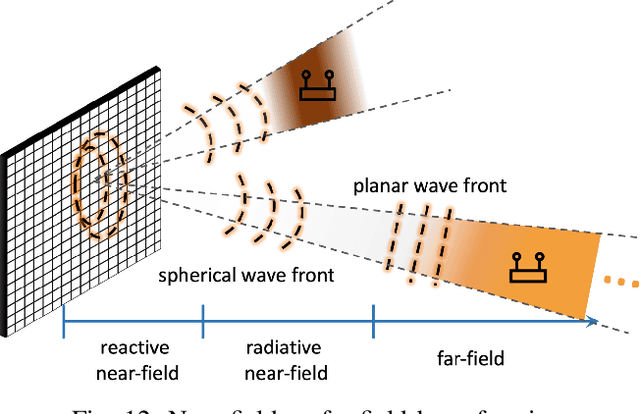
Technology solutions must effectively balance economic growth, social equity, and environmental integrity to achieve a sustainable society. Notably, although the Internet of Things (IoT) paradigm constitutes a key sustainability enabler, critical issues such as the increasing maintenance operations, energy consumption, and manufacturing/disposal of IoT devices have long-term negative economic, societal, and environmental impacts and must be efficiently addressed. This calls for self-sustainable IoT ecosystems requiring minimal external resources and intervention, effectively utilizing renewable energy sources, and recycling materials whenever possible, thus encompassing energy sustainability. In this work, we focus on energy-sustainable IoT during the operation phase, although our discussions sometimes extend to other sustainability aspects and IoT lifecycle phases. Specifically, we provide a fresh look at energy-sustainable IoT and identify energy provision, transfer, and energy efficiency as the three main energy-related processes whose harmonious coexistence pushes toward realizing self-sustainable IoT systems. Their main related technologies, recent advances, challenges, and research directions are also discussed. Moreover, we overview relevant performance metrics to assess the energy-sustainability potential of a certain technique, technology, device, or network and list some target values for the next generation of wireless systems. Overall, this paper offers insights that are valuable for advancing sustainability goals for present and future generations.